
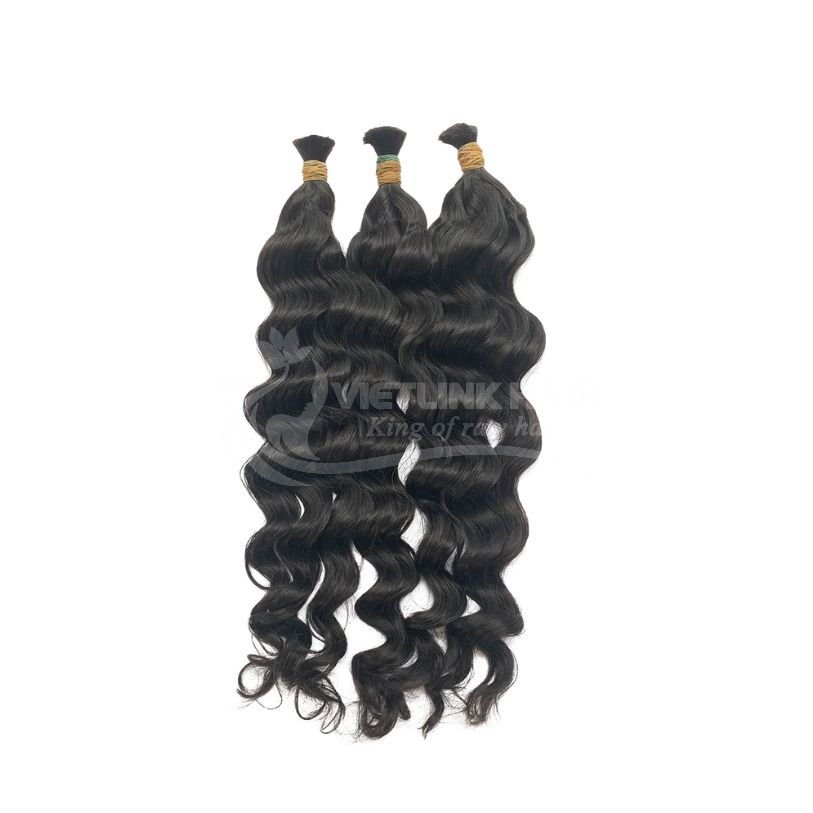
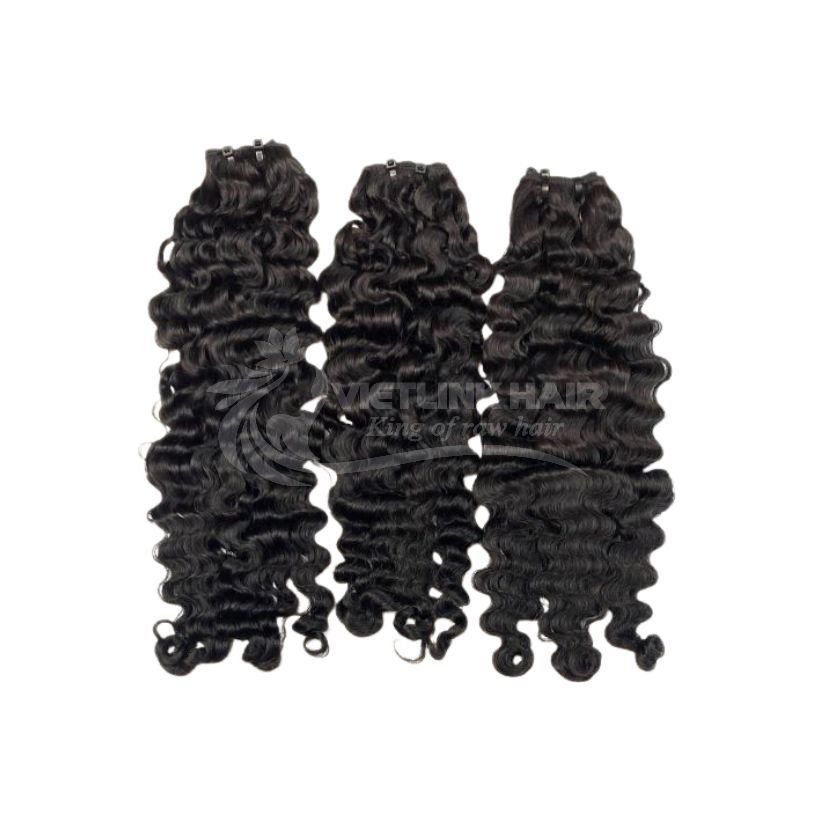
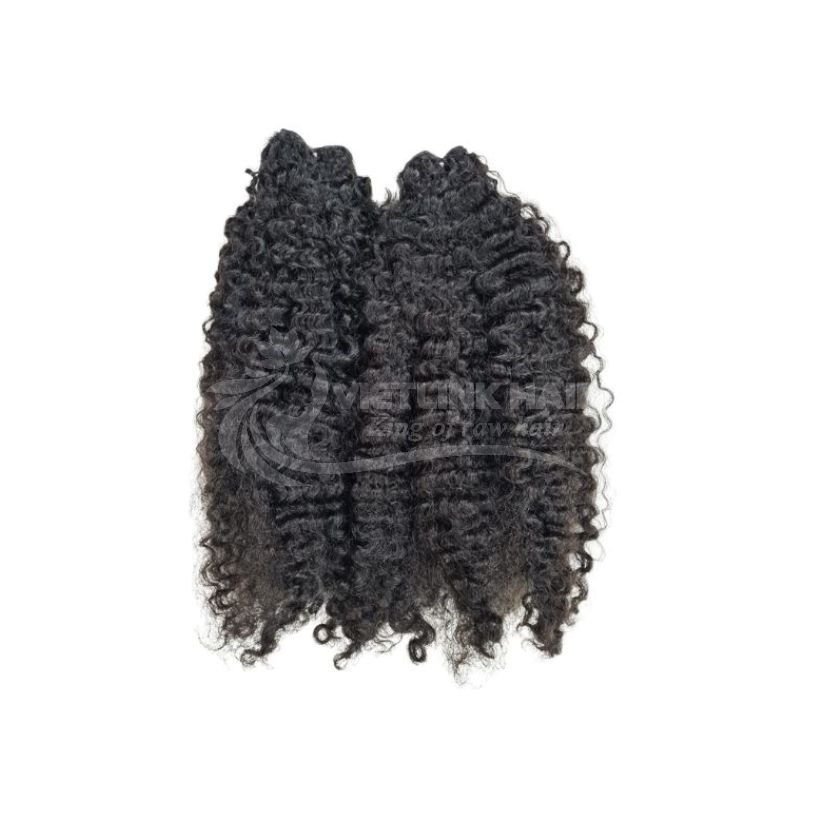
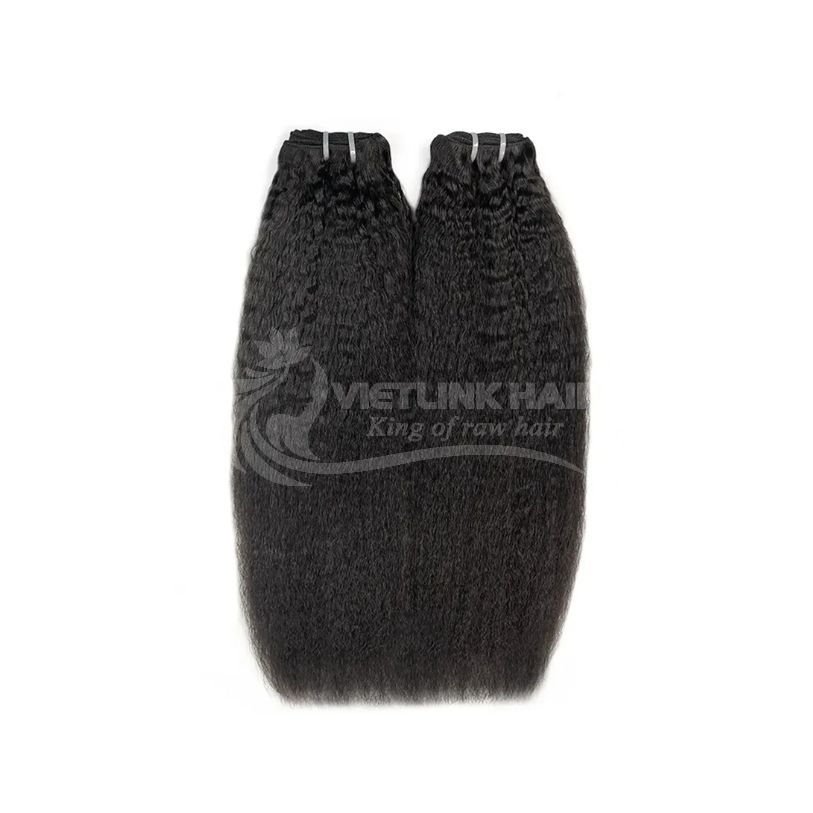
Hair Extension Knowledge
Remy Hair vs Raw Hair: What’s the Difference and Which Should You Buy?
Remy hair vs raw hair differ in sourcing, processing, cuticle alignment, natural texture, and price – factors that directly affect hair quality, styling versatility, and long-term value. Whether you are buying hair extensions for personal use or sourcing wholesale hair for a salon, wig brand, or hair business, understanding these differences is essential. This guide from VietLink Hair Factory compares Remy hair and raw hair in detail to help you decide which option is worth buying.
Remy Hair vs Raw Hair at a Glance
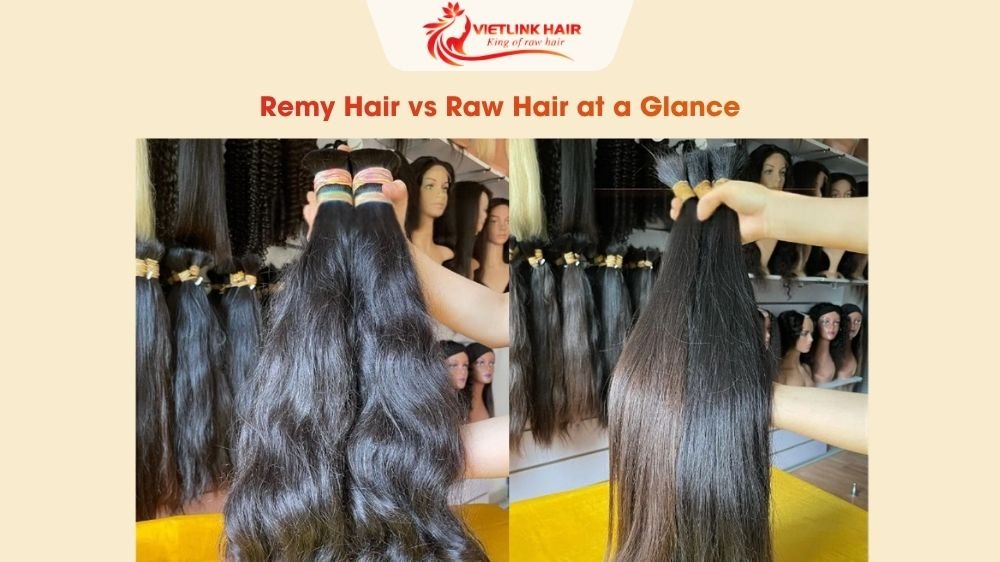
Both Remy hair and raw hair are made from real human hair, with cuticles generally kept intact and aligned in the same direction from root to tip. This alignment helps reduce tangling and maintain a smoother appearance compared with non-Remy hair. However, the key differences lie in hair sourcing, processing methods, natural texture, lifespan, and price. The comparison table below highlights the main differences between Remy hair and raw hair to help buyers understand their characteristics before exploring each type in detail.
| Feature | Remy Hair | Raw Hair |
| Donor source | May be collected from multiple donors and blended | Typically sourced from a single donor per bundle |
| Cuticle condition | Cuticles are generally intact and aligned | Cuticles remain intact and aligned, without being stripped during processing |
| Processing | May undergo steaming, chemical treatment, silicone coating, or dyeing | Ideally unprocessed, with no dyeing, steam perming, or chemical coating |
| Natural color | May be dyed or adjusted to achieve consistent shades | Retains the donor’s natural hair color |
| Typical lifespan with proper care | Around 6–12 months | Around 2–3 years or longer |
| Typical market price (100g bundle, 16–20 inches) | Approximately 30–65 | Approximately 60–120 |
| Best suited for | Budget-conscious buyers, temporary styles, and pre-colored looks | Long-term wear, customized coloring, and premium resale |
Note: Lifespan and prices are estimates, not fixed industry standards. Actual results depend on hair quality, processing, maintenance, and supplier specifications. Remy hair can also vary in its level of processing.
What Is Raw Hair?
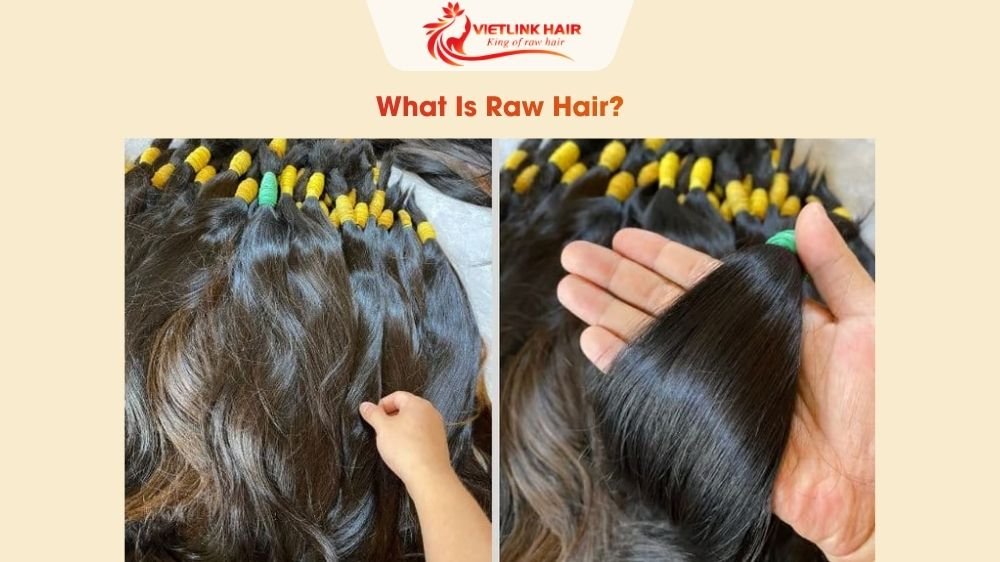
Raw hair is human hair that has not undergone chemical or heat processing to alter its natural texture or color after collection. It is typically sourced from a single donor per bundle, with the cuticles kept intact and aligned in the same direction. Unlike processed hair, raw hair retains its natural color and original texture without dyeing, bleaching, steam perming, or silicone coating.
Because raw hair retains its cuticle layer and has not undergone these texture-altering treatments, it can offer good durability and greater flexibility for styling and coloring when properly maintained. Its natural characteristics may also include subtle variations in strand thickness, color, and texture, giving each bundle a less uniform appearance than heavily processed hair.
What Is Remy Hair?
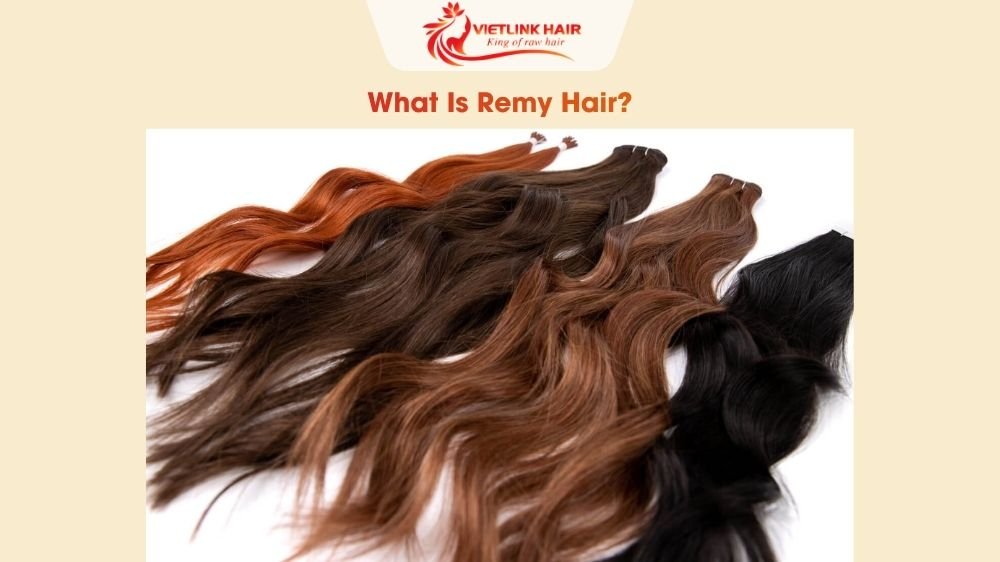
Remy hair is human hair collected and sorted to keep the cuticles intact and aligned in the same direction, from root to tip. This cuticle alignment helps Remy hair maintain a smoother feel and reduces tangling compared with non-Remy hair, where strands may face different directions.
However, Remy hair describes the condition and alignment of the cuticles, not whether the hair is completely unprocessed or comes from a single donor. Remy hair may be sourced from multiple donors and undergo additional treatments, such as steam processing to create waves or curls, acid washing, silicone coating, or dyeing. As a result, two Remy hair bundles of the same length can differ significantly in texture, appearance, durability, and maintenance requirements.
5 Key Differences between Remy Hair vs Raw Hair
Remy hair vs. raw hair mainly differ in processing, donor sourcing, cuticle condition, natural texture, and price. Understanding these 5 key differences will help you compare hair quality, expected lifespan, and value before choosing the right option for your needs.
Sourcing and Processing
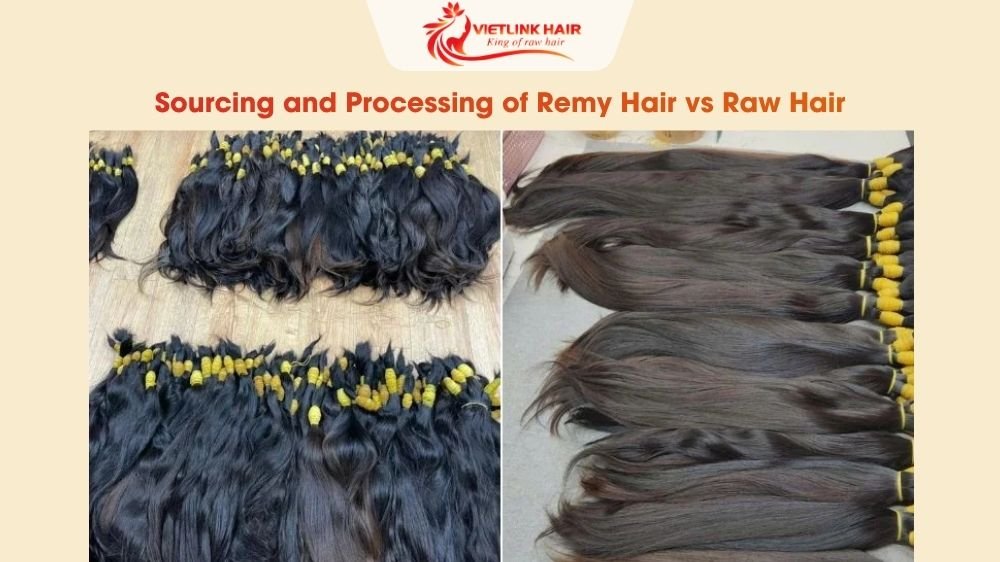
The biggest difference starts at the source. Raw hair is usually cut from one donor in a single ponytail, then sorted by length and bundled with the cuticles still facing the same way. The only steps are washing, sorting, and at most, a gentle wash to remove dirt. Nothing alters the hair’s structure.
Remy hair is collected and sorted the same way but is allowed a longer processing chain. Strands from several donors may be combined to reach a target length or volume. To make mixed hair look uniform, factories often apply acid or steam to remove surface roughness, add a silicone coating for shine, or dye it to a fixed color. None of this makes the hair fake, but it does mean you are buying a finished product rather than hair in its natural state.
Texture, Appearance and Natural Look
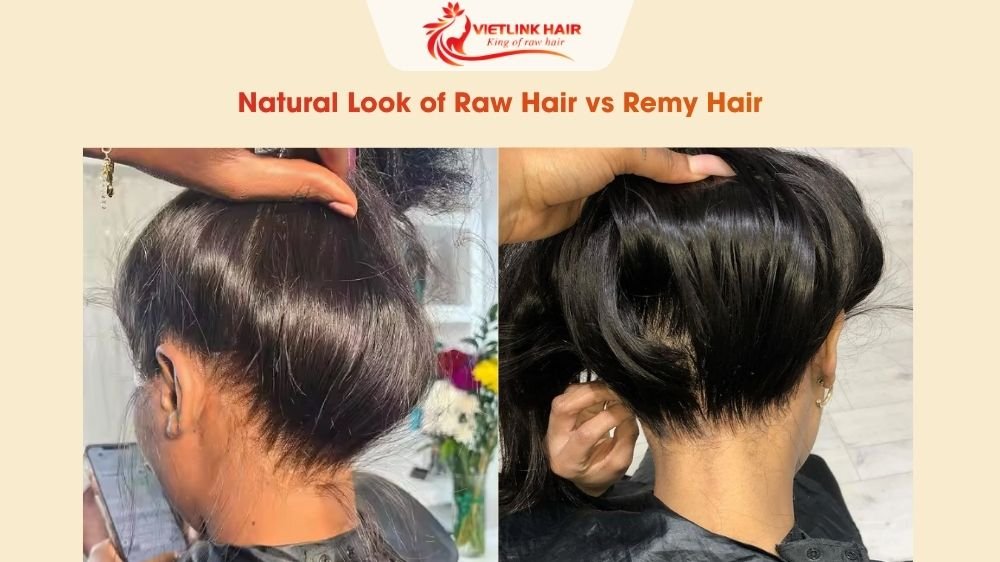
Raw hair looks and moves like natural hair because it still has the variation of natural hair. Strands are not all the same thickness, ends are fuller, and the shine is soft rather than glossy. Vietnamese raw hair, for example, is known for a naturally smooth, dense feel with natural dark shades, and it tends to blend easily with most hair types when installed.
Remy hair usually looks more uniform. That can be an advantage if you want a very sleek, consistent finish, or a pre-curled or pre-colored style that arrives ready to wear. The downside is that the shine can come from a coating, and the texture can feel slightly different after a few washes once the coating wears away. Remy hair also tends to blend well with most natural hair at first, but the match can change as the surface treatment fades.
Coloring, Bleaching and Heat Styling
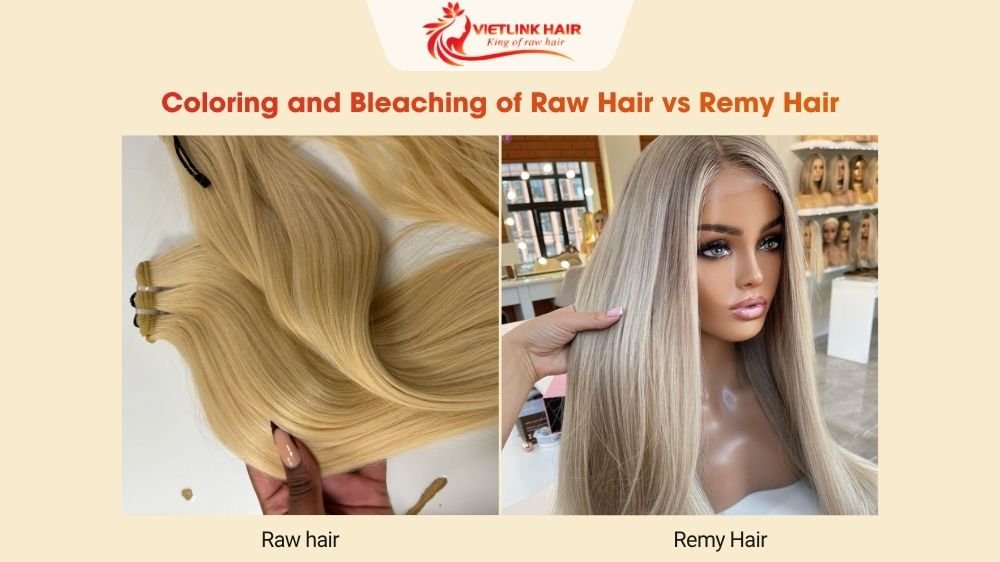
Raw hair is the easier canvas for color work because it has no coating, dye, or prior chemical damage to fight against. A stylist can lift it with bleach, tone it, and when done carefully, still keep the cuticle healthy. Heat styling is also more forgiving: raw hair tolerates curling irons and flat irons when used with a heat protectant at moderate temperatures. Lifting very dark hair to a light blonde remains a demanding process that should be done in stages by a professional, because lifting always weakens hair to some degree.
Remy hair is less predictable. If it has already been dyed, steamed, or coated, bleaching it can produce uneven results, patchy tone, or dryness, and heat can break down the coating faster. Remy hair that is natural in color and lightly processed can still be colored, but you lose the guarantee that every bundle will react the same way.
Durability, Lifespan and Maintenance
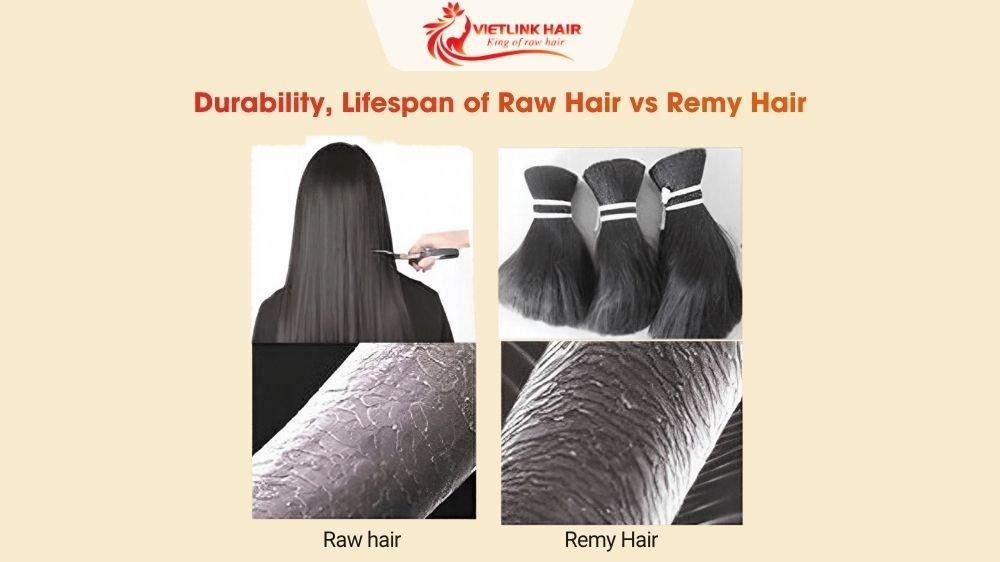
Raw hair lasts longer because nothing has weakened its structure before you receive it. With careful washing, a good conditioner, low-heat styling, and gentle storage, raw hair commonly lasts two to three years or more, and many buyers re-install the same bundles several times.
Remy hair generally lasts six to twelve months with regular wear. The processing that makes it smooth and uniform tends to wear off with washing, friction, and heat, and the hair can become dry, frizzy, or dull. Lightly processed, well-maintained Remy hair can last longer, but heavily coated or dyed Remy hair often declines fastest.
Maintenance is similar for both: wash with sulfate-free shampoo, condition from mid-length to ends, detangle from the tips upward, air-dry when possible, and store loosely in a silk or satin bag. The difference is tolerance. Raw hair forgives mistakes more often; Remy hair shows damage sooner.
Price and Cost per Year
When comparing Remy hair vs. raw hair prices, raw hair generally costs more per bundle. To understand how lifespan affects value, consider a hypothetical hair installation using three 100g bundles of 20-inch hair. The following figures are illustrative estimates, not guaranteed prices or lifespan benchmarks.
| Cost comparison | Remy Hair | Raw Hair |
| Price per 100g bundle | $45 | $85 |
| Initial cost for 3 bundles | $135 | $255 |
| Illustrative lifespan with proper care | 8 months | 30 months |
| Estimated cost per year of wear | About $203 | About $102 |
However, the total cost of ownership also depends on how long the hair lasts, how frequently it is used, and how well it is maintained. For buyers choosing between the two hair types, comparing the initial purchase price with the estimated cost per year of wear provides a more practical way to evaluate long-term value.
How to Tell Real Raw or Remy Hair from Fake
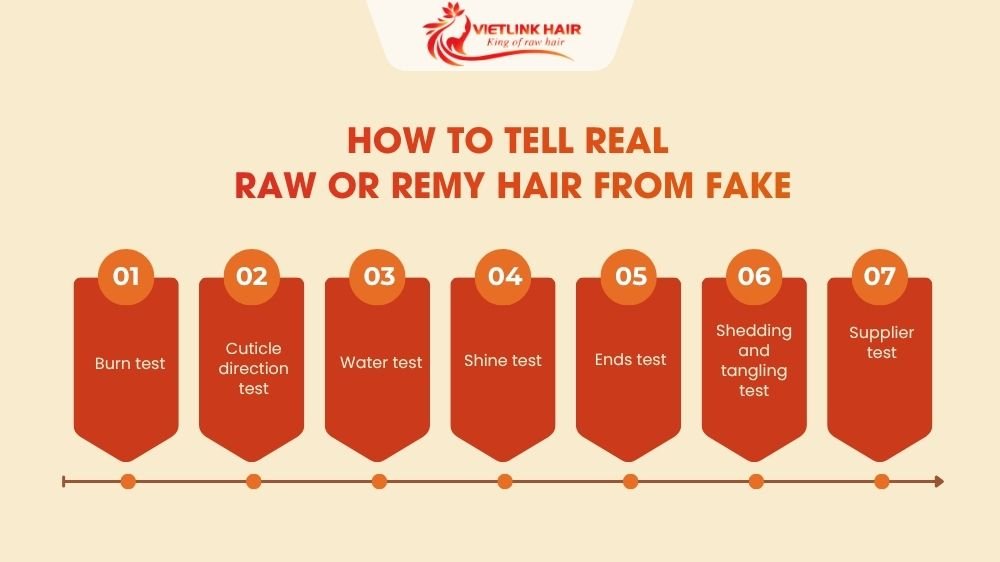
Fake or mislabeled hair is the most common reason buyers overpay. Synthetic fiber sold as human hair is one problem. A larger one is processed non-Remy hair sold as “raw.” These checks help you identify both.
- Burn test: Burn a few strands. Human hair smells like burnt hair and turns to a fragile ash. Synthetic fiber melts into a hard bead and smells like plastic. Test only a small sample and do it safely.
- Cuticle direction test: Hold a strand by the root and slide your fingers from root to tip, then back. Hair with aligned cuticles feels smooth in one direction and slightly rough in the other. If it feels the same both ways, the cuticles may be mixed.
- Water test: Wash a few strands. Real raw hair gets softer and more natural-looking. Coated hair loses its shine, turns dry, or looks flat once the coating comes off.
- Shine test: Natural hair has a soft sheen. An overly glassy, mirror-like finish often points to heavy silicone coating.
- Ends test: Hold a bundle up to the light. Raw and quality Remy bundles have full, blunt ends. Thin, wispy ends mean a lot of short strands were mixed in.
- Shedding and tangling test: Run your hand through the bundle and pull gently. Heavy shedding or knotting right out of the bag is a red flag.
- Supplier test: Ask for unedited photos and videos of the actual bundles, the natural color, the donor origin, and the processing steps. A real supplier answers directly.
Remy Hair vs Raw Hair: Which Should You Choose?
Now that you understand the key differences between Remy hair and raw hair, the right choice comes down to your budget, styling needs, and expectations for long-term use. Both types can be suitable options, but their different processing methods and price points make them better suited to different buyers.
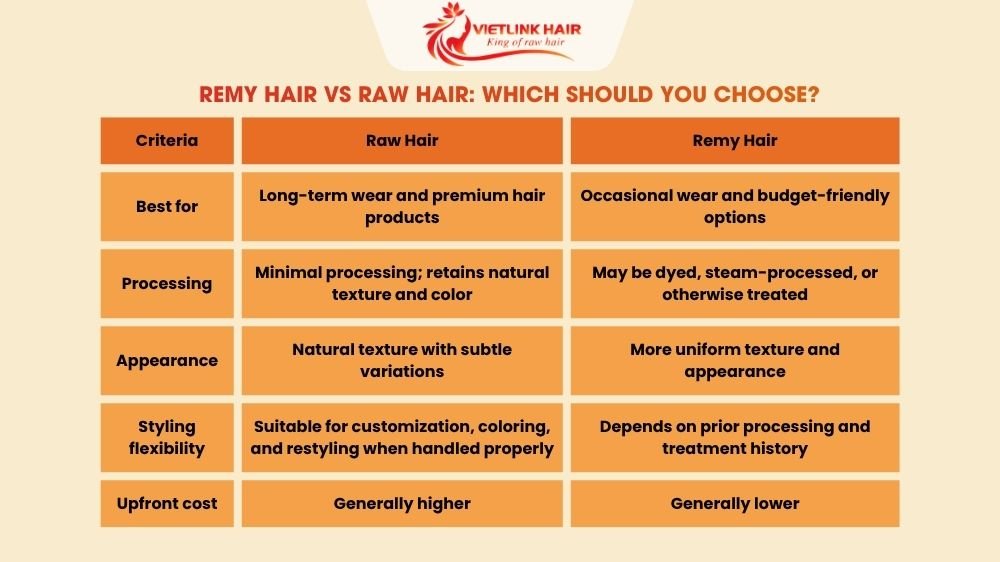
Choose raw hair if you prioritize natural texture, minimal processing, long-term wear, and flexibility for customization. It is ideal for frequent hair extension users, professional stylists, premium wig makers, and resellers targeting quality-conscious customers.
Choose Remy hair if you prefer a lower upfront cost, a consistent appearance, or ready-made colors and curl patterns. It can be a practical option for occasional wear, special events, budget-conscious buyers, and businesses targeting more accessible price points.
A simple way to decide:
- How long will you wear or sell it? More than a year points to raw. Under a year points to Remy.
- Will it be colored or heat-styled often? Frequently points to raw.
- Do you need the lowest upfront price? If yes, Remy.
- Do your customers care about natural origin and traceability? If yes, raw.
Many wholesale buyers stock both: raw hair for premium customers and Remy hair as a lower-priced line. The right mix depends on your market, not on one type being universally better.
Where to Buy High-Quality Raw and Remy Hair
Choosing the right supplier is just as important as understanding the difference between Remy hair and raw hair. The best hair manufacturer offers more than a competitive price: it combines reliable sourcing, consistent product quality, transparent communication, and the experience to understand different buyers’ needs. For salons, wig makers, resellers, and distributors, these qualities are essential to maintaining customer satisfaction and building a sustainable business.
For businesses sourcing Vietnamese human hair, VietLink Hair Factory stands out as a manufacturer worth considering, with experience in hair production and international exports dating back to 2016. Its experience serving international markets makes it a potential long-term sourcing partner for businesses seeking human hair products that align with their quality standards and customer expectations.

Rather than choosing a supplier based on price alone, buyers should look for a manufacturer that can explain its sourcing and processing methods, clarify product specifications, and communicate openly before an order is placed. Contact VietLink Hair Factory to discuss your sourcing requirements, explore suitable raw and Remy hair options, and learn more about its quality standards. Starting with a clear conversation can help you make a more informed purchasing decision and build confidence in your long-term supply partnership.
- WhatsApp: +84 855 555 951
FAQs
Is raw hair better than remy hair?
Raw hair is better in durability, natural look, and coloring flexibility, but not in price. It costs more per bundle and usually less per year of wear. Remy hair is better when you need a lower entry price, a uniform finish, or a short-term style. “Better” depends on how long you plan to wear or sell the hair.
Is Remy hair real human hair?
Yes. Remy hair is real human hair whose cuticles are kept aligned in one direction. What varies is the processing: it may be steamed, coated, or dyed, and it may come from several donors. If the price is far below the market range or the hair melts when burned, it is not genuine Remy hair.
Can you dye or bleach raw hair?
Yes. Raw hair takes color and bleach better than most processed hair because it has no coating or previous chemical damage. Lift it gradually, use a professional where possible, tone afterward, and deep-condition regularly. Lightening dark raw hair to a very pale shade will always reduce its lifespan to some extent.
How long does Remy hair last compared to raw hair?
With good care, Remy hair lasts about 6 to 12 months of regular wear, while raw hair commonly lasts 2 to 3 years or more. Heavily processed Remy hair declines faster because its coating and dye wear away with washing and heat.
What is the difference between raw hair and virgin hair?
Virgin hair has never been dyed or chemically treated, but it may have been steamed or coated to improve its look. Raw hair goes further: it is unprocessed, usually from one donor, and sold in its natural state. All raw hair is virgin, but not all virgin hair is raw. Ask the supplier to confirm each point in writing.
In conclusion, the main difference between Remy hair vs raw hair lies in their processing, natural characteristics, and price. Raw hair is ideal for buyers seeking minimally processed hair and long-term versatility, while Remy hair offers a more affordable option for everyday styling and specific looks. Before purchasing, compare the hair’s quality, processing history, and expected lifespan rather than relying on labels alone.
