
Hair Extension Knowledge
Can You Bleach Human Hair Extensions? The Complete Guide
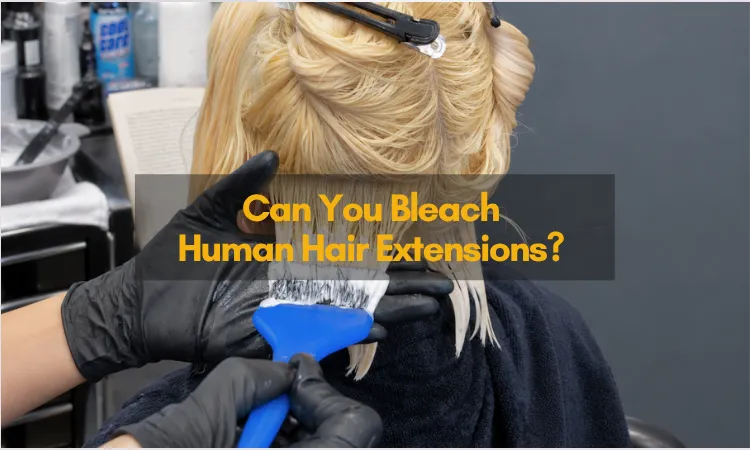
If a client asks for platinum blonde and your stock is dark brown, you can either lighten the hair yourself or reorder in a lighter shade. So, can you bleach human hair extensions without ruining the bundle? Yes, some human hair extensions can be bleached, but it is often not recommended: bleaching can permanently weaken the hair, and finished extension brands may prohibit it. First check the manufacturer’s instructions and ask a qualified colorist to assess and strand-test the exact product. Standard hair bleach is not suitable for synthetic extensions.
Can You Bleach Human Hair Extensions? The Short Answer
Before you open a tub of lightener, it helps to know what the answer depends on. Can you bleach human hair extensions of every type? No, and the rest of this guide shows where the line sits.
Human hair extensions are real strands that can be made into wefts, tapes, tips, or clip-in sets. Because they contain melanin and a cortex, some may respond to lightener, but intact cuticles alone do not prove that bleaching is safe. Prior coloring, coating, construction, and manufacturer restrictions matter.
Four facts shape every bleaching decision:
- Human hair can react to oxidative lightener, but results depend on its condition and previous processing. Standard human-hair bleach is not suitable for synthetic fibers.
- Extension lengths do not receive the same ongoing natural conditioning as hair attached to the scalp, so dryness after lightening requires careful maintenance.
- Previously colored or chemically treated extensions may lighten unpredictably, and some manufacturers prohibit additional bleaching.
- Lightening is permanent. You cannot return the strands to their original shade.
For wholesale buyers, the real question is a cost question. Is it cheaper to lighten a stock bundle, or to order the shade your client wants?
→ Not sure a bundle is real human hair before you test it? Here is the checklist we use: How to Tell If Hair Extensions Are Real Human Hair
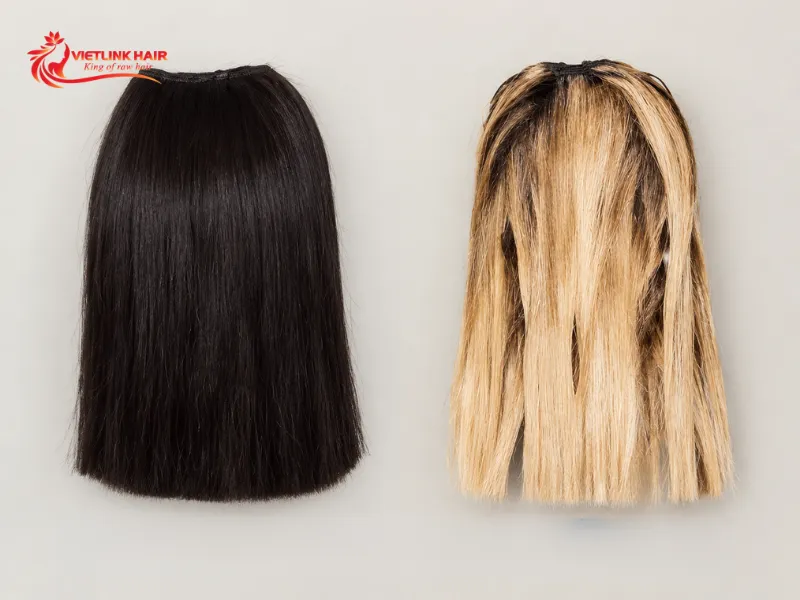
Which Human Hair Extensions Can You Bleach?
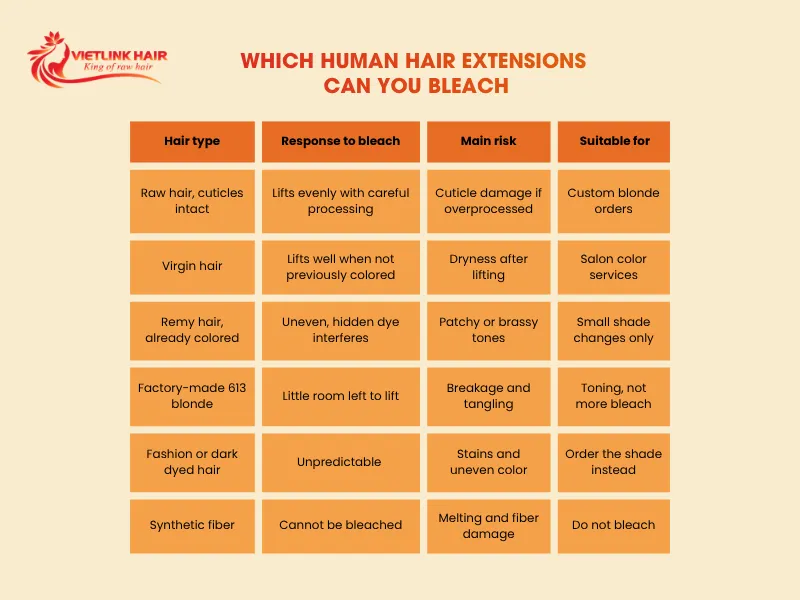
Processing history and extension construction are more useful than the label alone, so start by checking the exact product. Can you bleach human hair extensions from every supplier the same way? No, because origin and processing history change the result. The table below shows how common hair types respond to lightener.
| Hair type | Response to bleach | Main risk | Suitable for |
| Verified raw or virgin human hair | May lighten, but only if the supplier permits it and a professional strand test supports proceeding | Cuticle damage if overprocessed | Professional assessment before any custom lightening |
| Virgin hair with unknown processing records | Do not assume the seller’s virgin label confirms bleach suitability; verify and strand-test | Dryness after lifting | Professionally controlled coloring when approved |
| Remy hair, already colored | Processing history may limit further lightening or produce uneven tones | Patchy or brassy tones | Check manufacturer guidance; often avoid bleaching |
| Factory-made 613 blonde | Additional bleach is usually not advisable | Breakage and tangling | Consider approved toning only, after testing |
| Fashion or dark dyed hair | Unpredictable | Stains and uneven color | Order the shade instead |
| Synthetic fiber | Cannot be bleached | Fiber deterioration or discoloration | Do not bleach |
Cuticle condition matters for tangling and overall hair condition, but it does not guarantee even lift. Previous dyes, coatings, porosity, and the manufacturer’s processing instructions are also important. Remy hair vs virgin hair explains why cuticle alignment and chemical history must be checked separately.
→ Want to know why intact cuticles matter before any chemical process? Here is the full explanation: Cuticle in Hair: Expert Rules for Wholesale Success
Raw and virgin are not interchangeable marketing guarantees. A Remy product can also be virgin: Remy describes cuticle direction, while virgin describes the absence of prior chemical processing. Neither label replaces a verified product history or a strand test.
Factory Insight: A shiny finish is not proof that extensions are untreated or suitable for bleaching. Do not use blade-scraping tests to identify coatings. Instead, ask for written processing information and have a qualified colorist test an expendable strand for lift, strength, and texture changes.
How Bleaching Human Hair Extensions Changes the Hair Structure
Knowing what happens inside the strand explains why aftercare matters so much. Lightener combined with developer raises the cuticle, then oxidizes the melanin inside the cortex. The hair turns lighter, but it also becomes more porous.
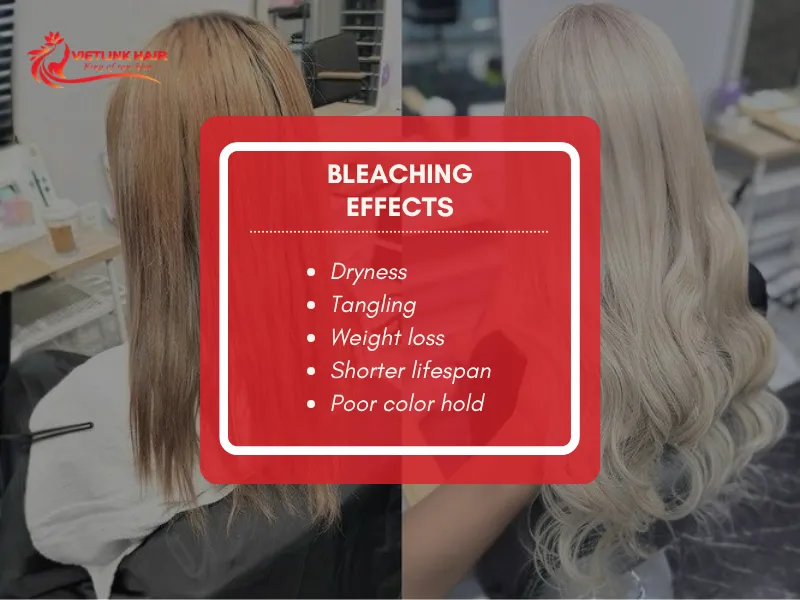
So, can you bleach human hair extensions and keep them in good condition? You can keep them usable, but the changes are real. Expect these effects after lightening:
- Dryness: Open cuticles lose moisture quickly, and extensions have no scalp oil to replace it.
- Tangling: Rough, porous strands catch on each other, especially at the ends.
- Weight loss: Lighter, thinner strands can make a weft feel less full.
- Shorter lifespan: Repeated chemical processing can reduce how long the hair remains wearable. See how long extensions last for the distinction between attachment wear and usable hair lifespan.
- Poor color hold: Porous hair releases toner fast, so tones fade sooner.
Dryness, roughness, breakage, and tangling can follow lightening; no aftercare routine can reverse severe chemical damage. Detangle gently from the ends upward while supporting the extension, and follow the product’s instructions for wet detangling. See hair extension aftercare tips for clients for maintenance guidance.
→ Dealing with knots after processing? Here is how to handle them: How to Detangle Hair Extensions: 10 Expert Secrets
How to Bleach Human Hair Extensions Safely, Step by Step
If a qualified colorist determines that a loose, specific human-hair product can be lightened, the following is a professional assessment workflow, not a universal or damage-free bleaching recipe. Brand rules differ: Luxy Hair advises against bleaching its extensions, while other suppliers may permit assessment by a professional colorist for selected human-hair products. Tape-in and pre-bonded constructions need extra caution. Do not expose tape tabs, clips, keratin bonds, or attachment seams to lightener. Follow both the hair supplier’s restrictions and the chemical manufacturer’s directions.
Prepare Your Tools and Run a Strand Test
Preparation prevents most mistakes, so gather everything before you mix. Use this checklist:
- Lightener powder and a low-volume developer
- A non-metal bowl, an application brush, and gloves
- A protected work surface and the tools required by the chosen color system
- Sulfate-free shampoo and a deep conditioner
- A post-color treatment recommended by the colorist for the product
- A product-compatible toner, only if the colorist determines it is appropriate
Check whether the supplier permits chemical lightening and whether the hair has been previously dyed. If lightening is permitted, a professional should test a small expendable strand and assess the dry result for excessive stretch, breakage, shedding, or loss of texture before considering a larger service. Follow the chemical manufacturer’s required safety and allergy precautions.
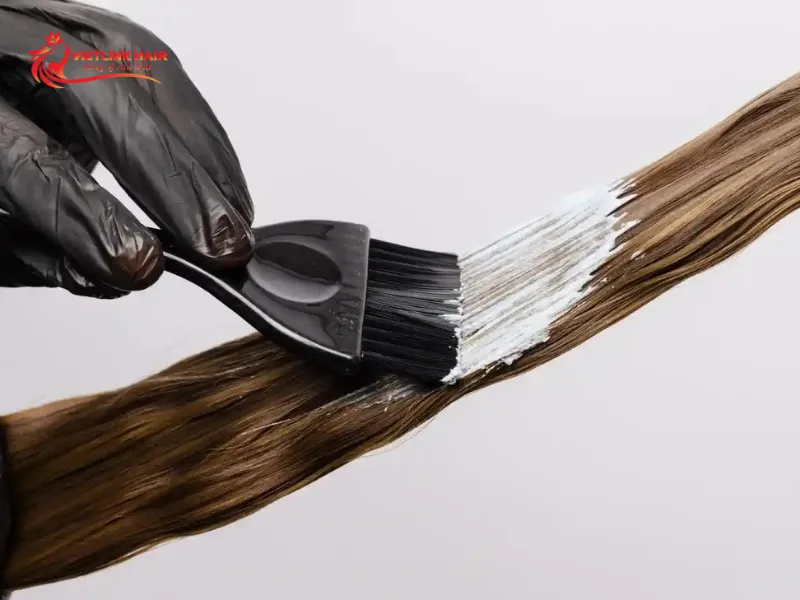
Mix, Apply and Monitor Processing
Only proceed if the extension manufacturer permits lightening and the strand test shows the hair remains in acceptable condition. A trained colorist should prepare a suitable formula according to the specific lightener’s instructions and keep product away from attachment points.
Application sequence and processing checks depend on the formula, starting condition, and hair construction; there is no single safe sequence for every bundle. Monitor the hair throughout, stop if it becomes overly stretchy or brittle, and never exceed the chemical manufacturer’s processing limits.
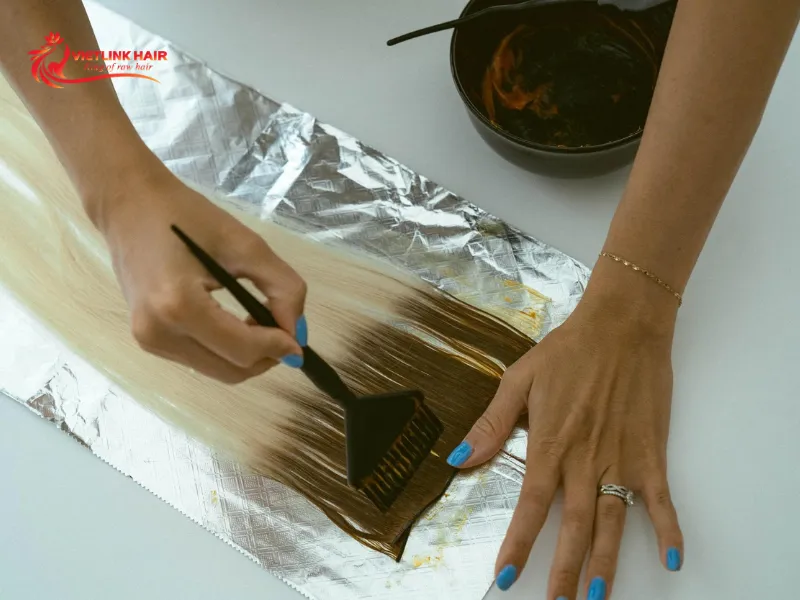
Rinse, Tone and Condition
Rinsing correctly protects the strands you just opened. Thoroughly rinse and cleanse according to the color manufacturer’s instructions. A professional may use a suitable toner after evaluating the resulting shade and condition; do not assume every yellow tone needs a violet toner.
Use only conditioning or bond-care products compatible with the specific extensions and attachment materials. Dry and assess the hair before styling; avoid excessive heat and discontinue use if strands break or mat.
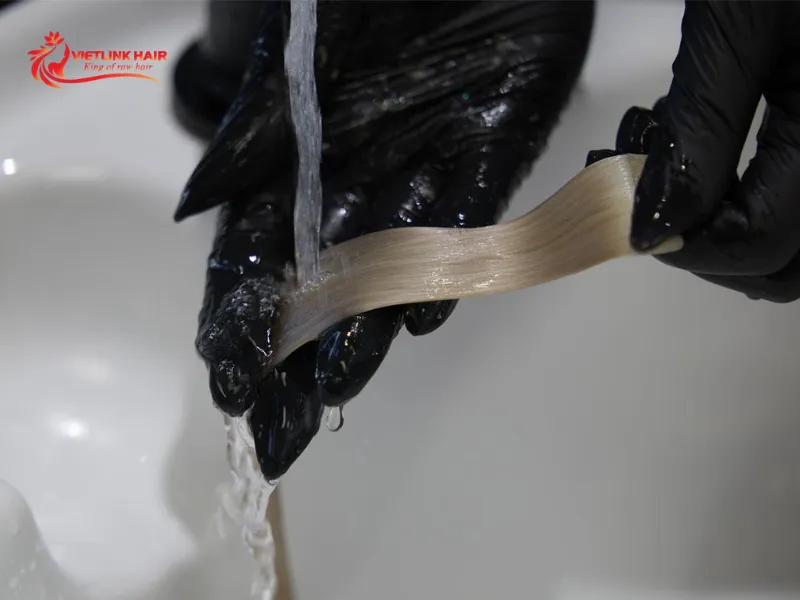
Bleach Human Hair Extensions at Home vs Factory Processing
Many buyers weigh a home lightening session against ordering factory lightened hair. Can you bleach human hair extensions at home and still match a factory shade? Sometimes, but consistency is the hard part. The comparison below covers the points that matter most for resale.
| Criteria | Lightening at home or in salon | Factory lightened hair |
| Shade consistency | Varies between bundles | May be matched to an approved reference, depending on supplier QC |
| Hair damage | Depends on skill and starting hair | Depends on starting hair, formula, process, and QC |
| Lead time | Depends on salon scheduling and processing | Production plus shipping time |
| Cost control | Labor and product costs; risk of failed color | Request an itemized quote and sample approval |
| Volume | Often suited to small or custom jobs | Depends on the supplier’s production and MOQ |
Each route has a clear advantage and a clear drawback. Lightening on site can help with occasional custom requests, but adds labor and risks uneven results or permanent damage. Ordering the intended shade may reduce the need for additional processing, although shade consistency, availability, lead time, and minimums must still be confirmed.
For wholesale inquiries, Vietlink Hair’s stated starting MOQ is 500 g; confirm product-specific minimums, available shades, order preparation time, and an itemized quotation with the team before ordering. Do not assume a given hair texture or color can safely be lightened to every target shade.
Factory Insight: Ask for a representative finished sample and record the target shade, texture, and treatment requirements. Retain it as a reference for subsequent order discussions, while allowing for reasonable batch variation.
Alternatives to Bleaching Human Hair Extensions
Bleaching is not the only way to reach a lighter look. These options reduce risk for the hair and for your inventory.
- Toner or dye over a light base: If the hair is already pale, a toner or gentle color can shift the tone. This is how most buyers dye hair extensions without a second round of lightener.
- Order the shade directly: Buying hair in the required finished shade avoids an additional bleaching step after purchase. Confirm how the supplier has already processed that shade.
- Blend highlight wefts: Mixing light and dark wefts creates highlights or balayage effects without treating any bundle.
- Gentle lifting only: If you want to lighten hair extensions without bleach, expect only a small change, especially on dark hair.
When you order blonde stock, fullness at the ends matters as much as shade. Thin ends show up clearly in lighter colors.
→ Want to know how drawn grades affect fullness before you order? Here is the full breakdown: What Is Double Drawn Hair?
Which Option Fits Your Business? Buyer Recommendations
The right choice depends on your order volume and your client base. Bleaching finished hair for resale adds processing risk and can make shade consistency difficult to control across batches. Use these scenarios as a starting point.
- If you run a salon with occasional blonde requests, ask a colorist to check whether the specific extensions can be lightened at all; pre-colored or bonded products may not be suitable. Keep the approved shade reference and have the colorist document the tested formula and outcome; a matching result on future bundles is not guaranteed.
- If you sell ready-to-wear blonde sets, ask the supplier about pre-lightened shades, available stock, and batch consistency rather than assuming a factory shade is always an exact match.
- If you manage a wig or extension brand, ask whether the supplier can quote on the required finished shades and any permitted private-label options. Confirm color capabilities, sample approval, and any product-specific minimums before ordering.
- If your budget is tight, compare the cost of wasted bundles against the price of ordering the shade. Failed tests add up quickly.
Not sure which starting shade or extension construction to request? Contact Vietlink Hair, a Vietnamese wholesale human hair supplier to discuss specifications and ask what options are currently available. Buyers can also learn about sourcing through a Vietnamese hair factory before comparing quotes.
Considering a color sample? Ask about sample options and confirm whether the requested shade, construction, and minimum order can be supplied.
FAQs
These are the questions buyers ask most often before they lighten a bundle. Each answer is short, so you can scan for the one you need.
Can you bleach black human hair extensions?
This question comes up when a client wants blonde from a dark base. Some untreated human-hair extensions may be lightened by a qualified professional, but many finished extensions are not suitable for further bleaching, even when their starting color is black. Dark hair lifts through several warm stages, so expect orange or yellow tones that need toning. Run a strand test first, because a full lift on dark hair stresses the strands the most.
Can you bleach human hair extensions at home?
Home bleaching of finished extensions carries a significant risk of irreversible damage and may breach supplier care instructions. Professional assessment is the safer choice; even a successful strand test does not guarantee the rest of a batch will behave identically. If you plan to resell the hair, the result must also match across bundles. For consistent shades in volume, factory-lightened, or custom-ordered hair is the safer route.
How can you lighten hair extensions without bleach?
Buyers ask this when they want to avoid chemical damage. A toner or color-depositing product can change the tone of an already light shade but cannot reliably turn dark hair blonde. Color remover affects some artificial dye pigments, not natural melanin, and may still damage processed extensions. If you need a clear jump in lightness, ordering the shade is more practical.
Can you dye hair extensions instead of bleaching them?
Dye is a lower-risk option for some jobs. You can dye hair extensions that are already light to adjust the tone or add a fashion color. Deposit-only color cannot turn dark hair blonde, and oxidative color may behave unpredictably on previously processed extensions. Test a small section first, because previous coloring changes how new color shows.
Can you bleach tape-in hair extensions?
Some tape-in products contain real human hair, but that does not make the adhesive panels safe to bleach. Lightener or developer may compromise tape tabs, and previously colored hair may become brittle or lift unevenly. Do not bleach tape-ins while installed. Check the manufacturer’s policy first; if a color change is permitted, have a trained stylist assess the removed hair and protect the attachments. In many cases, ordering the required shade is the lower-risk option. For attachment differences, see clip-in vs tape-in hair extensions.
Will bleaching or dyeing void my hair extensions warranty?
It may. Return, exchange, and warranty conditions vary by supplier and by product. Some brands exclude extensions that have been bleached, toned, or dyed; for example, Luxy states that treated sets are not eligible for return or exchange under its policy. Check the exact product terms in writing before chemical processing, and do not assume another brand follows the same rule.
How many times can you bleach human hair extensions?
Fewer is safer. Each lightening pass opens the cuticle further and reduces strength, and extensions cannot regrow. Many professionals avoid repeat lightening on the same bundle, and instead order a lighter base. There is no universally safe number of bleach sessions. If additional lift seems necessary, stop and seek guidance from an extension-experienced colorist rather than assuming a treatment can restore lost strength.
Need a Wholesale Quote for Human Hair Extensions?
Share your preferred starting shade, hair type, extension construction, quantity, and destination. Ask Vietlink Hair about available products, sample options, and an itemized quote before making coloring or purchasing decisions.

Pingback: Remy Hair vs Virgin Hair: 7 Differences You Should Know - Vietlink Hair
Pingback: How to Dye Hair Extensions at Home Safely
Pingback: Cuticle in Hair: Expert Rules for Wholesale Success