
Hair Extension Knowledge
Hand Tied vs. Machine Weft Hair Extensions: Which One for You?
A comfortable set of extensions starts with a weft that suits your natural hair and the fullness you want. In the hand tied vs machine weft comparison, both can create a natural finish with suitable products and skilled installation. This guide compares these hair extensions to help you discuss the right options with your stylist.
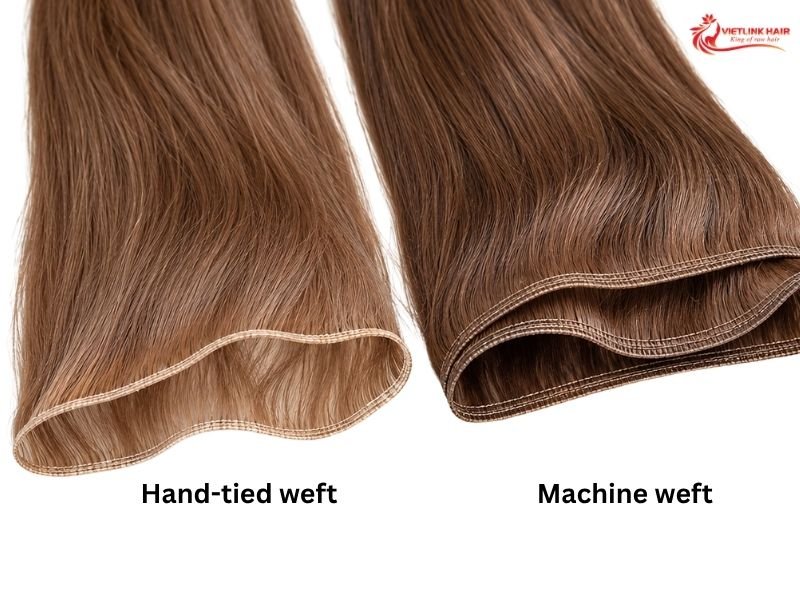
Hand-Tied vs. Machine Weft: Take a Look at Key Differences
A weft is a panel of extension hair joined along its top edge. These are typical differences between conventional hand-tied and traditional machine-sewn wefts. Do note that seam dimensions, track widths, and grams vary by product.
| Feature | Hand-tied weft | Machine weft |
| How the seam is made | Hair knotted by hand onto fine thread | Hair secured with machine stitching |
| Seam profile | Usually slim and flexible | Traditionally thicker; slim designs also exist |
| Typical density per track | Often lighter coverage; may need layering | Often fuller coverage; product dependent |
| Can it be cut? | Usually no (manufacturer-approved exceptions exist) | Generally yes – check edge-finishing instructions |
| Concealment | Fine seam can be easier to cover | Thicker seams need more natural hair coverage |
| Customization | Position, layer, or fold intact wefts | Trim track width and layer as appropriate |
| Typical fit | Fine strands with adequate density and strength | Medium-to-thick hair or fuller volume goals |
| Relative product cost | Often higher for comparable hair | Often lower for comparable hair |
How Are Hand-Tied and Machine Wefts Made?
Hand-tied and machine wefts describe how the extension panel is manufactured. (They do not, by themselves, identify the installation method or establish the quality of the hair used)
Hand-Tied Weft
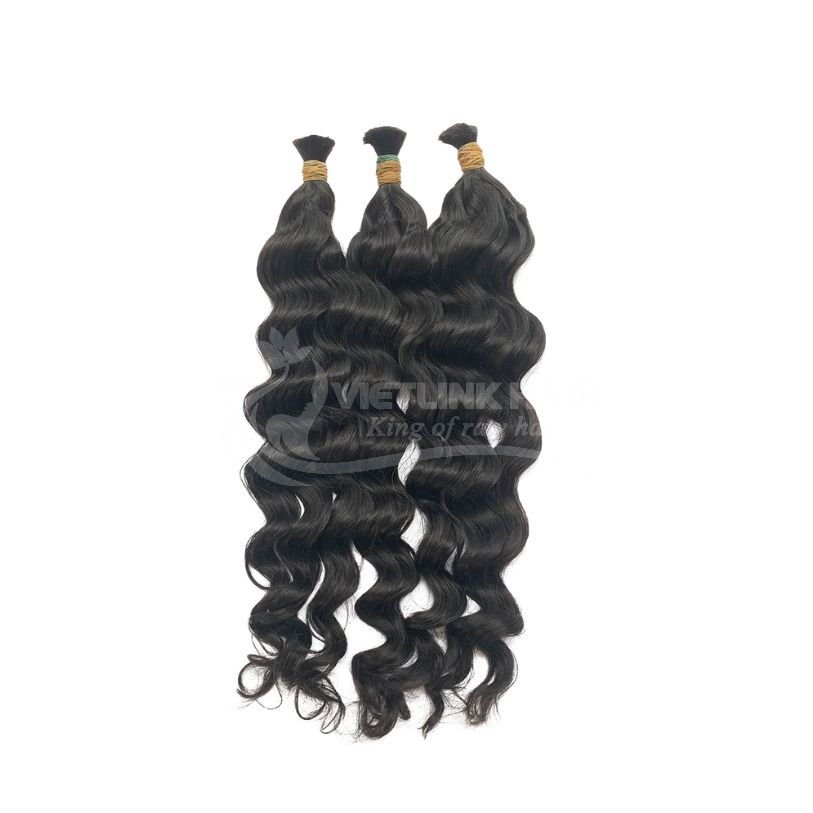
A hand-tied weft is made by knotting small groups of hair onto fine supporting thread. This produces a narrow, flexible seam that can sit discreetly beneath the natural hair.
Conventional hand-tied tracks should not be cut across their width: severing the supporting thread can release the knots and cause unraveling. Exceptions require explicit manufacturer guidance.
Many conventional wefts also have return hairs, the short root ends folded back near the seam. These may feel prickly for some wearers, depending on their length, finish, and placement, but they do not irritate everyone.
Machine Weft
A machine weft uses machine stitching to secure the hair along a continuous track. Traditional versions have a more substantial seam and can carry considerable hair density.
Stylists can generally cut suitable machine tracks to fit the planned row, following any instructions for securing the ends. Machine wefts can also have return hairs; these are not exclusive to hand-tied products.
Modern wefts vary considerably. Some newer manufactured designs use slim bonded or injected seams, so don’t treat them as identical to traditional stitched tracks. Always check the specific construction.
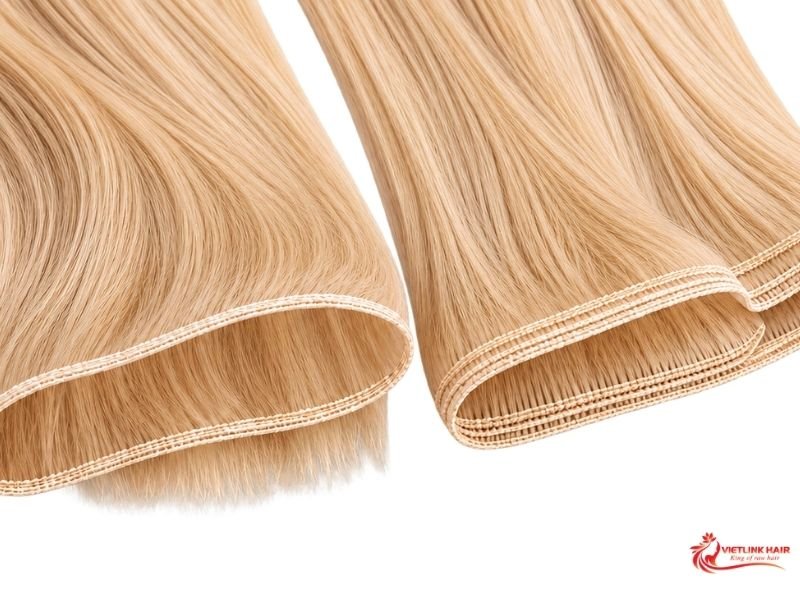
Hand Tied vs Machine Weft Pros and Cons
Neither construction wins every category. And the finished result depends on how the wefts work together within the installation.
Hand-Tied Weft Pros and Cons
Hand-tied wefts offer a fine seam, which is especially useful when visible bulk is a concern.
Pros
- Discreet profile: A slim track can be easier to conceal beneath suitable natural hair coverage.
- Flexibility: The fine seam follows the head’s contours without the stiffness of some traditional machine tracks.
- Adjustable blending: Stylists can combine intact wefts in different shades to build dimension and distribute fullness.
Cons
- Cutting restrictions: Conventional tracks cannot simply be trimmed wherever the row ends.
- Layering requirements: Several lighter wefts may be needed for the intended fullness. Stacking them also increases the overall seam profile.
- Higher product cost: Hand production typically adds labor, although hair quality and brand positioning also influence pricing.
Machine Weft Pros and Cons
Traditional machine wefts are practical when substantial coverage and adjustable track width are priorities.
Pros
- Cuttable width: Suitable tracks can be sized to the installation rather than relying entirely on folding.
- Fullness options: Denser products can provide substantial volume without stacking numerous individual wefts.
- Sturdy construction: A well-made stitched seam supports handling and reuse with appropriate care.
- Value: Comparable machine wefts often have a lower purchase price than hand-tied alternatives.
Cons
- More visible bulk: A thick track may show beneath sparse coverage or around exposed partings.
- Less flexibility: Some traditional seams feel firmer, especially where tracks overlap.
- Variable finishing: Cutting instructions and edge security differ between products; cuttable does not mean every seam is shed-proof.
Which Weft Suits Your Hair and Volume?
The most useful machine weft vs hand tied comparison starts with your own hair.
If You Have Fine or Low-Density Hair
A slim hand-tied seam may be easier to conceal, but fine hair still needs enough strength and coverage to support the installation. Your stylist should assess the intended attachment area, existing breakage, and how you usually part or tie back your hair.
Avoid assuming that multiple lightweight wefts remain lightweight once stacked. If your hair is actively thinning or your scalp is irritated, seek a dermatologist’s advice before adding extensions.
If You Have Thick Hair or Want More Volume
Traditional machine wefts can be useful when a denser panel is needed to blend with a full natural baseline. Their cuttable width also helps customize coverage across the head.
Hand-tied wefts remain an option for thick hair, but reaching the same fullness may require more pieces. Ask your stylist to assess the completed row, including overlap and folded ends.
Compare the actual products
Ask your stylist or supplier for:
- Seam height and thickness in millimeters.
- Grams per weft.
- Track length across the weft.
- Number of wefts and rows planned.
- Total installed weight after trimming.
For a fair density comparison, divide grams by track length to compare grams per inch, using products with the same hair length.
Installation, Maintenance, and Cost
Beyond the weft itself, installation, upkeep, and total cost all affect which option works better for you.
Installation
Both types can be sewn onto an appropriate foundation, such as a beaded row or braided base. “Hand-tied” does not mean the extensions are individually knotted onto your natural hair.
A stylist can trim a suitable machine track to width. Conventional hand-tied wefts are positioned, layered, or folded intact according to the method; folded ends need careful placement to manage bulk.
Placement and tension matter for either type. To prevent damage from extensions, ask the stylist to loosen a style that causes pain or feels too tight.
Maintenance
Follow the specific installation’s move-up or reinstallation schedule. For example, hand-tied move-ups can take four to six weeks, while machine-weft reinstallation can take six to eight weeks.
Clean the scalp, detangle gently while supporting the attachment area, and dry the roots and wefts thoroughly. Arrange an earlier assessment for slipping, matting, or discomfort.
The Cost
When comparing hand tied extensions vs machine weft quotes, separate the hair price from installation and ongoing appointments. Hand tying adds production labor, but length, grams, processing, color, and hair quality also affect cost.
Compare the same length and amount of comparable-quality hair, then include fitting, move-ups, removal, and replacement. A cheaper pack is not necessarily a cheaper complete installation.
Read more: How to Detangle Hair Extensions: 10 Expert Secrets
Frequently Asked Questions
Common questions about hand-tied and machine wefts.
Do Machine Wefts Feel Heavier Than Hand-Tied Wefts?
A dense machine weft may feel heavier than one light hand-tied piece. Still, the finished feel depends on total installed grams, seam bulk, placement, and weight distribution. Several hand-tied wefts can also feel substantial.
Can Wefts Damage Natural Hair?
Yes. Either type can contribute to breakage or traction-related hair loss when the installation pulls excessively on natural hair. Appropriate weight, careful placement, professional removal, and timely maintenance help reduce avoidable stress.
Why Do Hand-Tied Wefts Usually Cost More?
Hand tying involves skilled manual work to create a fine, consistent seam. That labor can increase production costs compared with machine sewing.
What If I Want a Thin Weft That Can Also Be Cut?
Ask about a genius-style or hybrid weft designed for cutting. These products can combine a slim seam with adjustable track width.
What Is the Healthiest Hair Extension Method?
Suitability depends on hair strength, scalp condition, attachment tension, and wearing habits. For existing thinning or scalp problems, seek a dermatologist’s assessment first.
Do Weft Extensions Cause Hair Thinning?
They can when sustained pulling leads to traction alopecia, but thinning is not inevitable for every wearer. Stop using an installation that causes pain or irritation. New thinning, broken hairs around attachment points, or a receding hairline warrant dermatological assessment.
In Summary
Compare actual seam dimensions and installed grams with your stylist before deciding. Follow our blog for more practical hair guides and care tips to help you make confident hair extension choices.
