
Hair Extension Knowledge
Cuticle in Hair: Expert Rules for Wholesale Success
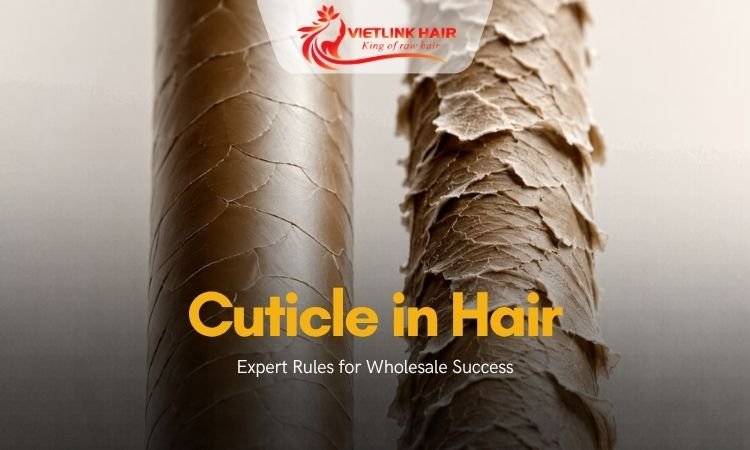
The cuticle in hair is the outer protective layer of the hair shaft. Its condition influences smoothness, friction, tangling and response to processing. For wholesale buyers, cuticle condition is one factor in evaluating extension quality alongside weft construction, processing history and care. This guide explains the structure, the main causes of damage, and the practical checks you can run on samples before placing a bulk order.
What Is Cuticle in Hair and Why Does It Matter?
Before comparing suppliers, it helps to be clear about what this layer actually is.
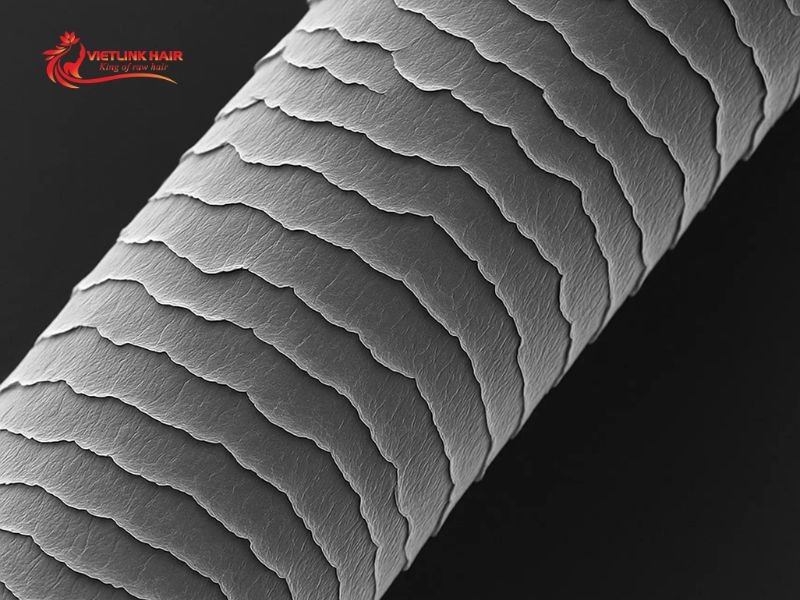
The hair cuticle is the outermost protective layer of the hair shaft. It consists of flattened, hardened keratinized cells that overlap like roof tiles or fish scales. The surface helps shield the cortex from abrasion and environmental exposure, reduces friction between strands, and affects shine, smoothness, tangling and water movement. It is a protective barrier, not a waterproof seal.
Studies commonly describe around six to eight overlapping cuticle cell layers in healthy hair, although published ranges and individual strands vary. The exposed scale edges point toward the hair tip, giving each strand a natural root-to-tip orientation. Keeping that orientation consistent matters when hair is sorted and made into extensions or wigs.
In wholesale, understanding cuticle quality helps buyers protect margins and brand reputation. It affects three key areas:
- Complaints: Tangling and matting risks.
- Product lifespan: Quality retention after washing.
- Consistency: Uniform quality across batches.
How Cuticle in Hair Fits Into the Strand Structure
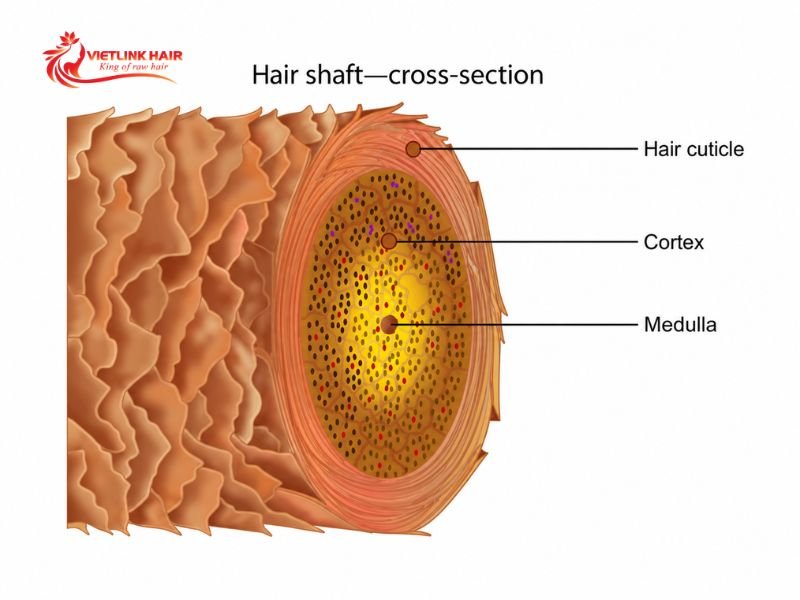
A strand is built from three layers, and each one plays a different role.
- Cuticle: the outer layer of overlapping keratin cells. It protects the interior, reduces friction and reflects light, which creates shine.
- Cortex: the largest part of the strand. It contains keratin fibers and melanin pigment, and it drives strength, elasticity and color.
- Medulla: the central core. Its structure is loose, and it is not always clearly present, though it shows more often in thicker strands.
Of the three, the cuticle is the first to meet the outside world, so it takes the first hit from brushing, styling and chemical work. When it weakens, the cortex underneath becomes easier to damage. That relationship is why buyers who understand cuticle in hair ask sharper questions about processing.
The cuticle does not create the hair’s natural pigment: melanin in the cortex is responsible for color. However, surface damage and increased porosity can affect how processed hair takes up and retains artificial color. Cortex condition, surface lipids, processing history and aftercare also contribute to the final result.
Healthy vs Damaged Cuticle in Hair
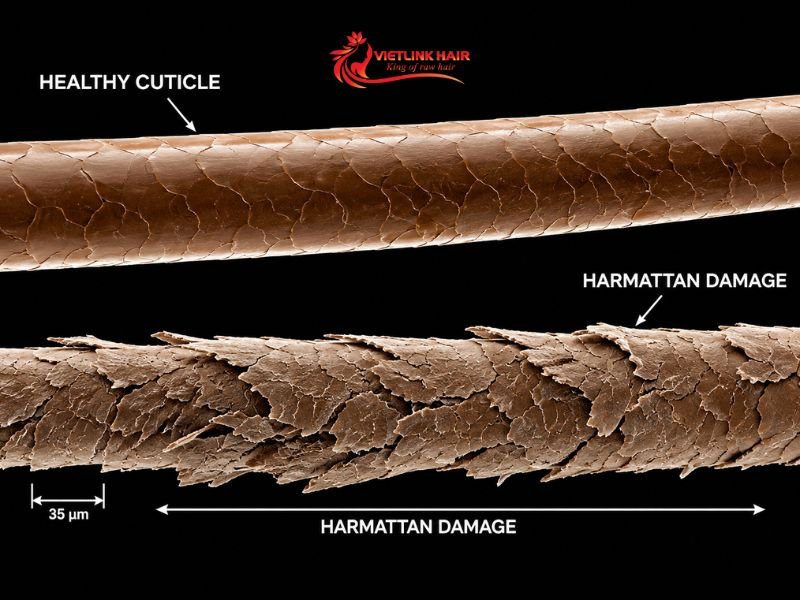
The difference between the two conditions shows up in both look and handling, as the table below shows.
| Criteria | Healthy cuticle | Damaged cuticle |
|---|---|---|
| Surface | Fairly flat and even | Rough, lifted, or cracked |
| Shine | Usually higher | Often reduced |
| Friction between strands | Lower | Higher |
| Moisture retention | Usually more stable | May lose water faster |
| Protection of the cortex | Stronger | Weaker |
| Overall handling | Smooth and easy to comb | Dry, tangled and prone to breakage |
These signs are indicators, not proof. Shine alone cannot confirm the state of the cuticle in hair, because coatings and finishing products can imitate a smooth surface. Softness has the same limit. For a stronger assessment, buyers need repeatable sample testing, clear supplier information and, where structural confirmation is required, microscopy.
What Damages Cuticle in Hair
Damage rarely comes from a single event, so it helps to look at the main sources one by one.
- Chemical treatment: bleaching, coloring, perming, and relaxing change protein structure, the lipid layer, and the surface. Repeated or aggressive processing raises the level of damage.
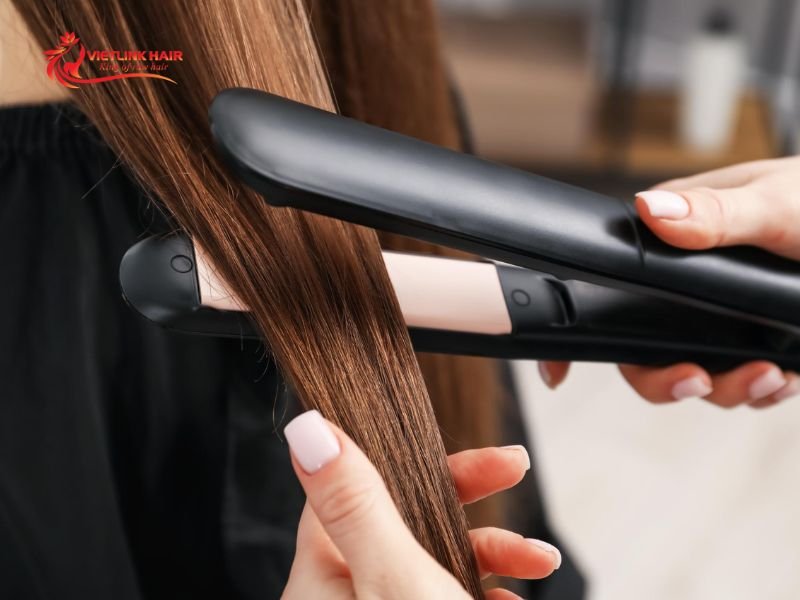
- Heat styling: high heat from flat irons, curling tools and dryers can dry out hair and weaken its structure. The risk depends on temperature, contact time, and the starting condition of the hair.
- Mechanical friction: rough brushing, pulling through knots, rubbing with a towel, and tight styles with repeated tension all wear the surface down.
- Environment: UV exposure, seawater, and chlorinated pool water weaken strands over time.
- Unsuitable products and processes: strongly alkaline products or poorly controlled chemical steps can swell the cuticle. That said, not every sulfate product harms the cuticle, since the effect depends on the formula and how it is used. See also what to check before bleaching human hair extensions.
For extension suppliers, the same causes apply to cuticle in hair during production. Acid baths, bleaching, dyeing, and heavy coating can all change the surface before the hair ever reaches a buyer. This is why processing history deserves as much attention as appearance.
How to Keep Cuticle in Hair Healthy
No routine can keep the cuticle perfect forever, but a few habits slow damage and protect the surface for longer.
For natural hair and for extensions, these habits matter most:
- Wash gently: use a mild shampoo and lukewarm water, and avoid rough scrubbing on wet hair.
- Condition after washing: conditioner smooths the surface and lowers friction between strands.
- Detangle with care: start at the ends, work upward, and use a wide-tooth comb on wet hair.
- Limit heat: apply a heat protectant and set tools to the lowest temperature that gives the result.
- Space out chemical work: avoid stacking bleaching, coloring, perming, and relaxing in one visit.
- Protect from the environment: cover hair in strong sun and rinse after seawater or chlorinated water.
- Reduce friction during sleep: a silk or satin pillowcase or a loose braid limits rubbing.
- Trim regularly: removing split ends helps keep splits from spreading up the strand.
For more practical routines, see hair extension aftercare tips for clients and how to detangle hair extensions.
For wholesale buyers comparing fuller ends, double-drawn hair is a separate specification from cuticle alignment. Protecting the cuticle in hair also starts before the product reaches the customer. Store bundles in a cool, dry place away from direct sunlight, and keep them flat or loosely tied so strands do not tangle. Add a short care card to each order, since clear wash and heat guidance helps customers avoid the habits that cause dryness and tangling.
Cuticle and Hair Porosity: Related but Not the Same
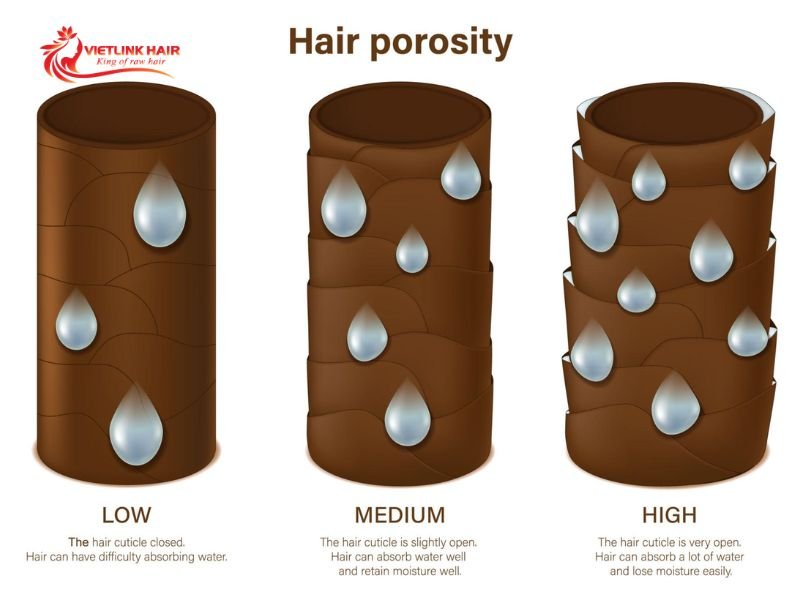
Cuticle condition is often mentioned together with porosity, so it is worth separating the two terms. Porosity describes how readily hair takes up and releases water. Cuticle condition and surface lipids influence this process, along with the internal structure of the strand. The common image of cuticles opening and closing like doors is an oversimplification: water, pH and chemical treatments can change the surface, but cuticle scales do not operate as controllable hinges.
- Low porosity: cuticle layers sit tightly, so water and products enter slowly. Hair may dry slowly or build up product.
- Medium porosity: hair absorbs and holds water in fair balance, which often makes styling easier.
- High porosity: hair absorbs water fast and loses it fast. It tends to turn dry and tangled when it is also damaged.
High porosity does not always mean a damaged cuticle, because natural structure plays a part. A smoother surface may reflect light more evenly, but gloss alone cannot prove cuticle integrity or color retention. Home tests such as dropping a strand into a glass of water are not reliable enough to settle the question.
Cuticle in Hair Extensions and Wigs: Alignment and Terminology
In extensions and wigs, the conversation shifts from care to sourcing, and direction becomes the key word.
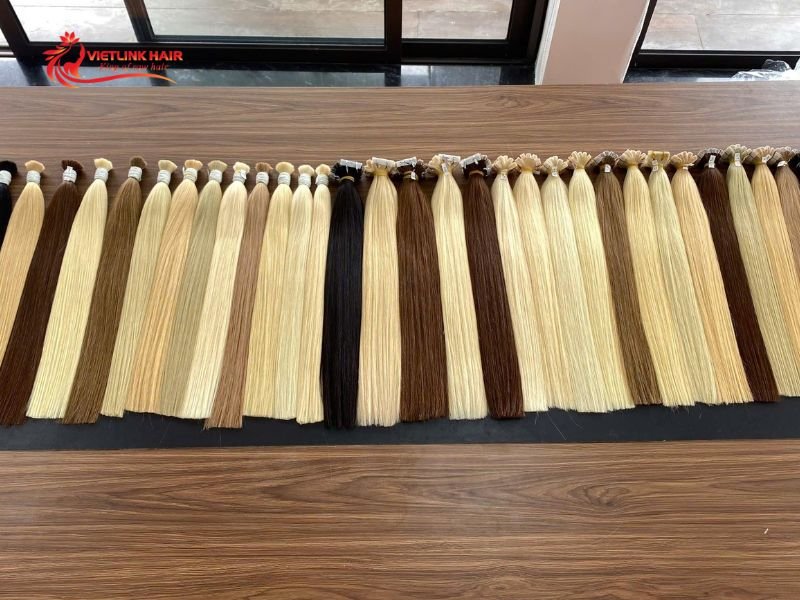
Cuticle-aligned hair is arranged so that the cuticle layers of all strands face the same direction, normally from root to tip. Think of fish scales: stroke with the scales and the surface feels smooth, stroke against them and it catches. Cuticle in hair behaves the same way when strands are mixed in opposite directions. Aligned strands slide past each other, which can reduce friction, tangling, and matting.
Alignment supports several practical outcomes:
- Less tangling: strands rub against each other in fewer opposing directions.
- Smoother combing: hair is easier to detangle during installation and styling.
- Better surface preservation: the cuticle stays in better shape when paired with suitable processing.
- Longer useful life: well-cared-for hair can keep its quality for more wear cycles.
Alignment is only one factor. Hair source, chemical processing, production technique, and storage also shape results. For practical expectations about wear and reuse, see how long hair extensions last.
| Criteria | Cuticle aligned | Not well aligned |
|---|---|---|
| Cuticle direction | Same direction | Mixed directions |
| Friction between strands | Usually lower | Can be higher |
| Tangling risk | Usually lower, other factors equal | Can be higher |
| Combing | Usually easier | May catch more often |
| Overall quality | Still depends on source and processing | Still depends on source and processing |
Suppliers also use several terms that overlap but do not mean the same thing:
- Raw hair: usually hair with little or no significant chemical processing, though the definition varies by supplier.
- Virgin hair: usually hair that has not been dyed or bleached, depending on the supplier’s standard.
- Remy hair: usually hair collected or processed so the strands keep the same cuticle direction.
- Cuticle aligned hair: emphasizes direction only and does not automatically prove the hair is raw or virgin.
A Remy label does not prove the hair is free of chemical treatment. A virgin label does not prove every cuticle is intact or perfectly aligned. For a closer comparison, see Remy hair vs virgin hair. Ask each supplier to define the term in writing before you print it on packaging.
Wholesale quality-check tip: Ask how strand direction is maintained during collection, sorting and packing. Compare more than one bundle after washing and detangling, and request written processing and batch specifications. Appearance alone cannot establish cuticle alignment.
Maintaining alignment can require additional collection and sorting controls. It may affect sourcing cost, but reduced complaints or returns should be assessed using actual product tests and the buyer’s own records.
How Wholesale Buyers Can Check Cuticle in Hair Quality
A short, structured sample test gives better data than a first visual impression, so follow the checks below in order.
- Check combing and tangling: comb gently from the tips up to the roots and watch for catching, clumping, or unusual knots.
- Check shedding: note how much hair comes out during combing and normal handling. For extensions, also inspect the weft, bond or tip depending on the product type.
- Check surface and uniformity: look at smoothness, dryness, split ends, and consistency across bundles. Shine alone does not prove an intact cuticle.
- Ask for origin and processing details: confirm whether the hair is raw, virgin, or processed, whether it was dyed or bleached, and how alignment is controlled.
- Test samples under real use: wash, dry, comb, and style samples the way customers would, using a documented, repeatable number of cycles. Compare several bundles from one lot and, if possible, across lots.
If you need to confirm structure at the microscopic level, a microscope or a lab test can do it. Visual checks only give early signals.

Before you place an order, send the supplier a short list of questions:
- Where is the hair collected, and how is it sorted?
- What chemical steps, if any, are used in production?
- How is cuticle direction controlled and checked?
- What quality control records are available for each lot?
- How are lot-to-lot differences handled if they appear after delivery?
Strong answers are specific, such as naming the sorting step or describing how reversed strands are removed. Weak answers repeat phrases like premium quality without any detail. If replies stay vague after a follow-up, treat that as a signal to slow down.
Consistency matters as much as the sample itself. A strong sample followed by uneven production is a risk worth planning for, especially when judging cuticle in hair across repeat orders.
Priorities depend on your business model:
-
Salons: Check tangling after washing and bundle alignment.
-
Wig retailers: Assess shine, softness, and surface finish.
-
Private labels: Verify quality claims in writing.
-
Budget buyers: Balance testing costs without compromising shedding checks.
Can Damaged Cuticle in Hair Be Restored?
The short answer is that physical damage cannot be fully reversed, but the surface can be improved, and further damage can be limited.
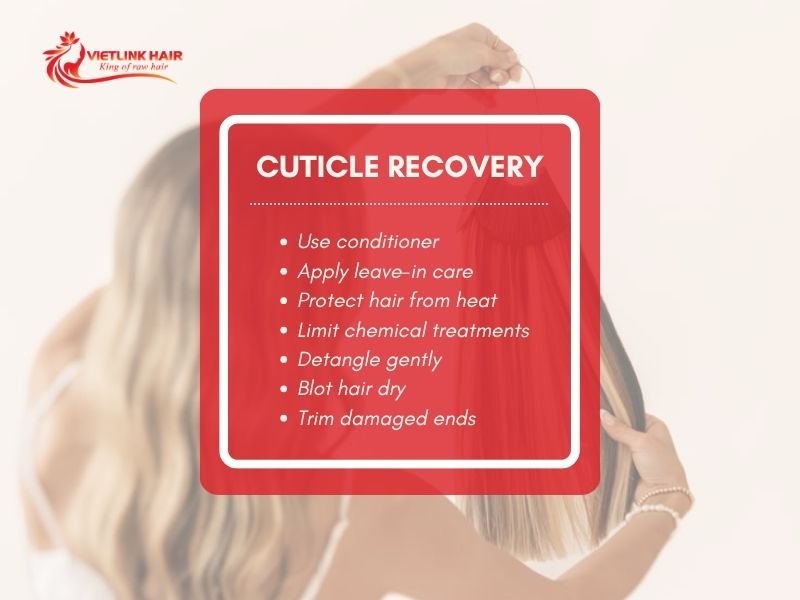
A cuticle that has been physically damaged does not regenerate like living tissue. Care routines can still improve how hair looks and handles. These steps are the most useful:
- Use conditioner: it reduces friction and makes hair easier to comb.
- Add leave-in care: serums and oils can smooth the surface for a while.
- Protect from heat: use a heat protectant and lower the styling temperature.
- Limit chemical work: avoid bleaching, coloring, perming, or relaxing too often.
- Detangle gently: work from the ends upward with a suitable comb.
- Blot, do not rub: use a soft towel to absorb water.
- Trim heavy damage: split or broken ends may need to be cut off.
Silicones, oils, and film-forming ingredients can make hair look smoother and shinier. That effect is cosmetic and does not rebuild lost cuticle. This matters when judging cuticle in hair on a sample, because a coated surface can hide damage until the first wash.
Common Mistakes When Reading Cuticle Claims
Even experienced buyers can misread quality claims, so these four mistakes are worth avoiding.
- Judging by shine alone: coatings and finishing sprays can create shine on a surface that has already lost cuticle layers.
- Treating Remy as proof of purity: the label points to direction, not to processing history.
- Testing one bundle: a single bundle cannot show variation inside a lot, so open several.
- Skipping the wash test: many surface treatments fade after washing, and that is when real behavior appears.
Each of these mistakes comes from relying on first impressions. A written test routine removes most of them, and it gives your team a shared standard when new staff handle sampling. Over time, the records also help you compare suppliers on equal terms.
Cuticle in Hair FAQ for Wholesale Buyers
These answers cover the points buyers usually want settled before ordering.
Does Shiny Hair Mean the Cuticle Is Intact?
Not necessarily, and coatings are the main reason. Silicone and other finishing products can create shine on a damaged surface. Wash a sample several times to see the real condition.
Is Cuticle Aligned Hair the Same as Raw or Virgin Hair?
No. Alignment describes strand orientation, while raw and virgin are trade terms generally used to describe processing history. A supplier can offer one without the other, so confirm each claim separately.
Does the Hair Cuticle Open and Close?
Not like a mechanical gate. Moisture and chemical treatments can change the cuticle surface and the way water moves through the fiber, but the scales are not actively opening and closing on command. Conditioning products may improve feel and reduce friction without restoring missing cuticle cells.
Can a Supplier Prove Cuticle Alignment?
Proof comes from a mix of sample testing, process documentation, and, when needed, microscope inspection. A written explanation of how direction is controlled is a good starting point. Repeated tests across lots then show whether the process holds up.
Conclusion
Cuticle condition and alignment affect friction and tangling, but sourcing decisions should also consider processing history, extension construction and repeatable sample performance. Test samples and verify supplier claims before bulk orders.
Before committing to a bulk order, define your specifications, confirm the supplier’s documentation, and test samples against your intended use. Ask Vietlink Hair, a Vietnamese wholesale human hair supplier, about current product specifications and how to evaluate samples before placing an order. Buyers exploring factory sourcing can also review our Vietnamese hair factory overview.
Follow Vietlink Hair on Facebook.
Need Human Hair Specifications for Wholesale Sourcing?
Share the hair type, length, quantity and quality requirements you are evaluating. Ask Vietlink Hair for current product details and an itemised quotation before ordering.

Pingback: Super Double Drawn Hair: Definition, Benefits & Differences
Pingback: 12 Wholesale Hair Vendors in Los Angeles Worth Comparing
Pingback: How to Detangle Hair Extensions: 10 Expert Secrets