
Hair Care
How to Detangle Hair Extensions: 10 Expert Secrets
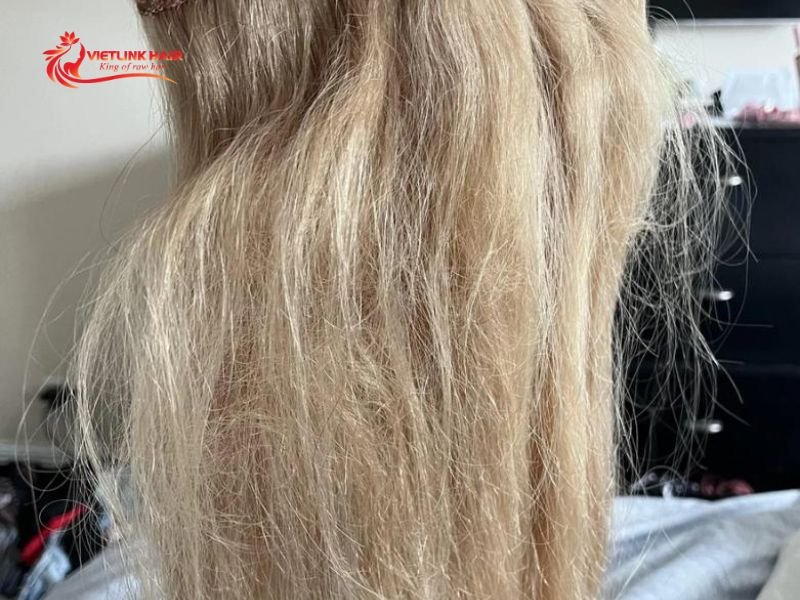
Tangled hair extensions can quickly turn a smooth hairstyle into a frustrating maintenance problem. Knots, dry ends, and matting near attachment points can make brushing difficult and may cause unnecessary shedding or breakage. For salon owners and hair extension retailers, repeated tangling complaints can also affect customer satisfaction and product returns.
Understanding how to detangle hair extensions starts with identifying the hair type, attachment method, and knot severity. Human hair extensions, synthetic fibers, curly textures, and installed extensions do not all respond to the same tools or products.
This guide explains the tools, techniques, and maintenance practices that help loosen tangles while protecting hair quality. It also covers common mistakes and practical considerations for salons and wholesale buyers.
Why Do Hair Extensions Get Tangled?
Before choosing a detangling method, it helps to understand why knots form. Tangling usually results from several factors rather than a single problem.
- Dryness and friction: Extension hair does not receive natural scalp oils along its lengths. Friction against clothing, pillows, and neighboring strands can make the hair feel rough and increase tangling.
- Cuticle condition: Damaged or raised cuticles can cause strands to catch on one another. Cuticle alignment may also influence how smoothly strands move.
- Product buildup: Residue from styling products, conditioners, and environmental minerals can make extensions feel coated or difficult to manage.
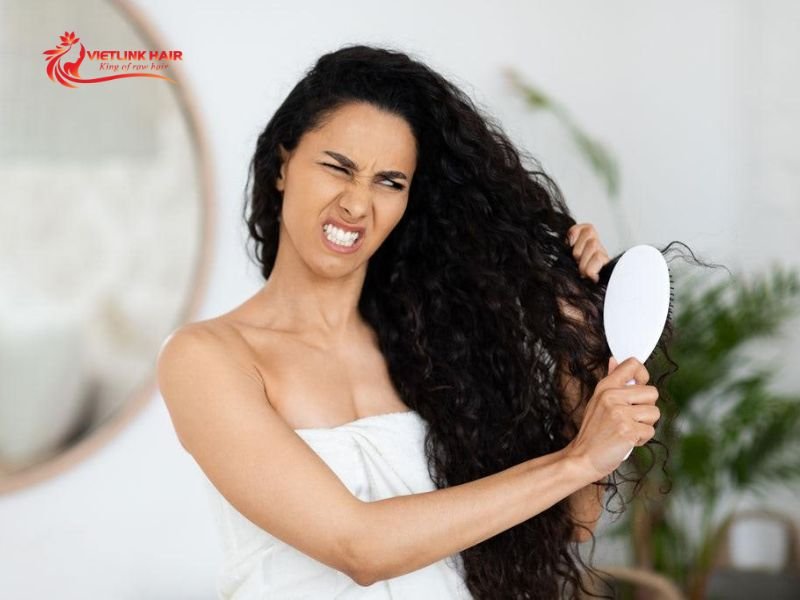
- Incorrect brushing: Starting at the roots and pulling downward can tighten existing knots instead of releasing them.
- Poor storage: Loose extensions stored in crowded drawers or damp spaces can become tangled before their next use.
- Attachment-related matting: Shed natural hairs may become trapped around tape bonds, beads, or sew-in tracks, creating knots near the scalp.
Best Tools for Detangling Hair Extensions
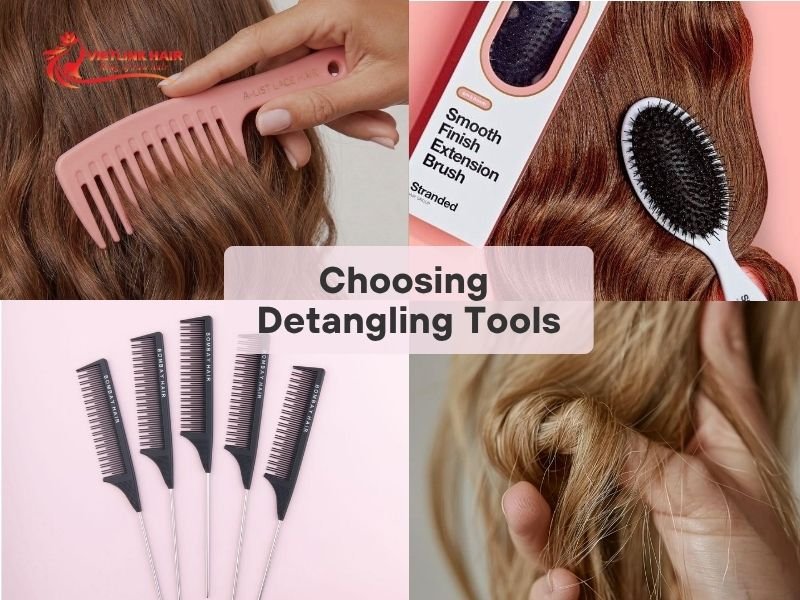
Choosing the correct tool makes it easier to release knots without applying excessive force. When learning how to detangle hair extensions, the best option depends on the hair texture, attachment method, and condition of the extensions.
1. Wide-Tooth Comb
A wide-tooth comb separates strands gradually and allows you to work through individual knots with greater control.
It is useful for loose tangles, thicker sections, and many curly or wavy textures. However, it may not be sufficient for dense matting without first loosening the knots by hand.
2. Extension-Friendly Brush
A brush designed for extensions may have flexible bristles or a construction intended to reduce snagging around compatible hair lengths and attachment points.
Use it gently on suitable straight or wavy extensions. Avoid dragging the brush across exposed tape bonds, clips, or sewn wefts.
3. Fingers for Curl Preservation
Finger detangling is useful when preserving the definition of curly extensions is important. If you want to know how to detangle hair extensions with tight curl patterns without causing frizz, finger separation is essential. Apply a compatible conditioning product when appropriate, then gently separate the strands in small sections.
4. Pintail Comb for Sectioning
A pintail comb helps create clean sections and can assist with carefully separating small, accessible knots. Its pointed end should not be forced into dense mats or used close to the scalp.
| Tool | Main advantage | Limitation | Suitable use |
| Wide-tooth comb | Controlled separation | Slower on dense knots | Loose tangles and textured hair |
| Extension-friendly brush | Efficient for longer lengths | Can snag attachment points if misused | Compatible with straight or wavy extensions |
| Fingers | Precise, gentle handling | Time-consuming | Curly hair and localized knots |
| Pintail comb | Accurate sectioning | Pointed end can damage hair | Parting and careful knot separation |
The key is not to choose the most expensive tool. Instead, select one that matches the texture and allows you to work without force.
How to Detangle Hair Extensions Step by Step
Once you have the appropriate tools, follow a controlled process. The objective is to release knots gradually while minimizing friction, shedding, and tension on the attachment system.
Step 1: Prepare the Hair Extensions
Start by identifying the extension type and checking where the knots have formed.
If you use clip-ins, remove each weft and place it on a clean, flat surface. This allows you to work without pulling on your natural hair.
For tape-ins, sew-ins, or other installed methods, separate the natural hair into manageable sections. Keep the attachment points accessible without pulling or twisting them.
Check for loose wefts, damaged bonds, or compact matting near the scalp before proceeding.
Step 2: Apply a Suitable Detangling Product
A compatible detangling spray or lightweight leave-in conditioner can improve slip and help strands move past one another.
For human hair extensions, choose products according to the hair’s condition and the manufacturer’s care instructions. Use only products suitable for the extension material.
Be particularly careful with tape-in and bonded extensions. Heavy oils and conditioners near adhesive attachment points may affect the bond, depending on the formulation.
Apply a small amount first, distribute it through the tangled lengths, and add more only if needed. Excessive product can leave residue that makes future maintenance more difficult.
Step 3: Separate Knots with Your Fingers
Before using a comb, gently separate loose strands around the knot with your fingers.
Hold the hair above the tangled area to stabilize it. Use your fingertips to loosen the outer edges instead of pulling the knot apart in one movement.
If the hair is tightly compacted, work on a smaller portion at a time. Stop if the knot does not release with gentle pressure, especially when it is close to an attachment point.
Step 4: Work from the Ends Upward
This is the central technique for learning how to detangle hair extensions without unnecessary pulling.
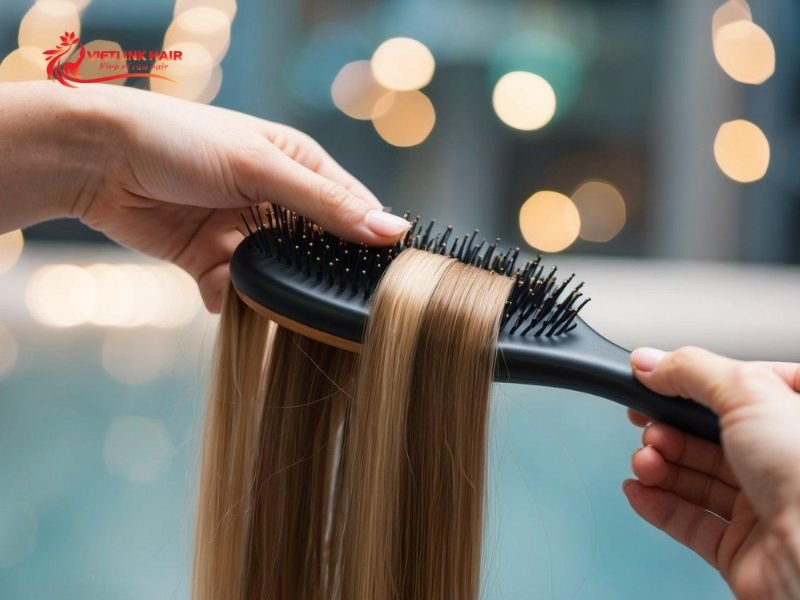
Begin at the bottom few centimeters of the hair. Remove the small knots first, then gradually move upward toward the mid-lengths and roots.
Hold the section just above the knot with one hand while using the other to comb through it. This helps reduce the force transferred to the extension weft or natural hair.
Do not start at the roots and brush directly to the ends. That movement can push loose tangles together and tighten them into larger knots.
Step 5: Wash and Condition Severely Tangled Extensions
If product buildup or dryness makes detangling difficult, washing may help. However, not every tangled extension needs to be washed immediately.
For removable human hair extensions, follow the manufacturer’s washing instructions. Wet the hair carefully, apply a suitable conditioner, and work through manageable sections while the product provides slip.
Avoid rubbing the hair together, twisting it into a bundle, or piling it on top of itself. These actions can create additional tangles.
For installed extensions, do not soak or manipulate the attachment areas unnecessarily. Follow the maintenance instructions for the specific method, and seek professional help if severe matting develops near the scalp.
Step 6: Dry and Store the Extensions Properly
After washing, gently squeeze out excess water with a soft towel rather than rubbing the hair.
Use an appropriate detangling method while conditioning or drying, depending on the fiber type and manufacturer’s instructions. Human hair extensions should be dried thoroughly before storage.
For removable wefts, lay them flat or hang them in a suitable storage area where the hair can remain separated. Keep the extensions away from dust, excessive moisture, and direct heat.
Do not store damp extensions in a closed bag, as retained moisture can affect the hair and extension base.
How to Detangle Different Types of Hair Extensions
Although the basic principles remain similar, attachment methods and fiber types affect which techniques are appropriate.
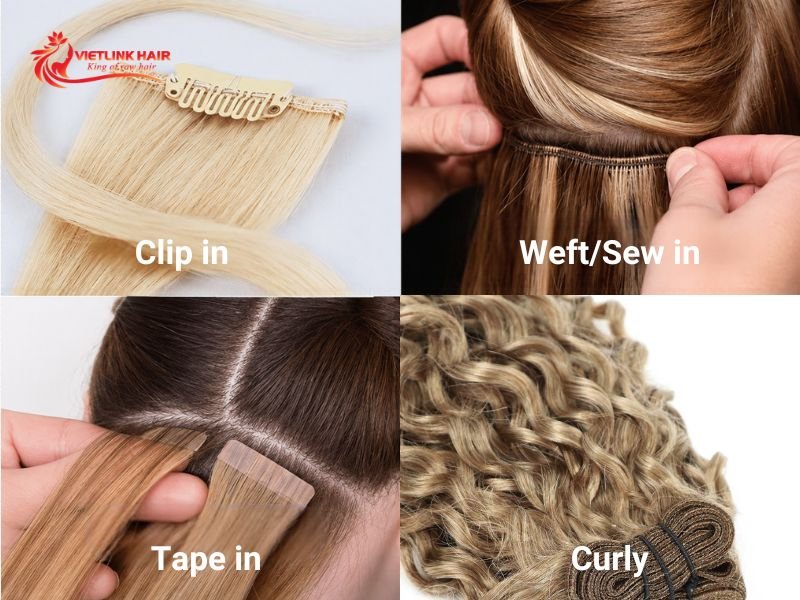
Clip-In Hair Extensions
Clip-ins are removable, so they are generally easier to detangle separately from natural hair.
Open the clips, remove each weft gently, and support the hair near the base while working through knots. Keep the clips away from the comb’s path to avoid snagging.
Tape-In and Sew-In Hair Extensions
Installed extensions require more attention because excessive pulling can affect both the extension and the wearer’s natural hair.
For tape-ins, avoid placing oily products near adhesive bonds unless the product is specifically approved for that purpose. For sew-ins, support the hair while detangling near the weft to minimize stress on the stitching and natural hair.
If shed hair has formed a dense mat around the attachment points, arrange a professional assessment instead of forcing a brush through the area.
Curly and Wavy Hair Extensions
Curly textures need a technique that respects their curl pattern.
Finger detangling or a suitable wide-tooth comb is often helpful. A compatible conditioner can provide slip, making it easier to separate individual strands.
Dry brushing may disrupt curl definition and increase frizz in some textures. If the curls become stretched or lose their shape during detangling, adjust the technique and product rather than applying more force.
Human Hair vs. Synthetic Extensions
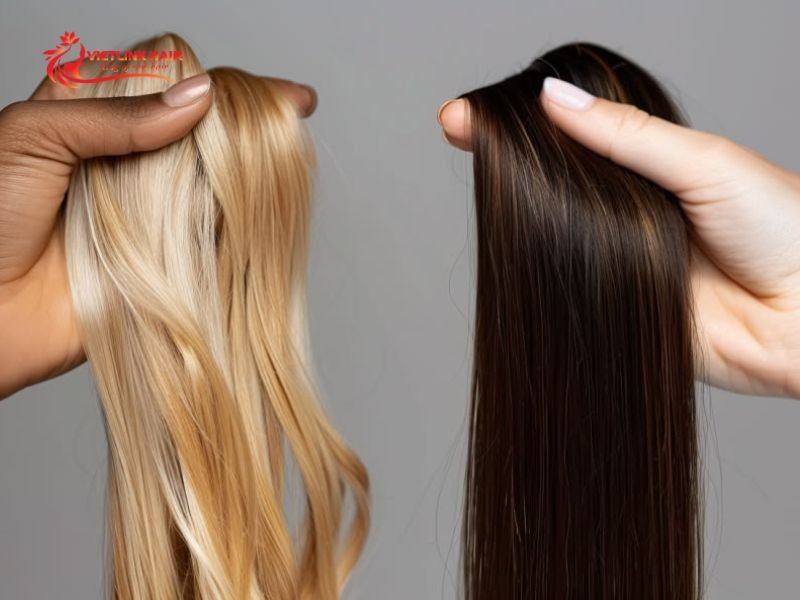
Human hair and synthetic fibers have different care requirements.
Human hair can generally be washed and conditioned with compatible products. Heat styling may also be possible, depending on the hair’s condition and previous processing.
Synthetic extensions require products and techniques appropriate for the specific fiber. Some synthetic fibers cannot tolerate conventional heat tools, and unsuitable conditioners may leave residue.
Always check the manufacturer’s guidance before applying heat or chemical treatments.
How to Detangle Matted Hair Extensions Without Damage
Loose knots and dense mats require different approaches. If you are learning how to detangle hair extensions that have become severely matted, begin by assessing the condition rather than immediately reaching for a brush.
Identify the Severity of the Matting
Loose tangles usually allow individual strands to move when separated by hand. Dense mats are more compact and may contain shed hairs, product residue, or several intertwined sections.
Check whether the matting occurs along the lengths or close to installed bonds and wefts. The location matters because knots near the scalp may involve both natural hair and the extension attachment.
Loosen the Knots Gradually
For removable human hair extensions, apply a compatible conditioner if the care instructions allow it. Separate the outer strands first, then gradually work toward the center of the knot.
Avoid sharp tools, forceful pulling, and aggressive brushing. These methods can break the hair or damage the weft.
If the hair is severely compacted, damaged, or difficult to separate, a professional may need to assess whether it can be safely recovered.
Know When to Seek Professional Help
Installed extensions should be handled carefully when matting occurs near the scalp. A qualified stylist can assess whether the issue involves trapped shed hair, attachment movement, or damage to the natural hair.
Do not attempt to pull a tight mat away from the scalp. If the area causes pain, persistent tension, or irritation, stop and arrange professional assistance.
Common Mistakes When Detangling Hair Extensions
Even suitable tools can cause damage when the technique is incorrect. Avoid these common mistakes:
- Brushing from roots to ends: This may tighten knots and increase pulling.
- Using excessive force: Strong pulling can break strands or stress the extension base.
- Applying heavy products near bonds: Some oils and conditioners may interfere with adhesive attachments.
- Dry brushing every curl pattern: This can disrupt definition and increase frizz.
- Ignoring fiber limitations: Synthetic hair may be damaged by unsuitable heat or products.
- Storing extensions while damp: Retained moisture and compressed strands can create additional maintenance problems.
- Ignoring recurring matting: Repeated tangles may indicate an issue with care practices, product buildup, attachment maintenance, or hair condition.
A careful technique is more useful than repeatedly brushing the same knot with greater force.
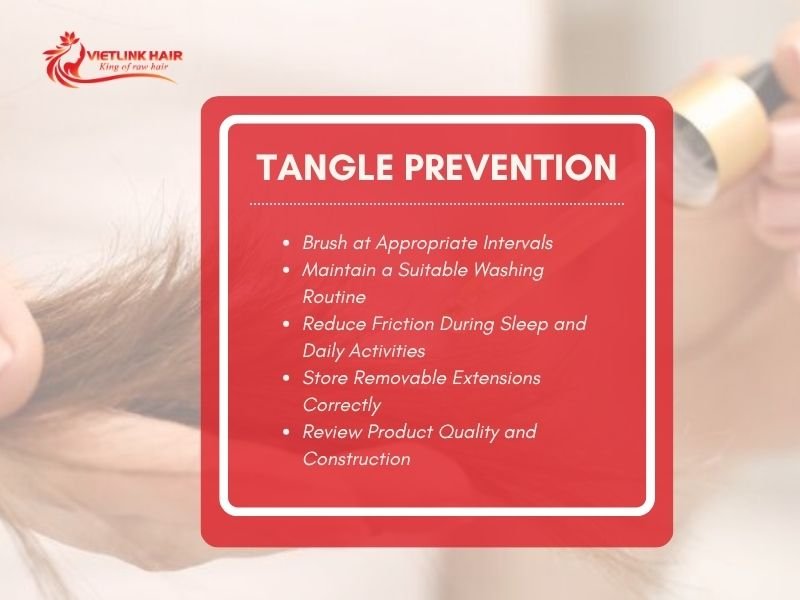
How to Prevent Hair Extensions from Tangling
Once the knots are removed, consistent maintenance helps reduce the conditions that cause them to return.
Brush at Appropriate Intervals
Brush gently according to your extension type, texture, and wearing routine. People who wear extensions daily may need more frequent maintenance than those who use clip-ins occasionally.
Work in sections and support the hair near the attachment points. Adjust the frequency if brushing begins to cause excessive shedding or discomfort.
Maintain a Suitable Washing Routine
Use compatible shampoo and conditioner to remove residue while limiting unnecessary friction.
Apply conditioner mainly to the lengths and ends when required by the extension’s care instructions. Keep adhesive attachment points free from incompatible products.
Reduce Friction During Sleep and Daily Activities
For installed extensions, ensure the hair is dry before sleeping. A loose braid or suitable silk or satin covering can help reduce friction for many users.
Remove clip-in extensions before sleeping, swimming, or exercising. These removable pieces are not designed for continuous wear in the same way as professionally installed methods.
Store Removable Extensions Correctly
After use, detangle the hair, ensure it is dry, and store it in a clean, dry location.
Keep the wefts separated rather than pushing them into a crowded drawer. A suitable hanger or storage pouch can help limit friction and dust accumulation.
Review Product Quality and Construction
For salon owners and distributors, recurring tangling should be assessed alongside maintenance practices and product specifications.
Human hair source, cuticle condition, processing history, texture, and weft construction can all influence handling performance. Care instructions should also reflect the actual product rather than applying one routine to every extension type.
Factory insight: When a buyer reports tangling across multiple units from the same shipment, compare the affected batch with an approved sample. Review the hair’s behavior after washing, drying, and gentle combing, and document whether the problem appears along the lengths or near the weft. This gives the supplier more useful information than a general complaint that the hair feels difficult to manage.
FAQS
With the main techniques covered, these answers address common maintenance questions for different extension types.
Should You Detangle Hair Extensions Wet or Dry?
It depends on the fiber, texture, and product instructions. Some curly human hair extensions are easier to detangle when damp and conditioned, while certain straight extensions are best handled when dry or slightly damp. Avoid rough brushing when the hair is wet.
Can You Use Regular Conditioner on Hair Extensions?
Some regular conditioners are suitable for human hair extensions, but not every formula is appropriate. Check the manufacturer’s recommendations, especially for tape-in or bonded extensions where product placement matters.
How Often Should You Detangle Hair Extensions?
The frequency depends on wearing time, length, texture, and daily activity. Daily wearers may benefit from gentle checks several times a day, while removable extensions can be detangled before and after use as needed.
Can Severely Matted Hair Extensions Be Saved?
Some mats can be loosened gradually, but others may be too compact or involve damaged hair and attachment points. Stop if the process requires force and seek professional assessment when necessary.
Why Do Hair Extensions Keep Tangling at the Nape?
The nape experiences friction from clothing, collars, movement, and contact with the shoulders. Sweat, product residue, and trapped shed hairs can contribute as well. Gentle brushing, suitable conditioning, and reducing friction may help.
Keep Hair Extensions Manageable with Vietlink Hair
Learning how to detangle hair extensions starts with selecting the right tools, detangling from the ends upward, and matching products to the hair and attachment method. Consistent aftercare can reduce unnecessary pulling and help extensions remain manageable throughout their intended service life.
For salons, retailers, and distributors, repeated tangling complaints also deserve a closer look at product specifications, construction, and care guidance. Matching these factors to customer needs supports better product selection and more informed aftercare recommendations.
Vietlink Hair works with B2B buyers seeking hair extension sourcing solutions. Contact our team to discuss product specifications, texture options, and wholesale requirements.
WhatsApp: +84 855 555 951
Email: info@vietlinkhair.com
Facebook: Vietlinkhair
