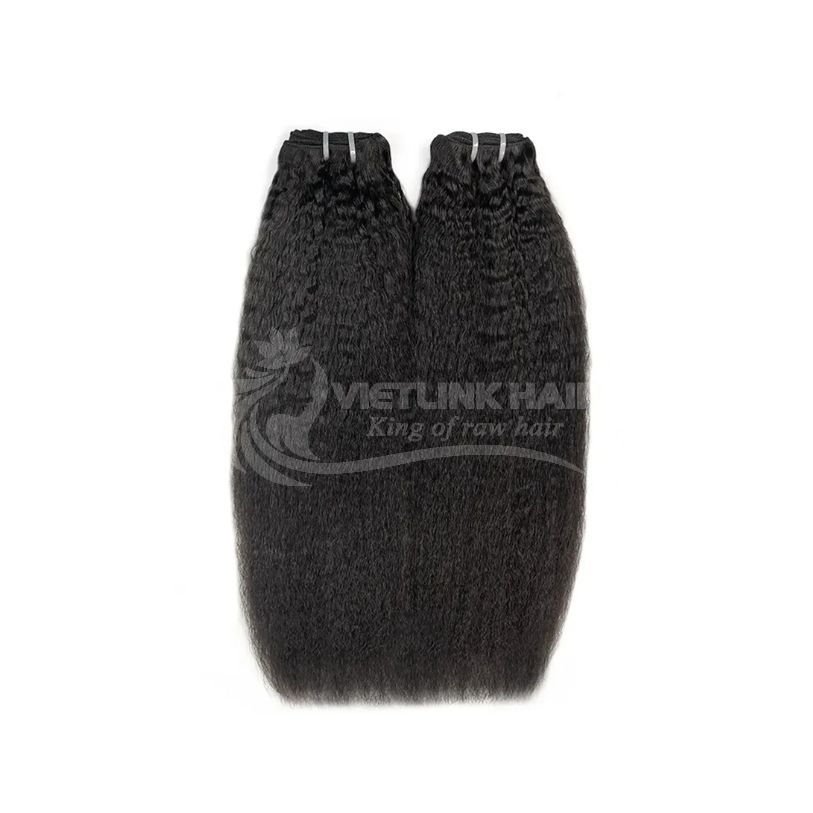
Hair Extension Knowledge
How to Fix Dry Hair Extensions: 7 Easy Steps
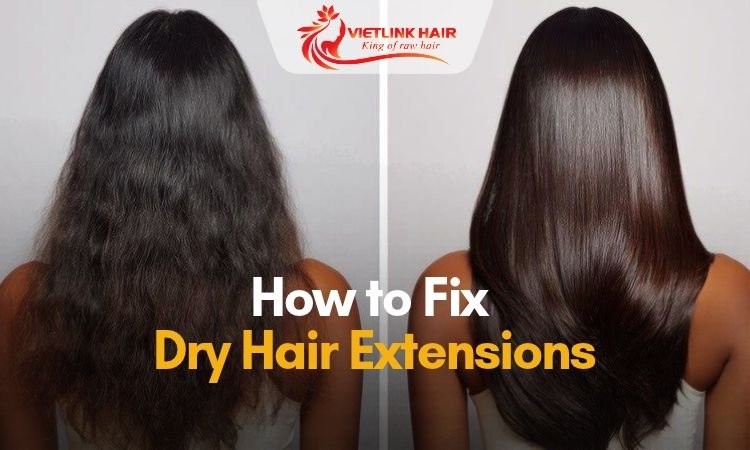
To learn how to fix dry hair extensions, start by gently detangling, washing only when needed, and conditioning the mid-lengths and ends. A lightweight leave-in treatment, careful drying, and heat protection can improve softness and manageability. First check whether the hair feels dry, coated with product buildup, or structurally damaged: these problems need different responses. Keep rich products away from tapes, beads, and bonds, and remember that conditioning cannot reverse broken strands.
This seven-step guide covers human hair extensions, between-wash care, installation-specific precautions, and when replacement makes more sense. It is also suitable for salons sharing aftercare guidance with clients.
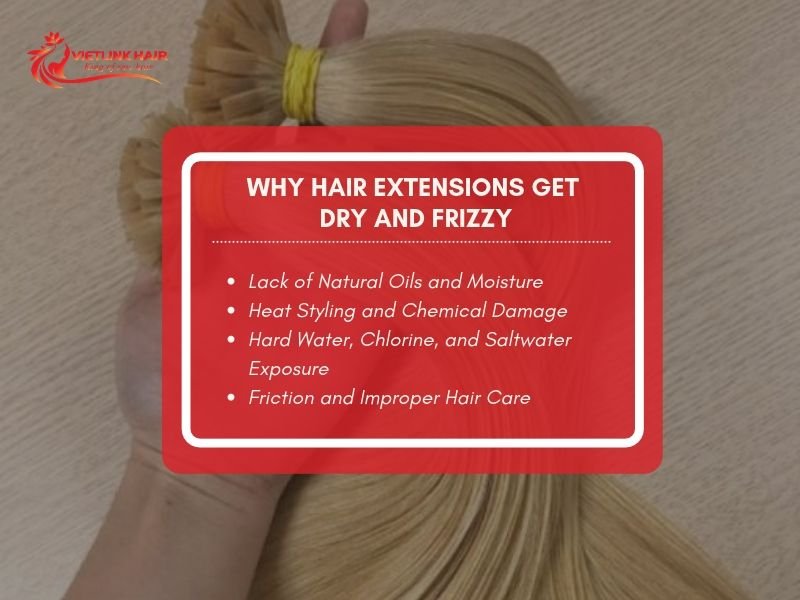
Why Do Hair Extensions Become Dry and Frizzy?
Knowing why extensions feel rough helps you choose between conditioning, gentle cleansing, and replacement. These are common causes, not a diagnosis of any particular product or customer complaint.
Lack of Natural Oils and Moisture
Extension lengths do not receive a continuing supply of sebum from the scalp in the way growing hair near the roots does. Washing, friction, prior chemical processing, and heat can leave the fiber feeling rough. Human hair extensions may feel softer after suitable conditioning, but products cannot regenerate damaged hair.
Heat Styling and Chemical Damage
Frequent high-heat styling can make hair more brittle and rough. Bleaching and other chemical processing can also increase porosity and damage the hair surface. Lightened extensions often need especially gentle handling, although their response to treatment varies with processing history.
Hard Water, Chlorine, and Saltwater Exposure
Hard-water minerals, swimming-pool chemicals, and saltwater can contribute to residue, tangling, or a rough feel. Rinse after swimming when suitable for the attachment method. Do not use strong clarifying shampoo automatically: check the extension supplier’s care instructions first.
Friction and Improper Hair Care
Friction from clothing, sleep, and aggressive brushing can create tangles and wear the fiber surface. Start detangling at the ends and support any attachment points to reduce pulling.
Dryness or Product Buildup: How Can You Tell?
If hair feels coarse and frizzy mainly at the ends, conditioning may help. If strands feel sticky, coated, unusually heavy, or dull after several styling products, buildup could be involved. Hair that snaps or mats soon after careful detangling may have more severe wear. These signs overlap, so treat them as clues rather than a guaranteed diagnosis.
| What you notice | Possible issue | First response |
|---|---|---|
| Dry, rough ends with mild tangling | Dryness or surface wear | Condition mid-lengths and ends |
| Sticky, coated, or heavy strands | Product residue | Review products and cleanse gently as permitted |
| Roughness after every wash | Wash routine, water residue, or previous damage | Check cleanser and heat habits before adding more product |
| Repeated breakage or severe matting | Structural damage or attachment issue | Ask a qualified stylist to assess repair versus replacement |
How to Fix Dry Hair Extensions in 7 Steps
Use these seven steps as a flexible routine, not a single treatment that is appropriate for every installation. Removable clip-ins, tape-ins, sewn wefts, and keratin bonds can have different care instructions. Apply heat protectant before any heat-based drying or styling, even though the protective step is explained in Step 7.
Step 1: Gently Detangle Your Hair Extensions
Detangling comes first because washing tangled hair creates knots that are hard to undo later. Work on dry hair so the fibers are at their strongest. Here is the method:
- Use a loop brush or wide-tooth comb, not a standard paddle brush.
- Hold the hair above the section you are working on, so the bonds or wefts take no tension.
- Start at the ends and move upward in small sections.
- Loosen stubborn knots with your fingers before combing.
Tip for salons: detangle gently before washing and teach clients to support the attachment area. For difficult knots, see our guide on how to detangle hair extensions.
Step 2: Wash Extensions With Sulfate-Free Shampoo
Once the hair is detangled, wash it if there is sweat, dirt, or noticeable buildup. A gentle shampoo recommended for the specific extensions is a practical starting point; sulfate-free alone does not guarantee compatibility. Follow these points:
- Use lukewarm water, since hot water lifts the cuticle.
- For installed extensions, clean the scalp gently without rubbing attachment areas. For removable clip-ins, wash the detached pieces according to their care instructions.
- Do not rub or twist the hair, because that creates new tangles.
- Rinse until the cleanser has been thoroughly removed.
Avoid an arbitrary washing schedule: frequency depends on the installation, lifestyle, and supplier guidance. For cleanser-selection considerations, see best shampoo for hair extensions.
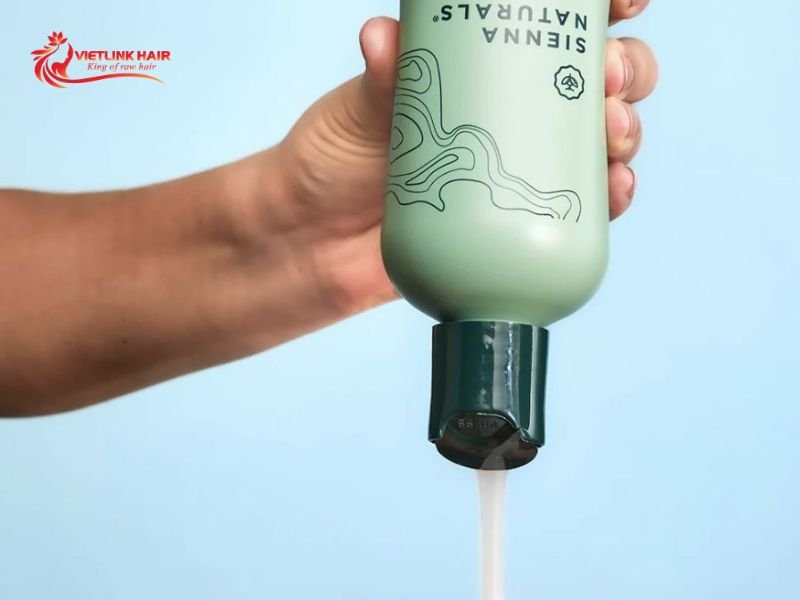
Step 3: Apply a Deep Conditioning Hair Mask
A suitable conditioning mask can reduce friction and improve the feel of dry human hair extensions, although it cannot rebuild broken fibers. Apply it carefully:
- Squeeze out excess water first so the mask is not diluted.
- Apply from mid-length to ends and keep it away from tapes, glue, or keratin bonds.
- Comb through gently to spread it evenly.
- Use the time stated on the mask label and the extension supplier’s care guidance. Rinse thoroughly with lukewarm or comfortably cool water.
Practical salon note: If tape, beads, or bonds are loosening, stop applying conditioning products near the attachments and ask the installer to inspect them. Do not assume all dryness complaints are caused by aftercare; initial hair quality, processing, and wear can also matter.
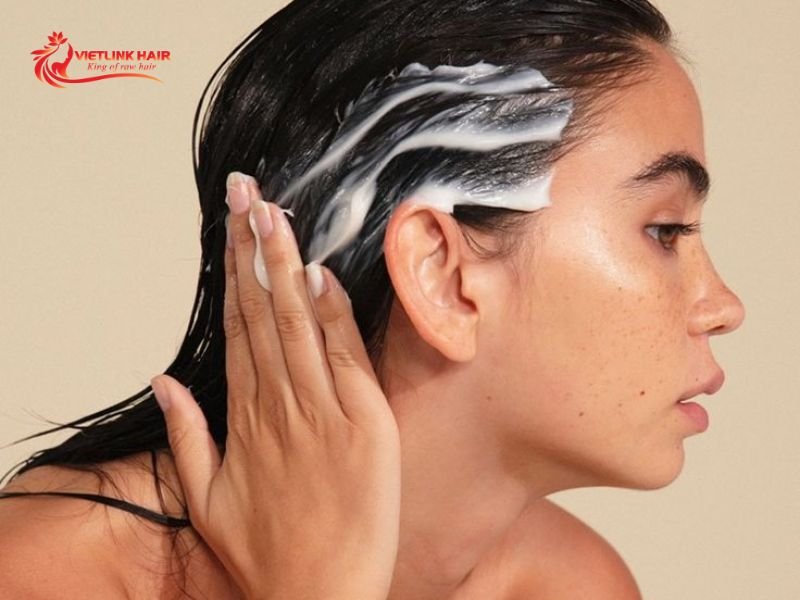
Step 4: Use Leave-In Conditioner to Restore Softness
A compatible leave-in product can make lengths easier to comb and manage between washes. It does not permanently repair damaged cuticles. Use it this way:
- Apply a small amount to damp hair, focusing on the lower half of the lengths.
- Comb it through with a wide-tooth comb for even coverage.
- Add more only if the hair still feels rough, since too much weighs it down.
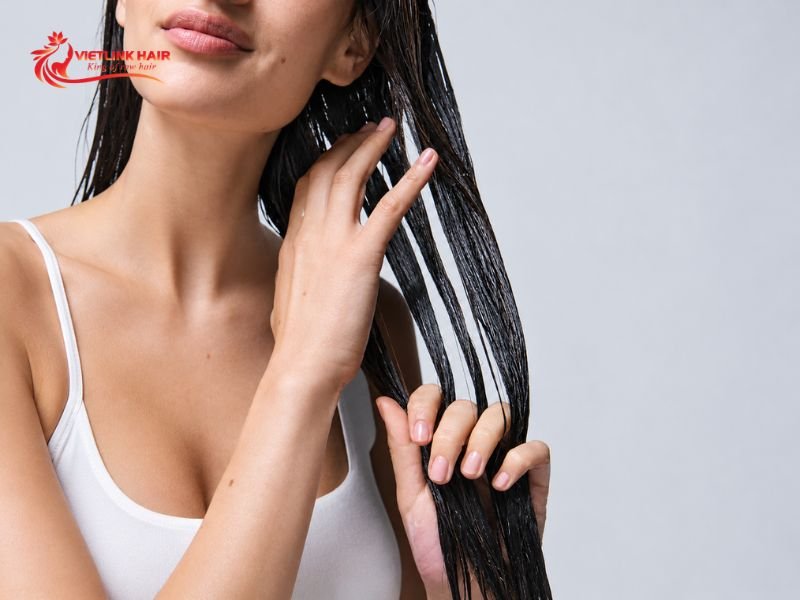
Step 5: Apply Lightweight Hair Oil to Dry Ends
A small amount of light hair oil or finishing serum can reduce friction and add shine to the ends, but it does not permanently seal or rebuild a damaged cuticle. Keep the method simple:
- Warm two or three drops between your palms.
- Smooth the oil over the ends and mid-lengths only.
- Keep it away from the roots and attachment points to protect the bonds.
- Choose a lightweight formula that does not leave a greasy film.
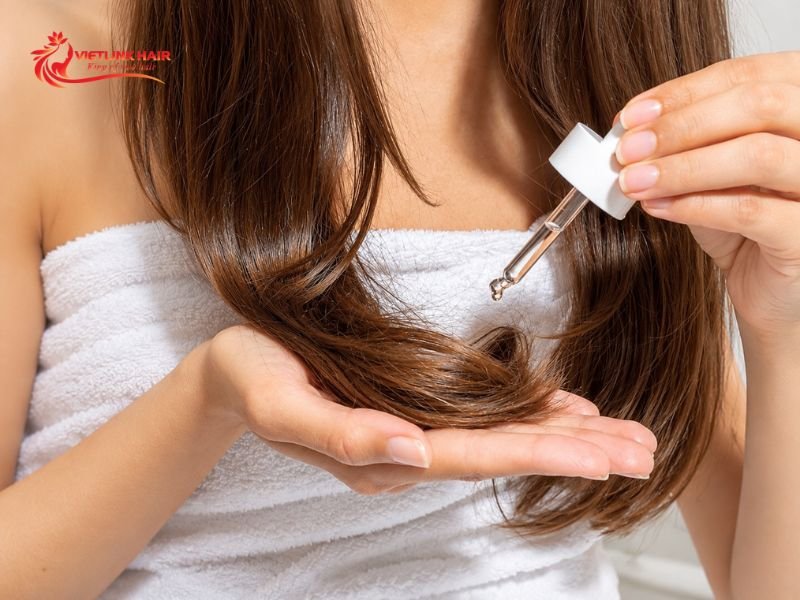
Step 6: Dry Hair Extensions With Low Heat
Drying needs to match the extension installation. Removable clip-ins can often be dried separately according to their care label. Installed tape, weft, or bonded extensions require special attention to the attachment areas, which should not be left damp overnight. Follow these rules:
- Squeeze out water with a microfiber towel, and avoid wringing.
- For removable clip-ins, air-dry as permitted by the manufacturer. For installed extensions, dry attachment rows thoroughly using the installer’s recommended method.
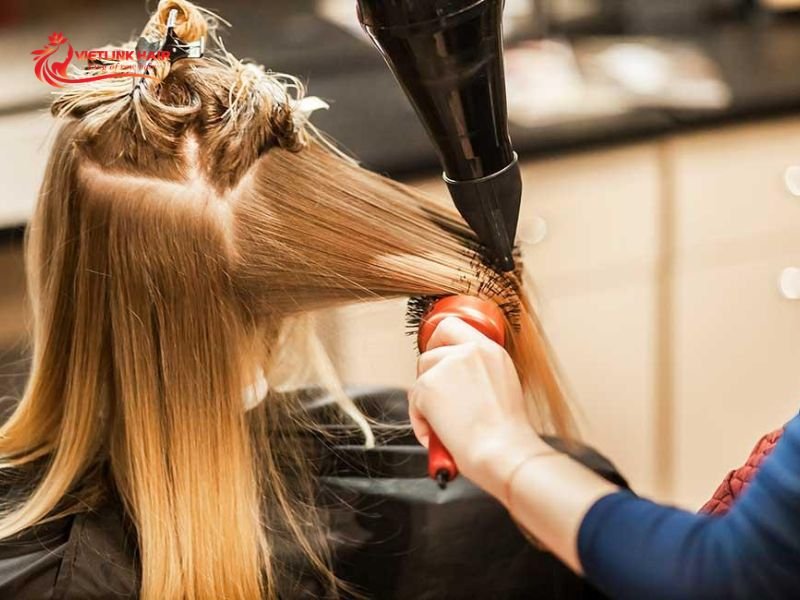
- Before blow-drying lengths, use a compatible heat protectant as directed; use low or moderate heat and avoid overheating bonds or tapes.
- Point the airflow down the hair shaft so the cuticle lies flat.
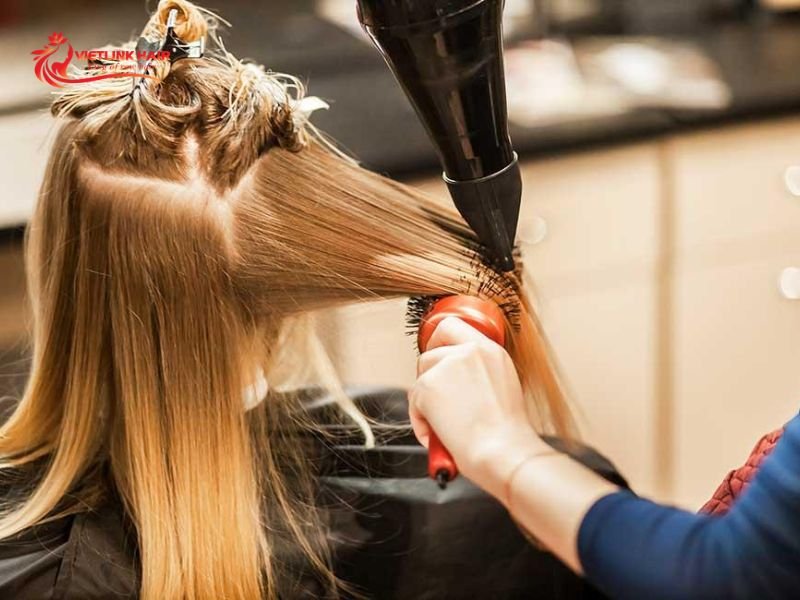
Step 7: Use Heat Protectant Before Styling
Heat protectant is a preventive step, not a final repair. Apply it before blow-drying or using hot tools, following the product label and any restrictions around the attachment method. Use it as follows:
- Apply a heat protectant suitable for the tool and for damp or dry hair as specified by its label; keep product away from attachments if instructed.
- Keep tool temperatures moderate, since lower settings cause less new damage.
- Style in small sections and avoid passing over the same strand repeatedly.
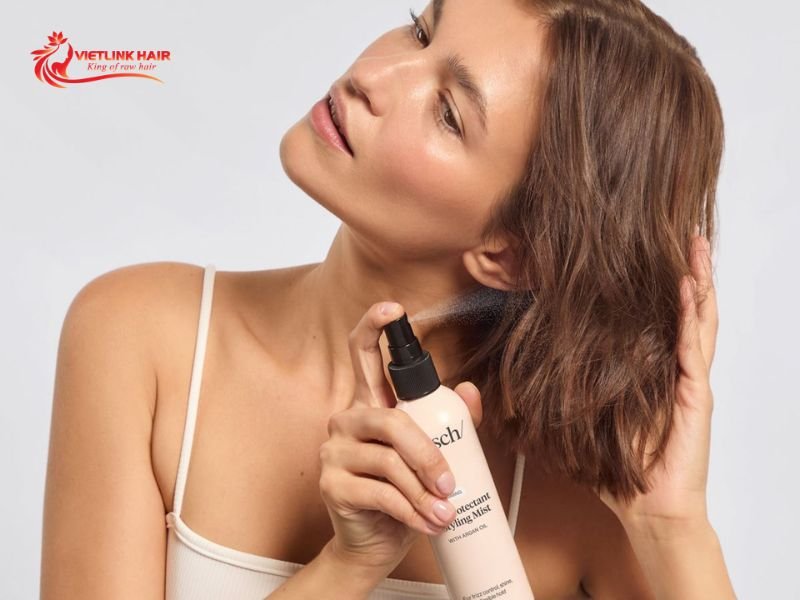
How to Fix Dry Hair Extensions Without Washing
Between washes, a small amount of compatible leave-in product may improve how dry lengths feel. This is a temporary refresh, not a substitute for cleansing when residue has accumulated. Avoid soaking attachment points, especially with freshly installed extensions.
Apply a Leave-In Conditioning Spray
Mist a suitable leave-in product onto the mid-lengths and ends, avoiding beads, tapes, and bonds. Start with a little and add only if needed. Follow the product label instead of assuming every alcohol-free formula is compatible with every installation.
Smooth Frizzy Ends With Lightweight Hair Oil
Use a small amount of lightweight oil or finishing serum on the ends if the hair tolerates it. Avoid attachment areas and stop if the hair starts to feel coated.
Detangle Knots and Reduce Friction
Work from the ends upward with an appropriate brush, supporting installed attachment points. Before bed, make sure both the lengths and installation areas are dry, then secure the hair loosely if recommended by your stylist. A satin or silk pillowcase may help reduce friction. For broader routines, see these hair extension aftercare tips.
How to Fix Dry Hair Extensions Based on Hair Type
Human hair and synthetic fibers need different products, and the installation method also changes what can safely touch the attachment points. The table summarizes fiber and processing differences; follow it with the installation-specific guidance below.
| Hair type | Main concern | Adjustment to the routine |
|---|---|---|
| Human hair | Cuticle roughness | Full 7 steps, mask weekly or as needed |
| Curly hair | Frizz and lost definition | Apply products on damp hair, no dry brushing |
| Bleached hair | Porosity and brittleness | Gentle wash, lighter handling, limited heat |
| Synthetic hair | Surface tangling | Fiber-safe products only |
Dry Human Hair Extensions
Human hair extensions may respond well to conditioning, but the result depends on processing history and damage level. Use a suitable mask as needed, avoid product buildup, and wash according to the installation and supplier guidance.
Curly Hair Extensions
Curl patterns lose definition quickly when moisture drops. Apply products to damp, sectioned hair and avoid brushing once it has dried. Use your fingers or a wide-tooth comb and let the hair air dry.
Bleached Hair Extensions
Bleached extensions can have greater porosity and fragility. Use compatible gentle products and limit heat. Protein or bond-focused treatments should be selected for the hair and attachment system rather than used automatically. See also can you bleach human hair extensions.
Synthetic Hair Extensions
Synthetic fibers generally do not respond to human-hair conditioners in the same way as human hair. Use fiber-specific products and follow heat restrictions; the seven-step human-hair routine should not be applied to synthetic extensions unchanged.
Adjust Care for Clip-Ins, Tape-Ins, Wefts, and Keratin Bonds
Installation method matters as much as hair texture. These are general precautions; the product supplier and installer should confirm the precise care routine. If deciding between installation types, review tape-in vs sew-in extensions.
| Method | Practical adjustment |
|---|---|
| Removable clip-ins | Remove before washing and allow to dry fully before storage, following product instructions. |
| Tape-ins | Keep oils and heavy conditioners away from the adhesive tabs; dry the attachment areas thoroughly. |
| Sew-in or weft extensions | Clean without rough rubbing, and ensure the weft rows and underlying hair dry completely. |
| Keratin-bonded extensions | Avoid direct heat and rich product buildup on bonds; support each section when detangling. |
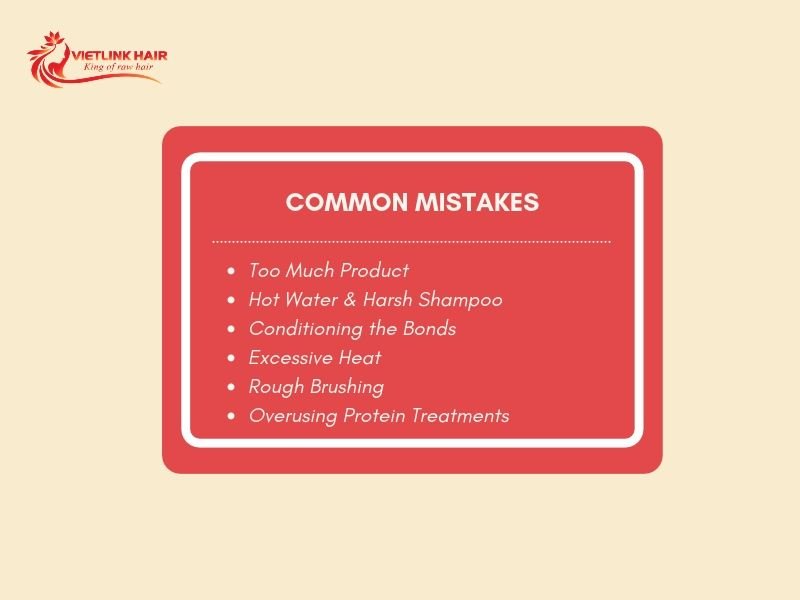
Common Mistakes to Avoid When Fixing Dry Hair Extensions
Even a correct routine fails when a few habits work against it. Flag the mistakes below to clients, since each one can slow recovery or cause new damage.
Applying Too Much Hair Oil or Heavy Conditioner
Too much product weighs the hair down and attracts dirt. Start with a small amount and add only if needed.
Using Hot Water and Harsh Shampoos
Very hot water and unsuitable cleansing products can worsen roughness or irritate the scalp. Use lukewarm water and a cleanser compatible with the attachment method.
Applying Hair Masks Directly to Extension Bonds
Masks and rich conditioners can weaken tapes, glue, and keratin bonds. Keep them on mid-lengths and ends, away from the roots.
Using High Heat Without Heat Protectant
Repeated high heat can worsen fiber damage. Apply an appropriate protectant before heat and follow attachment-specific temperature restrictions.
Brushing Wet Extensions Too Aggressively
Wet hair stretches and breaks more easily than dry hair. Use a wide-tooth comb, start at the ends, and detangle with conditioner in the hair.
Overusing Protein Treatments on Dry Hair Extensions
Not every brittle extension needs more protein. If a treatment leaves hair stiff, stop using it and ask a stylist or manufacturer which products suit the fiber and attachment type.
When Can Dry Hair Extensions No Longer Be Repaired?
Conditioning can improve softness and detangling, but it cannot fuse split ends, reverse broken strands, or replace missing fibers. Assess the hair and attachments separately before deciding to continue treatment or replace the set.
Signs of Severe Cuticle Damage
Warning signs include split ends, ongoing snapping, or repeated matting despite gentle cleaning and detangling. Roughness alone does not prove irreversible damage, since buildup may cause a similar feel.
Persistent Tangling and Hair Breakage
Repeated matting, thinning wefts, or strands breaking mid-length may signal damage that conditioning cannot solve. If attachments pull, slip, or cause scalp discomfort, have a qualified stylist assess them rather than adding more products.
When to Condition and When to Replace Extensions
Continue gentle care if the hair is only mildly dry and becomes easier to manage after conditioning. Consider trimming or replacement if it repeatedly snaps, mats, or remains unmanageable. See how long hair extensions last for other factors that affect wear time.
FAQs
Clients and buyers tend to ask the same few questions. The answers below cover the most frequent ones.
Can You Put Coconut Oil on Dry Hair Extensions?
Coconut oil can soften the ends, but it is heavy and tends to build up. Use a very small amount on the lower lengths and keep it away from the bonds. A lighter oil is usually easier to manage.
How Long Should You Leave a Hair Mask on Extensions?
Follow the time stated on the product label. Leaving a mask on much longer does not add benefit and can make the hair feel heavy. Rinse thoroughly so no residue remains.
Can You Fix Dry Hair Extensions With Conditioner?
Yes, conditioner helps, especially alongside a mask and leave-in. A single rinse-out conditioner may only soften the surface for a short time. Combine it with gentle washing and low heat for longer lasting results.
Why Are My Hair Extensions Still Dry After Conditioning?
Possible causes include product residue, harsh cleansing, hard-water deposits, previous bleaching, and heat damage. First review the products and installation instructions. A clarifying wash may be inappropriate for some attachments, so seek supplier or stylist advice before using one.
How Often Should You Moisturize Hair Extensions?
There is no single frequency for every extension type. Apply leave-in or a mask only as the fiber, attachment system, and product labels permit; adjust to dryness and visible buildup rather than following a fixed weekly schedule.
Why Are My Hair Extensions Dry After Washing?
The cleanser may be too harsh, residues may remain, or previous heat and chemical damage may be making the hair feel rough. Check the wash method and product compatibility, then condition the lengths without coating attachments.
Can You Revive Severely Dry or Damaged Hair Extensions?
Conditioning may make dry human hair extensions feel softer, but it cannot reverse split ends, missing fibers, or severe breakage. If the set keeps matting or snapping after careful treatment, ask a stylist whether trimming or replacement is more practical.
How Do You Moisturize Tape-In Extensions Without Loosening Them?
Apply a tape-compatible lightweight leave-in or conditioner to the mid-lengths and ends only, avoiding the adhesive tabs. Keep the tabs free of oils and heavy masks, and dry the installation areas thoroughly after washing.
Conclusion
Dry human hair extensions can often feel softer with careful detangling, gentle cleansing, conditioning, leave-in care, and safe heat habits. The correct routine depends on whether the hair is removable or installed, and whether the problem is dryness, residue, or permanent damage. Salon teams can adapt these instructions to the specific product and installer guidance.
Explore More Hair Extension Guidance from Vietlink Hair
Understanding proper aftercare can help you choose and maintain hair extensions more confidently.
Visit Vietlink Hair to explore our hair extension resources and product categories.
