
Hair Extension Knowledge
How to Dye Hair Extensions at Home Safely
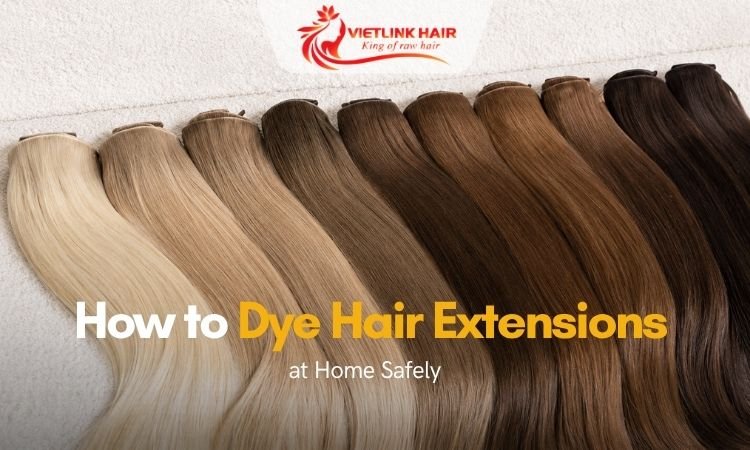
Changing hair extension color at home can be useful when a set is close to, but not quite, the shade you need. The challenge is avoiding patchy results, excess dryness, and damage to attachment areas.
How to dye hair extensions at home depends on the fiber, previous processing, construction, and target shade. Many human hair extensions can accept color, particularly when depositing a darker shade or adjusting tone. Synthetic fibers generally cannot be colored with conventional human-hair dye. Before dyeing, confirm that the specific extension product and color formula are compatible.
For salons and wholesale buyers, color consistency starts with product selection. A manufacturer’s description of a hair grade does not replace a strand test or documented processing history.
Can You Dye Hair Extensions at Home?
Yes, some 100% human hair extensions can be dyed at home, but not every extension is suitable. Start with three checks:
- Fiber: Confirm that the product is human hair, synthetic fiber, or a blend. Conventional human-hair dye is not appropriate for most synthetic extensions.
- Processing history: Previously bleached, dyed, coated, or heavily processed human hair may absorb pigment unevenly or be too fragile for another treatment. Remy describes cuticle alignment; it does not establish that hair is unprocessed.
- Construction: Clips, tape, silicone strips, keratin bonds, lace, and adhesives may discolor or weaken when exposed to coloring products.
Depositing a deeper or similar shade is often more manageable than lifting several levels, but no color treatment is completely risk-free. If the extension manufacturer advises against recoloring, follow that restriction or consult an extension-experienced colorist.
Do a strand test and a skin patch test
These tests answer different questions. A strand test checks how a small piece of extension hair takes the formula, how the dried color looks, and whether the hair remains manageable. A skin patch test checks for a possible reaction to the dye. Follow the dye package’s allergy-test directions each time, even if you have used color before; do not treat a successful strand test as a substitute for the skin test.
What You Need to Dye Hair Extensions
Prepare the workstation and supplies before you begin. Choose products according to the directions for your particular color system.
| Item | Purpose or caution |
|---|---|
| Compatible 100% human hair extensions | Confirm suitability for recoloring and the construction type |
| Semi-permanent or demi-permanent color | Often considered for tonal or darker deposits; compatibility depends on product |
| Developer, only if required | Use the exact type, strength, and ratio specified by the color manufacturer |
| Color bowl, brush, and protective gloves | Controlled mixing, saturation, and hand protection |
| Foil or plastic surface protector | Protects the workstation; cover hair during processing only when directed |
| Wide-tooth comb or appropriate extension brush | Gentle detangling without pulling the attachments |
| Compatible shampoo and conditioner | Preparation and post-color care according to product directions |
| Timer and small sample weft | Follow exact processing directions and assess a test strand |
Some extension-specific instructions mention a 10-volume developer, but this is not a universal recommendation. A direct dye may need no developer, and some formulas or extensions should not be colored at all.
How to Dye Hair Extensions at Home: Eight Steps
This sequence focuses on controlled color deposition on compatible, removable human hair extensions. It is not a bleaching tutorial. For installed tape-in or bonded extensions, seek professional guidance rather than attempting to saturate hair around the bonds.
Step 1: Inspect the Extensions
Identify the extension type and check for brittle ends, unusual dryness, previous bleaching, and adhesives or silicone components. If the product is fragile or the manufacturer’s guidance prohibits coloring, stop. Note the starting shade, the intended result, and any difference between hair near the attachment and at the ends.
Step 2: Clean and Prepare the Hair
Where recommended by the extension or dye manufacturer, gently shampoo removable wefts to remove styling buildup and temporary coatings. Avoid twisting or scrubbing the tracks. Detangle from the ends upward. Dry the hair fully if the chosen formula requires dry application; some products specify damp application instead. Do not assume every product needs clarifying shampoo or a pre-wash.
Step 3: Test the Strand and Check Allergy Instructions
Color a small hidden section or spare weft according to the exact formula directions. Once processed, rinsed, and dried, check the final shade, evenness, softness, and elasticity. Separately, complete the dye manufacturer’s skin patch test as directed. If the strand test produces an undesirable result or the patch test suggests sensitivity, do not proceed with the full application.
Step 4: Mix the Color Correctly
Wear gloves, protect the work surface, and mix only what the product instructions specify. Measure color and developer precisely if a developer is required. Do not improvise ratios, combine incompatible color systems, or increase developer strength to speed things up. Use the same tested formula for the main application.
Step 5: Apply Evenly, Away From Attachment Areas
Lay removable wefts flat and work one section at a time. Brush the color gently downward through the lengths, then turn the weft over and saturate the other side. Avoid aggressive combing of wet, treated hair. Keep the formula away from tape, adhesive, silicone bases, clips, lace, and bonded areas; do not rely on a universal one- or two-inch clearance because construction varies.
Step 6: Process for the Product’s Specified Time
Use a timer and follow the color manufacturer’s stated processing time and instructions about covering the hair. Hair extensions can react differently from growing hair because of previous treatments and variable porosity. The 10–30-minute and 20–40-minute windows seen in general online advice are not universal. Never extend the time just because the color appears slow to develop.
Step 7: Rinse and Condition
Rinse as the chosen color system directs, handling wefts gently from the track toward the ends. Shampoo only if the specific formula calls for it. Apply a compatible conditioning product where directed, avoiding attachment points that must remain free of products. Do not assume every extension needs a protein treatment; choose moisture or protein based on its condition and manufacturer guidance.
Step 8: Dry and Evaluate the Finished Color
Press out excess water without twisting and air-dry removable extensions when feasible. Use gentle heat only when the product permits it. Compare the fully dry result with the intended shade before reinstalling or packaging. Never store damp extensions, and review the manufacturer’s advice before coloring or wearing the set again.
How Long Does It Take to Dye Hair Extensions?
Allow enough time for inspection, any patch-test waiting period, pre-washing and drying when required, a full strand test, color application, formula-specific processing, rinsing, conditioning, and complete drying. The chemical processing stage is only one part of the workflow.
| Stage | Timing guidance |
|---|---|
| Allergy test | Follow the package’s stated period before coloring |
| Pre-wash and drying | Depends on extension type and formula |
| Strand test | Allow full processing and drying before evaluating |
| Application | Varies by number and thickness of wefts |
| Color processing | Use only the chosen product’s instructions |
| Rinsing, conditioning, drying | Depends on formula and thickness; allow thorough drying |
Can You Dye Hair Extensions Lighter?
Going lighter is different from depositing pigment. A lighter box dye may not lift previously dyed extensions as expected; bleaching can create uneven warmth, dryness, breakage, or loss of elasticity. Whether a particular human-hair extension can be lightened depends on its source material, previous processing, and supplier restrictions—not solely on whether it is labeled Remy or virgin.
For a substantial lift from dark brown to blonde, discuss the project with an experienced colorist or choose a pre-lightened shade closer to the result you need. Read our related guide on bleaching human hair extensions for the separate considerations involved. Do not use conventional bleach on synthetic extensions.
Human Hair vs. Synthetic Hair: Can You Dye Both?
| Consideration | Human hair extensions | Synthetic extensions |
|---|---|---|
| Conventional human-hair dye | May be compatible, subject to processing and product guidance | Generally unsuitable |
| Going darker | Possible on suitable products after testing | Requires specialized fiber-specific methods, if possible |
| Major lightening | Higher risk; seek professional advice | Conventional bleaching unsuitable |
| Strand test | Essential before treating the full set | Do not use human-hair dye as a trial method |
| Attachments | Protect tape, glue, silicone, lace, and bonds | Construction and fiber may be sensitive to chemicals and heat |
Do not assume non-Remy human hair is automatically synthetic or impossible to dye. The key distinction is fiber type and specific processing history. Learn more about the different labels in our guide to raw hair vs. Remy hair.
Common Mistakes When Dyeing Hair Extensions
| Mistake | Why it matters | Better approach |
|---|---|---|
| Skipping the strand test | Color can develop unexpectedly | Test and evaluate the dry result |
| Forgetting the skin patch test | Potential dye sensitivity is not checked | Follow package allergy-test directions |
| Assuming Remy means unprocessed | Previous color may change absorption | Confirm processing history |
| Using stronger developer by default | May increase unwanted chemical stress | Follow the exact color system |
| Coloring attachments | May compromise adhesive or discolor bases | Keep chemistry away from attachment zones |
| Using fixed online processing times | Different formulas process differently | Follow manufacturer timing |
| Repeated bleaching | Can increase dryness and breakage | Consider pre-colored hair or a colorist |
| Rough detangling or damp storage | May increase tangles and wear | Handle gently and dry fully |
Why Processing History Matters for Wholesale Buyers
Before stocking extensions that customers may wish to recolor, suppliers and salons should document fiber composition, original shade, previous dye or bleaching, texture treatments, and construction details. A claim that a bundle is “high grade” cannot predict its response to a particular dye. Ask for exact product specifications, follow any brand restrictions, and test a representative sample before promising customization.
For a retailer, the choice is often between supplying a suitable starting shade for controlled darkening and ordering already-colored extensions to avoid unnecessary post-purchase processing. This is product-selection guidance, not a claim about undocumented Vietlink Hair manufacturing steps.
Two Practical Hair Extension Coloring Scenarios
Example 1: Medium Brown to Dark Chocolate Brown
A salon has medium-brown human hair clip-ins and needs a darker match. After confirming the product permits recoloring, the stylist performs the dye manufacturer’s allergy test and a strand test. If the dry sample is even and remains manageable, the stylist applies the tested color separately to each compatible weft, protects the clips and track, and follows processing and conditioning directions. This is generally a more controlled goal than a major lift.
Example 2: Dark Brown to Blonde
Dark-brown extensions need to become blonde. Ordinary color deposition will not achieve a significant lift, and the previous color history may be unknown. Rather than repeatedly bleaching the full set, the salon can seek professional assessment or source a pre-lightened, appropriate-color alternative. This may reduce the risk of losing an entire set to uneven lift or breakage.
How to Maintain Extensions After Coloring
Color-treated extensions do not receive scalp sebum along their detached lengths. Follow the manufacturer’s washing and conditioning advice, detangle gently from the ends, minimize unnecessary high heat, and let removable pieces dry completely before storage. Keep conditioning products away from attachment zones where the supplier advises. For additional practical care, see how to fix dry hair extensions and hair extension aftercare tips.
Frequently Asked Questions About Dyeing Hair Extensions
Can you dye 100% human hair extensions?
Often yes, if the product permits recoloring and is in good condition. Check previous processing, complete the dye’s allergy test, and perform a strand test before applying color to the full set.
Can you dye synthetic hair extensions?
Conventional human-hair dyes are generally unsuitable for synthetic fibers. Some specialist methods exist for certain fibers, but they are not interchangeable with standard hair coloring.
Can you dye extensions from black to brown?
It depends on the existing pigments and how much lift is required. Depositing a darker shade is different from trying to lighten very dark extensions. Ask an experienced colorist if lifting is necessary.
How long should you leave dye on hair extensions?
Follow the precise processing time for the selected formula, including any manufacturer’s extension-specific restrictions. Do not substitute a generic 10–30 or 20–40-minute estimate.
Should you wash extensions before dyeing?
Pre-washing may remove coatings or buildup, but it should follow the extension supplier’s and color manufacturer’s instructions. Dry or damp application depends on the formula.
Can you dye clip-in, tape-in, and weft extensions?
Some removable human-hair clip-ins and wefts may be suitable after testing. Installed tape-ins and bonded extensions have attachment risks, so professional assessment is preferable. Always protect clips, tape, silicone, and other attachment parts.
Does dyeing reduce extension lifespan?
It can. Risk depends on previous processing, formula, technique, and aftercare. Strand-test both color and resulting hair condition before treating the whole set.
Does Remy hair always take color better?
No guaranteed result follows from the Remy label alone. Remy describes cuticle alignment, not whether hair has previously been dyed or bleached. Verify the actual product history and test.
Final Takeaway
To dye hair extensions at home with less risk, verify that the extensions and dye are compatible, favor modest tonal or darker changes where suitable, perform both the skin allergy test and strand test, protect attachments, and follow the precise formula instructions. For large color lifts or unknown processing history, consider a professional or pre-colored alternatives.
Explore Human Hair Extensions With Vietlink Hair
Choosing extension hair for a salon or retail collection where customers may request color customization? Explore Vietlink Hair and confirm current product specifications, processing history, and color suitability with the supplier before purchasing.

Pingback: Remy Hair vs Raw Hair: What’s the Difference and Which Should You Buy?