Hair Extension Knowledge
Clip-In vs Tape-In Hair Extensions: Differences and Which to Choose
Choosing between clip-in vs tape-in hair extensions comes down to more than how they attach to the hair. From the convenience of instant volume to the seamless finish of semi-permanent wear, each method offers distinct benefits for different styling needs and lifestyles. Explore their key differences, maintenance requirements, and long-term value with VietLink Hair in this article to find the best option for your hair goals or extension business.
Clip-In vs Tape-In Hair Extensions at a Glance
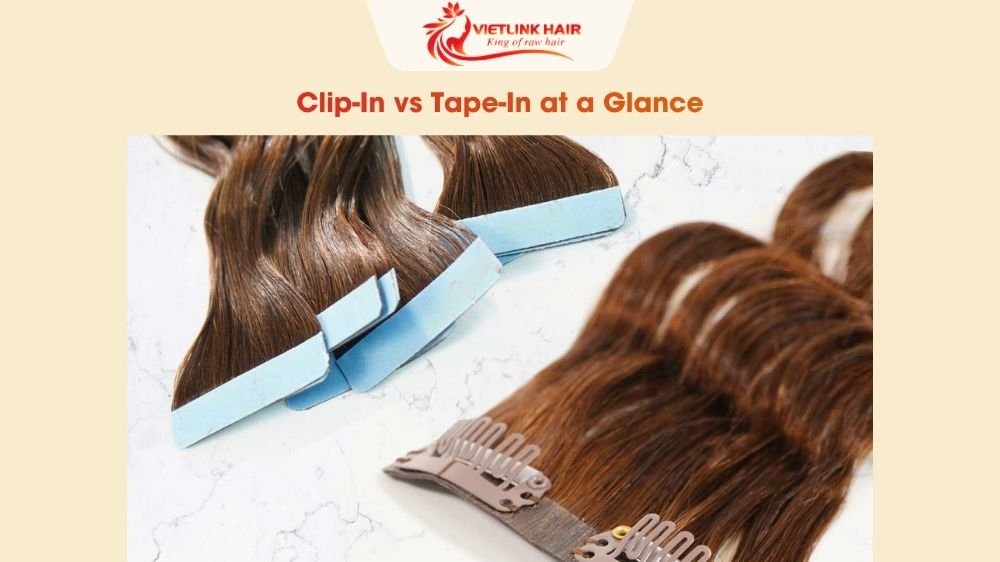
Clip-in hair extensions are temporary hairpieces secured to natural hair with small clips. They can be applied and removed at home, making them suitable for occasional styling without a long-term commitment.
Tape-in hair extensions are semi-permanent extensions attached to sections of natural hair using adhesive tape. They lie relatively flat against the head for a seamless appearance and typically require professional installation and regular maintenance.
The key differences between clip-in and tape-in hair extensions include application, wear time, maintenance, and lifespan. The table below summarizes the key differences between the two kinds.
| Factor | Clip-In Hair Extensions | Tape-In Hair Extensions |
|---|---|---|
| Type | Temporary, removable extensions | Semi-permanent extensions attached with adhesive tape |
| Installation | DIY application, typically 10–20 minutes | Professional installation, typically 45–90 minutes |
| Typical wear time | A few hours to a full day; remove before sleeping | Around 6–8 weeks before maintenance |
| Reapplication | Reattach whenever needed | Usually requires repositioning and fresh tape every 6–8 weeks |
| Hair lifespan | Often 6–12 months with proper care, depending on usage and quality | Can often be reused for multiple applications with proper care and new tape tabs |
| Impact on natural hair | Generally low when clips are positioned correctly and tension is minimized | Depends on installation, adhesive removal, maintenance, and aftercare |
| Best for | Occasional styling, beginners, and temporary length or volume | Regular wear, a seamless appearance, and consistent length or volume |
Note: Installation times, wear periods, and hair lifespan are estimates. Actual results vary by hair quality, installation technique, maintenance, and individual hair condition.
Key Differences Between Clip-In and Tape-In Extensions
The main differences between clip-in and tape-in hair extensions come down to how they attach to natural hair, how long they stay in place, and the care they require. Here is a closer look at the key differences.
Application and Installation
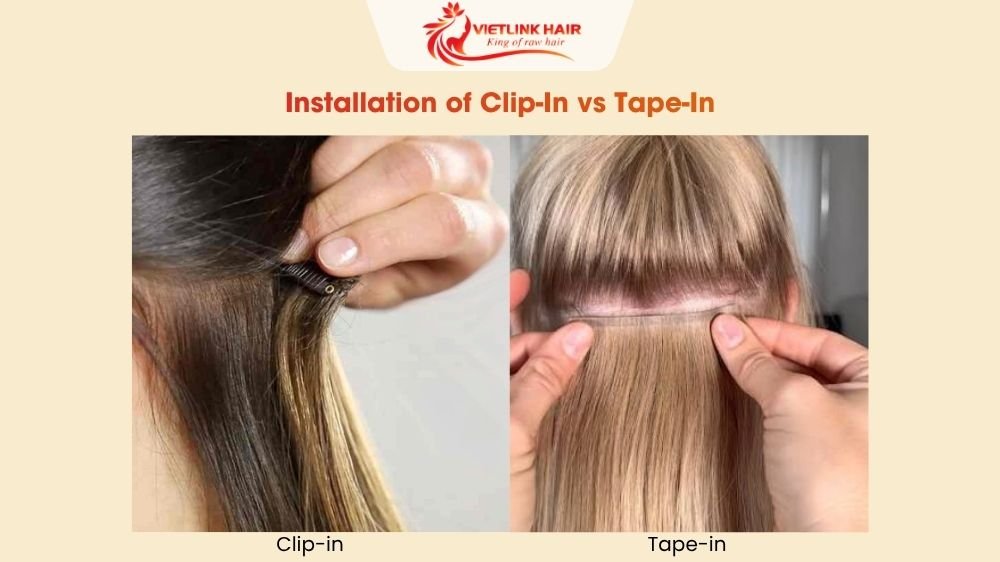
Clip-ins attach with snap clips on separate wefts, allowing wearers to place pieces where extra volume is needed. A practiced wearer may apply a small set in about 5–10 minutes, while a fuller set may take 10–20 minutes or longer. These are illustrative times, not guaranteed fitting speeds. Avoid aggressive teasing or clipping too close to delicate hairlines; placement should feel secure without pulling.
Tape-ins use adhesive-backed wefts placed around thin sections of natural hair, commonly as paired “sandwich” attachments. A trained stylist should match section thickness, bond placement, and product weight to the client’s hair. Full-head professional fitting may take roughly one to two hours, although partial installations and complex colour blending can differ. Professional removal uses a remover compatible with the adhesive. Improper fitting or removal can lead to tension or breakage.
In short, clip-ins reward speed and independence, while tape-ins reward precision and professional hands.
Comfort, Visibility, and Natural Appearance
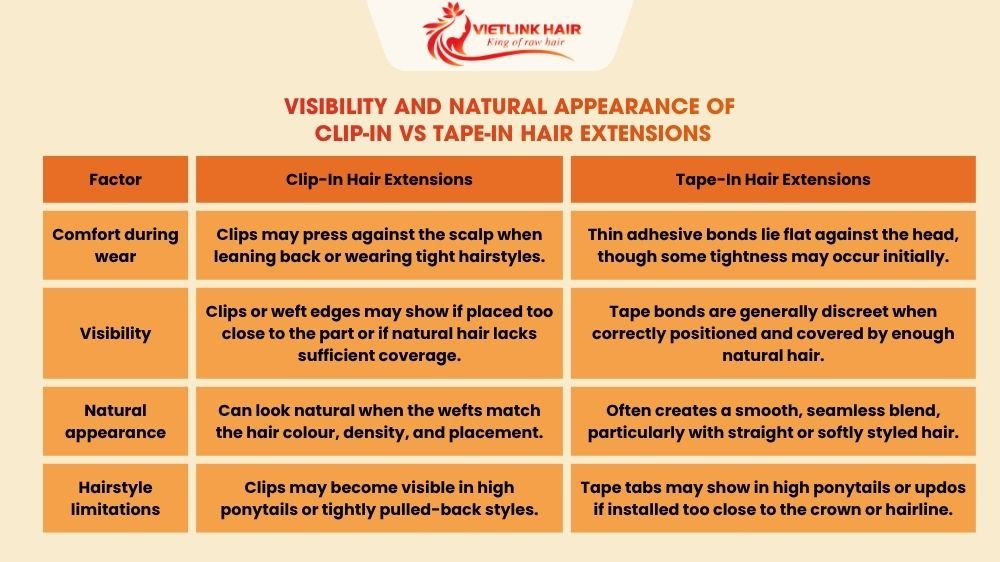
Clip-ins sit on top of a small anchor of teased hair. Many wearers forget they are on, but the clips can be felt when lying back against a headrest, wearing a tight updo, or pulling hair into a ponytail. Visibility depends on placement and hair density. On thick or medium hair, the wefts disappear under a top layer. On fine hair, the weft edge or clip can show near the part if the placement is too high.
Tape-in bonds often lie flatter than clip attachment points, although their concealment depends on shade, density, and placement. Persistent tightness, pulling, or scalp discomfort is not a normal result to ignore: ask the stylist to reassess the installation. High ponytails can expose either method if bonds or clips are placed in visible areas.
Wear Time, Maintenance, and Reusability
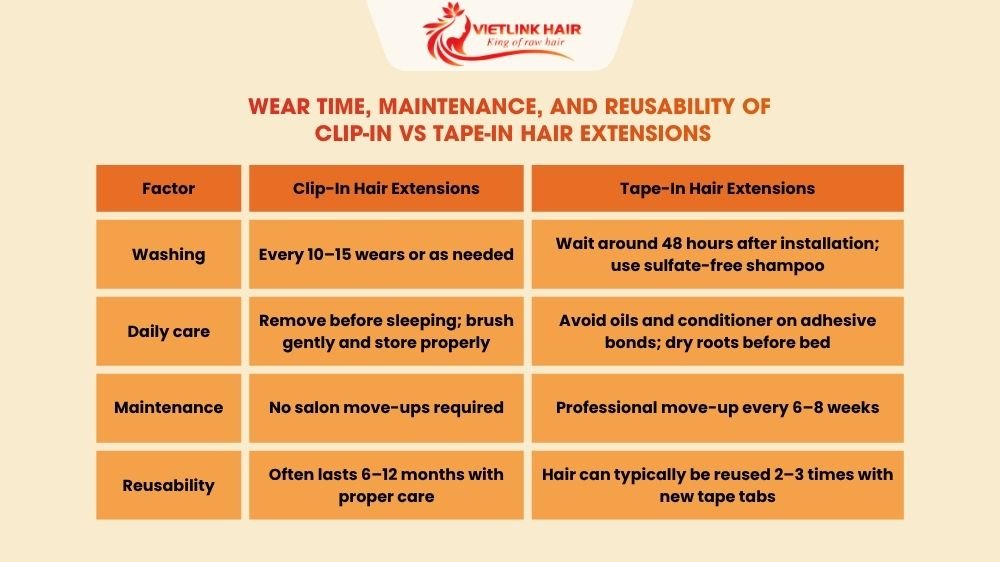
Clip-ins are worn when needed and are generally removed before sleeping, washing, or swimming. How often to clean them depends on product buildup and wear frequency rather than a fixed number of uses. Detangle gently, support the weft while brushing, and follow the manufacturer’s care instructions. Their useful life depends on hair and clip quality, frequency of wear, and care.
Tape-ins remain attached day and night between salon visits, including during ordinary washing and exercise when the product and fitting allow. They need product-specific washing and bond care. Follow the adhesive manufacturer’s instructions about when the hair can first be washed; a universal 48-hour waiting period should not be assumed. Keep oils and conditioners away from adhesive bonds where advised, dry the roots thoroughly, and arrange professional repositioning as the natural hair grows. A 6–8-week maintenance interval is common guidance, but some clients require an earlier appointment. Refit timing is not the same as the usable lifespan of the hair. Reuse is possible only when the hair and attachment system remain suitable.
Styling Versatility and Hair Compatibility
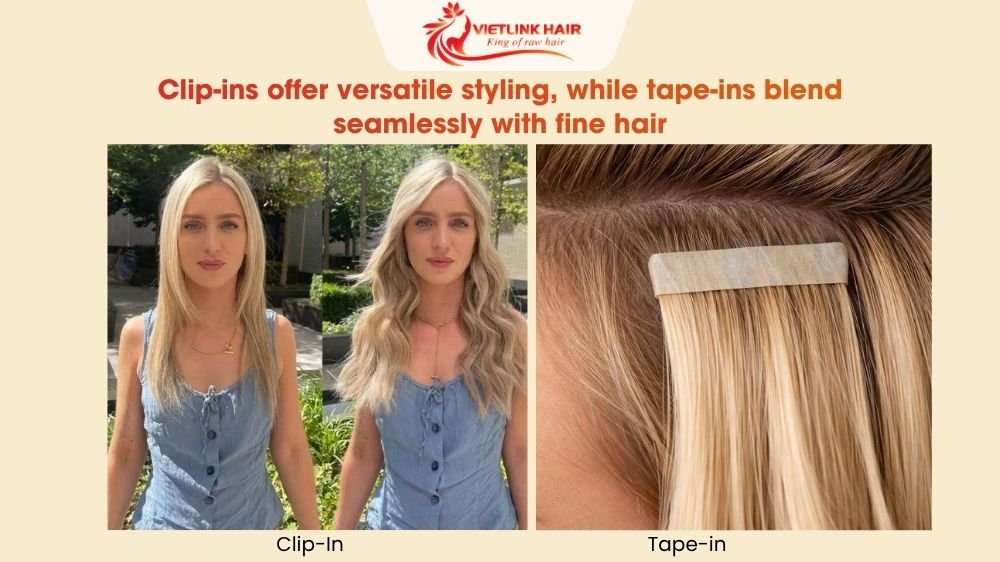
Because clip-ins come off easily, they allow day-to-day styling changes and can be colour-matched before wear. Heat styling is appropriate only for products designed to tolerate it. Clip-ins can suit occasional wear, but they are not automatically the safest choice for fine, fragile, or thinning hair: clip weight and repeated gripping on small sections can cause discomfort or breakage. Lightweight wefts may help some wearers, while people with noticeable hair loss or scalp sensitivity should seek professional advice before attaching any extensions.
Tape-ins can offer a relatively flat finish that may be discreet in fine hair, but a flat attachment is not automatically a low-risk attachment. Suitability depends on hair density, strand strength, panel weight, placement, and stylist assessment. If hair is actively thinning, fragile, or unable to support the attached weight, either method may be unsuitable. Hair length needs vary with placement and blending. Use heat only where the hair and attachment manufacturer permits it; do not apply hot tools directly to adhesive bonds.
Upfront Cost and Long-Term Value
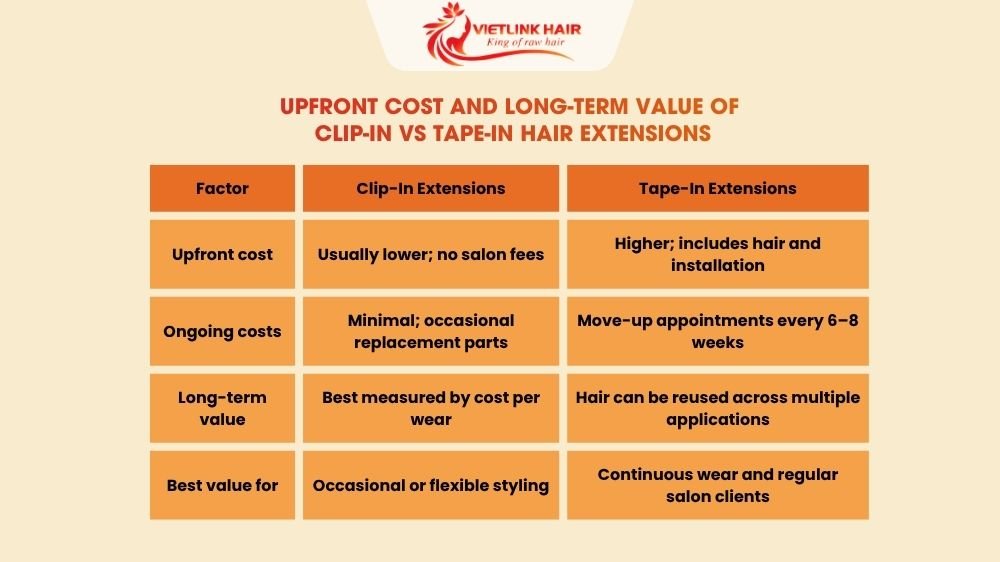
Cost per wear can help compare clip-in sets, but use realistic wear frequency and include any care or replacement costs. Daily clip use can also create stress where the same sections are repeatedly clipped, particularly on fragile hair.
For tape-ins, compare the full service cycle: hair purchase, first installation, replacement tape, maintenance appointments, removal, and the number of times the actual set remains usable. Reuse counts are not guaranteed; ask the supplier and stylist for product-specific guidance.
Pros and Cons of Clip-In vs Tape-In Hair Extensions
Clip-in and tape-in hair extensions each offer distinct advantages and limitations in terms of convenience, appearance, maintenance, and long-term wear. The following breakdown highlights the pros and cons of each method to help you determine which option best aligns with your styling needs and expectations.
Clip-In Hair Extensions: Pros and Cons
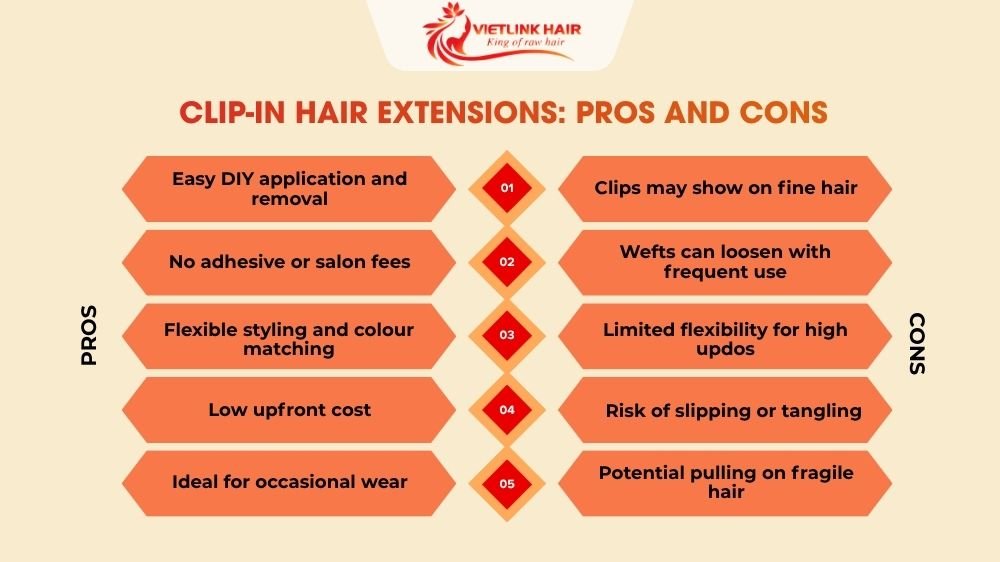
What works in their favour
- Usually self-applied and removable, without adhesive or salon installation
- Removable at night; avoid placing clips repeatedly on fragile sections
- Useful for testing length, colour, and volume before choosing a longer-term method
- Simple to colour-blend, curl, and restyle on a table before putting them in
- Lower upfront spend and no recurring maintenance fees
What to watch
- Clips can be felt in some positions and may show on very fine hair
- Daily on-and-off wear can loosen stitching over time
- Updos and high ponytails need careful placement to hide the weft edge
- Poor-quality sets with weak clips can slip or tangle quickly
- Heavy sets may tug on fragile strands if worn all day
Tape-In Hair Extensions: Pros and Cons
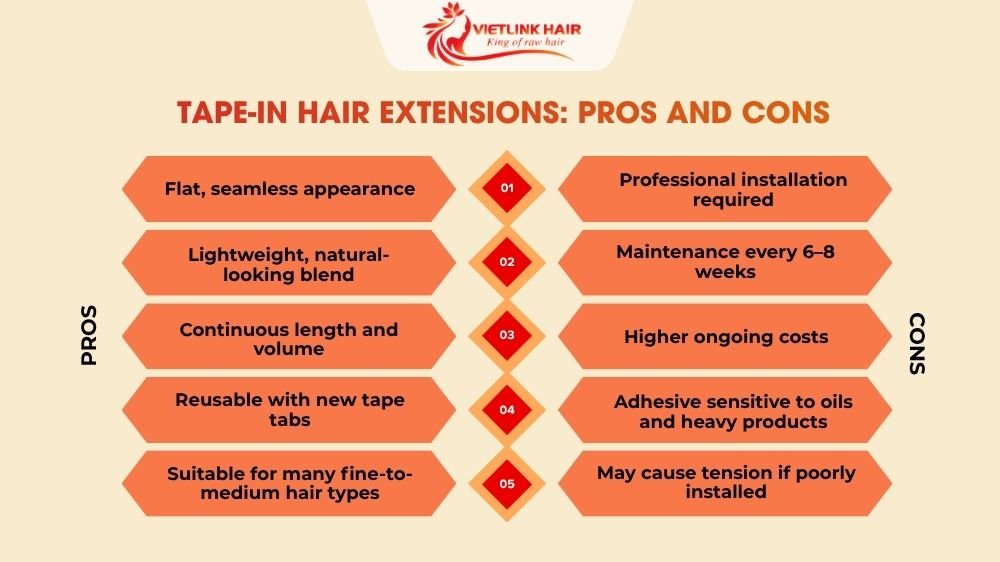
What works in their favour
- Flat bonds that may blend discreetly when correctly matched and placed
- Continuous length and volume without daily setup
- Hair may be reused if condition and product guidance allow
- Weight is distributed along the tape attachment, but suitability still requires individual hair assessment
- Regular salon appointments give stylists a chance to check scalp and hair health
What to watch
- Requires a trained stylist for installation and removal
- Needs regular professional move-ups (often around 6–8 weeks, depending on product and hair growth)
- Oils, silicone-heavy conditioners, and heavy products can weaken the adhesive
- Tabs placed too thick or too close to the scalp can cause tension
- May not be suitable for very short, fragile, or thinning hair; require professional assessment
Clip-In or Tape-In Extensions: Which Is Right for You?
The best choice depends on who is wearing the extensions, how often, and what the person expects from the result. Here is how the decision looks for different buyers.
If you are choosing for yourself
Pick clip-ins if you wear extensions occasionally, want to experiment with length or colour, or prefer to keep your natural hair free of any bonding. Pick tape-ins if you want an always-on result, you already visit a stylist regularly, and you are comfortable with maintenance appointments. If your hair is very fine, start with thin clip-in wefts or ask a stylist whether tape-ins are safe for your density.
If you run a salon or work as a stylist
Offering both methods can serve different client needs when salons have appropriate training and stock. Clip-ins suit occasional wearers, while tape-ins require a service plan that includes installation, maintenance, and removal. For a closer look at another professional fitting choice, see our tape-in vs I-tip extensions comparison. Keep realistic product and adhesive specifications on the salon’s purchasing checklist.
If you resell online or build a private label brand
For resale, compare how customers buy each method: clip-ins may suit self-install customers, whereas tape-ins usually require professional application. Test hair quality, clip strength, adhesive compatibility, shade consistency, and real demand before expanding stock. Packaging and custom specifications should be confirmed in writing with the supplier.
Where to Buy High-Quality Clip-In and Tape-In Extensions
Where you buy clip-in vs tape-in hair extensions can affect product quality, customer satisfaction, and the consistency of future orders. Before choosing a supplier, evaluate the following factors:
- Hair quality: Check whether the hair is 100% human hair, how it has been processed, and whether the cuticles are aligned to help minimise tangling.
- Weft construction: Look for secure, even stitching and consistent hair density across each weft.
- Attachment components: Clip-in extensions should have durable clips that hold securely, while tape-in extensions need reliable adhesive tabs designed for secure attachment and clean removal.
- Colour consistency: Matching shades across individual pieces and repeat orders helps salons deliver consistent results, and businesses maintain customer trust.
- Product range: A suitable supplier should offer different lengths, weights, and textures to accommodate varied styling preferences and customer needs.
- Private label options: For hair brands and resellers, custom packaging, labelling, and product specifications can help establish a distinctive market position.
For salons, resellers, and hair brands comparing wholesale clip-in and tape-in products, a Vietnamese human hair supplier may be worth considering alongside local distributors. Discuss the required weight, colour, weft construction, clip or tape specifications, and expected landed cost before ordering. Learn how factory-direct sourcing works through this Vietnamese hair factory overview; verify current stock and product-specific capabilities with Vietlink Hair.
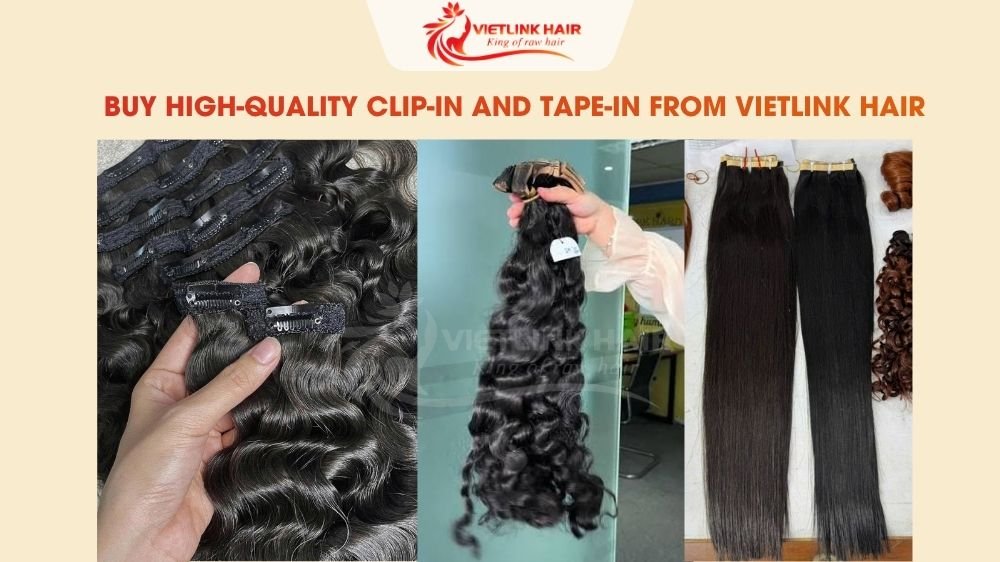
Ask the supplier for product-specific samples or specifications before ordering in bulk. For branded clip-in or tape-in lines, confirm whether packaging, labelling, custom colours, or other private-label services are available for the requested order and what minimums apply.
For a business quotation, prepare your product format, required hair length and texture, target quantity, and delivery destination. Confirm the minimum wholesale order (500g), availability, and product-specific conditions directly before payment.
FAQs
Which lasts longer, clip-in or tape-in hair extensions?
Clip-ins are removed between wears, whereas tape-ins stay attached until a professional move-up. These are different measures: wear time per installation is not the same as the lifespan of the reusable hair. Actual longevity depends on materials, installation, frequency of wear, and aftercare.
Do tape-in extensions damage hair more than clip-ins?
Neither method is damage-free, and it is not possible to rank the damage risk for everyone by attachment type alone. Tape-ins create continuous attachment points and can cause pulling, matting, or breakage if panels are too heavy, maintenance is delayed, or adhesive is removed incorrectly. Clip-ins avoid continuous wear and adhesive but can still cause traction and breakage if heavy pieces repeatedly grip the same fragile sections. Persistent pain, redness, or increased shedding warrants removal or professional assessment rather than continued wear.
Which is better for fine or thinning hair: clip-in or tape-in extensions?
Neither is automatically safer. Clip-ins are removable and avoid adhesive, but clips can concentrate weight on small sections. Tape-ins lie relatively flat, yet continuous wear and poorly matched panel weight may stress fragile hair. A stylist should assess density, shedding, scalp comfort, and the amount of added hair before recommending either method. If hair loss is active or significant, postponing extensions may be the better option.
Can you wash and swim with clip-in or tape-in extensions?
Remove clip-ins before washing or swimming. Tape-ins can be washed according to the adhesive and hair manufacturer’s instructions, but avoid conditioners or oils on attachment areas if advised. Pools, salt water, and prolonged moisture may affect hair quality and bonds; ask your stylist for care appropriate to the specific system.
Can I order wholesale clip-in and tape-in extensions under my own brand?
Many hair extension suppliers offer OEM or private-label arrangements, but availability is not guaranteed for every clip-in or tape-in specification. Ask Vietlink Hair to confirm available formats, packaging options, minimum quantities, and sample terms in writing before placing an order.
Final Thoughts: Clip-In vs Tape-In Hair Extensions
In conclusion, choosing between clip-in vs tape-in hair extensions depends on your styling needs, maintenance preferences, and budget. Clip-in extensions offer flexibility and easy at-home application, making them ideal for temporary styling, while tape-in extensions provide a more seamless look for longer wear but require regular salon maintenance. For salons, resellers, and hair brands, the right choice also depends on customer demand, product quality, and profit margins.
Need Clip-In or Tape-In Hair Extensions for Your Business?
Tell Vietlink Hair the extension method, length, colour, quantity and delivery destination you need. Request current specifications, availability and an itemised wholesale quotation.

Pingback: How Long Do Extensions Last? Hair Care Secrets