
Hair Extension Knowledge
Natural Curly Hair With Extensions: A B2B Matching Guide
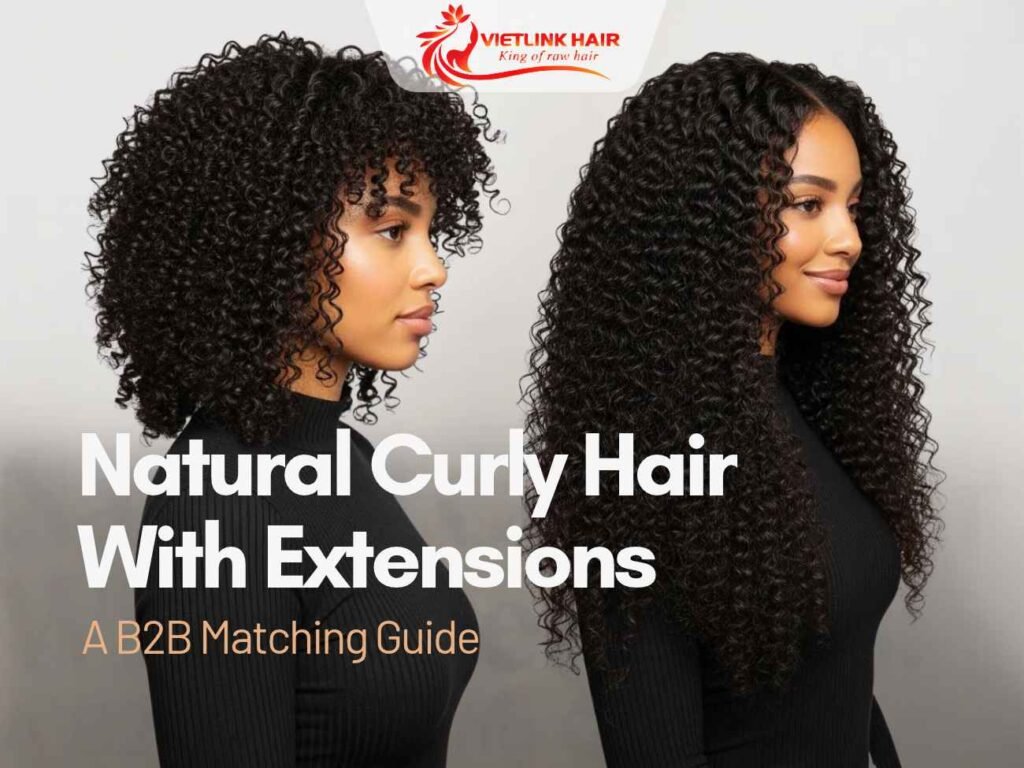
A curly hair extension can look convincing in a product photo yet blend poorly after washing if its curl size, shrinkage, or density differs from the wearer’s hair. The cause may involve the product, styling routine, installation, or a combination of factors. This guide shows wholesale buyers how to match curl pattern, shrinkage, method, and hair type when sourcing natural curly hair with extensions before placing an order.
What Is Natural Curly Hair With Extensions?
Natural curly hair with extensions means selecting added hair whose curl size, density, movement, and dry appearance blend with the wearer’s natural curls. The goal is a believable result after normal washing and styling, not just a match in a product photo.
For buyers, check three separate specifications: curl pattern, shrinkage (how much shorter hair appears when curled), and processing history. Terms such as Remy, raw, or single donor do not by themselves guarantee a particular curl pattern or curl retention. Request clear specifications and test a sample before ordering in volume.
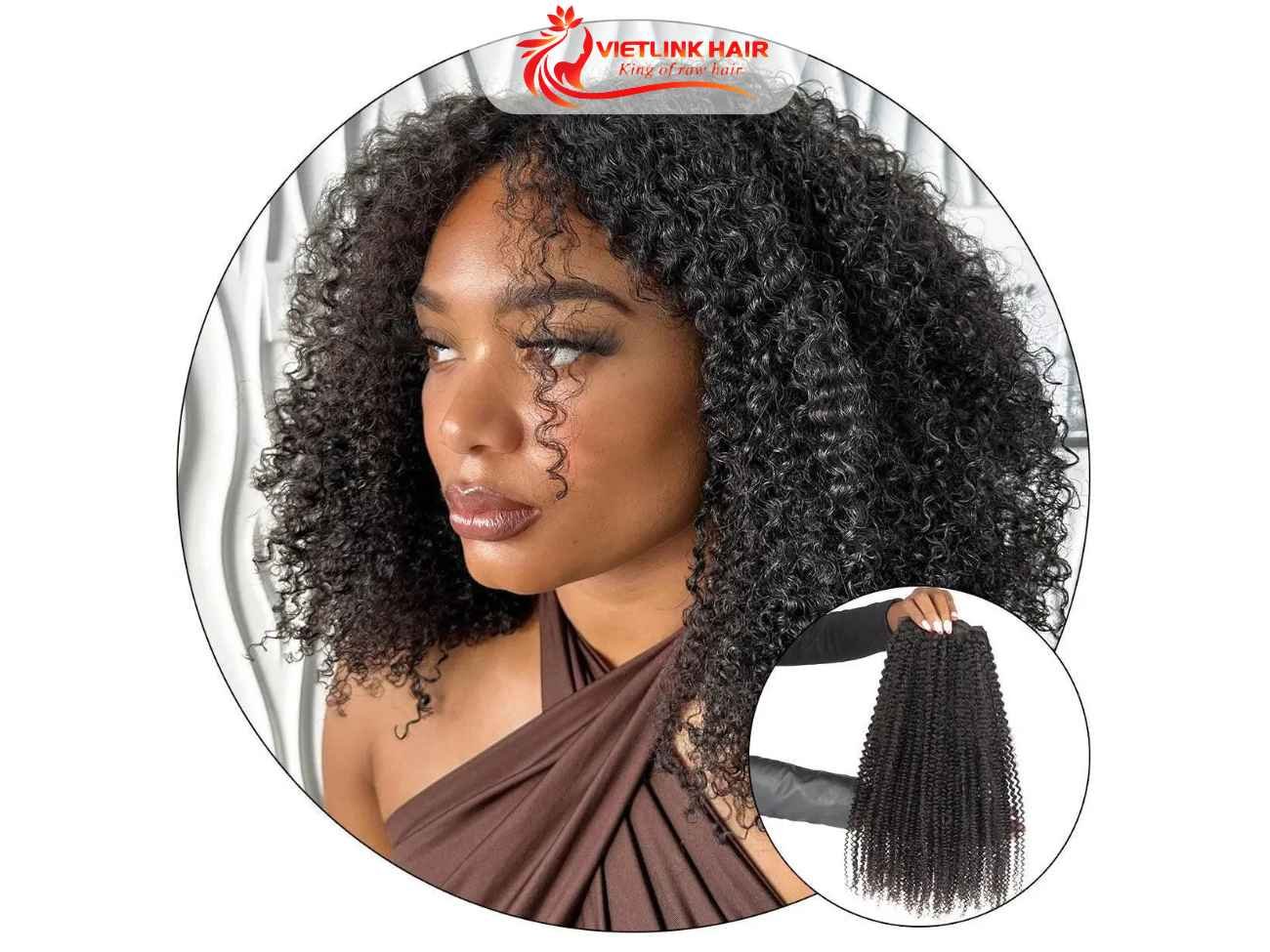
How Curl Pattern and Shrinkage Change Naturally Curly Hair With Extensions
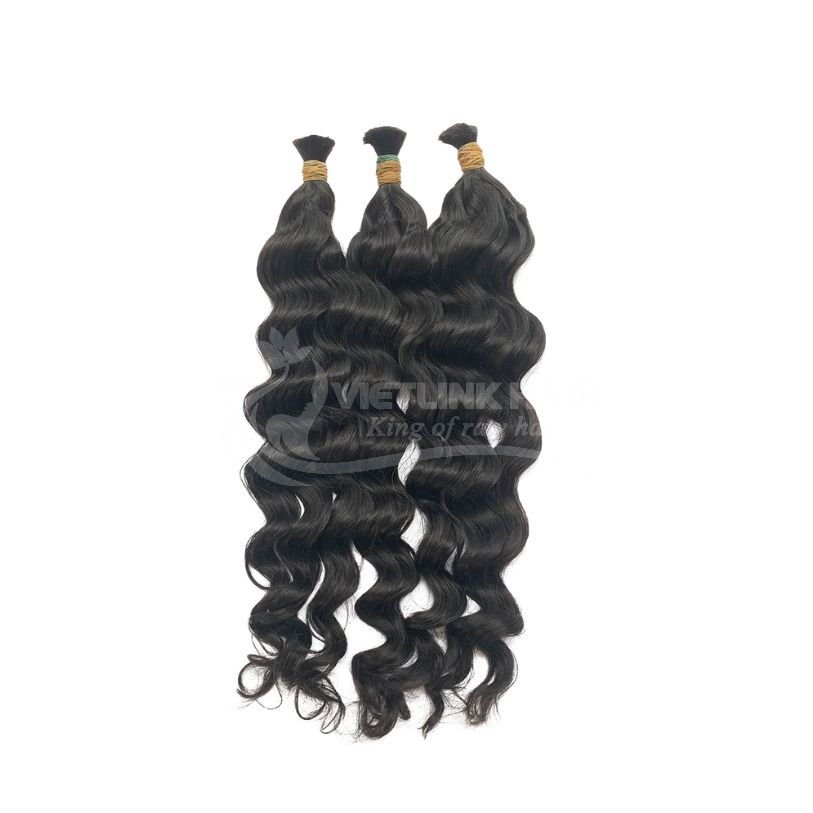
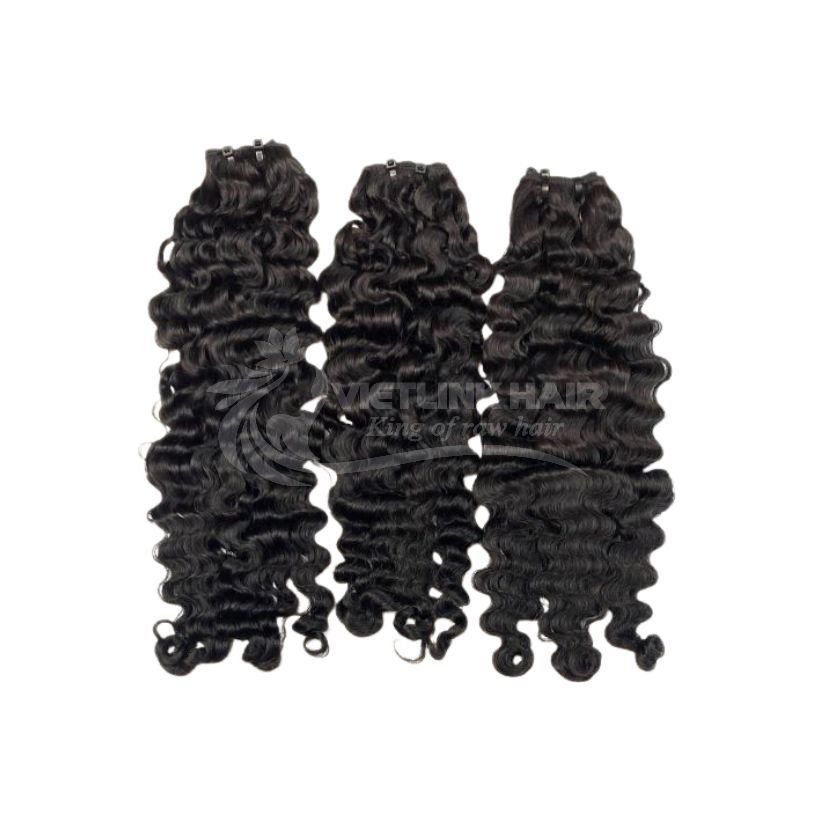
Matching a curl pattern requires more than selecting a label such as 3A or 4C. Hair can vary in curl diameter, density, porosity, and shape across one head, so compare a sample with the client’s crown, sides, and nape in natural light.
Use curl classifications as a communication aid rather than a precise guarantee. A supplier’s “3C” product may not look identical to a client’s 3C curls after washing.
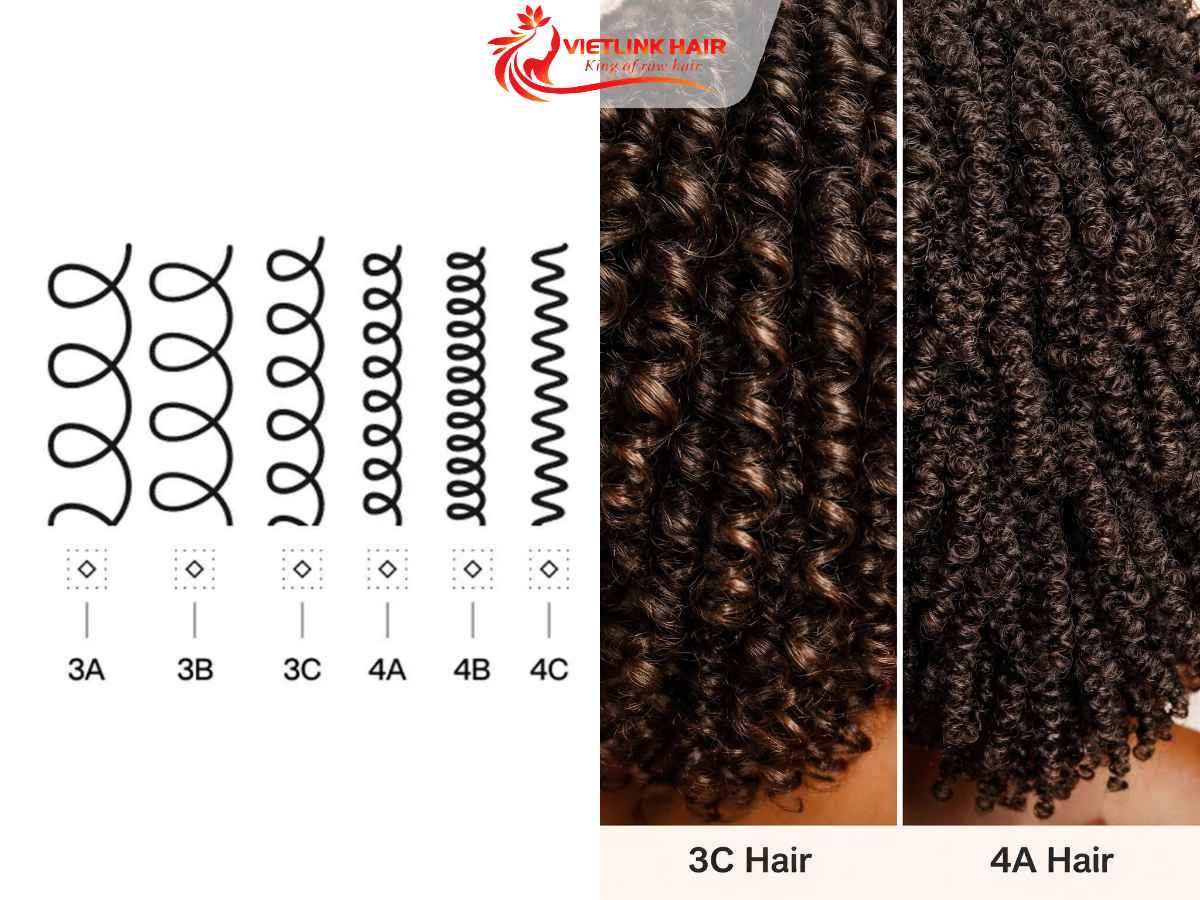
Shrinkage is the second critical check. Curly and coily hair may look substantially shorter when dry than when stretched. Compare natural hair and extension samples at a similar dry, styled state, and ask the supplier whether advertised length is measured stretched. Avoid assuming that every 4C product shrinks by the same number of inches.
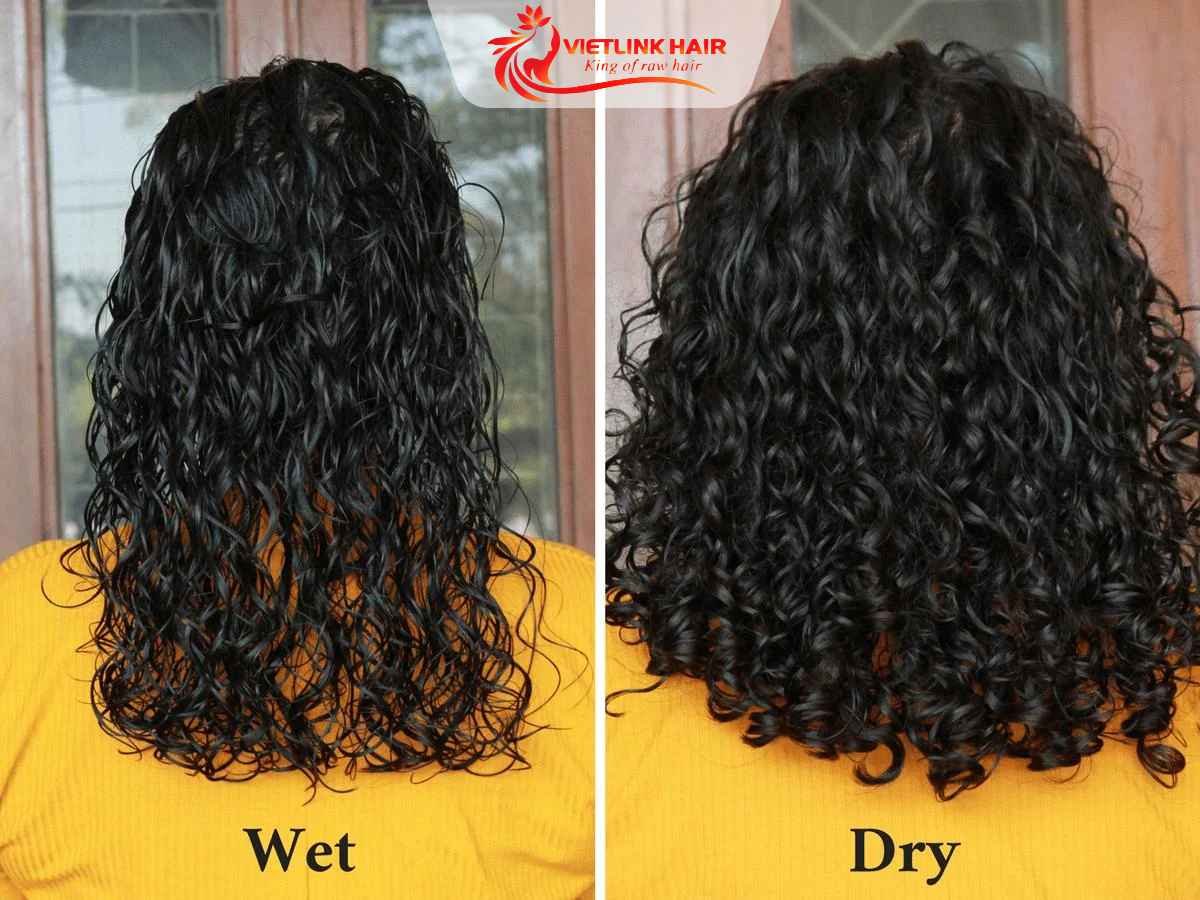
Use this illustrative guide to shortlist samples; curls within each category vary:
| Client curl type | What to look for | Common mistake |
| 3A to 3B | Loose spiral, soft movement | Choosing tight curls that stand out |
| 3C to 4A | Dense small spirals | Choosing wavy hair that stretches out |
| 4B to 4C | Tight zigzag coils | Ordering a curl that is too uniform |
Buyer tip: Record both the stretched length and dry finished appearance. Ask how each supplier measures curly hair; the difference varies by texture and should not be expressed as a fixed number of inches.
How to Choose Extensions for 4C Natural Hair
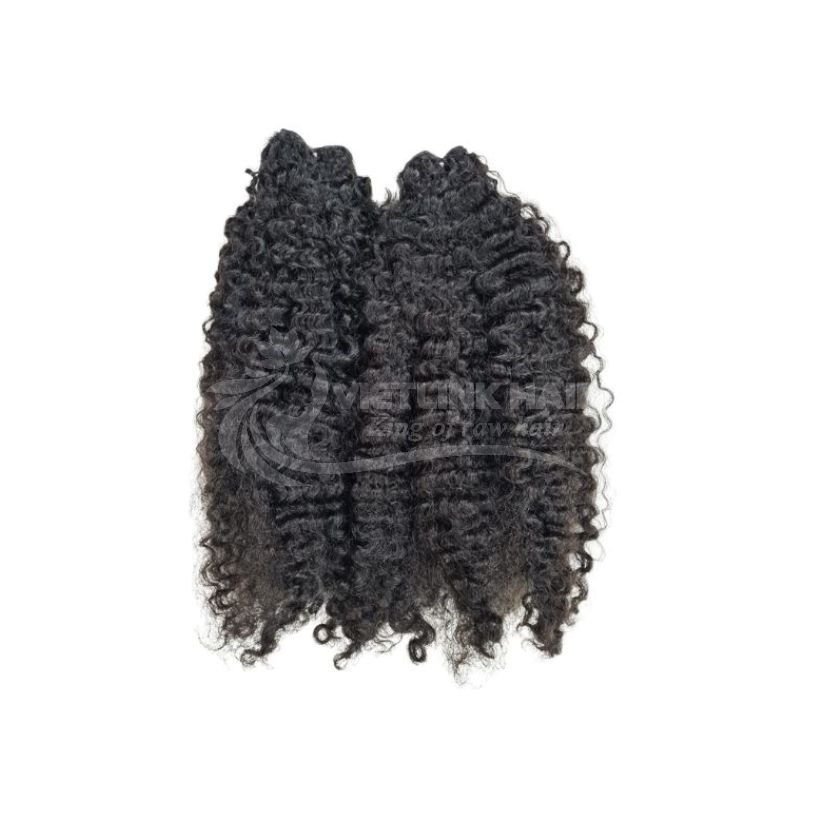
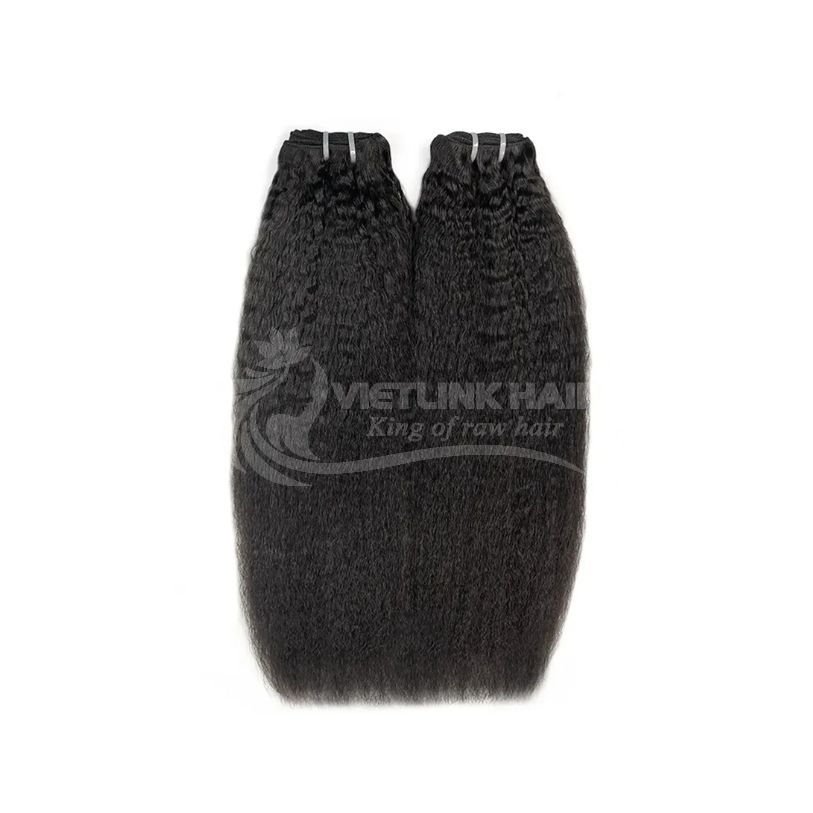
For 4C hair, match the finished hairstyle rather than shopping by a curl-type label alone. A naturally worn coily look often needs a tightly coiled extension with comparable density, surface texture, and dry shrinkage; a stretched twist-out or blown-out style may blend better with an afro-kinky or kinky-straight finish. Neither option is automatically correct for every wearer.
Check a representative sample after washing, conditioning, and air-drying. Compare the sample alongside the client’s leave-out or visible hair in the style they actually wear. Record both the stretched measurement and the finished dry length; avoid universal shrinkage figures because the result varies by product and styling method.
For installation: choose clip-ins for removable styling when placement and clip tension are suitable; professionally installed wefts or other methods may suit longer wear when the foundation is comfortable and the client’s hair can safely support it. Avoid putting heavy attachments near fragile edges. If an installation causes pain or pulling, have a qualified stylist remove or adjust it.
The brands and product examples shown in search results demonstrate that several kinds of 4C-matching extensions exist, but they do not establish whether Vietlink Hair currently stocks any specific 4C texture. Confirm availability and sample specifications directly.
Choosing the Right Method for Curly Natural Hair Extensions
If you are weighing strand-by-strand versus flat attachments, review our tape-in vs I-tip extensions guide.
With texture defined, the installation method also affects how natural curly hair with extensions moves after installation.
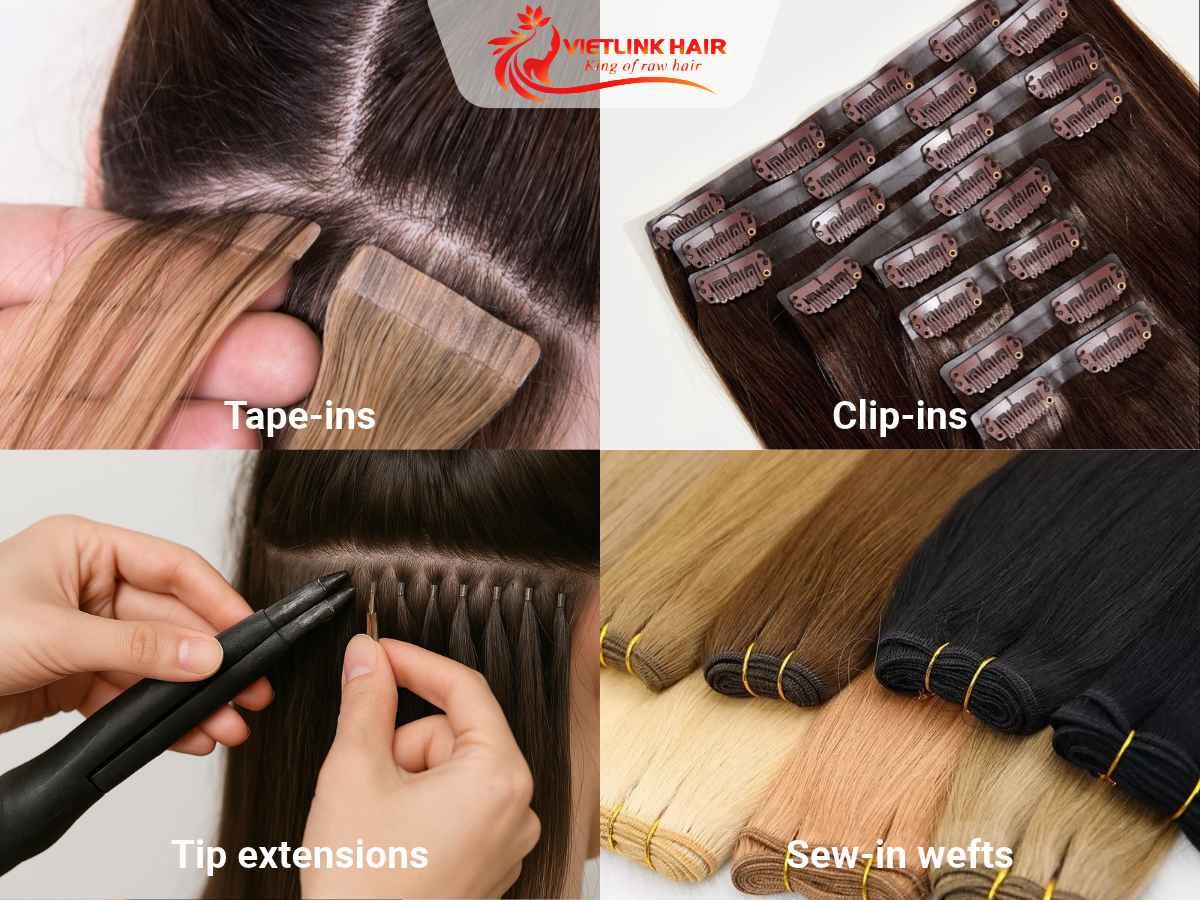
Each method suits a different client profile. Use this list to match method to need:
- Clip-ins: Useful for temporary volume and special occasions. Rotate placement and avoid clips that tug at fragile edges; removable does not mean risk-free.
- Tape-ins: Flat attachments that may work for some curly-hair clients, depending on density, styling habits, and professional placement.
- Nano rings: Small bead attachments without heat; suitability depends on hair strength, bead fit, tension, and maintenance.
- Tip extensions: I-tip and flat-tip options that place hair exactly where the client needs it.
- Sewn-in or beaded-row wefts: May provide volume and longer wear for suitable clients, but need a professional foundation, appropriate weight, and scheduled checks. Some sew-in styles use leave-out for blending; a leave-out is not appropriate for every installation.
Attachment weight, distribution, and tension all matter. Fine or fragile natural hair may be vulnerable to pulling even when a method does not use heat. A qualified stylist should assess scalp comfort, density, installation technique, and maintenance; remove or adjust any painful installation. See the American Academy of Dermatology’s guidance on extensions and traction.
Common Buyer Mistakes With Natural Curly Hair With Extensions
Even experienced vendors repeat a few errors, so it pays to review them before your next purchase order.
The first mistake is ordering by photo instead of by sample. A product image cannot show how a curl behaves after washing, and lighting can hide a loose pattern. The second mistake is mixing textures inside one order without labeling them, which leads to stylists grabbing the wrong bundle.
The third mistake is ignoring the client’s density. Thin, tight curls need a lighter product, while dense curls can carry more weight without losing shape. In curly work, density and curl pattern must be judged together, not separately. This is especially important when sourcing natural curly hair with extensions, because excessive weight can change the client’s natural curl shape.
Raw Hair vs Steam-Styled Hair for Extensions With Naturally Curly Hair
The method is only half of the decision, because the hair type decides how long the curl survives.
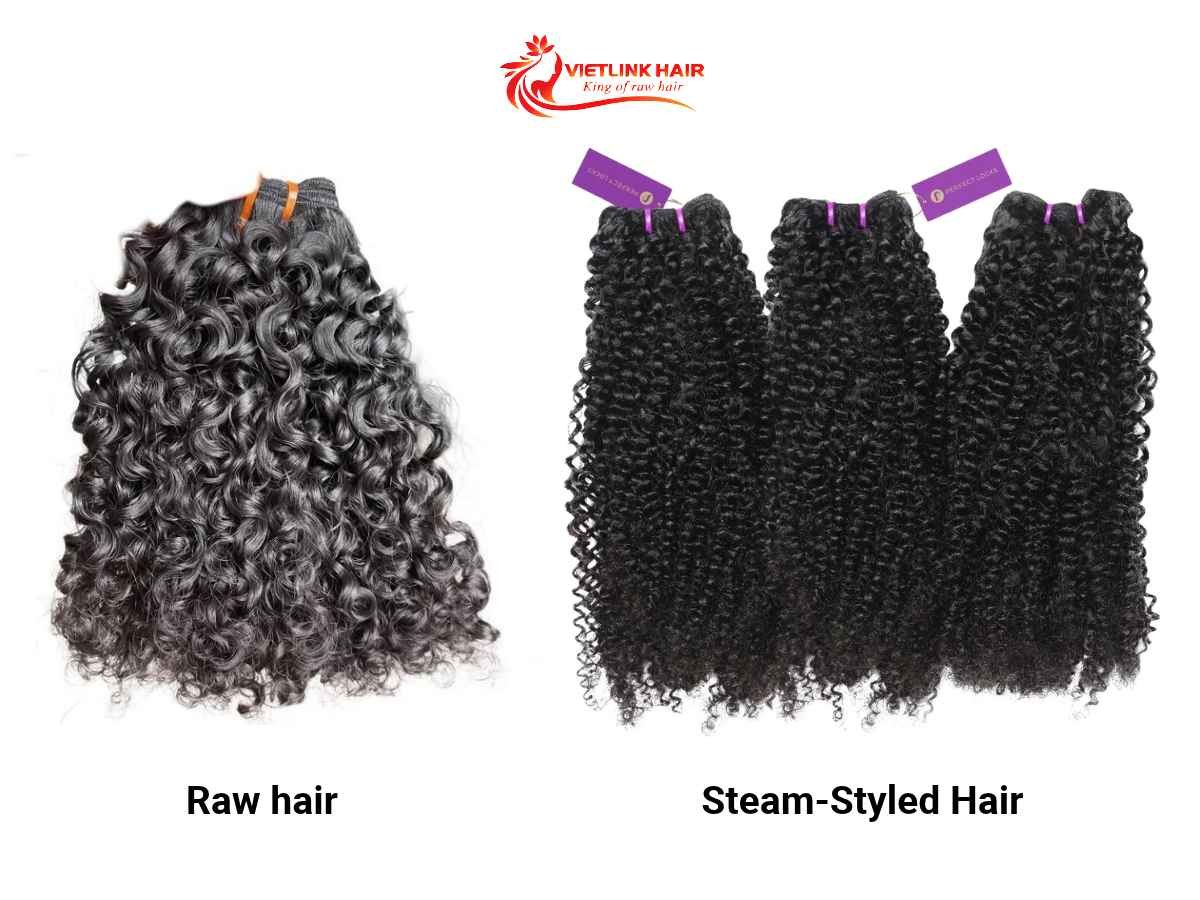
Natural-texture hair and factory-textured hair are different sourcing options. Hair sold as “raw” should have its processing history clarified; the term is not a guarantee of single-donor sourcing, untouched texture, or curl performance. Steam-textured hair can retain its pattern well, but results depend on the process, hair condition, and care routine. Ask suppliers to identify how the curl was formed and compare samples after washing and air-drying.
| Factor | Raw single donor hair | Steam-styled hair |
| Curl retention | Varies; verify natural pattern after wash | Varies by processing; test retention |
| Best for | Clients with natural curls | Clients who want a styled curl |
| Advantage | Potentially natural texture; batch matching still needed | Repeatable styled patterns may be available |
| Limitation | Natural curls and quantities may vary | Processing and care requirements vary |
Neither type is better in every case. Choose according to how closely the product matches the client’s post-wash curl, care requirements, cost, and available stock. Test representative samples and track any customer feedback by product specification and batch; there is no universal winner.
A product labeled “curly” may have a naturally occurring or manufacturer-created texture. Product photos alone cannot establish the processing method or post-wash behavior; verify the specification and test the sample.
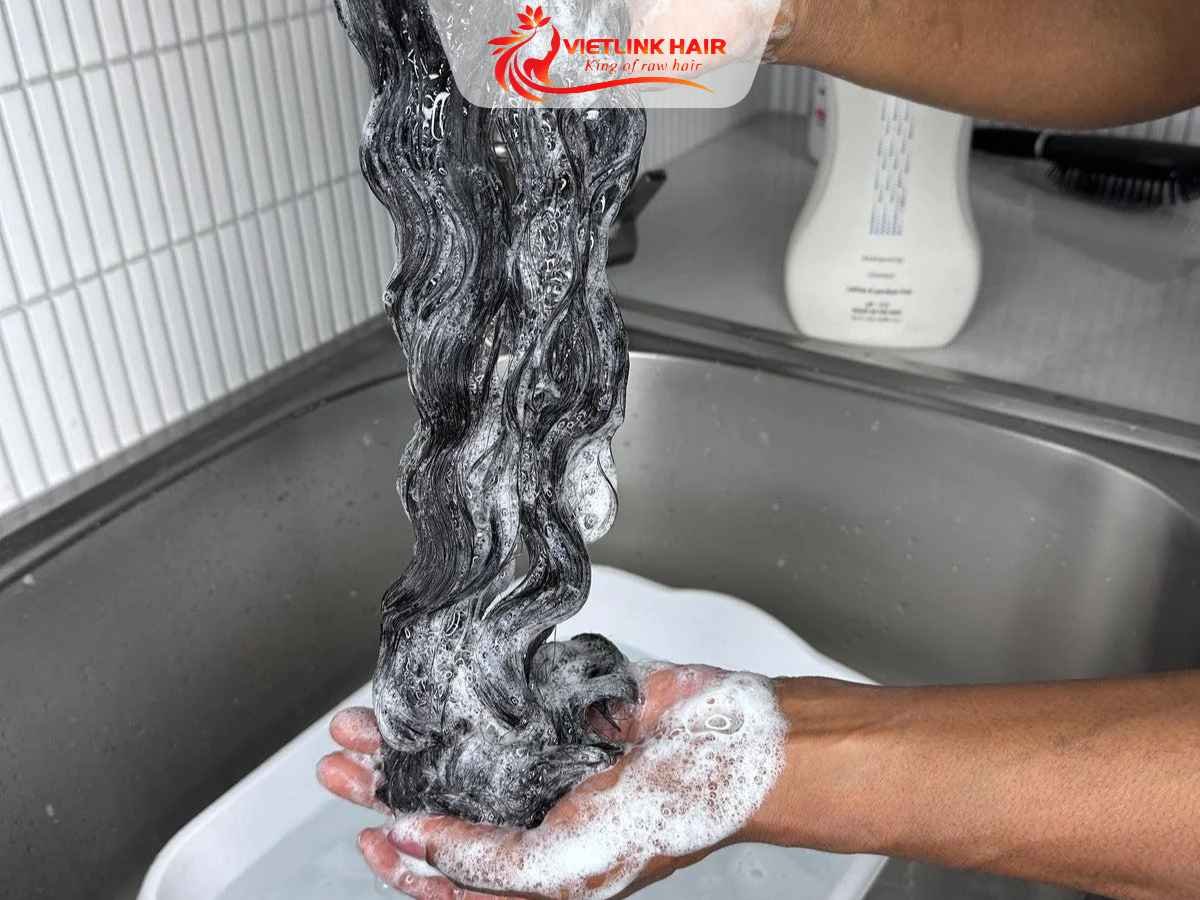
Buyer test: Wash and air-dry a representative sample using its intended care routine, then compare the curl pattern and tangling with the pre-wash result. Repeating the test can reveal changes, but a fixed number of washes is not proof of lifetime durability.
How to Blend Extensions With Naturally Curly Hair: A 6 Step Checklist
After the right hair reaches the chair, the blend depends on a clear, repeatable process.
Give your stylists this checklist so results stay consistent:
- Match the texture in a dry state. Hold a small sample against the client’s crown and nape in natural light.
- Plan the blending area. Where a leave-out installation is used, blend the top natural layer; for other methods, conceal attachments according to the style.
- Choose a comfortable installation. Have a professional assess attachment weight and tension, especially for fragile hair.
- Cut and layer after installation. Trim the extensions while they sit in the client’s hair so the shape follows the natural curl.
- Style the two textures together. When the product instructions allow, dampen and define natural hair and extensions in the same session using compatible conditioning and hold products. Air dry or diffuse gently to compare the finished patterns.
- Teach the aftercare. Give the client a short care sheet before they leave.
Each step protects the curl pattern, which is the main asset in curly work. Final blending depends on curl match, placement, shaping, and aftercare. The checklist is a practical guide, not a guarantee of customer outcomes.
Quality Checklist for a Natural Curly Hair With Extensions Order
Once you know the common errors, a short quality checklist helps you screen every supplier the same way.
Run these checks on each sample batch:
- Curl consistency: Compare representative bundles in the same dry condition and document any acceptable variation.
- Cuticle direction: Ask for processing and cuticle-alignment specifications; touch alone cannot verify cuticle direction.
- Wash test: Wash, air-dry, and compare the pattern to the initial result; repeat consistently if needed.
- Shedding and tangling: Comb gently and watch for excess loss at the weft or bond.
- Color and shine: Look for a natural finish, not a waxy or coated surface.
Record the result for every batch in a simple sheet. Batch-level notes can help identify repeatability issues and guide future supplier discussions; short sample histories do not establish long-term performance.
Care Tips for Natural Curly Hair With Extensions
For everyday upkeep, see our hair extension aftercare tips and guidance on how to detangle hair extensions.
Once the blend is complete, aftercare keeps the curl alive, so share these points with your retail clients.
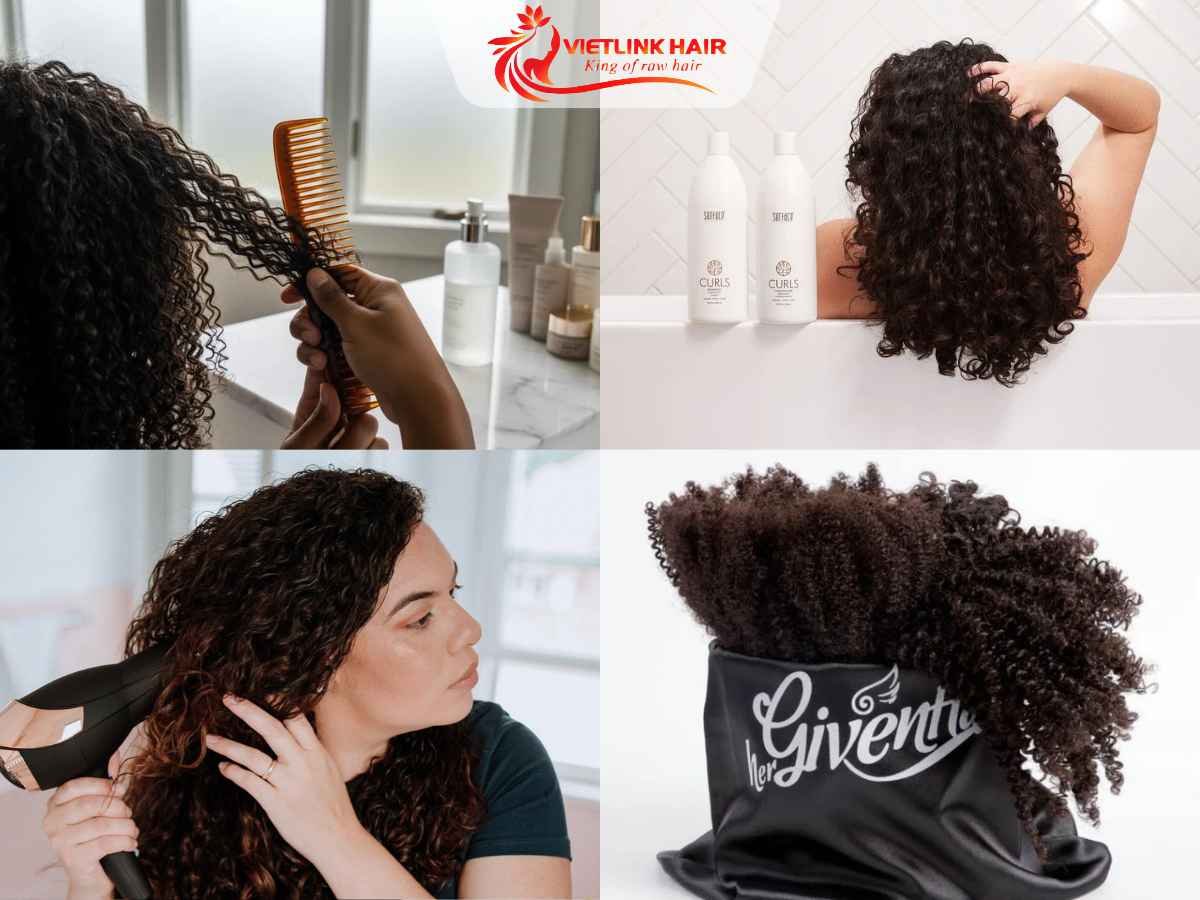
- Use a gentle shampoo and a compatible conditioner; sulfate-free formulas may be suitable, but follow the specific extension and attachment care instructions.
- Detangle gently in sections with fingers or a suitable comb, often with conditioner for tightly coiled textures; support the attachment and work from the ends upward.
- Avoid heavy oils and butters that weigh down the curl.
- Air dry or use a diffuser on low heat.
- Store the hair loosely between wears, never tightly bundled.
These practices may help reduce friction and buildup. Include care instructions matched to the extension attachment and texture; avoid conditioning or oiling bonds unless the installer or manufacturer permits it.
Sourcing Extensions With Naturally Curly Hair From a Vietnam Factory
For wholesale buyers considering a Vietnam-based supplier, compare written specifications and representative samples before placing a larger order. Vietlink Hair’s website presents a range of Vietnamese human hair products, but availability of a particular 3A–4C curl pattern, natural-texture sourcing, and processing requirements must be confirmed for each quotation.
- Define the specification: Share the target curl reference, stretched length, dry appearance, color, weight, product format, and intended installation method.
- Request current product details: Ask Vietlink Hair about available textures, processing history, sample terms, pricing, MOQ, and the measurement method used for curly hair.
- Review a sample: Compare its dry curl and shrinkage with the client’s natural hair, and check its condition after washing and air-drying.
- Confirm commercial terms: Obtain production, payment, shipping, and repeat-order specifications in writing before paying for a bulk order.
For additional context, compare Remy hair vs raw hair and wavy hair vs curly hair before deciding which product language best describes the hair you need.
FAQ About Natural Curly Hair With Extensions
The questions below come up often when new buyers start a curly hair line, so use them to prepare your own product pages.
Can extensions match 4C hair?
Yes, when a suitable texture and installation are available. Compare coil size, density, surface appearance, and shrinkage after washing. For a stretched or blown-out 4C style, a matching stretched texture may work better than a tightly defined coil. Test a sample against the client’s actual finished hairstyle.
Do curly extensions lose their curl after washing?
It depends on the hair type. Retention depends on the fiber’s natural pattern, processing, and care. Ask for processing details and test representative samples after washing and air-drying; no single wash test proves long-term durability.
How does shrinkage affect length?
Curly hair springs back when it dries, so a stretched length looks shorter in real life. Measure both the client’s hair and the sample in the same dry state.
How Do I Test a Curly Hair Extension Before Buying?
Order a representative sample and document its initial curl, dry length, and feel. Wash and air-dry it using the care routine you plan to recommend, then compare curl recovery, tangling, shedding, and shrinkage. Repeat the same method for meaningful comparisons, but do not treat a small wash test as a guarantee of long-term wear.
Which method suits fine curly hair?
No method is automatically safest. Removable clip-ins, selected tape-in installations, or professionally fitted wefts may be options depending on density, hair strength, styling habits, and maintenance. A qualified stylist should evaluate weight and tension, especially around the hairline. An attachment that pulls or hurts needs immediate adjustment.
What order size can I start with?
Minimum order quantities depend on the supplier and product specification. Ask Vietlink Hair to confirm the current MOQ and quoted terms for the exact curly-hair product you need.
Final Thoughts on Natural Curly Hair With Extensions
Blending natural curly hair with extensions starts with a post-wash curl match, realistic shrinkage expectations, safe attachment weight, and appropriate aftercare. Buyers should request material and processing specifications, inspect samples, and compare batches rather than rely on curl labels or promises of guaranteed retention.
Explore Curly Hair and Extension Guidance From Vietlink Hair
Choosing a matching curl pattern and suitable extension method starts with clear specifications. Visit Vietlink Hair to explore our hair resources and available product categories.

Pingback: Yaki Straight vs Kinky Straight Hair: 7 Key Differences
Pingback: Wavy Hair vs Curly Hair: Amazing Differences Explained