
Hair Care
7 Best Anti-Humidity Hair Treatments for Humid Weather
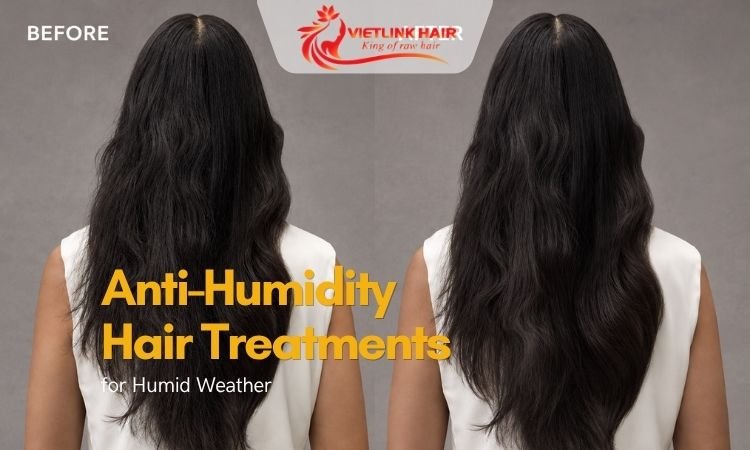
Humidity can quickly turn smooth hair into frizz, especially in warm, humid regions like Florida and Texas. The effect can be more noticeable with extensions when their texture reacts differently from the client’s natural hair.
Anti-humidity hair treatments help control frizz, moisture-related expansion, and shape loss. Options include anti-humidity sprays, smoothing serums, leave-in conditioners, oils, and protective styling.
For B2B buyers, the right treatment also depends on hair texture, processing, density, climate, and maintenance needs.
What Are Anti-Humidity Hair Treatments?
Anti-humidity hair treatments are products or care methods that help limit the visible effects of moisture in the surrounding air.
Humidity can affect hair because water interacts with the hair fiber and the temporary bonds that help maintain a styled shape. This is one reason straightened hair can become wavy or puffy, while curly hair can become larger and more frizzy in humid conditions.
A useful anti-humidity hair treatment therefore has two main purposes:
- Control unwanted frizz and surface roughness
- Help maintain the desired hair shape
Some products work by forming a light film around the hair. Others improve conditioning and manageability, making hair easier to style.
However, no treatment can completely separate hair from its environment. Product performance depends on the formula, application, hair condition, and humidity level.
For extension buyers, this distinction matters. A supplier’s “humidity-resistant” claim should be supported by clear specifications and sample testing rather than treated as an absolute performance guarantee
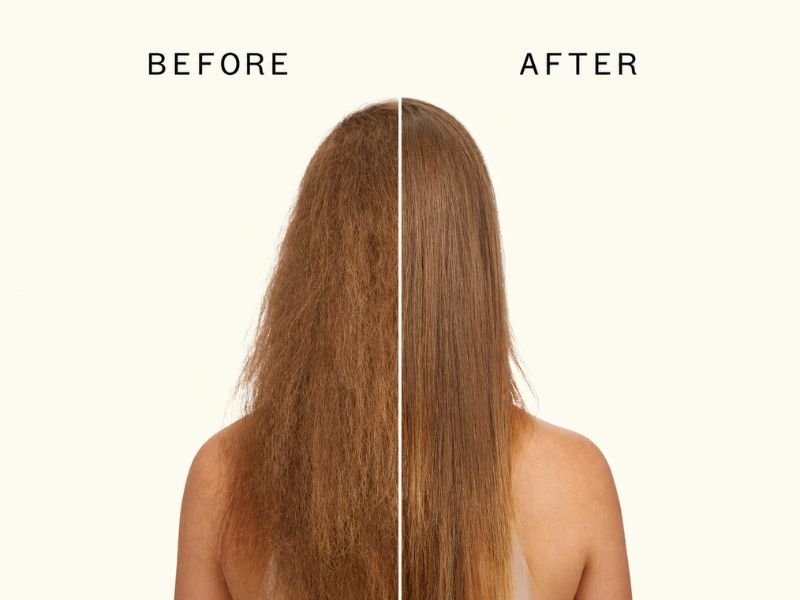
How Humidity Affects Different Hair Textures
Before choosing anti-humidity hair treatments, buyers should understand how each texture behaves.
The same humidity level can create very different results on straight, wavy, and curly hair.
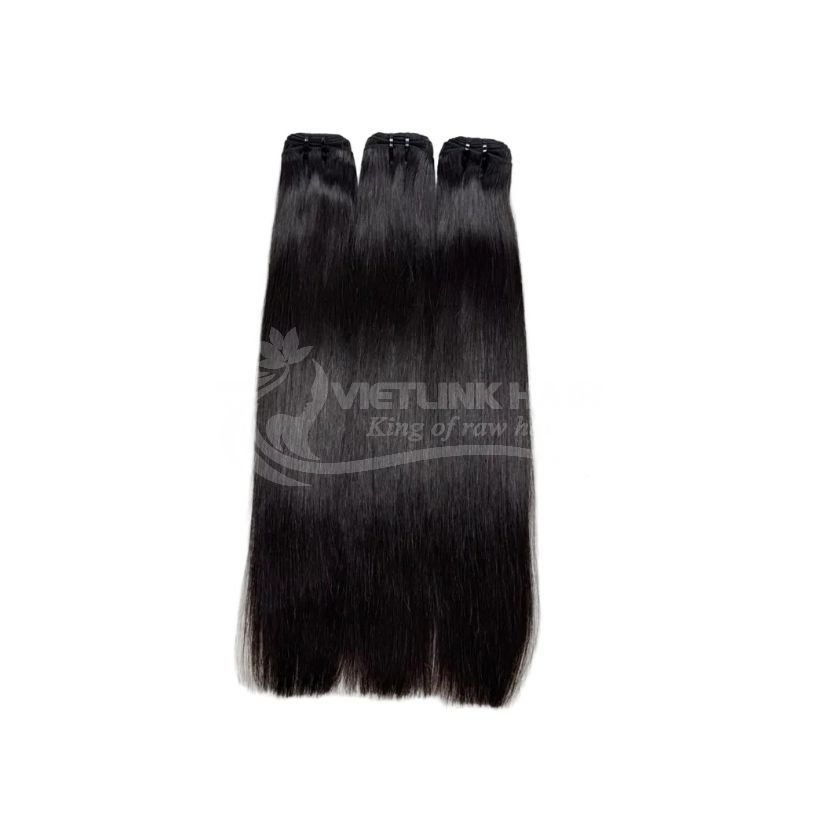
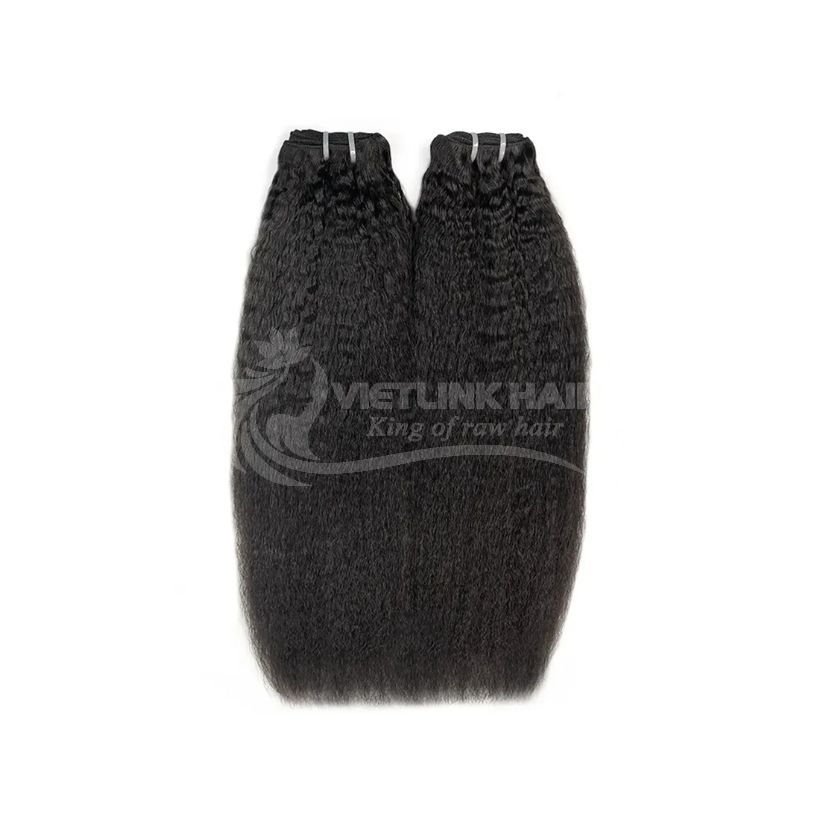
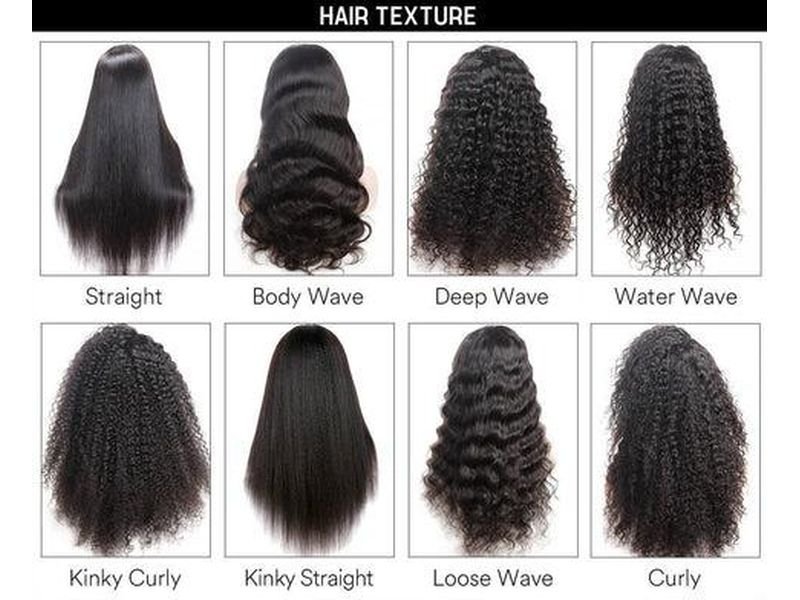
Straight Hair
Straight hair makes humidity-related changes easy to see.
A sleek hairstyle can develop bends, flyaways, or surface frizz when exposed to moisture. This is especially noticeable when the customer expects a completely smooth finish.
A lightweight serum or anti-humidity spray can help maintain a smooth surface. However, using too much product can make fine straight hair look flat.
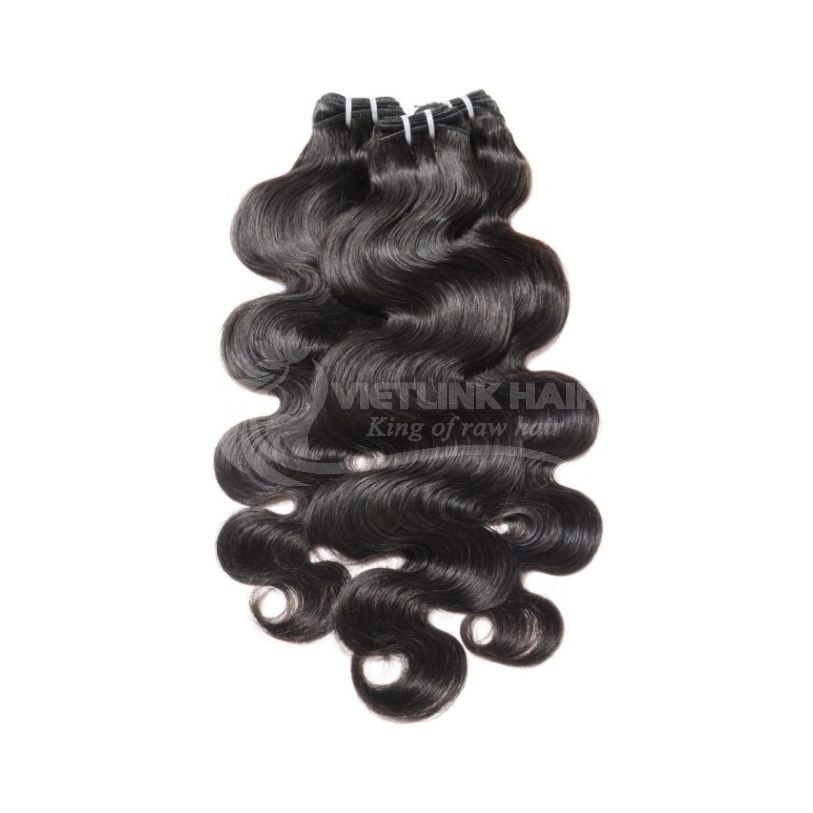
Body Wave
Body wave is often more forgiving in humid weather.
The existing wave pattern gives the hair some movement, so a small amount of additional volume may not look like a styling failure.
For this texture, anti-humidity hair treatments can focus on keeping the hair soft and reducing excessive frizz without removing its natural movement.
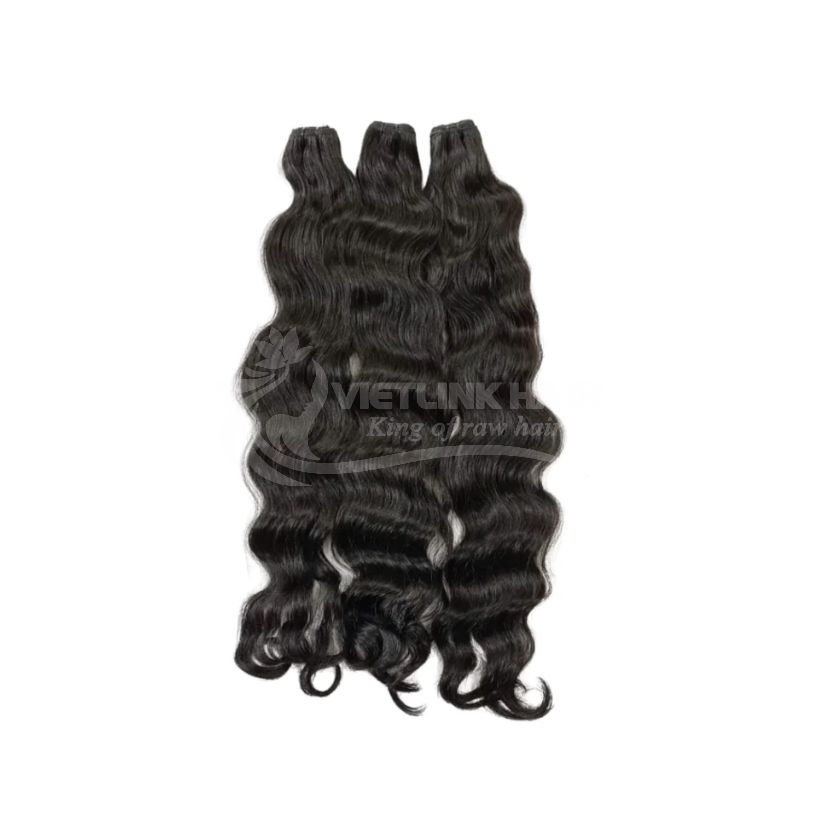
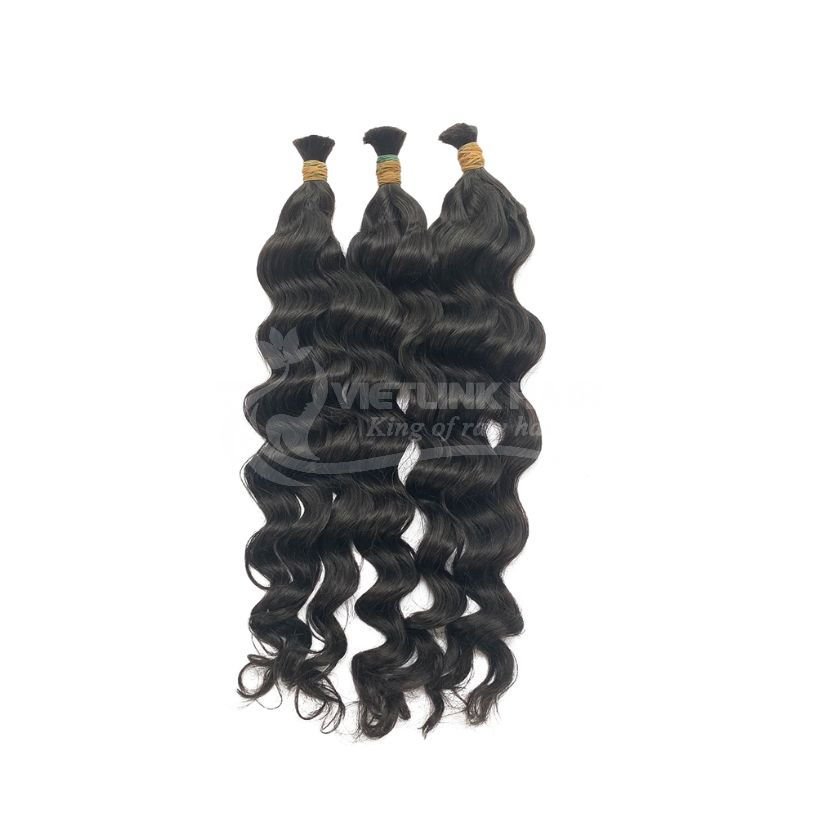
Deep Wave
Deep wave has stronger movement and more volume.
Humidity may increase the overall size of the texture, especially when the hair is dry or frequently manipulated.
A leave-in conditioner combined with a lightweight curl or wave product can help keep the pattern organized.
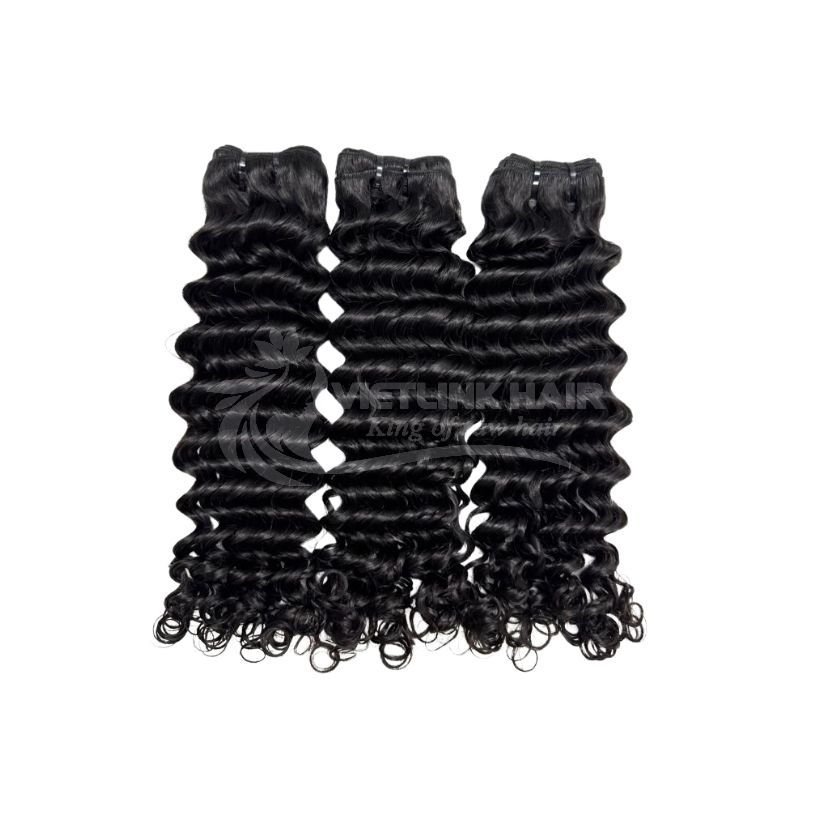
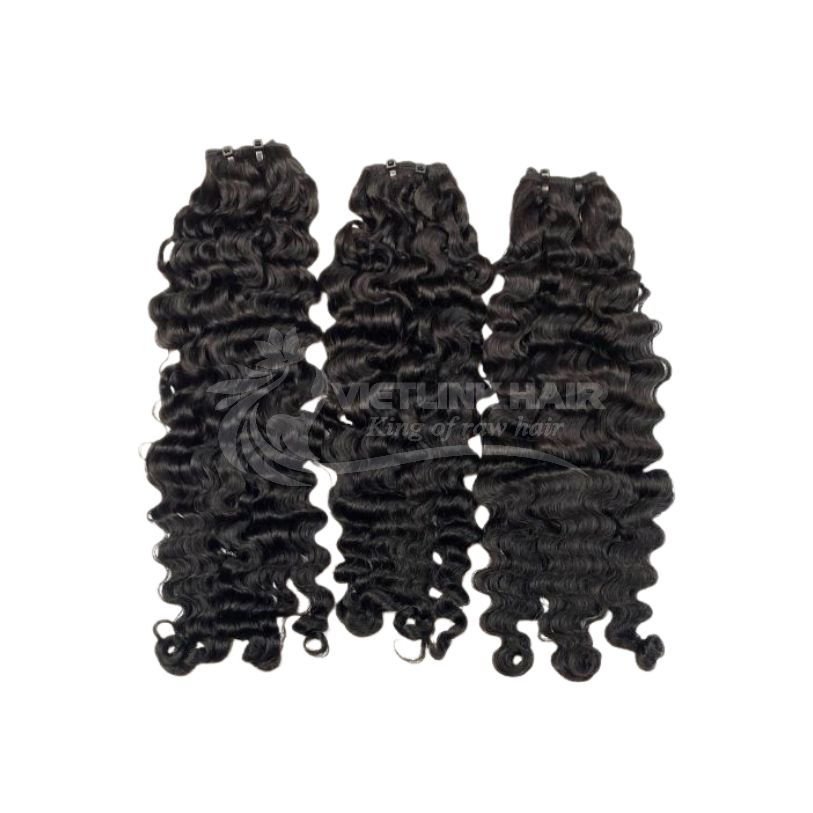
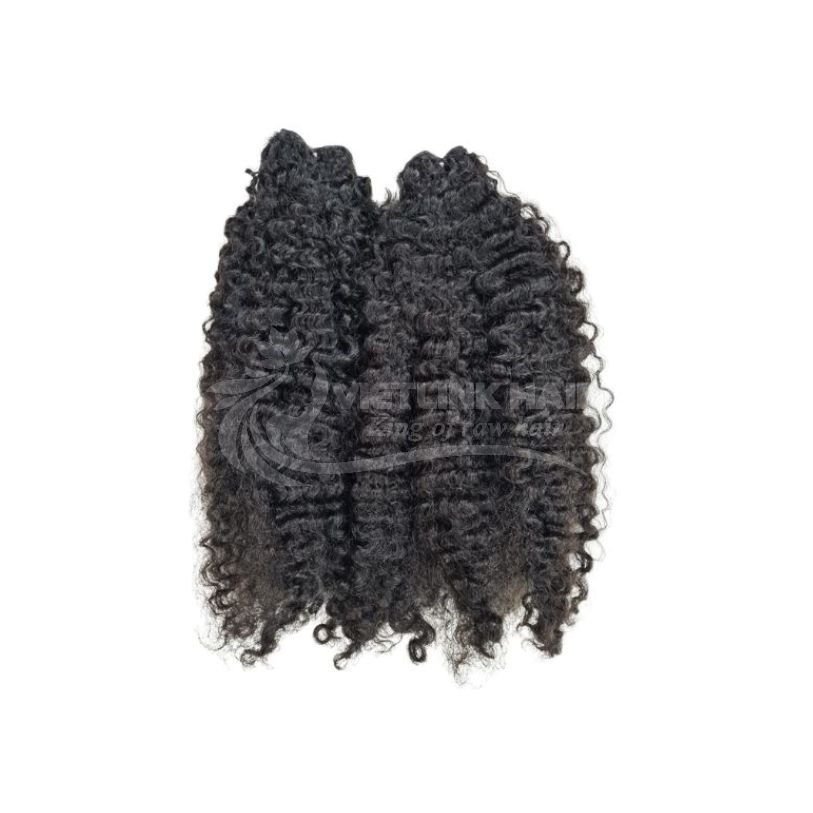
Curly and Kinky Curly Hair
Curly textures need a different approach.
Trying to eliminate every sign of expansion can lead to excessive brushing and heat styling. Instead, the goal should usually be maintaining curl definition while controlling unwanted frizz.
This is where moisture balance becomes important. A suitable anti-humidity hair treatment should support manageability without making the curl pattern heavy or greasy.
7 Anti-Humidity Hair Treatments That Help
The best routine usually combines several small steps rather than depending on one product.
1. Anti-Humidity Spray
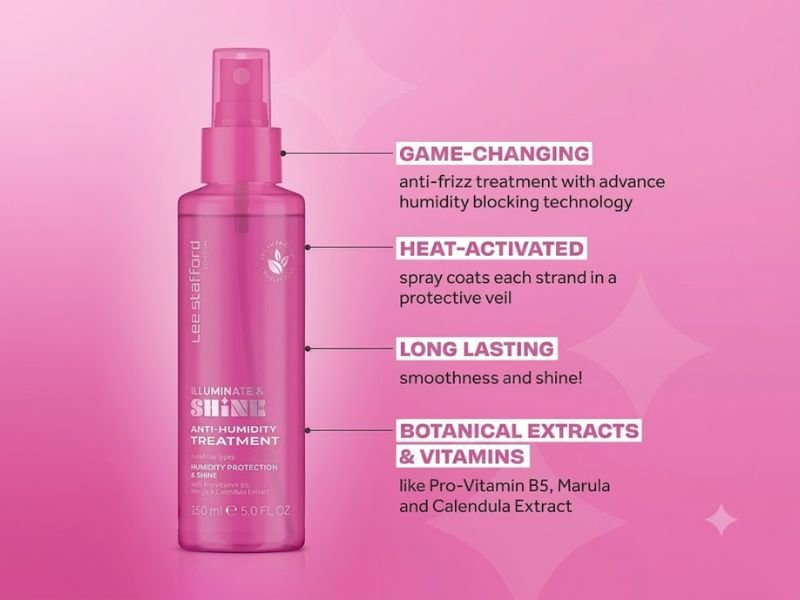
Anti-humidity sprays are among the most direct anti-humidity hair treatments because they are specifically designed to protect the finished hairstyle from atmospheric moisture.
Some formulas are applied before blow-drying and activated by heat. Others are finishing sprays applied after the style is complete.
The distinction is important for salons. A heat-activated product should be used according to its instructions rather than marketed as an air-dry solution.
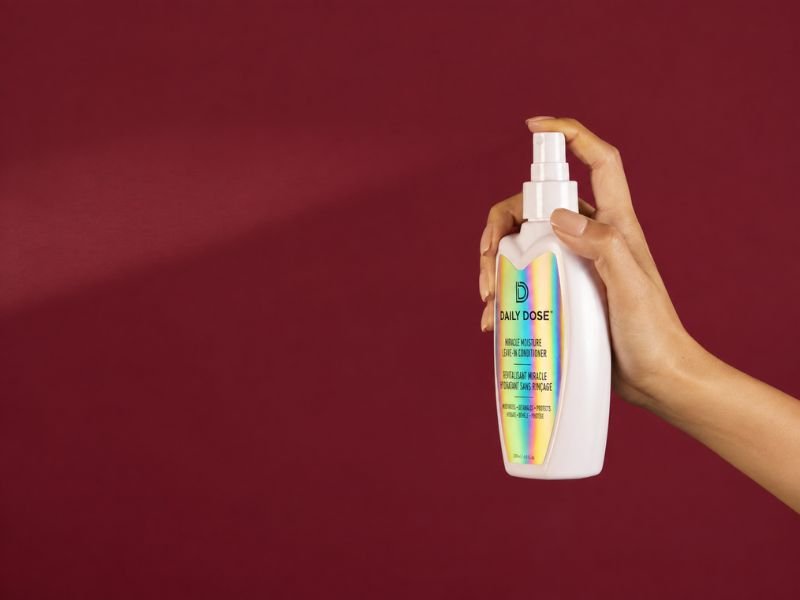
2. Leave-In Conditioner
Leave-in conditioner can improve softness and manageability before the hair is exposed to humid air.
For extensions, apply the product mainly through the mid-lengths and ends. Excessive application around the attachment area can create buildup and make maintenance more difficult.
A lightweight leave-in may suit fine hair, while thicker or coarse textures can generally handle richer conditioning formulas.
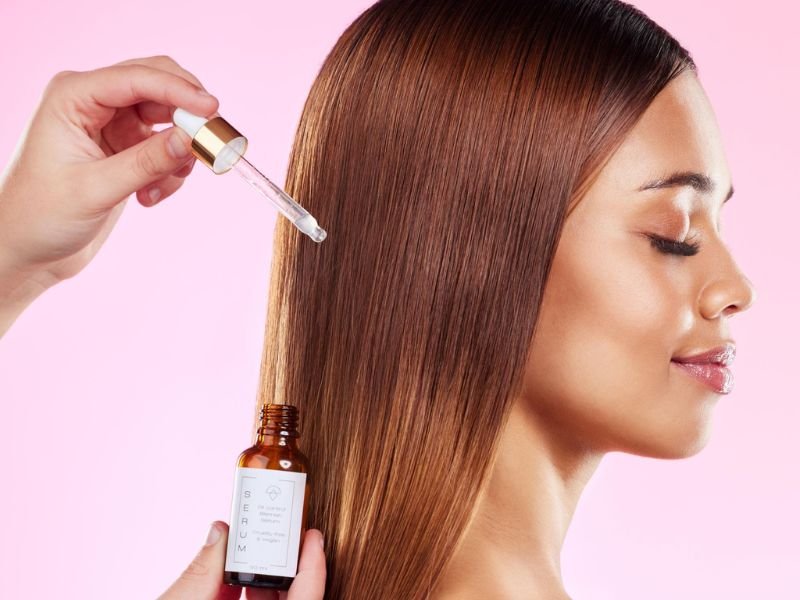
3. Smoothing Serum
A smoothing serum can reduce the rough feel of the hair surface and help control flyaways.
This is particularly useful for straight extensions where small amounts of frizz are visually obvious.
When using serum as an anti-humidity hair treatment, start with a small amount. Applying more product does not necessarily provide more protection.
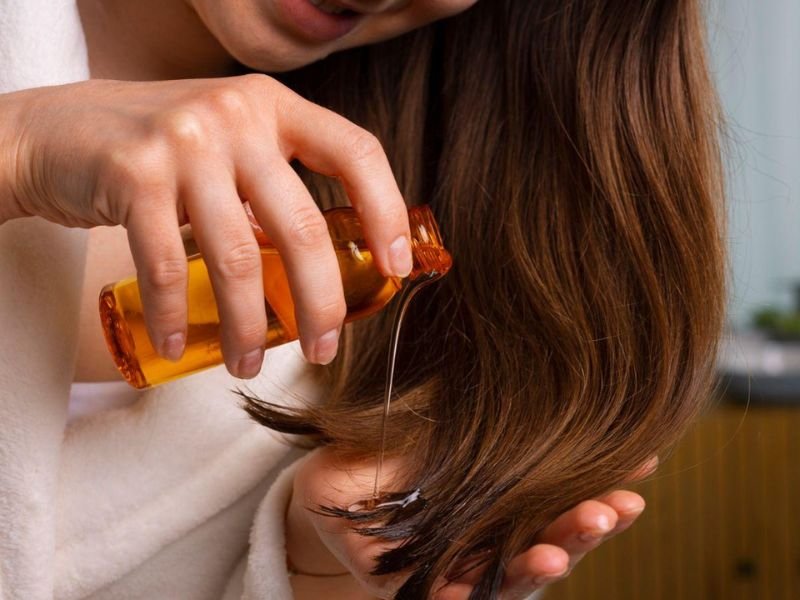
4. Lightweight Hair Oils
Oils can support softness and reduce the dry feel of the hair.
Coconut oil and other conditioning oils are commonly used in hair care, but the right amount depends on the hair texture and density.
Fine hair can become heavy quickly, while thick or coarse hair may tolerate richer formulas.
For extension customers, concentrate oil on dry lengths and ends rather than repeatedly coating the entire head.
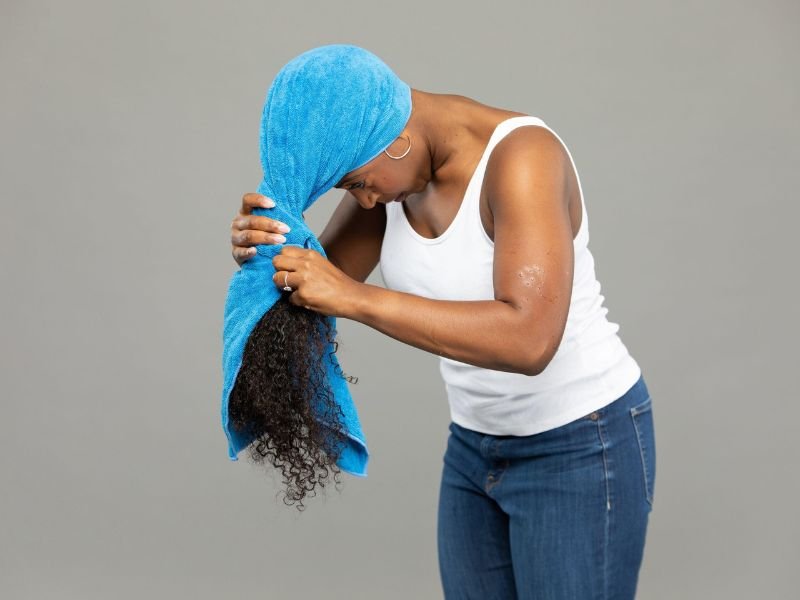
5. Microfiber Towel Drying
Not every anti-humidity hair treatment comes in a bottle.
Drying technique also matters.
Rough towel rubbing creates friction and can disturb the hair surface. A microfiber towel or soft T-shirt can help remove excess water more gently.
This is particularly useful for wavy and curly textures because aggressive rubbing can separate the wave or curl groups and create additional frizz.
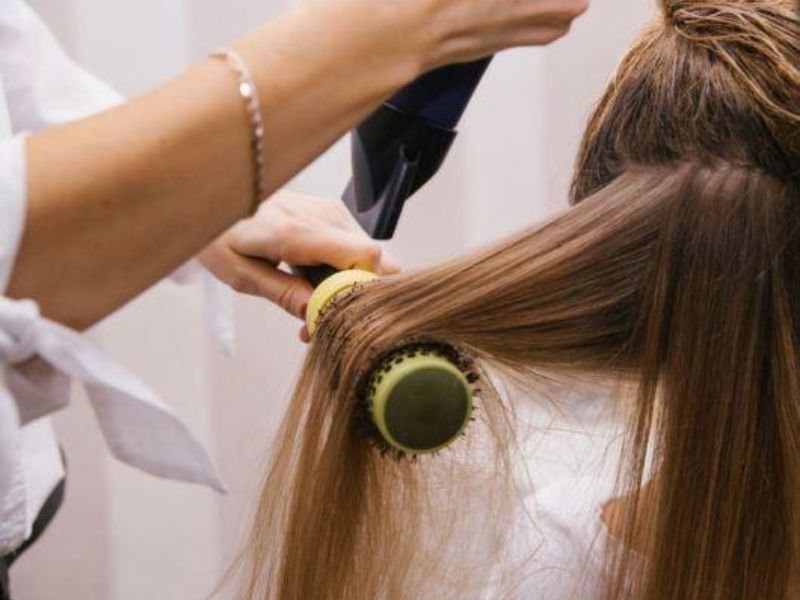
6. Controlled Heat and Cool Air
High heat can contribute to dryness and damage when used excessively.
When heat styling is necessary, use an appropriate heat protectant and avoid unnecessarily high temperatures. After blow-drying, a cool-air setting can be used to finish the hairstyle.
For customers wearing straight extensions in humid climates, controlled blow-drying can help establish the initial shape before applying a finishing product.
7. Satin or Silk at Night
Nighttime friction is another factor that should not be ignored.
A satin or silk pillowcase can reduce friction while the customer sleeps. This does not make the hair humidity-proof, but it can help reduce tangling and surface disturbance before the next styling session.
For long extensions, this simple step can be particularly useful because the hair may remain in contact with the pillow for several hours.

Best Anti-Humidity Hair Treatments by Hair Texture
Different textures need different treatment priorities.
| Hair texture | Main humidity issue | Suitable treatment approach | Maintenance |
| Straight | Frizz and shape loss | Serum + anti-humidity spray | Medium–High |
| Body Wave | Wave loosening | Leave-in + light spray | Low–Medium |
| Deep Wave | Frizz and dryness | Leave-in + curl/wave product | Medium |
| Curly | Expansion and frizz | Curl cream + light hold | Medium |
| Kinky Curly | Dryness and shrinkage | Leave-in + richer conditioning | Medium–High |
- For straight hair, the priority is usually surface smoothness.
- For wavy hair, preserving movement is more important than making the hair completely flat.
- For curly textures, definition and moisture management should take priority over eliminating all volume.
This means anti-humidity hair treatments should be selected according to the desired final appearance, not simply according to the word “humidity.”
Anti-Humidity Hair Care for Texas and Florida
Climate is especially important when sourcing hair for the U.S. market.
Florida has a warm and humid climate, particularly during summer. The National Weather Service describes South Florida summers as hot, humid, and associated with frequent showers and thunderstorms.
Texas is more geographically diverse. Coastal and southeastern areas can experience substantially different humidity patterns from the drier western parts of the state.
For this reason, a distributor should not treat “Texas customers” or “Florida customers” as one uniform group.
Instead, consider three factors:
- Indoor lifestyle: Air-conditioned environments can be much drier than outdoor conditions.
- Outdoor exposure: Customers who work or exercise outdoors may experience more visible humidity effects.
- Styling expectations: A customer who wants bone-straight hair has different requirements from one who prefers a natural wave.
A salon serving humid markets can therefore offer different anti-humidity hair treatments according to texture and customer lifestyle.

Factory Insight: What Humidity Means for Hair Extensions
From a factory perspective, humidity performance starts with the hair itself.
A common misconception is that the texture name alone determines how an extension will perform in humid weather. In reality, processing history and fiber condition can also affect the final result.
For B2B sourcing, buyers should check:
- Hair source
- Raw or processed status
- Cuticle condition
- Texture-processing method
- Finished length
- Weight in grams
- Density
- Curl or wave consistency
- Shedding after washing
- Batch consistency
For example, curly and wavy extensions may appear shorter than their measured stretched length because the texture contracts when it returns to its natural pattern.
This is particularly important when selling hair by inch. Buyers should ask whether the supplier measures the hair stretched, naturally textured, or both.
A useful anti-humidity hair treatment also cannot compensate for inconsistent raw material or poor texture processing.
That is why sample testing should happen before a large wholesale order.
A Practical Humidity Sample Test
A B2B buyer can test a sample in several stages:
Step 1: Record the dry weight and measured length.
Step 2: Wash the sample using the intended customer care routine.
Step 3: Allow the texture to dry naturally.
Step 4: Record texture recovery and visual length.
Step 5: Expose the sample to a humid environment.
Step 6: Check frizz, tangling, shedding, and texture retention.
This gives buyers more useful information than relying only on marketing terminology.
How to Build an Anti-Humidity Hair Routine
An effective routine should be simple enough for customers to follow consistently.
Start by washing the hair with a suitable shampoo and conditioner. Avoid aggressive handling while the hair is wet.
After washing, gently remove excess water with a microfiber towel.
Apply a small amount of leave-in conditioner to the lengths and ends. If the customer uses heat, add an appropriate heat-protection product.
Style according to the intended texture.
Once the hair is dry, apply a suitable finishing product if needed.
Finally, reduce unnecessary touching during the day and protect the hair from friction at night.
This combination of product selection and handling technique is more practical than relying on a single anti-humidity hair treatment.
Common Mistakes With Anti-Humidity Hair Treatments
Even good products can produce disappointing results when used incorrectly.
Using Too Much Product
Heavy product buildup can make hair look greasy or flat.
The correct amount depends on strand thickness, density, and product concentration.
Applying Rich Oils to Fine Hair
Fine hair may become weighed down by heavy oils or butter.
If the hair becomes limp after treatment, reduce product quantity or choose a lighter formula.
Using Excessive Heat
Repeated high-temperature styling can increase dryness and make hair more difficult to manage.
Use controlled heat and avoid unnecessary restyling.
Treating Every Texture the Same
Straight and curly hair have different styling goals.
A routine designed to flatten straight hair may reduce curl definition. Conversely, a heavy curl product may be unsuitable for fine straight hair.
Ignoring the Natural Hair
For extension customers, the natural hair underneath can be the biggest blending factor.
If natural hair expands significantly while the extension remains very straight, the difference can become visible.
In this situation, choosing a compatible texture may be more effective than adding more anti-humidity hair treatments.
B2B Checklist for Humid-Climate Hair Sourcing
For wholesalers and distributors, product selection should go beyond appearance.
Before ordering, ask the supplier:
- What is the hair source?
- Is the hair raw, virgin, or processed?
- How is the texture created?
- What is the finished weight?
- How is length measured?
- Is the curl or wave measured stretched?
- What is the MOQ?
- How consistent is the texture between batches?
- Can the supplier provide samples?
- How does the hair respond after washing?
A supplier should be able to provide measurable specifications rather than relying only on terms such as “premium,” “luxury,” or “humidity-proof.”
For Vietlink Hair’s wholesale customers, this specification-based approach is particularly useful when building inventory for different U.S. climate markets.
FAQs About Anti-Humidity Hair Treatments
Before selecting products or sourcing hair, buyers often have similar questions about anti-humidity hair treatments.
What are the best anti-humidity hair treatments?
The most suitable option depends on hair texture and styling goals. Anti-humidity sprays, leave-in conditioners, smoothing serums, and appropriate styling products can all play a role.
Do anti-humidity sprays work?
They can help reduce the visible effect of atmospheric moisture, but results depend on the formula, hair condition, application, and humidity level. Some formulas require heat activation, while others are designed as finishing sprays.
How do I stop my hair from frizzing in humidity?
Use suitable conditioning, reduce friction, control heat exposure, and apply an appropriate anti-frizz or humidity-control product. Choosing a texture that works with your natural hair can also reduce daily styling.
What hair texture is best for humid weather?
There is no universal answer. Body wave, deep wave, and curly textures can be easier to manage when the customer accepts natural movement, while straight hair may require more styling to maintain a sleek finish.
Are anti-humidity hair treatments suitable for extensions?
Yes. However, products should be selected according to the extension texture and applied mainly to the lengths and ends. Heavy buildup around attachment points can create maintenance problems.
How often should anti-humidity products be used?
Follow the product’s instructions and the customer’s styling routine. Daily application is not automatically necessary. Overuse can create buildup, especially on fine hair.
Final Takeaway
Anti-humidity hair treatments work best when matched with the right texture and care routine. Straight hair needs smoothness control, while wavy and curly textures benefit from definition and moisture balance.
For B2B buyers, also check hair source, processing, density, length, MOQ, and batch consistency.
Sourcing Vietnamese human hair for humid U.S. markets? Contact Vietlink Hair to discuss suitable textures and wholesale specifications for your customers.
WhatsApp: +84 855 555 951
Email: info@vietlinkhair.com
Facebook: Vietlinkhair
