
Hair Care
How to Wash a Wig: 5 Essential Steps for Better Care
Washing a wig incorrectly can cause tangling, shedding, and damage to the cap. So, how do you wash a wig properly? Follow these 5 steps: detangle, wash, rinse, condition, and air-dry.
The method varies slightly between human hair and synthetic wigs. For B2B sellers, clear care instructions can also help customers maintain their wigs and reduce avoidable complaints.
How to Wash a Wig: What to Check Before You Start
Before learning how to wash a wig, identify the wig material and construction. Human hair and synthetic wigs do not respond to water, products, and heat in exactly the same way.
- Human hair wigs: Made from real hair that may be colored or chemically processed.
- Synthetic wigs: Made from manufactured fibers with varying heat tolerance.
The cap construction also affects care. A lace front wig, hand-tied wig, and machine-made wig can have different areas where excessive conditioner, rubbing, or pulling may increase shedding.
For wholesale sellers, product labeling should therefore include the hair type, fiber type, cap construction, and basic care requirements. This information gives retailers a clearer way to explain maintenance to their own customers.
Supplies You Need to Wash a Wig Properly
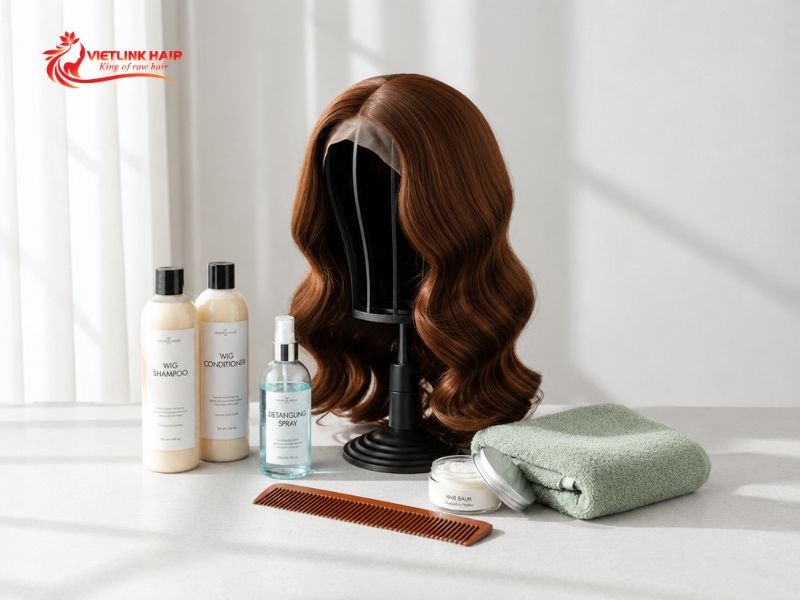
Once the wig type is confirmed, prepare the right tools before adding water. A simple setup reduces unnecessary handling during the washing process.
Here is a practical checklist:
| Supply | Purpose |
| Wide-tooth comb | Removes tangles with less pulling |
| Wig-safe shampoo | Cleans without relying on regular hair products |
| Conditioner or wig conditioning spray | Improves manageability after washing |
| Basin or clean sink | Provides controlled washing conditions |
| Soft or microfiber towel | Removes excess water by pressing |
| Wig stand | Supports air drying and helps maintain the cap shape |
A wig-specific shampoo is preferable to using whatever shampoo is available in the bathroom. Headcovers specifically recommends products formulated for wigs because processed wig hair does not receive natural scalp oils like growing hair.
The same principle applies to synthetic fibers. Wig care products should be selected according to the fiber manufacturer’s instructions rather than assuming that a product suitable for human hair is automatically suitable for synthetic hair.
How to Wash a Wig Step by Step
Now that the material and tools are ready, the washing process can be broken into five controlled steps. The key principle throughout is to reduce friction, pulling, twisting, and unnecessary heat.
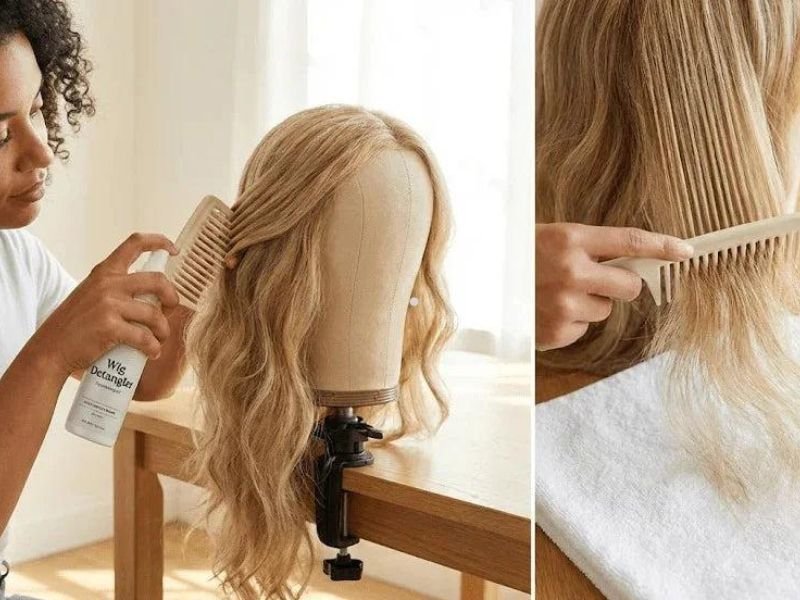
Step 1: Detangle From Ends to Roots
The first step in how to wash a wig is detangling before the hair becomes wet. Use a wide-tooth comb and work gradually from the ends toward the roots.
Do not pull a comb directly from the cap to the ends when there are existing knots. Working in small sections reduces tension on the hair and the attachment points.
This is especially important for longer wigs and curly textures, where friction can create more tangling. Wigs.com also recommends starting at the ends and moving toward the roots before washing.
Step 2: Prepare the Wash Water
Water temperature should match the wig manufacturer’s care instructions.
- Synthetic wigs: Cool water is safer because excessive heat may damage some fibers.
- Human hair wigs: Cool or lukewarm water may be suitable depending on the product.
Since wig materials and construction vary, avoid giving customers one universal water temperature. For a specific synthetic wig, some manufacturer guides recommend around 25°C water with a 2-minute soak.
For B2B sellers, adding the recommended temperature and washing method to the care card for each SKU can make after-sales instructions clearer.
Step 3: Wash Gently
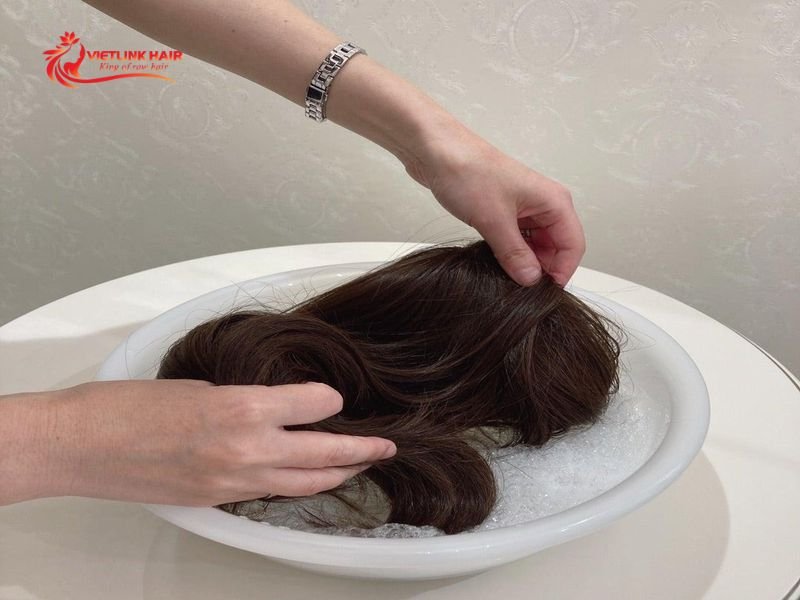
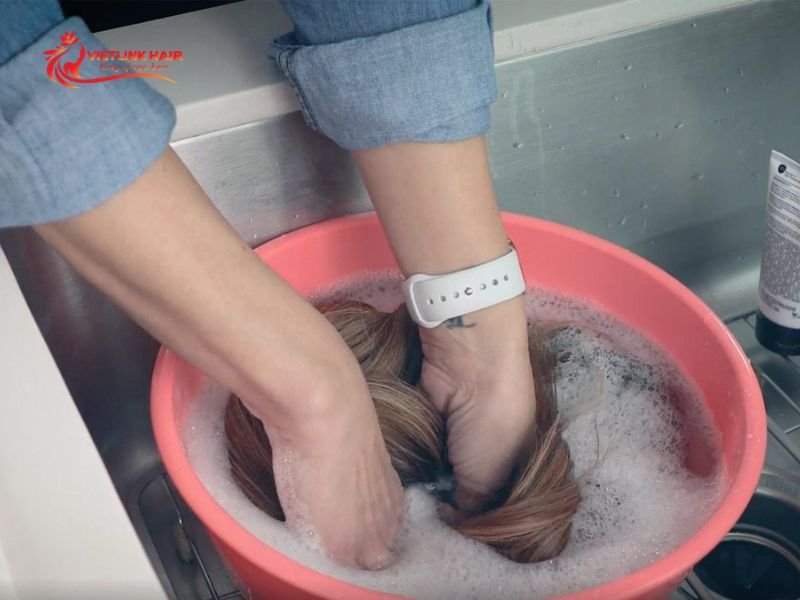
Add an appropriate amount of wig shampoo to the water or your hands according to the product instructions. Place the wig into the water and allow the shampoo to clean the hair without aggressive rubbing or scrubbing.
For synthetic wigs, one manufacturer’s care instructions recommend approximately 1 tablespoon of shampoo in a basin of cool water, followed by a 3 to 5-minute soak without scrunching or aggressive agitation.
When cleaning the cap, pay particular attention to the hairline and areas that contact the scalp. Sweat, oils, makeup, and styling products can accumulate there.
However, avoid treating the cap like fabric that needs vigorous scrubbing. Excessive manipulation can increase stress on knots and attachment points.
Step 4: Rinse and Condition
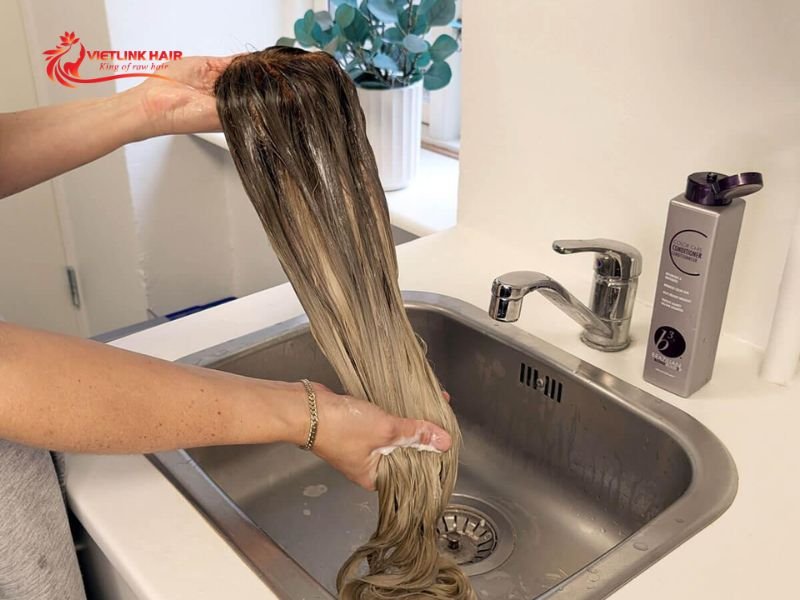
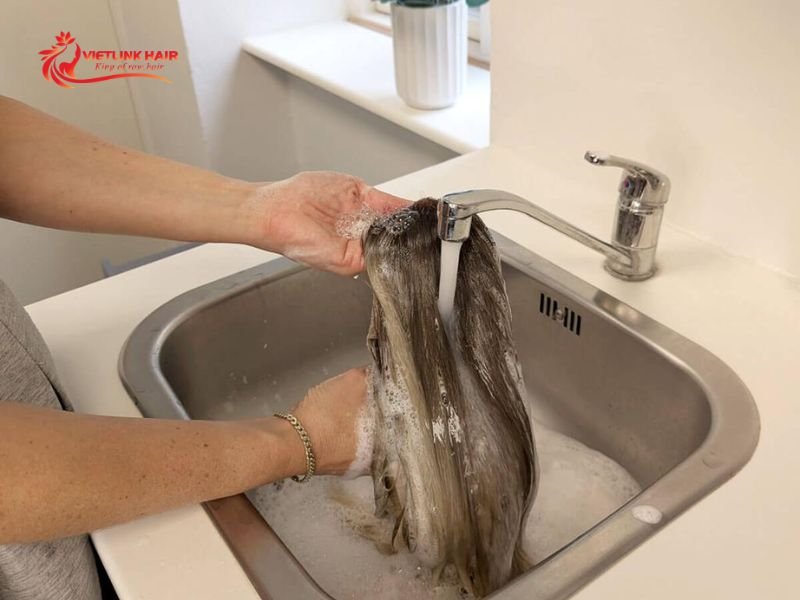
After shampooing, rinse until the water runs clear. Keep the hair moving in its natural direction instead of flipping it repeatedly during rinsing.
Conditioner should generally be concentrated on the mid-lengths and ends rather than directly on the knots or cap. Wigs.com and Headcovers both caution against applying conditioner around the roots or attachment areas because it can contribute to knot loosening and shedding.
For synthetic wigs, use a conditioner or leave-in product specifically designed for synthetic fibers. Some synthetic wig instructions recommend a light mist rather than a heavy conditioning treatment.
After conditioning, rinse thoroughly according to the product instructions. Residue left on the hair can make the wig feel heavy or affect its appearance.
Factory insight: In wholesale operations, washing is not only a customer care issue. It can also be a useful quality check. After washing and drying a sample, buyers can observe shedding, tangling, texture retention, lace condition, and cap shape before committing to a larger production order.
Step 5: Dry the Wig
Drying is the final stage of how to wash a wig, and it is often where avoidable damage occurs. Do not twist, wring, or aggressively squeeze the wet hair.
Instead, use a soft towel to press or blot out excess water. Then place the wig on a suitable wig stand and allow it to air dry.
Annabelle’s Wigs recommends air drying synthetic hair on a wig stand and avoiding direct heat. Wigs.com similarly recommends air drying on a folding wig stand in its general wig care guide.
Avoid placing a wet wig on a solid styrofoam head if the construction can stretch the cap. A ventilated stand allows air to circulate the hair and cap while the wig dries.

How to Wash a Synthetic Wig vs a Human Hair Wig
The basic washing sequence is similar, but how to wash a wig changes according to its material. Synthetic fibers and human hair have different responses to heat, products, and styling.
| Criteria | Human Hair Wig | Synthetic Wig |
| Water | Cool or lukewarm, according to care instructions | Cool water is commonly recommended |
| Shampoo | Wig-specific shampoo | Synthetic wig shampoo |
| Conditioner | Mainly mid-lengths and ends | Fiber compatible conditioner |
| Heat tolerance | Generally greater, depending on processing | Depends strongly on the fiber |
| Styling after washing | Can allow more styling options | Often retains its original style |
| Main risk | Dryness, heat damage, shedding | Fiber damage, texture change, tangling |
Human hair offers more styling flexibility, but it still requires careful maintenance because commercial wigs may have undergone coloring or other processing.
Synthetic wigs can be easier to maintain because many fibers have style memory. However, the exact heat tolerance depends on the fiber, so sellers should not assume that every synthetic wig is heat-friendly.
This creates an important B2B trade-off. If buyers need frequent restyling and a more natural styling workflow, human hair may be more suitable. If they prioritize easier maintenance and style retention, a suitable synthetic construction may be more practical.

Common Mistakes When You Wash a Wig
Even when customers know the basic steps, several common mistakes can reduce wig performance. For sellers, explaining these points clearly can prevent unnecessary product complaints.
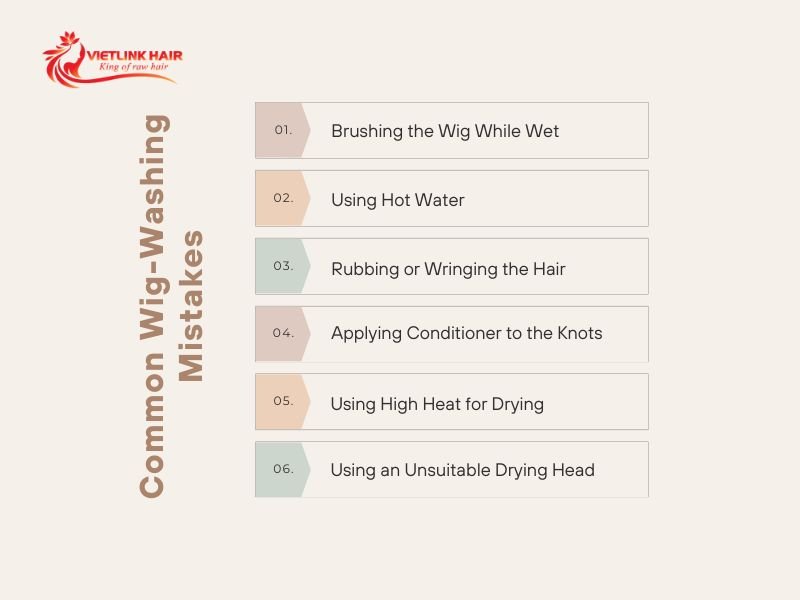
- Brushing the wig while wet. Wet hair is more difficult to detangle and can be more vulnerable to stretching. For synthetic wigs, Headcovers specifically advises detangling while the fiber is dry.
- Using hot water. Excessive heat can be particularly problematic for synthetic fibers. Heat-friendly does not mean unlimited heat tolerance, and the manufacturer’s specifications should determine the appropriate temperature.
- Rubbing or wringing the hair. Aggressive friction can increase tangling and place unnecessary stress on the hair and cap. The safer approach is to smooth, press, and blot.
- Applying conditioner directly to knots. Conditioner near hand-tied areas can contribute to knot loosening and shedding. Keep heavier conditioning products away from the base whenever the care instructions call for this precaution.
- Using high heat for drying. Air drying is a lower-risk option for many wigs, particularly synthetic styles. Direct heat can change the fiber or damage processed human hair.
- Using an unsuitable drying head. A poorly sized or solid head can place unnecessary tension on the cap. A suitable wig stand provides better air circulation and support during drying.
How Often Should You Wash a Wig?
There is no single washing schedule that works for every wig. How to wash a wig should be paired with a frequency based on material, wear frequency, sweat, styling products, and the surrounding environment.
For synthetic wigs, one care guide recommends washing around every 6 to 8 wearings, while another recommends approximately 2 to 4 washes per year. These figures show why sellers should treat frequency as a product care recommendation rather than a universal rule.
Human hair wigs may require more frequent cleaning when worn regularly. Headcovers gives 7 to 14 days of wear as a general guideline, while noting that actual frequency depends on use and product buildup.
The practical recommendation is therefore segment-based:
- For occasional wear: wash when the wig develops visible buildup, odor, or a change in texture.
- For frequent wear: monitor sweat, scalp oils, styling products, and tangling rather than following an arbitrary calendar.
- For humid or hot conditions: customers may need more frequent cleaning because sweat and environmental exposure can increase buildup.
For B2B sellers, this is also a useful reason to provide care instructions by product category instead of printing one generic washing schedule for every wig.
How to Wash a Wig for Customers: A Care Card for Wig Sellers
For wholesale sellers, knowing how to wash a wig is useful, but turning that information into a simple customer care card can be even more valuable.
A basic care card can contain five short instructions:
- Detangle the dry wig from ends to roots.
- Wash with wig-safe shampoo and suitable water.
- Do not rub, scrub, twist, or wring the hair.
- Keep conditioner away from knots and the cap when instructed.
- Blot excess water and air dry on a wig stand.
The card should also state whether the product is human hair, synthetic, or heat-friendly synthetic. This avoids a common customer misunderstanding in which all synthetic wigs are assumed to tolerate the same styling temperature.
For wholesale orders, sellers can go one step further by matching the care card to the SKU. A human hair lace wig, a hand-tied synthetic wig, and a heat-friendly synthetic wig should not necessarily receive identical maintenance instructions.
B2B insight: A standardized care card can function as part of the product specification rather than simply being a marketing insert. When the same washing instructions are distributed across a batch, retailers have a consistent reference point for customer service, trainini meag, and after-sales communication.
This approach can also make quality feedback more useful. If several customers report shedding after following the same documented washing process, the seller has a clearer basis for investigating the batch, cap construction, knot security, or hair processing.
FAQ
The following questions address common situations that can affect washing results and customer expectations.
Can I Use Regular Shampoo to Wash a Wig?
Regular shampoo is not the preferred option for wig care. Wig-specific products are formulated around the characteristics of alternative hair, while human hair wigs may contain processed hair that requires gentler maintenance.
If the supplier provides a specific shampoo recommendation, retailers should follow that specification rather than substituting a general household product.
Can I Wash a Wig in a Washing Machine?
A washing machine is not a suitable default method for wigs. Mechanical agitation can create excessive friction, tangling, and stress on the cap or hair attachment points.
Hand washing in a controlled basin is easier to manage because the seller or wearer can control water movement and handling throughout the process.
How Long Does It Take for a Wig to Dry?
Drying time depends on hair length, density, ventilation, humidity, and cap construction. Instead of giving customers one fixed drying time, recommend leaving the wig on a ventilated stand until the hair and cap are completely dry.
The important point is to avoid styling or storing the wig while it remains significantly damp. Air circulation around the cap can help the moisture escape more evenly.
How Do I Wash a Lace Front Wig Without Damaging the Lace?
Handle the lace gently and avoid aggressive rubbing around the hairline. During conditioning, keep the product away from the knots where possible because excess conditioner can contribute to knot loosening.
When rinsing, allow water to move through the hair in its natural direction rather than repeatedly flipping the lace and hair back and forth.
Does Washing a Wig Change Its Curl Pattern?
It can, depending on the hair or fiber type and how the wig was constructed. Synthetic wigs often have style memory and may return toward their original shape after washing, while heat or aggressive handling can affect certain fibers.
Human hair wigs can also lose or change a styled curl pattern after washing because real hair does not permanently retain every manufactured style. The correct post-wash styling method should therefore follow the wig’s material and manufacturer’s specifications.
Final Takeaway
Learning how to wash a wig means controlling five key steps: detangling, washing, conditioning, rinsing, and drying. For B2B buyers, this routine can also help assess shedding, tangling, cap construction, and texture retention.
Looking for reliable wholesale human hair wigs or customized wig solutions? Contact Vietlink Hair to discuss your requirements, including hair type, construction, density, and order volume.
WhatsApp: +84 855 555 951
Email: info@vietlinkhair.com
Facebook: Vietlinkhair
