
Hair Extension Knowledge
Tape-In vs Sew-In Extensions: Complete Comparison, Cost & Care Guide
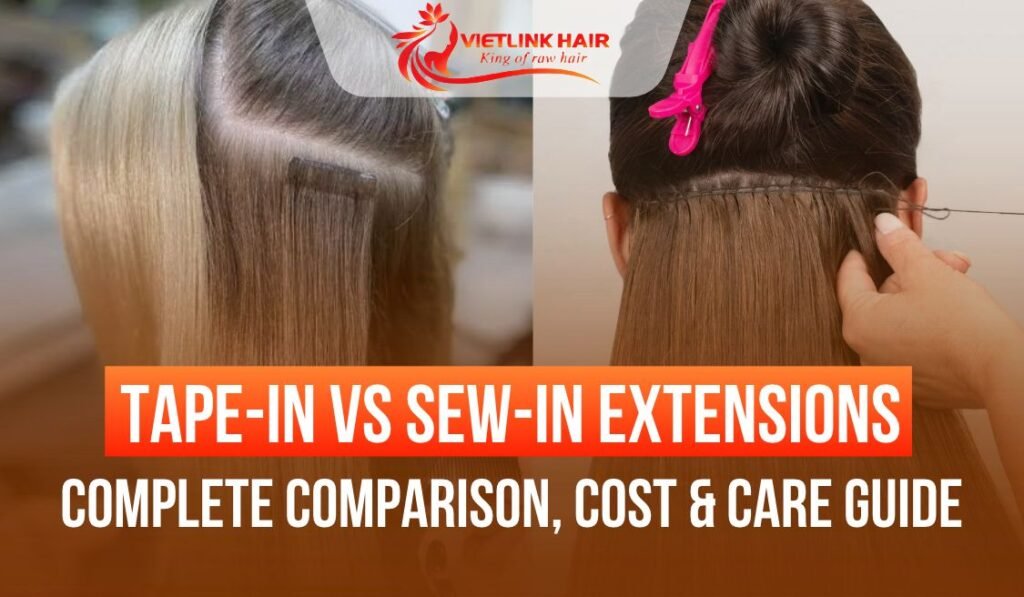
Tape-in vs sew-in extensions offer distinct advantages for different styling preferences, hair types, and budgets. Understanding their differences can help individuals make better styling choices while enabling hair businesses to identify products that meet their customers’ needs. In this article, VietLink Hair will compare both methods in terms of application, cost, durability, and care, then explore key considerations when sourcing quality extensions for a hair business.
Tape-Ins vs Sew-Ins at a Glance
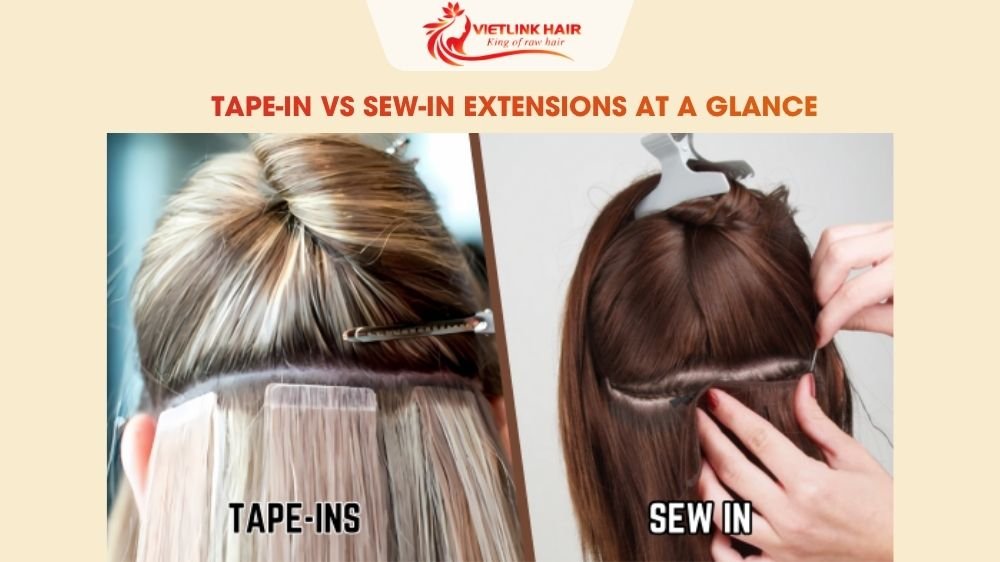
Tape-ins use adhesive tabs for a flat, seamless finish, while sew-ins are stitched onto braided hair for a secure fit and fuller volume. Here is a side-by-side comparison of tape-in vs sew-in extensions to help you understand their main differences before choosing a method.
| Factor | Tape-In Hair Extensions | Sew-In Hair Extensions |
| Installation method | Adhesive wefts pressed around small sections of natural hair | Wefts sewn onto braided tracks using thread |
| Installation time | Approximately 45–90 minutes | Approximately 2–4 hours |
| Best hair types | Fine to medium hair, especially straight to wavy textures | Medium to thick hair, including wavy, curly, and coily textures |
| Maintenance schedule | Typically every 6–8 weeks | Typically every 6–8 weeks, depending on hair growth and braid tension |
| Hair extension lifespan | Often 6–12 months with proper care and professional reinstallation | Often 12 months or longer with proper care, depending on hair quality and wear |
| Appearance | Flat, lightweight, and discreet at the roots | Fuller, with weft tracks concealed beneath the natural hair |
| Installation skill | Requires proper sectioning and adhesive placement | Requires braiding, precise stitching, and tension control |
| Best for | Natural-looking volume, a seamless finish, and relatively quick installation | Added length, fuller volume, and a secure installation for suitable hair types |
4 Key Differences Between Tape-In and Sew-In Extensions
Tape-in and sew-in extensions differ in more than just their installation methods. From application time and maintenance requirements to cost, durability, and suitability for different hair types, each method offers distinct advantages. Understanding these four key differences will help you compare both options and choose the right extensions for your styling needs and budget.
Installation Method and Time
A tape-in installation starts with clean, product-free hair. The stylist takes a thin horizontal section close to the scalp, places one pre-taped weft underneath it and a second weft on top, then presses the two together so the natural hair sits between them like a sandwich. Tabs are usually placed about a quarter to half an inch from the scalp and staggered in rows so they lie flat. A full head commonly needs around 20 to 40 pieces, depending on the density you want, and the whole appointment is often finished in 45 to 90 minutes.
A sew-in installation begins with braiding the natural hair into flat tracks, often cornrows running across the head in a pattern chosen for the final style. The stylist then stitches each weft onto a track with a curved needle and strong thread, working row by row. Some clients leave a small section of natural hair out at the top or sides to blend with the part. Because of the braiding and hand sewing, a full install normally takes two to four hours, and results depend heavily on the stylist’s technique.
For the client, the practical consequence is this: tape-ins are faster and easier to book around a busy schedule, while sew-ins need a longer chair time and a more experienced professional.
Cost and Maintenance
The total cost of tape-in and sew-in extensions includes the hair, installation, and ongoing maintenance. The table below compares typical prices in the salon market.
| Cost item | Tape-In | Sew-In (Weft) |
| Hair only (full head) | 200-800 | 200-800 |
| Installation labor | 100-300 | 150-500 |
| Total first install | 300-1,100 | 500-1,500 |
| Maintenance visit | 100-300 per move-up | 40-100 per tightening |
| Visit frequency | Every 6–8 weeks | Every 4–6 weeks |
| Extra costs | Tape replacement and repairs: about 10-80 | Full takedown and reinstall: 150-500 labor |
Note: Actual costs vary by location, salon, stylist experience, hair quality, and length.
Sew-in extensions generally take longer to install because the stylist must braid the natural hair and stitch in the wefts. Tape-ins may cost more to maintain per visit because the stylist needs to remove the extensions, clean off the adhesive, replace the tape, and reapply them.
Over time, the overall cost of both methods depends on maintenance frequency, salon fees, and how long the hair remains in good condition. Tape-in hair can be reused for multiple installations, while sew-in wefts can also be reused with proper maintenance. For salon owners and resellers, these price ranges provide a useful reference when setting service fees, pricing hair packs, and creating maintenance packages.
How Long Each Method Lasts
The lifespan of tape-in and sew-in extensions depends on both how long each installation remains secure and how long the hair can be reused. Although both methods require maintenance as natural hair grows, their attachment systems influence how often they need adjustment and how long the hair remains wearable.
Tape-in extensions typically stay in place for 4 to 8 weeks per application. Human hair grows about half an inch (around 1.25 cm) per month. After six to eight weeks, a tape-in tab that started near the scalp now sits roughly an inch away, and the new growth can make the hair feel heavy or look gapped at the root. That is why tape-ins are moved up rather than left alone.
Sew-in extensions generally need tightening within 6 to 8 weeks, with the entire set removed by about 8 to 10 weeks. As natural hair grows, the braids loosen and the weft slides away from the scalp. Removing the installation within the recommended timeframe helps prevent matting at the base of the braids.
The reusability of the hair itself is another key difference. Tape-in pieces can be removed and re-taped, but each cycle shortens the usable life of the tape area, so sets commonly last two to three installs, roughly 6 to 12 months. Sew-in wefts have no adhesive to wear out, so premium human hair wefts can often be reinstalled for a year or longer when they are washed gently and detangled correctly.
Comfort, Hair Damage, and Suitability
Tape-ins lie flat against the head, weigh little, and are rarely noticeable under a pillow or a hat. Comfort problems usually come from overloading fine hair with too many tabs or from placing tabs too close to the scalp. Damage typically happens at removal, when adhesive is pulled instead of dissolved, or when residue is left on the hair and builds up.
Sew-ins feel more secure but put the natural hair under tension. Braids that are pulled too tight can cause soreness, scalp irritation, and with repeated tight styling, traction alopecia, a form of hair loss caused by constant pulling. A skilled stylist braids firmly but not tightly, and any ongoing pain is a signal to loosen or remove the set. On the positive side, a sew-in keeps the natural hair braided and mostly untouched, which many clients with thick or textured hair find protective.
Suitability comes down to density and length. Tape-ins need enough natural hair to cover the tabs; fine, thin hair can show them, and very short hair may not have the length for a clean sandwich. Sew-ins need hair long enough to braid, commonly around three inches or more, and work especially well on thick, curly, or coily hair where a track disappears naturally. People with sensitive scalps, active scalp conditions, or very fragile hair should speak to a professional before choosing either method.
Pros and Cons of Each Method
The pros and cons below focus on how each method behaves in daily life and styling, beyond the points already covered.
Tape-in extensions
- Pros: The weft lies flat, so layered cuts and side parts look natural. Hair can be parted in more places than a braided foundation allows. Because there is no thread or braiding, the head feels lighter and the extensions are easy to blend with the natural hair at the nape. Tabs are small enough to work on fine hair when the weight is distributed well.
- Cons: High ponytails and updos can expose the tabs, especially on thin hair. Oil-based and silicone-heavy products weaken the bond. Tape can slip in hot, humid weather or after heavy sweating if it was applied to residue. Each reinstall needs fresh tape, which adds ongoing cost.
Sew-in extensions
- Pros: The hold is very secure, so the set copes well with sweat, humidity and an active lifestyle. Hair can be curled, straightened and styled in many directions when the weft is human hair. Wefts can be reused across several installs. The fullness and length available are greater than most tape-in sets can safely carry.
- Cons: The braid pattern can create bulk, and a leave-out section needs to match the extensions closely. The braids take longer to dry after washing, and damp tracks can develop odor if not dried completely. Removal and reinstallation need a trained hand, which limits where and when you can book.
How to Care for Tape-In and Sew-In Extensions
Proper care helps tape-in vs sew-in extensions maintain their appearance, texture, and longevity. While both methods require gentle washing and detangling, each has specific maintenance needs to keep the extensions in good condition.
For both methods
- Detangle gently from the ends upward with a wide-tooth comb or a loop brush, never from the roots down.
- Use a heat protectant and keep tools at or below about 350°F (175°C). Human hair tolerates heat better than synthetic fiber, but repeated high heat dries the cuticle.
- Wash with sulfate-free shampoo and condition the lengths and ends only.
- Sleep with the hair loosely braided or tied, and use a satin pillowcase or bonnet to reduce friction.
Tape-in care
- Wait 48 hours after installation before the first wash so the adhesive can set fully.
- Keep conditioner, oils and serums away from the tape area. Apply them mid-length to ends only.
- Wash in a downward motion and avoid scrubbing the roots. Let the hair dry completely before brushing.
- To remove, use an adhesive remover made for extensions and let it soak until the tape slides off. Never peel or pull.
Sew-in care
- Dilute shampoo with water and apply it along the tracks, using the pads of your fingers to clean the scalp between braids.
- Dry the tracks thoroughly. Squeeze out water with a towel and use a cool or low-heat dryer until the braids are fully dry, because trapped moisture is the main cause of odor and matting.
- Moisturize the scalp lightly and keep leave-out hair conditioned so it does not break at the point where it meets the weft.
- Do not exceed the recommended wear time. Overstaying leads to tangling and strain on the natural hair.
Tape-Ins vs Sew-Ins: Which Is Better for You?
The best choice between tape-in and sew-in extensions depends on your hair type, styling preferences, maintenance routine, and budget. For hair professionals and business owners, customer demand, product quality, and reusability are equally important. Here is how to choose the right option for personal use or your hair business.
Choose tape-in extensions if:
- You have fine to medium hair and want a flat, natural-looking finish.
- You prefer a relatively quick installation and are comfortable with regular maintenance every 4 to 8 weeks.
- You are a salon owner or stylist serving clients who want lightweight extensions and a natural root appearance.
- You sell hair extensions and want to offer a popular option for clients seeking semi-permanent length and volume.
Choose sew-in extensions if:
- You have thick, curly, or coily hair that can support a braided foundation.
- You prefer a secure installation without adhesive at the weft attachment points.
- You are a braider, sew-in specialist, or salon serving clients who prefer this installation method.
- You supply hair bundles or wefts to salons, resellers, and hair boutiques that cater to sew-in customers.
Consider offering both if:
- You have varied styling preferences, or your salon serves clients with different hair types.
- Your hair business supplies multiple customer segments, from individual consumers to professional stylists and resellers.
- You want to compare demand for different extension methods before committing to larger wholesale orders.
Whether you are choosing extensions for yourself or sourcing products for a business, test the hair quality before making a long-term commitment. For personal use, assess how well the extensions blend with natural hair and fit your maintenance routine. For wholesale buyers, request samples to evaluate texture, shedding, tangling, weft construction, and performance after washing.
Where to Buy Quality Tape-In and Sew-In Extensions?
Finding a reliable supplier for tape-in and sew-in extensions means choosing hair that meets your customers’ expectations while supporting your business’s long-term growth. VietLink Hair specializes in 100% Vietnamese human hair, offering salon owners, hair brands, and wholesale buyers access to hair valued for its natural appearance, versatility, and suitability for a wide range of extension products. With experience in the hair industry since 2016, VietLink Hair understands the importance of product quality and dependable sourcing in building lasting business relationships.
As a factory-direct supplier, VietLink Hair works with business buyers to discuss product specifications, including hair length, texture, and extension formats, helping them find options suited to their target markets. Whether you are sourcing tape-in extensions for professional stylists or sew-in wefts for salons, resellers, and distributors, the focus is on matching the product to your requirements rather than offering a one-size-fits-all solution. Buyers can also request samples to assess hair texture, shedding, tangling, and construction before proceeding with a larger order.
Contact VietLink Hair to discuss your requirements, explore available options, and request a wholesale quotation tailored to your business needs.
- WhatsApp: +84 855 555 951
FAQs
Are tape-in extensions better than sew-in extensions?
Not in every case. Tape-ins are better for fine to medium hair, faster appointments, and a flat, invisible root. Sew-ins are better for thick or textured hair, an active lifestyle, and heavier, longer sets. Better means the method that fits the client’s hair density and routine, which is why most salons offer both.
Which lasts longer, tape-ins or sew-ins?
Sew-ins generally last longer overall because the wefts have no adhesive to wear out and can be reinstalled for a year or more. Tape-ins usually last two to three installs. Each individual installation of either method needs attention after 6 to 8 weeks.
Which method is better for thin hair?
Tape-ins are usually the safer choice for thin hair because they are lightweight and do not need tight braiding. The key is using fewer, well-spaced tabs so the weight is spread out. Heavy sew-ins and tight braids can strain fragile hair, so a stylist should assess density first.
Can tape-in and sew-in extensions be reused?
Yes, when the hair is real human hair and well cared for. Tape-ins are reused by replacing the tape each time, and sew-in wefts are reused by sewing them onto a fresh foundation. Quality and gentle handling determine how many cycles the hair survives, so reusability is a strong selling point for premium hair.
Which extension method is more profitable for a hair business?
Both are profitable in different ways. Tape-ins let a stylist serve more clients per day and bring repeat bookings plus fresh tape sales every 6 to 8 weeks, while sew-ins carry a higher ticket per appointment and sell as reusable bundles. Many salons and resellers stock both and buy from a factory-direct supplier to protect margin.
In conclusion, choosing between tape-in vs sew-in extensions depends on your natural hair type, desired look, maintenance routine, and budget. Tape-ins are ideal for a lightweight, seamless finish and quicker installation, while sew-ins offer fuller volume and a secure fit. Before deciding, compare the installation costs, maintenance requirements, and hair quality. With the right method and proper care, both options can deliver natural-looking results and long-lasting styling versatility.
