
Hair Extension Knowledge
Best Hair Extension Aftercare Tips for Clients
Hair extensions need proper care to stay smooth, manageable, and long-lasting. These hair extension aftercare tips help salons and resellers give clients simple guidance on washing, brushing, styling, sleeping, and maintenance.
Why Is Hair Extension Aftercare Important?
Before looking at individual routines, it helps to understand why extension hair requires different treatment from natural hair.
Natural hair receives sebum from the scalp. Extension hair does not receive the same direct supply of natural oils, particularly through the mid-lengths and ends. This can make the lengths feel dry more quickly.
At the same time, the attachment area needs special care. Excessive pulling, heavy products, friction, and direct heat may affect some attachment systems.
The main goals of hair extension aftercare tips are therefore to:
- Reduce friction and unnecessary pulling.
- Keep the extension lengths conditioned.
- Prevent root tangling and matting.
- Protect attachment points.
- Reduce excessive heat exposure.
- Maintain clean and manageable hair.
Poor aftercare may contribute to:
- Tangled roots
- Matted sections
- Dry or rough ends
- Breakage
- Loose attachments
- Product buildup
- Excessive mechanical tension
One important point for clients is that shedding does not automatically mean the extensions are defective. Natural hair continues to shed while extensions are installed, and some shed hairs can remain trapped around attachment points.
Regular brushing and professional maintenance help manage this buildup.
Hair Extension Aftercare Tips for a Daily Routine
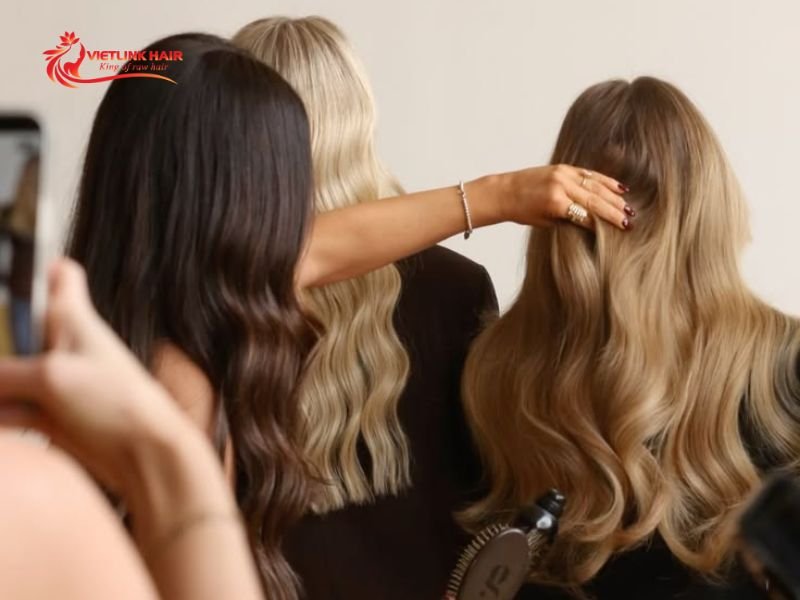
A simple routine is usually easier for clients to follow than a complicated care program. The focus should be on keeping the hair separated, dry, and protected.
A practical daily routine can look like this:
| Time | Routine | Purpose |
| Morning | Gently detangle | Remove overnight knots |
| Before washing | Brush carefully | Reduce tangling |
| After washing | Dry thoroughly | Prevent root matting |
| Evening | Brush and loosely secure | Reduce friction |
| Daily | Check attachment areas | Identify problems early |
Clients do not need to brush aggressively or use multiple products. Consistency is more useful than excessive manipulation.
For salons, giving clients a short daily checklist can also reduce confusion after installation.
How to Wash Hair Extensions Correctly
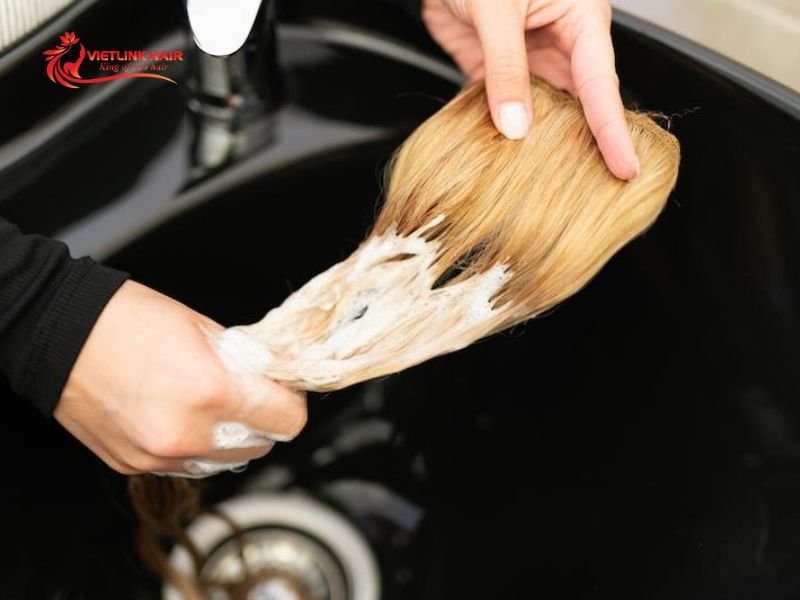
Washing is one of the most important areas covered by hair extension aftercare tips because incorrect washing can increase tangling and mechanical stress.
Brush Before Washing
Clients should gently remove existing knots before getting the hair wet.
Start at the ends and gradually move upward. If a knot is difficult to remove, hold the hair above the attachment while working through it.
This technique reduces pulling at the root.
Clean the Scalp Gently
Shampoo should focus mainly on the scalp.
Clients can:
- Wet the hair thoroughly.
- Apply shampoo to the scalp.
- Massage gently with the fingertips.
- Allow the cleanser to move through the lengths.
- Rinse thoroughly.
Avoid vigorously rubbing or twisting the lengths together.
A gentle or sulfate-free shampoo may be appropriate for many extension systems, but the exact recommendation should follow the supplier’s specifications.
Apply Conditioner to the Lengths
Conditioner is generally most useful on the mid-lengths and ends.
Clients should:
- Apply conditioner below the attachment area.
- Concentrate more product on dry ends.
- Avoid saturating tapes, bonds, beads, or other attachment components.
- Rinse thoroughly.
Heavy products around certain attachment systems can contribute to buildup or slippage.
How Often Should You Wash Hair Extensions?
There is no universal washing frequency.
Many clients may wash around two to three times per week, but the appropriate schedule depends on:
- Scalp oiliness
- Exercise
- Climate
- Hair texture
- Extension method
- Styling products
- Personal hygiene needs
An active client with an oily scalp may need a different routine from a client with a dry scalp.
This is why salons should avoid giving every client the same washing schedule.
How to Brush Hair Extensions Without Damage
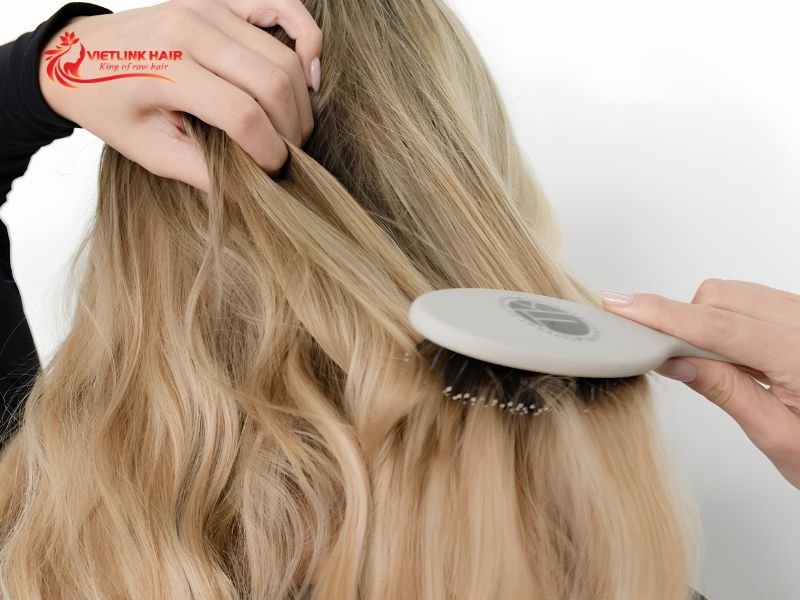
Brushing is another essential part of hair extension aftercare tips. Poor brushing technique can pull on attachment points and create unnecessary tension on natural hair.
Choose a Suitable Brush
Depending on the system, clients may use:
- Loop brushes
- Extension brushes
- Detangling brushes
- Wide-tooth combs
The brush should allow the client to detangle the lengths without repeatedly catching the attachment.
Use the Bottom-to-Top Technique
The basic method is straightforward:
- Divide the hair into manageable sections.
- Hold the section above the attachment.
- Start at the ends.
- Work upward gradually.
- Finish by gently brushing through the full length.
Starting directly at the roots can pull through knots and place additional stress on the attachment.
Separate the Roots Regularly
This is particularly important for semi-permanent extension systems.
As natural hair grows and sheds, loose hairs can collect around the attachment. If neighboring sections become tangled, small knots can develop into larger areas of matting.
Clients should gently check the attachment areas with their fingers every day.
How to Dry Hair Extensions After Washing
Drying is sometimes overlooked, but it is an important part of hair extension aftercare tips.
Wet hair is more vulnerable to stretching and mechanical stress. Leaving the hair wet for long periods can also increase friction and tangling.
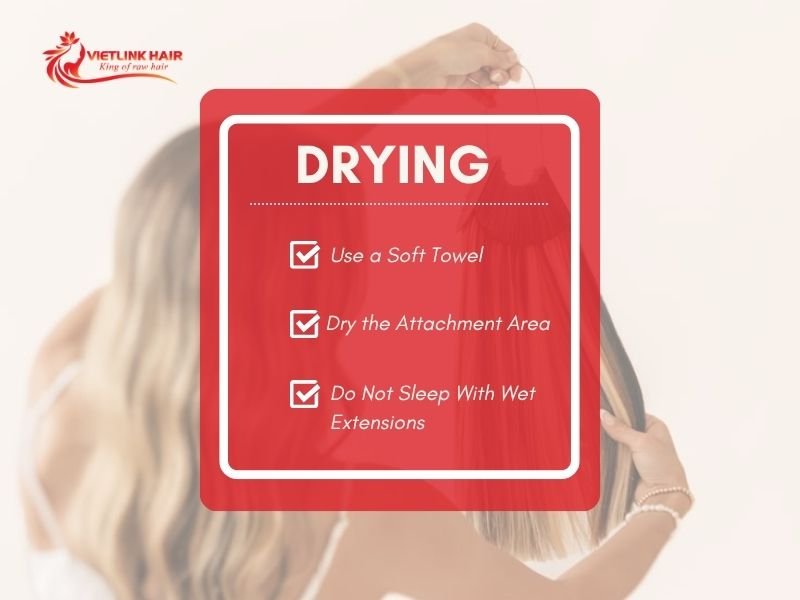
Use a Soft Towel
Instead of rubbing the hair vigorously, gently squeeze out excess water.
A microfiber towel can help reduce friction during this stage.
Dry the Attachment Area
The roots and attachment points should be dried properly before sleeping.
Use moderate airflow and keep the dryer moving. Avoid concentrating high heat on one small area for an extended period.
Do Not Sleep With Wet Extensions
Sleeping with wet extensions can increase:
- Tangling
- Root matting
- Friction
- Section-to-section movement
Longer and thicker extensions can be particularly difficult to detangle after overnight friction.
Hair Extension Aftercare Tips Before Bed
Nighttime care is another area where small changes can make a difference.
Before going to bed, clients should:
- Brush out tangles.
- Check the attachment areas.
- Make sure the hair is completely dry.
- Loosely braid long hair.
- Avoid tight ponytails.
- Consider a satin or silk pillowcase.
A loose braid can reduce movement and friction during sleep.
The braid should remain loose rather than tight. Excessive tension can place stress on the natural hair around the attachment.
Using Heat on Hair Extensions
Many clients want to curl, straighten, or blow-dry their extensions. Human hair extensions can generally be styled with heat, but repeated high temperatures can contribute to dryness and surface damage.
Therefore, heat protection should be part of any practical hair extension aftercare tips.
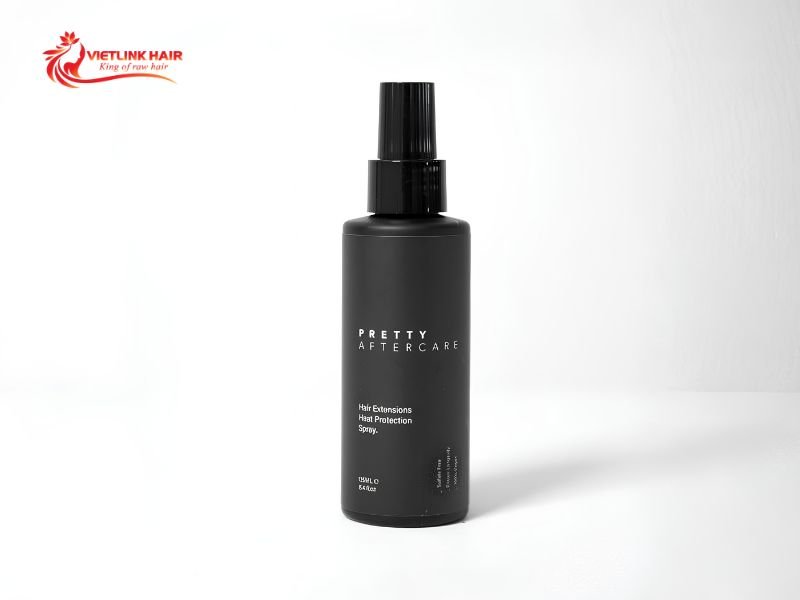
Use Heat Protectant
Apply a suitable heat-protection product before using hot tools.
The product should mainly be applied to the lengths according to its instructions.
Keep Heat Away From Attachments
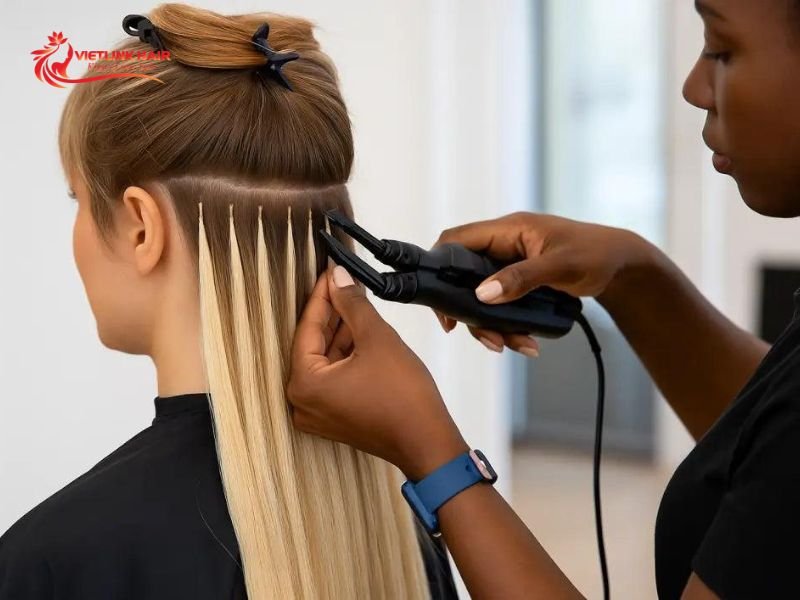
Direct heat requires additional caution around:
- Tape
- Keratin bonds
- Adhesive systems
- Some ring or bead systems
The temperature suitable for styling the lengths may not be suitable for the attachment.
What Temperature Should You Use?
There is no universal temperature that applies to every extension product.
Some extension-care systems recommend temperatures around 170°C or 338°F as a conservative reference. However, this should not be treated as a universal limit.
The appropriate setting depends on:
- Hair processing level
- Hair condition
- Styling tool
- Texture
- Supplier specifications
When possible, use the lowest temperature that produces the desired styling result.
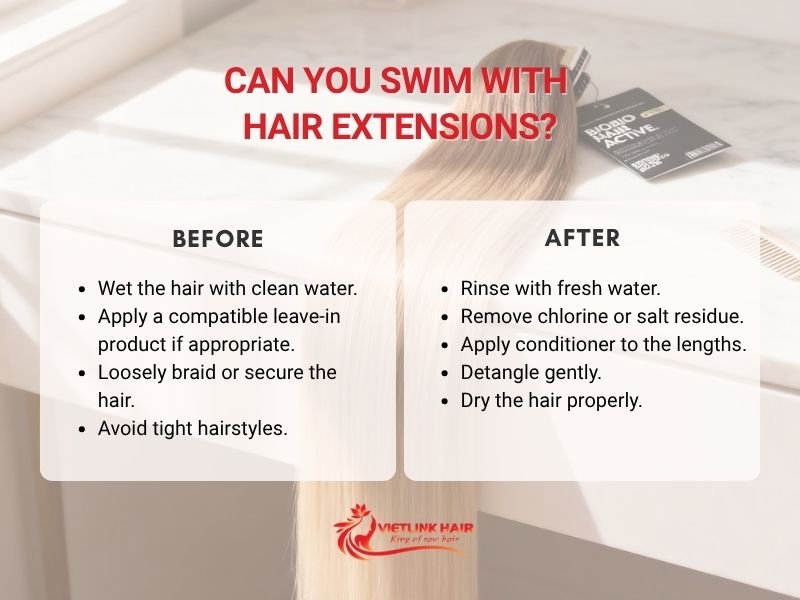
Can You Swim With Hair Extensions?
Swimming is an important lifestyle consideration because chlorine, salt water, and prolonged moisture can affect the hair’s condition.
Clients do not necessarily need to avoid swimming, but they should adapt their routine.
Before Swimming
Recommended steps include:
- Wet the hair with clean water.
- Apply a compatible leave-in product if appropriate.
- Loosely braid or secure the hair.
- Avoid tight hairstyles.
Pre-wetting the hair can reduce the amount of pool or seawater absorbed by the hair.
After Swimming
After swimming:
- Rinse with fresh water.
- Remove chlorine or salt residue.
- Apply conditioner to the lengths.
- Detangle gently.
- Dry the hair properly.
Chlorine and salt can contribute to dryness and tangling. They may also affect the appearance of some colored extension hair.
Clients who swim frequently may therefore require more attention to conditioning and maintenance.
Hair Extension Aftercare Tips for Exercise and Sweating
Exercise does not automatically mean that extensions must be washed after every workout.
The better approach depends on the client’s scalp condition and extension system.
During exercise:
- Tie the hair loosely.
- Avoid excessive tension.
- Keep long hair controlled.
- Avoid tightly compressing attachment areas.
After exercise, allow the scalp and hair to dry properly.
If the scalp becomes heavily sweaty, cleansing may be appropriate depending on the client’s normal routine.
For salons, lifestyle questions should be part of the consultation. A client who exercises daily may need different aftercare instructions from a client who rarely sweats.
Can You Dye Hair Extensions After Installation?
Coloring extensions requires additional care because extension hair may have already undergone chemical processing.
Before coloring, salons should consider:
- Hair origin
- Previous bleaching
- Previous coloring
- Hair porosity
- Current condition
- Desired color change
Darkening vs. Lightening
Depositing a darker shade is different from lifting hair to a lighter level.
Lightening usually creates greater chemical stress because existing pigment must be altered or removed.
This is why salons should be particularly cautious when clients request significant color changes.
A strand test can help evaluate how the extension hair responds before a larger service.
Protect the Attachment
Color products should not contact attachment components when the extension system does not allow it.
This is particularly important with adhesive, tape, and keratin-based systems.
Hair Extension Maintenance Schedule
Professional maintenance is an important part of hair extension aftercare tips.
Clients should not wait until the hair becomes severely tangled or an attachment is almost completely grown out.
A six-to-eight-week maintenance interval is commonly used for some extension systems, but it is not universal.
Maintenance timing depends on:
- Extension method
- Natural hair growth
- Hair density
- Extension weight
- Attachment position
- Lifestyle
- Installation technique
During a maintenance appointment, the stylist can check:
- Root matting
- Loose attachments
- Uneven tension
- Natural hair condition
- Product buildup
- Extension condition
If a client experiences significant discomfort, severe matting, or unusual breakage, professional assessment should happen earlier.
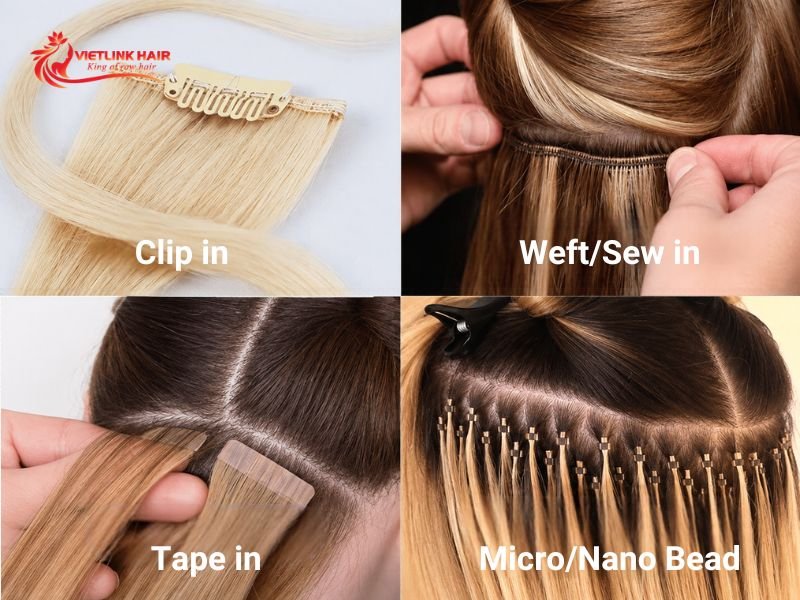
Hair Extension Aftercare by Extension Type
Different extension systems require different care priorities.
| Extension type | Main care focus | Common concern |
| Tape-in | Keep heavy products away from tape | Slippage |
| Keratin/U-tip | Control heat around bonds | Bond damage |
| I-tip/Micro ring | Separate roots regularly | Matting |
| Weft | Control tension and brushing | Root stress |
| Clip-in | Remove before sleeping | Mechanical tension |
Tape-In Extensions
Tape-in clients should pay particular attention to products used near the tape.
Heavy oils and conditioning products may affect certain adhesive systems.
The exact restrictions should follow the product supplier’s specifications.
Keratin Extensions
Keratin-bonded extensions require careful heat management.
Direct high heat near the bond can affect the attachment, while aggressive brushing can increase tension.
Micro Ring and I-Tip Extensions
Root separation is especially important.
As natural hair grows, shed hairs can become trapped around the attachment. Regular separation can help reduce the risk of matting.
Weft Extensions
Clients with wefts should pay attention to tension.
Tight ponytails, repeated pulling, and heavy styling can create additional mechanical stress around the installation area.
Clip-In Extensions
Clip-ins are normally removed before sleeping.
Clients should:
- Remove them gently.
- Detangle before storage.
- Keep them dry.
- Store them in a clean place.
Because clip-ins are removable, proper storage is also part of their care routine.
Hair Extension Aftercare Products: What Should Clients Use?
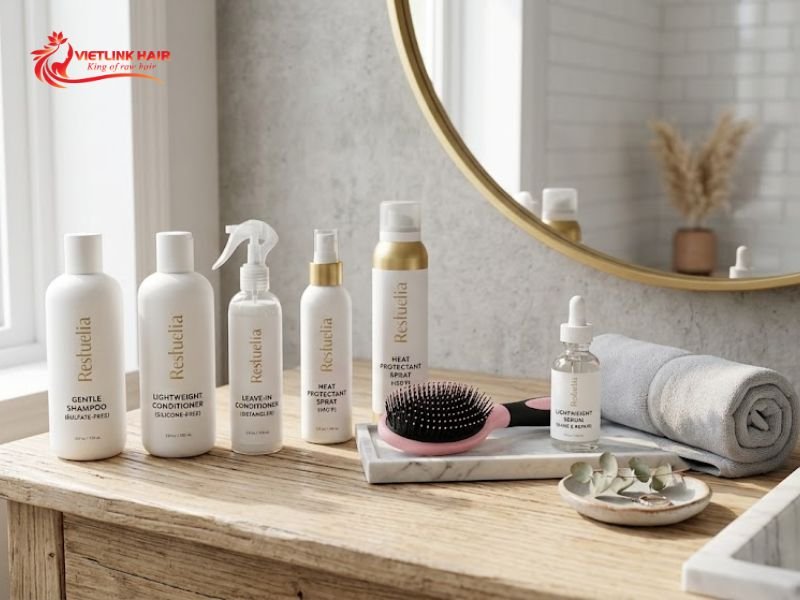
Product selection should consider both the hair and the attachment system.
Useful categories include:
- Gentle shampoo
- Lightweight conditioner
- Leave-in conditioner
- Heat protectant
- Extension-friendly brush
- Lightweight serum
- Microfiber towel
Clients should be cautious with heavy oils and products around attachment areas.
A product can be beneficial for dry ends but unsuitable for an adhesive or tape area.
This is why salons should explain not only what product to use, but also where to apply it.
Common Hair Extension Aftercare Mistakes
Understanding mistakes makes hair extension aftercare tips easier for clients to remember.
| Common Mistake | Better Approach |
| Sleeping with wet hair | Dry the hair completely before bed to reduce tangling and friction. |
| Applying oil to attachments | Keep richer oils mainly on the lengths and ends unless the supplier advises otherwise. |
| Using excessive heat | Use heat protection and the lowest effective temperature. |
| Ignoring root matting | Check and gently separate the attachment areas regularly. |
| Treating every extension type the same | Adjust aftercare based on the extension method and attachment system. |
Factory Insight: Hair Quality Affects Aftercare
From a manufacturing perspective, aftercare performance starts with the product itself.
Two extension sets can look similar but behave differently because of differences in:
- Hair origin
- Cuticle condition
- Processing history
- Hair direction
- Chemical treatment
- Manufacturing process
Virgin or minimally processed hair has a different chemical history from heavily processed hair.
This can influence how the hair responds to washing, heat, coloring, and long-term wear.
For B2B buyers, this means selecting extensions based only on initial appearance may not be enough.
A buyer supplying salons with active clients, frequent heat users, or regular color services should also consider processing level, texture stability, and intended use.
Clear supplier specifications can help salons create more accurate client instructions.
Expert Insight: Aftercare Should Match the Client
There is no single routine suitable for every extension client.
Instead, salons can adapt hair extension aftercare tips according to client behavior.
If the client has an oily scalp: prioritize appropriate cleansing and scalp hygiene.
If the client has dry or processed hair: focus on conditioning and reduced heat exposure.
If the client swims frequently: emphasize pre-swim protection and post-swim rinsing.
If the client exercises frequently: monitor sweat and scalp buildup.
If the client has fine natural hair: pay attention to extension weight and mechanical tension.
If the client uses heat tools often: emphasize heat protection and temperature control.
This scenario-based approach makes aftercare more practical and easier for clients to follow.
Hair Extension Aftercare Checklist
After covering the main routine, clients can use this checklist as a simple reminder.
Daily
A simple daily routine helps prevent tangling and unnecessary stress on the extensions.
- Detangle gently.
- Start brushing from the ends.
- Check attachment areas.
- Avoid unnecessary pulling.
- Keep heavy products away from attachments where required.
Washing
Proper washing helps keep both the extensions and attachment areas clean without adding excess tension.
- Brush before washing.
- Clean the scalp gently.
- Avoid vigorous rubbing.
- Condition the lengths.
- Rinse thoroughly.
- Dry the attachment area completely.
Styling
Heat styling should be controlled to reduce dryness and protect the attachment system.
- Use heat protection.
- Keep direct heat away from attachments.
- Use the lowest effective temperature.
- Avoid unnecessary repeated heat styling.
Sleeping
Night-time care focuses on reducing friction and preventing tangles while you sleep.
- Do not sleep with wet hair.
- Brush before bed.
- Loosely braid long hair.
- Reduce friction where possible.
Swimming
Swimming can expose extensions to chlorine or salt water, so a few simple steps can reduce dryness and tangling.
- Wet hair before swimming.
- Secure it loosely.
- Rinse after chlorine or salt-water exposure.
- Condition the lengths.
Maintenance
Regular maintenance helps salons identify attachment or matting issues before they become more difficult to manage.
- Follow the salon’s recommended schedule.
- Report loose or uncomfortable attachments.
- Address root matting early.
- Have permanent extensions removed professionally.
FAQ About Hair Extension Aftercare Tips
With the main routine covered, clients often have a few practical questions about daily maintenance.
Can I sleep with wet hair extensions?
It is better to avoid it. Dry the hair and attachment areas completely before sleeping, then loosely braid or secure long hair.
Can I use oil on hair extensions?
Oil can be useful on dry lengths and ends, but it should generally be kept away from attachment areas when the system is sensitive to oils.
Can I swim with hair extensions?
Many extension clients can swim. However, chlorine and salt water may increase dryness and tangling. Wet the hair before swimming and rinse it thoroughly afterward.
Can I straighten or curl hair extensions?
Human hair extensions can generally be heat-styled, but repeated high temperatures may reduce hair quality. Use heat protection and avoid direct heat on attachment points.
How often should I maintain my extensions?
Some systems are commonly maintained every six to eight weeks, but the appropriate schedule depends on the method, natural hair growth, extension weight, and client lifestyle.
Why are my extensions matting at the roots?
Root matting can develop when shed natural hairs collect around attachment points. Moisture, friction, insufficient separation, and delayed maintenance can make the problem worse.
Can I dye my extensions?
Some human hair extensions can be colored, but the result depends on previous processing and current hair condition. A strand test is recommended before a larger chemical service.
What brush should I use?
An extension brush, loop brush, or suitable detangling brush can work depending on the extension system. The main goal is to reduce pulling around the attachment.
Final Takeaway
Good hair extension care means gentle brushing, careful washing, proper drying, controlled heat, and regular maintenance.
For salons and wholesale buyers, choosing the right hair and attachment method also simplifies aftercare. ContactVietlink Hairfor wholesale hair extensions suited to your business needs.
WhatsApp: +84 855 555 951
Email: info@vietlinkhair.com
Facebook:Vietlinkhair
