
Hair Extension Knowledge
Genius Weft vs Hand-Tied Weft: Which Hair Extension Is Better?
Looking for hair extensions that blend seamlessly with natural hair without adding unnecessary bulk? Genius weft vs hand-tied weft is a common dilemma, as both offer a natural finish but differ in thickness, flexibility, comfort, and styling versatility. This guide from VietLink Hair breaks down their key differences, pros and cons, costs, and lifespan to help you find the best option for your hair type, styling preferences, and budget. Whether you’re a salon professional or a hair extension buyer, understanding these differences will help you make a more confident choice.
Genius Weft vs Hand-Tied Weft at a Glance
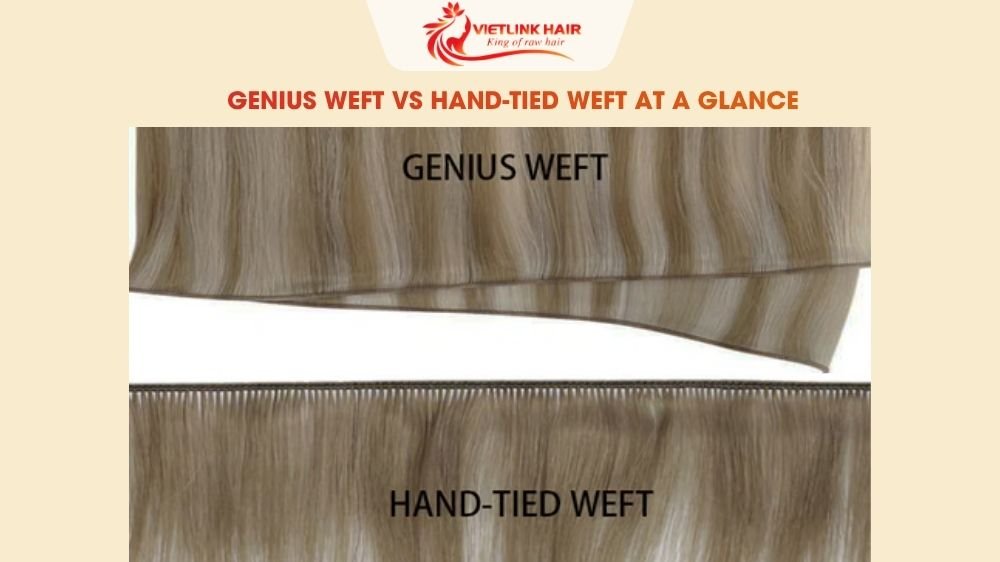
Genius weft and hand-tied weft extensions both add length and volume while blending naturally with the wearer’s hair. However, they differ in weft construction, thickness, customization, and installation requirements.
Here is a quick comparison of Genius Weft vs hand-tied weft extensions before exploring each factor in detail.
| Factor | Genius Weft | Hand-Tied Weft |
| Weft construction | Machine-made with a thin, flexible seam | Hand-knotted weft with a delicate, narrow seam |
| Thickness | Low-profile seam; thickness varies by design | Often an especially fine, flexible seam; thickness varies by design |
| Customization | Purpose-designed Genius wefts are typically cut-to-fit; follow product guidance | Traditional hand-tied tracks should be folded, not cut |
| Return hair | Many Genius designs have no folded-over return hair | Traditional hand-tied designs often have short folded-over return hairs |
| Installation | Typically sewn onto a beaded row | Typically sewn onto a beaded row |
| Best for | Cut-to-fit placement, concentrated fullness and less return hair | Lightweight layering, an unobtrusive seam and dimensional colour blending |
| Hair types | Suitable for many hair types, depending on density and installation | Often preferred for fine to medium hair when properly fitted |
| Maintenance | Usually requires move-ups as natural hair grows | Usually requires move-ups as natural hair grows |
| Key advantage | Flexible, durable, and customizable | Thin, lightweight, and discreet |
Quick takeaway: Genius wefts are a strong choice for buyers who prioritize a thin, customizable weft, while hand-tied wefts appeal to those seeking a lightweight, low-profile construction. The best option depends on hair density, scalp comfort, stylist technique, and the desired result.
What Is a Genius Weft?
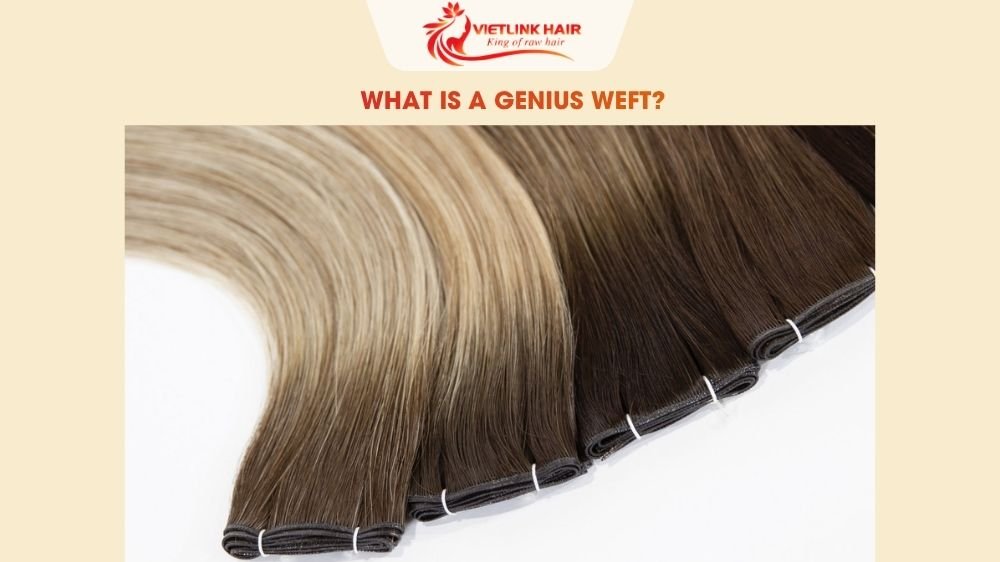
A genius weft is a thin, machine-sewn hair extension weft designed to provide a flat, flexible finish with the convenience of customizable sizing. Its construction minimizes bulk at the seam while allowing stylists to cut the weft to fit different head shapes without unraveling, making it a versatile option for professional hair extension installations. Genius weft extensions are commonly sewn onto beaded rows to add length and volume while blending with natural hair.
What Is a Hand-Tied Weft?
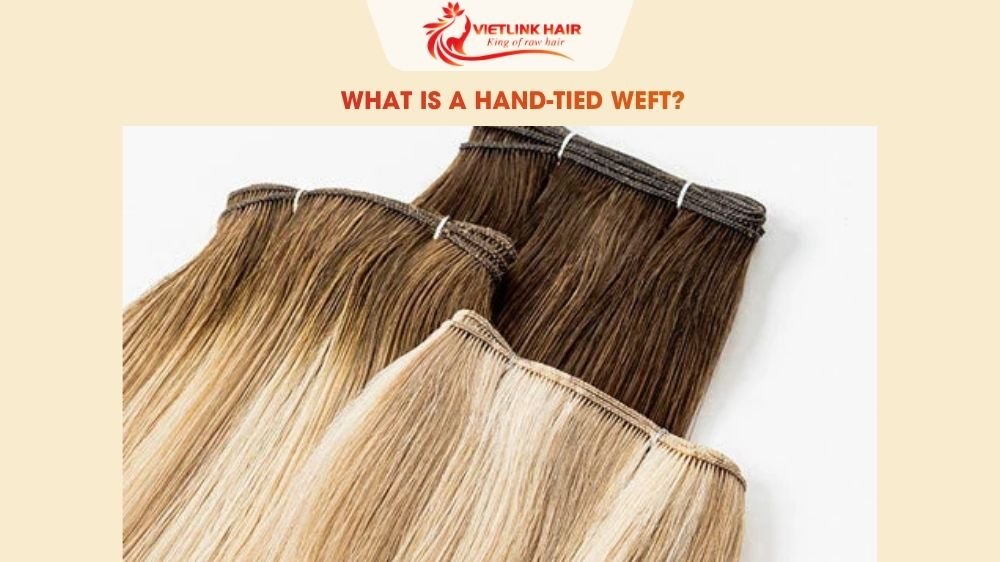
A hand-tied weft is a hair extension weft made by manually tying individual sections of hair onto a fine thread track. This hand-crafted construction creates a lightweight, narrow seam that lies close to the scalp for a discreet, natural-looking finish. Hand-tied weft extensions are typically installed by sewing them onto beaded rows. Because cutting can cause the knots to unravel, stylists generally fold the weft ends rather than cut across the track.
Key Differences Between Genius Weft and Hand-Tied Weft
While the quick comparison highlights the main differences, the real distinction lies in how each weft performs in practice. From seam construction and cutting flexibility to comfort, durability, and styling versatility, these factors can influence the final result and the stylist’s installation process. Let’s examine each difference in detail.
Weft Thickness and Flatness
Both constructions can create a low-profile seam, but neither has one universal thickness. A genius weft uses a slim reinforced edge, while a traditional hand-tied weft uses a fine knotted track. For example, Bohyme’s published comparison describes its hand-tied designs as thinner and lighter-density than its Genius designs. This is a comparison of that brand’s products, not a measurement standard for all wefts. Ask for the seam profile and pack weight of the exact product you intend to buy.
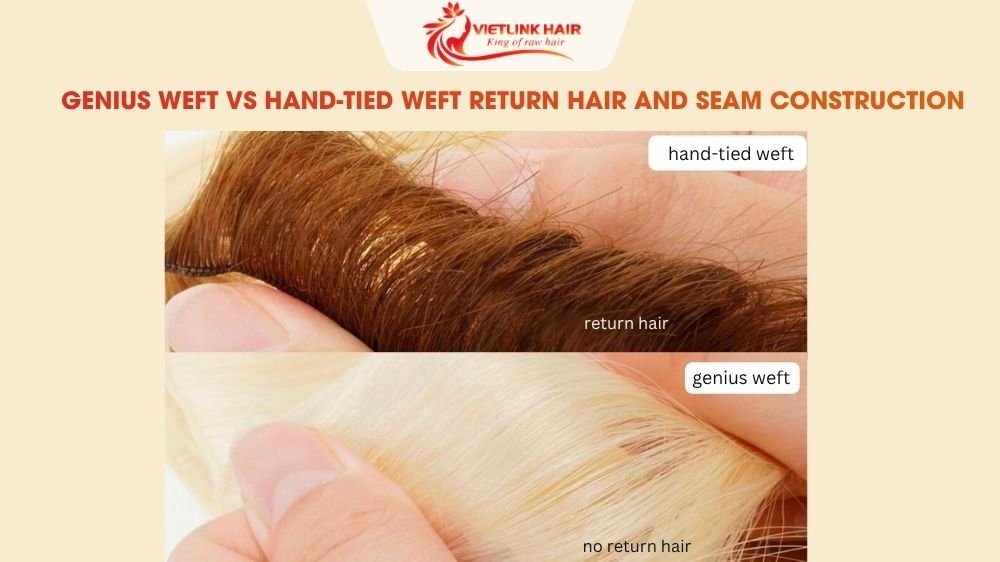
Return hair (sometimes called “mustache hair”) is the short hair folded back near the upper edge of a weft. Traditional hand-tied designs often have it; many Genius designs remove it. Return hair may be unnoticeable for some wearers but can tickle or irritate sensitive scalps. When comparing samples, examine the return hairs, seam stiffness, how the weft bends, density per row and total installed weight. Do not assume that Genius is always thinner or more comfortable: the stylist should assess the complete installation, not just an isolated strip.
Cutting and Customization
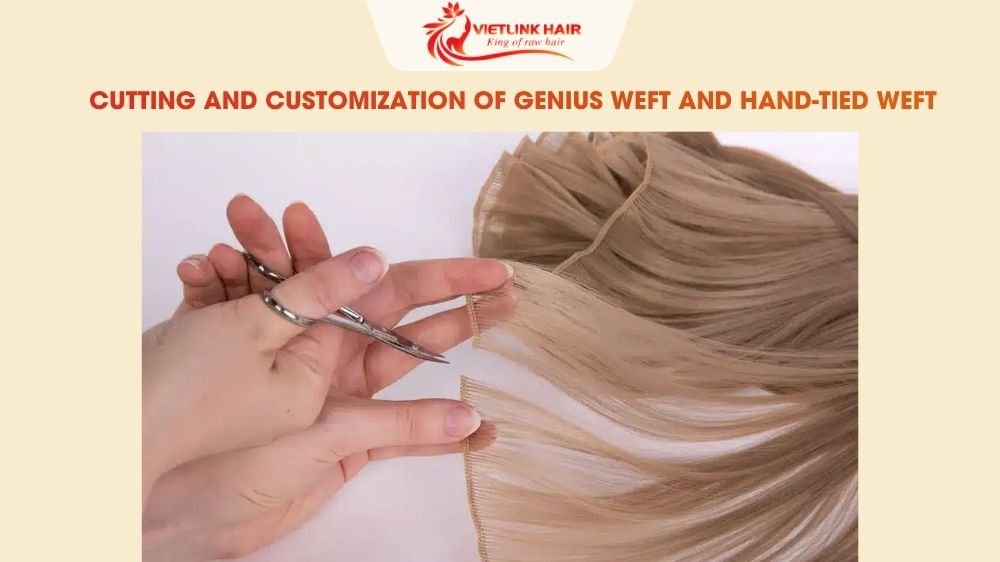
Cutting flexibility is one of the most practical distinctions. Many genius wefts are designed to be trimmed to the width of an installation row, but the allowable cut locations and any required edge sealing vary by manufacturer. Conventional hand-tied tracks should not be cut arbitrarily, because doing so can release knots and cause shedding. Follow the instructions for the specific product before altering either construction.
For a salon, a manufacturer-approved cut-to-fit Genius construction can make partial rows and unusual head shapes easier to plan. The offcuts are not automatically reusable: inspect the cut edge for stability and confirm whether the supplier permits reuse. Traditional hand-tied wefts should generally be folded or layered to fit the row instead of being cut; do not assume a drop of glue makes cutting safe.
Comfort and Natural Look
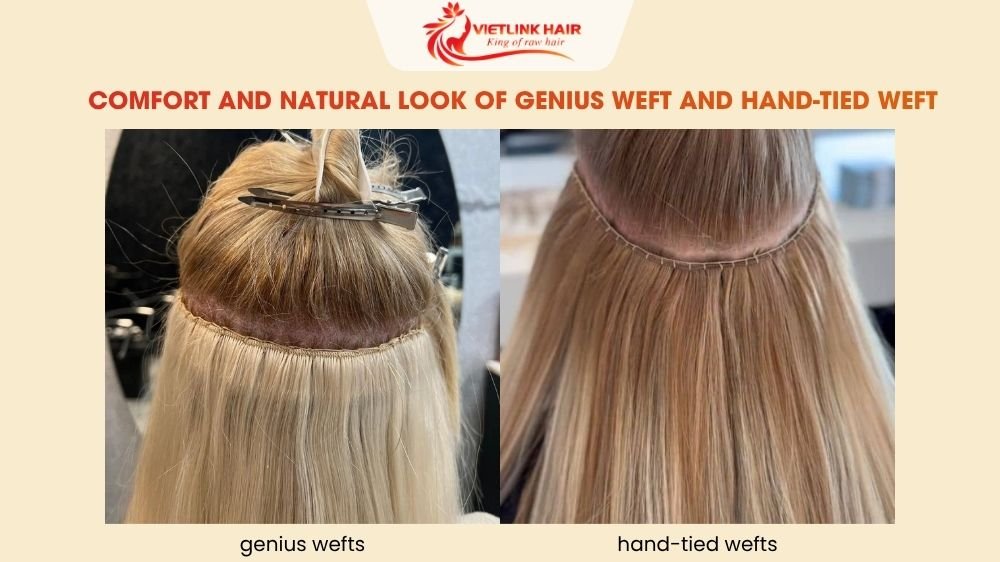
Both genius and hand-tied wefts can feel lightweight when their total weight and row tension suit the wearer. A slim seam may be easier to conceal, but comfort also depends on the foundation, placement, stacking and scalp sensitivity. Neither construction eliminates traction or guarantees a natural-looking result.
A zero-return Genius design can be more comfortable for someone bothered by short folded hairs near the scalp, while a light-density hand-tied track can be useful for flexible, layered colour blending. In one brand’s product line, the hand-tied track may also be thinner than the Genius track. The stylist should assess a sample against the client’s hair density, scalp sensitivity, total extension weight, parting and usual hairstyles before recommending either construction.
Durability and Lifespan
The service life of either weft depends on hair quality, processing history, wear frequency, care and the condition of its attachment track. A tightly secured genius seam may tolerate resizing well; a traditional hand-tied track can be delicate if its knots are disturbed. Neither label guarantees a fixed number of months of use. For the distinction between wear duration, maintenance appointments and hair reuse, see our guide to how long hair extensions last.
Both can be repositioned and reused when their hair and seam remain sound. Reconstructing or re-sewing a hand-tied track is specialist work, not a guaranteed feature of every product. Ask the installing stylist when to schedule a move-up based on growth, matting, tension and the method used; do not rely on a universal four-to-eight-week interval.
Price and Value
Price is another important factor when comparing genius weft vs hand-tied weft extensions. Both are available in different price ranges, depending on hair quality, length, color, and brand. Genius wefts are often positioned in the mid-range to premium segment, while hand-tied wefts can also command premium prices because of their labor-intensive construction.
Cost depends on the actual hair weight, length, cuticle and processing specifications, seam construction, the number of rows, installation labour and maintenance. Do not assume one construction is always cheaper. Request comparable quotes for the same grams, shade, length and hair grade, plus the full salon fitting and move-up charges.
| Cost Factor | Genius Weft | Hand-Tied Weft |
|---|---|---|
| Product quote | Compare cost per 100 g for the exact length, shade, grade and construction | Compare cost per 100 g using matching specifications |
| Installation labour | Ask whether custom trimming and edge finishing add chair time | Ask whether width planning, folding and row placement add chair time |
| Maintenance | Confirm move-up labour, track condition and any replacement requirements | Confirm move-up labour, knot integrity and any track-repair requirements |
| Potential value | Cut-to-fit flexibility where the product permits it | Fine, flexible track where the product suits the client |
The table below focuses on cost drivers rather than unsourced market price ranges. A vendor quote should specify currency, date, unit weight and whether installation or shipping is included.
Genius Weft vs Hand-Tied Weft: Which Is Better for Different Hair Types?
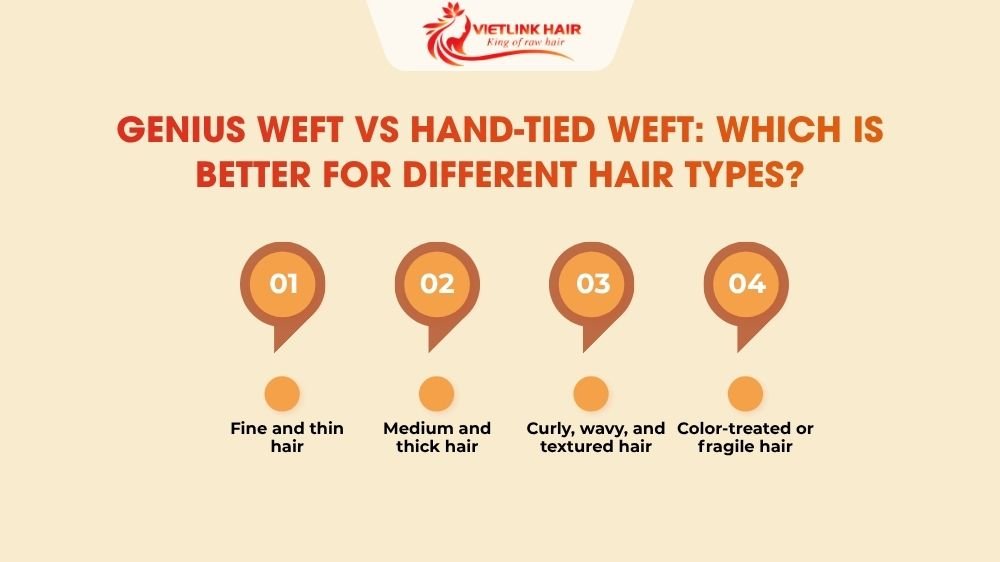
The best weft hair extensions depend on natural hair density, texture, and condition. Genius wefts and hand-tied wefts can both add length and volume, but each offers different advantages for specific hair types.
1- Fine and thin hair
Both can work on some fine-hair clients, but the total weight and placement need an individual assessment. A low-profile genius seam or a light hand-tied track may be helpful; neither is automatically safe for fragile or actively thinning hair. Ask a trained stylist to assess the natural hair before adding rows.
2- Medium and thick hair
Medium or thick natural hair may support fuller installations, but product density and the number of rows vary by brand and desired result. Compare grams per weft, planned row placement and styling needs; do not assume genius wefts always carry more hair than hand-tied tracks.
3- Curly, wavy, and textured hair
Natural texture can help conceal weft seams, making texture matching especially important. Hand-tied wefts can work well with braid-in and bead-based installation methods that accommodate natural curls, while genius wefts allow stylists to cut custom pieces to blend areas with uneven hair density. Matching the extension texture to the client’s natural curl pattern is essential, as a mismatch is often more noticeable than a thicker seam.
4- Color-treated or fragile hair
Neither weft construction inherently requires adhesive or heat, but the chosen installation can still place tension on natural hair. Chemically stressed or fragile hair should be assessed by a trained stylist; trimming a weft does not by itself make the installation safe.
Which Weft Is Better for Hair Salons and Wholesale Buyers?
For hair salons, resellers, and wholesale buyers, choosing between genius weft and hand-tied weft extensions involves more than comfort and appearance. Inventory costs, installation efficiency, profit margins, and product demand all influence which weft type makes the most business sense.
Chair Time and Versatility: Genius wefts may be convenient to stock for busy salons because one product can accommodate full rows, partial rows, and custom adjustments. A single width may serve multiple installs if the product can be safely trimmed, but offcut reuse should be confirmed with the supplier. Hand-tied wefts are a more specialized product, suited to clients seeking a premium result and willing to pay for it, but they work best at their original widths.
Inventory and Profit Margins: Neither weft type has a universally higher unit price, sales velocity or profit margin. Salons and resellers should compare actual customer requests, cost per gram, installation labour, stock turnover and the number of useful widths before deciding whether to stock one or both. Ask each supplier to confirm packaging or branding options rather than assuming they are available. If you are comparing fuller-looking ends across different weft constructions, review what super double drawn hair means separately from seam density; these are different specifications.
Choosing the right weft is only part of building a profitable hair business. A reliable factory partner can help you maintain consistent product quality, manage sourcing costs, and develop a product range that fits your target market. Vietlink Hair, a Vietnamese human hair supplier, is an option for salons and resellers exploring wholesale sourcing. Buyers can enquire through its Vietnamese hair factory page and request confirmation of current weft constructions, grade options, quantities, packaging and order terms. Do not assume that every weft construction or customisation is available.
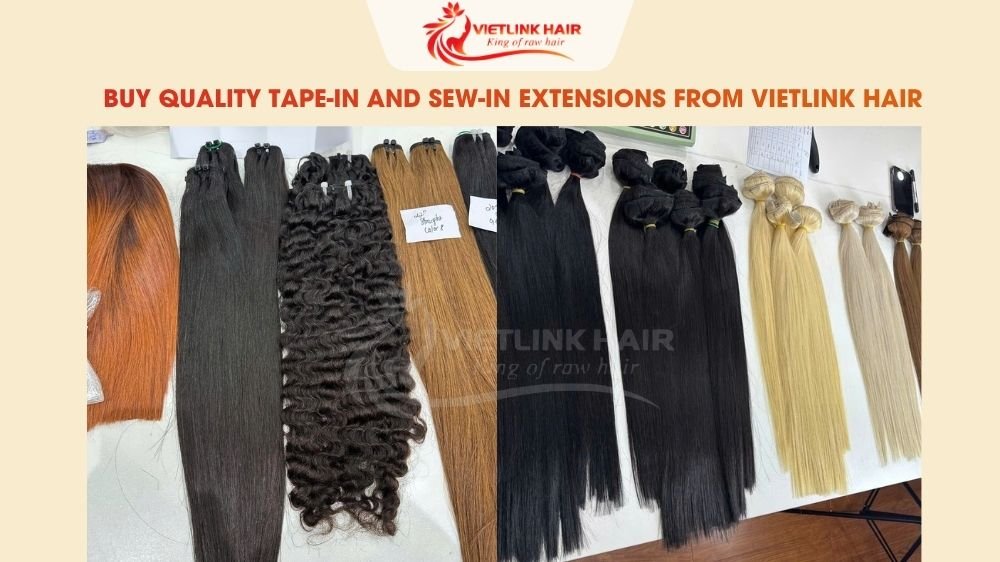
For a meaningful quote, provide your desired weft construction, hair length, texture, colour, weight, intended installation method and destination country. Ask for photographs of the seam, any cutting instructions and an approved sample before ordering.
How to Choose Between Genius Weft and Hand-Tied Weft
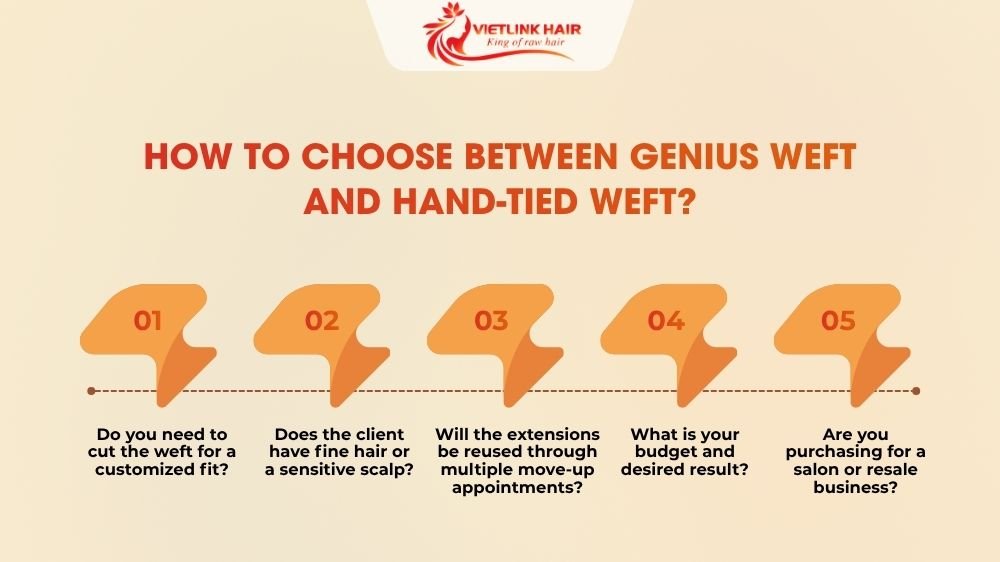
Choosing between genius weft and hand-tied weft extensions depends on installation requirements, natural hair characteristics, maintenance expectations, and budget. Use the following five questions to identify which weft type best fits your needs as a stylist, salon owner, or wholesale buyer.
- Do you need to cut the weft for a customized fit? Choose Genius Weft if you need to trim the track to create custom widths and precise placements. Traditional hand-tied wefts generally should not be cut because doing so can cause the knots to unravel.
- Does the client have fine hair or a sensitive scalp? Consider a genius weft for its thin, flat seam, or a hand-tied weft if a soft, flexible track is the priority. The right choice also depends on hair density, installation technique, and individual scalp comfort.
- Will the extensions be reused through multiple move-up appointments? Hand-tied wefts may be reusable if the original track remains secure, with specialist repairs where appropriate. Genius wefts can also be moved up and reused when properly maintained.
- What is your budget and desired result? Genius wefts are often positioned in the mid-range to premium segment, while hand-tied wefts can command premium prices. Compare the cost per 100g, hair quality, and expected reuse before making a decision.
- Are you purchasing for a salon or resale business? Genius wefts can serve as a versatile core product for different client needs, while hand-tied wefts can complement the range for customers seeking a lightweight, discreet installation. Stocking both allows businesses to serve different preferences and budgets.
Expert tip: If you are building your initial inventory, genius weft can be a versatile starting point because of its cuttable construction and customization flexibility. Consider adding hand-tied wefts as you identify demand among clients who prioritize a lightweight track and reusable extensions. The best product mix ultimately depends on your customers, installation services, and sourcing budget.
FAQs
Is Genius Weft Better Than Hand-Tied Weft?
Neither weft type is universally better. Genius wefts offer cuttable construction, customization flexibility, and efficient installation, while hand-tied wefts provide a soft, flexible track that can be re-sewn for reuse. The best choice depends on hair type, installation needs, budget, and maintenance preferences.
Can Genius Weft Be Cut Without Shedding?
Yes. Many genius wefts are made to be cut to width, but not every product has the same edge construction or finishing instructions. Confirm approved cut points and sealing requirements with the manufacturer; check the edge after cutting.
What Is Return Hair in Genius and Hand-Tied Wefts?
Return hair is the short folded-over hair near the weft track. Many conventional hand-tied wefts include it, while zero-return Genius designs avoid it. This may affect how the seam feels on a sensitive scalp, but comfort also depends on total weight, row tension and placement. Check the construction of the specific product.
Is Hand-Tied Weft Worth the Higher Price?
Hand-tied wefts may suit clients who want a fine, flexible track, while genius wefts may provide useful cut-to-fit options. Neither has a reliably lower price across suppliers. Compare matched product quotes, installation costs and reusability instructions.
How Long Do Genius Weft and Hand-Tied Weft Extensions Last?
Both can be reused when the hair and seam remain in suitable condition, but there is no fixed lifespan for either type. Move-up timing depends on growth, hair condition and installation technique. Ask your stylist to inspect the attachment track at each appointment.
Which Weft Is Better for Fine Hair?
Both constructions may suit some fine-haired clients when the stylist selects appropriate density, row placement and attachment weight. A lightweight hand-tied track may help where minimal weight is essential; a custom-cut, zero-return Genius design may help where precise sizing or scalp comfort is the priority. Neither is automatically safe for fragile or actively thinning hair. An experienced stylist should assess hair and scalp condition before installation.
In conclusion, choosing between genius weft vs hand-tied weft depends on hair type, installation needs, maintenance, and budget. Genius wefts stand out for their cuttable construction, customization flexibility, and efficient installation, while hand-tied wefts offer a lightweight, flexible track that can be re-sewn for reuse. Both can deliver natural-looking length and volume when properly selected and maintained. For salons and wholesale buyers, the best option is the one that matches customer demand, product quality requirements, and business goals.
Comparing Weft Hair Options for Your Business?
Share your preferred weft construction, length, texture, colour, quantity and delivery country. Ask Vietlink Hair to confirm current options, sample terms and an itemised wholesale quotation.
