Hair Extension Knowledge
I-Tip vs K-Tip Extensions: Key Differences, Pros and Cons
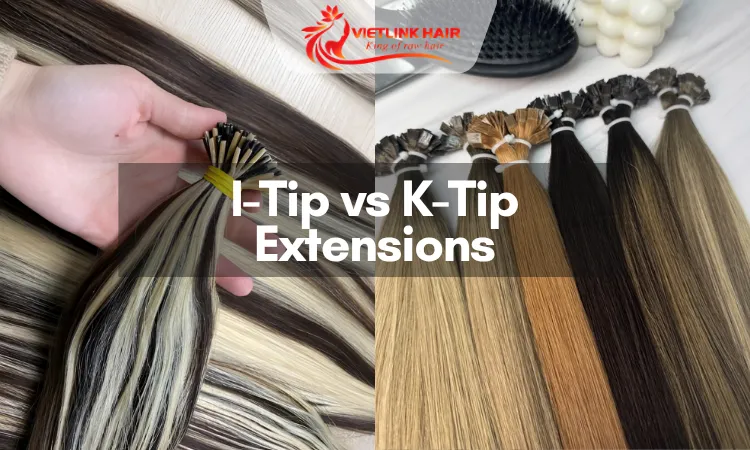
I-Tip vs K-Tip extensions differ primarily in how they attach to natural hair. I-Tips use clamped beads without installation heat, while K-Tips use heat-softened keratin bonds. I-Tips support periodic move-ups and reuse when the hair is suitable; K-Tips generally offer longer wear without bead adjustments but usually require complete removal and a fresh set or a specialist-approved re-tipping process. This comparison covers comfort, fine-hair suitability, maintenance, lifespan, and the quality checks salons and wholesale buyers should consider.
What Are I-Tip and K-Tip Hair Extensions?
Before comparing the two methods, it helps to define each one clearly.
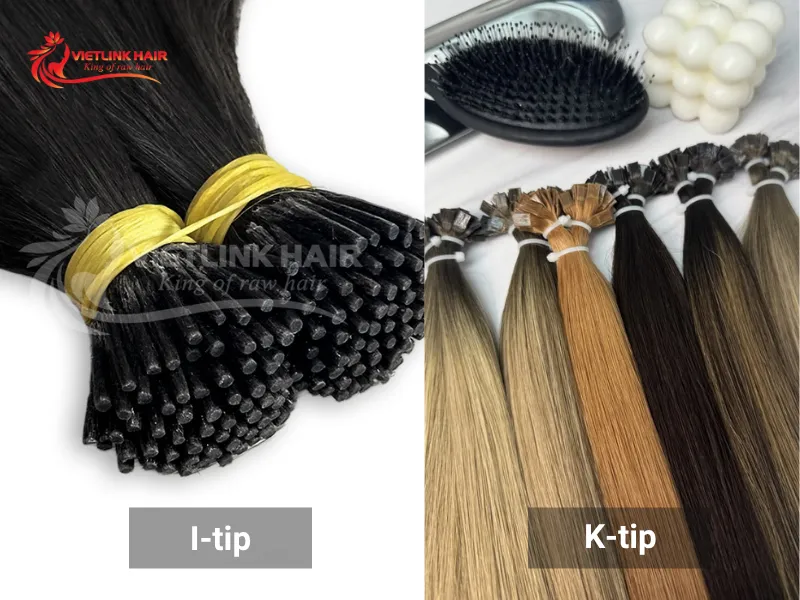
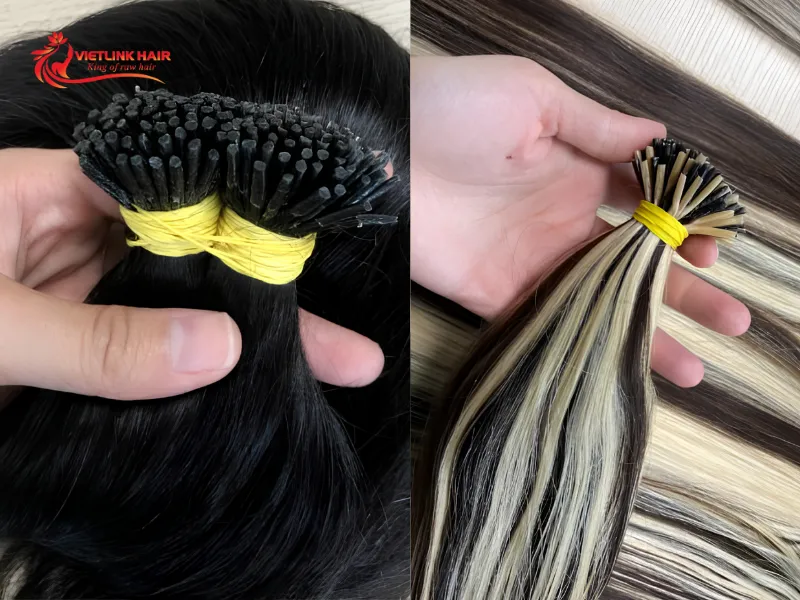
I-Tip extensions are single hair strands with a straight, stick-shaped tip. Each strand is passed through a micro bead together with a small section of natural hair, and the bead is clamped shut with pliers. No heat or glue is involved, so this is a cold fusion method.
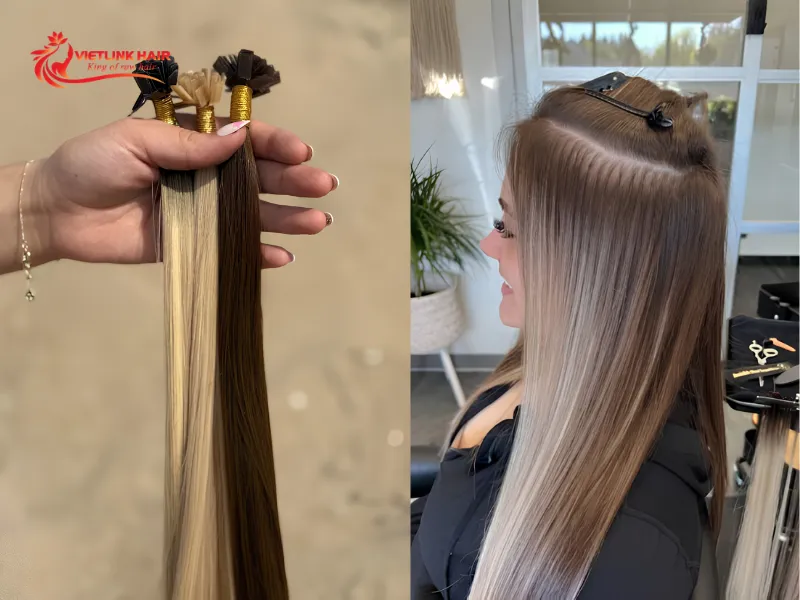
K-Tip extensions are single strands with a keratin bond at the root. A heated connector softens the keratin so it wraps around a small section of natural hair. Because heat creates the attachment, this is a hot fusion method.
Both belong to the strand-by-strand family, where one extension strand attaches to one small section of natural hair. Hair quality must be assessed separately from the tip method: the Remy label generally refers to cuticle direction, but it does not by itself verify grade, processing history, or batch consistency.
</p>
I-Tip vs K-Tip Extensions: Key Differences at a Glance
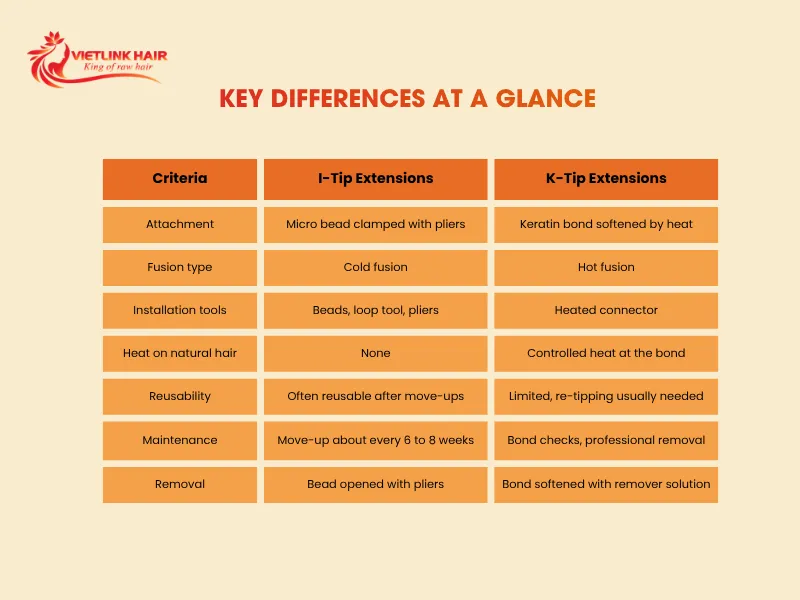
Quick answer: I-Tip uses a heat-free clamped bead and is commonly chosen when hair reuse and regular move-ups are priorities. K-Tip uses a heat-applied keratin bond and generally stays in place until a professional removal appointment. The safest fit depends on hair condition, attachment size and the installer—not on a blanket claim that one method is damage-free.
The table below compares the two methods on the points that matter most to buyers.
| Factor | I-Tip Extensions | K-Tip Extensions |
|---|---|---|
| Attachment | Clamped microbead around a tipped strand and natural hair | Keratin-based bond softened using a heated fusion tool |
| Installation heat | Not needed | Required at the attachment |
| Typical service pattern | Scheduled bead checks and move-ups; commonly about every 6–8 weeks in some professional systems | Regular assessment and care, but typically no bead-style move-ups before full removal |
| Wear time vs hair life | One position lasts until the next move-up; suitable hair may be reused through multiple installations | One installation often lasts several months, depending on system, growth and care |
| Reuse | Often possible if the tips and lengths remain sound | Brand-dependent; many systems specify a fresh set, while specialist re-tipping is possible only where approved |
| Fine-hair considerations | No heat, but bead bulk, grip and tension need careful assessment | Small customized bonds may be discreet; heat and strand weight require specialist control |
| Removal | Stylist opens beads with the correct tool | Stylist breaks down bonds using the system-specific removal process |
| Main business trade-off | Potential reuse value and repeat move-up appointments | Longer wear between repositioning visits, with removal and replacement or approved re-tipping costs |
Treat the table as a starting point rather than a verdict. Real results depend on hair grade, installer skill, and client habits.
→ Want to see how other bead-based methods compare? Here’s the full breakdown of micro ring vs nano ring extensions.
How Do I-Tip and K-Tip Extensions Work?
Each method follows its own installation logic, so it is worth walking through both.
How Are I-Tip Extensions Installed?
The I-Tip process is mechanical and needs no heating tools. A stylist follows these steps:
- Separate a small section of natural hair, about the width of one extension strand.
- Thread a micro bead onto the natural hair with a loop tool.
- Insert the I-Tip strand into the bead alongside the natural hair.
- Position the bead at the distance recommended by the attachment system and the trained stylist, allowing the hair to move without pulling.
- Clamp the bead with pliers until it holds firmly.
Some systems use silicone-lined beads. The bead material, size and grip must suit the product and the client’s natural hair; no bead diameter is safe or effective for every installation.
How Are K-Tip Extensions Installed?
K-Tip installation replaces the bead with controlled heat. The steps are:
- Separate a small section of natural hair.
- Place the keratin tip against the section, close to the root.
- Use the tool temperature and contact method specified for the particular keratin product; avoid a universal temperature setting.
- Roll the softened keratin between the fingers to form a small, rounded bond.
Consistent bond dimensions and clean shaping can support discreet placement. The installer should follow the brand-specific heat and bond instructions; factory quality control should be checked through documented specifications or representative samples, not assumed.
Pros and Cons of I-Tip vs K-Tip Extensions
Neither method wins in every situation, so a balanced view helps buyers stock the right product.
I-Tip Extensions: Advantages and Limitations
I-Tip offers flexibility for both stylists and clients. Its main strengths are:
- No heat during installation, which suits clients concerned about thermal damage.
- Strands can often be reused if the hair stays in good condition.
- Beads can be opened and repositioned during move-ups.
Its limitations are just as clear:
- Beads need periodic adjustment as natural hair grows.
- Poorly sized or badly placed beads may create visible bumps.
- Pliers and bead supplies add to the toolkit.
K-Tip Extensions: Advantages and Limitations
K-Tip focuses on a compact bond and a low-profile finish. Its strengths include:
- Small bonds that can move naturally with the hair.
- No beads to adjust or replace.
- A familiar method for salons already trained in keratin work.
The limitations are:
- A heat tool is required during installation.
- Reusing strands is harder, and re-tipping is often needed.
- Removal needs a bond remover and a trained hand.
When weighing I-Tip vs K-Tip Extensions, think in trade-offs. If clients value reusable hair and can return for move-ups, I-Tip may fit better. If they prioritize discreet attachment points and fewer repositioning visits, K-Tip may be worth considering, provided they accept scheduled assessments and professional removal.
Which Method Works Better for Different Hair Types?
Hair type is a question your customers will raise often, so each common case is covered below.
I-Tip vs K-Tip for Fine or Thin Hair
For another installation-method comparison, read tape-in vs I-tip extensions.
Fine-hair decision: A small bead may be more noticeable or prone to slipping on low-density hair, while a customized micro keratin bond can be less visible but still adds weight and requires heat. A trained stylist should assess hairline coverage, shed hair, scalp sensitivity and total installed load before choosing either method.
Fine hair has less strength to carry extra weight, so both methods need careful sizing. The extension strand weight and the natural-hair section size should be customized by a qualified stylist; there is no universal safe weight for every fine-haired client. In I-Tip vs K-Tip Extensions comparisons for fine hair, many stylists favor small bonds or small silicone-lined beads. A sample test on the client is more reliable than any general rule.
Which Method Works Better for Thick Hair?
Thick hair can hide almost any attachment, so the choice often comes down to workflow. Adequate density can make attachments easier to conceal, but bead size still needs to match the chosen system and the client. K-Tip also works well when the bond stays uniform. For thick hair, stylist preference and installation speed usually matter more than the method itself.
Are I-Tip or K-Tip Extensions Suitable for Damaged Hair?
Damaged hair needs a gentler approach, so assess its condition first. I-Tip avoids installation heat but can still cause damage through inappropriate tension or bead placement. However, weak natural hair may not tolerate the tension of beads. In severe cases, a stylist may advise waiting for the hair to recover before any strand-by-strand method.
Which Method Offers a More Natural Blend?
The blend depends more on strand quality than on attachment type. Cuticle alignment, color match, and even strand tapering create the natural look. Both methods can look seamless when bonds or beads are small and correctly placed. Low-quality strands will show regardless of the tip type.
How Long Do I-Tip and K-Tip Extensions Last?
Lifespan questions often mix up two separate ideas: the life of the hair itself and the time one installation stays in place.
I-Tip Hair Lifespan and Reusability
As natural hair grows, beads move away from the scalp. Some professional systems recommend I-Tip move-ups around every 6–8 weeks, but the correct schedule depends on the product, installation and individual growth. After a move-up, the same strands can be reinstalled if the tip and hair remain in good condition. With proper care, high-quality strands may serve through several installations.
K-Tip Hair Lifespan and Bond Durability
Manufacturer examples (not Vietlink Hair product guarantees): see BELLAMI I-Tip guidance and BELLAMI K-Tip guidance for product-specific wear, maintenance and reuse policies.
K-Tip bonds move down with new growth. Some professional systems specify approximately 3–6 months of wear per installation, with regular checks and removal according to their instructions; this is not a universal guarantee. Once removed, the keratin tip is often worn, and strands may need fresh keratin before reuse. Bond durability depends on keratin quality and correct heat application.
What Factors Affect Hair Extension Longevity?
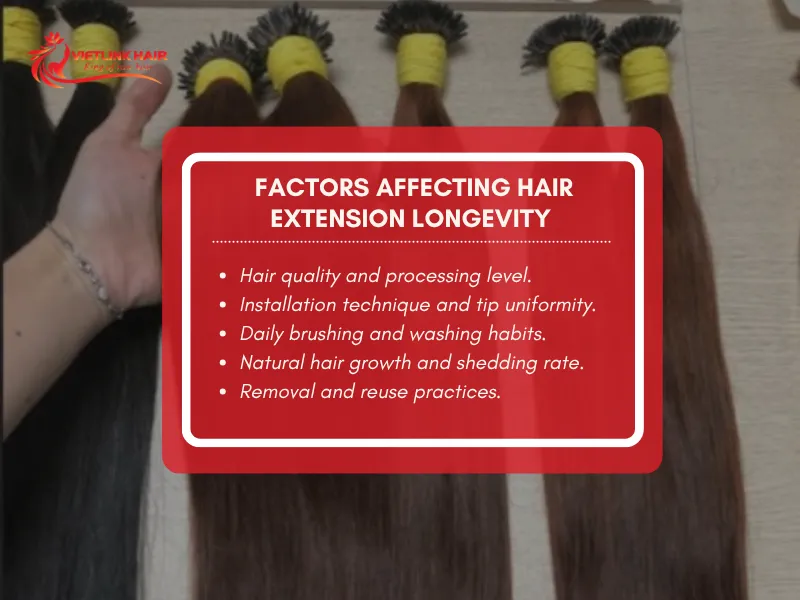
Several variables shape results in I-Tip vs K-Tip Extensions, whichever method you stock:
- Hair quality and processing level.
- Installation technique and tip uniformity.
- Daily brushing and washing habits.
- Natural hair growth and shedding rate.
- Removal and reuse practices.
The figures above are typical ranges, so avoid presenting them to customers as fixed promises.
→ Want a wider view of lifespan across all methods? Here’s
.
Maintenance and Removal: I-Tip vs K-Tip Extensions
Good aftercare protects both the product and your brand reputation, so the routines are worth comparing.
How to Maintain I-Tip Extensions
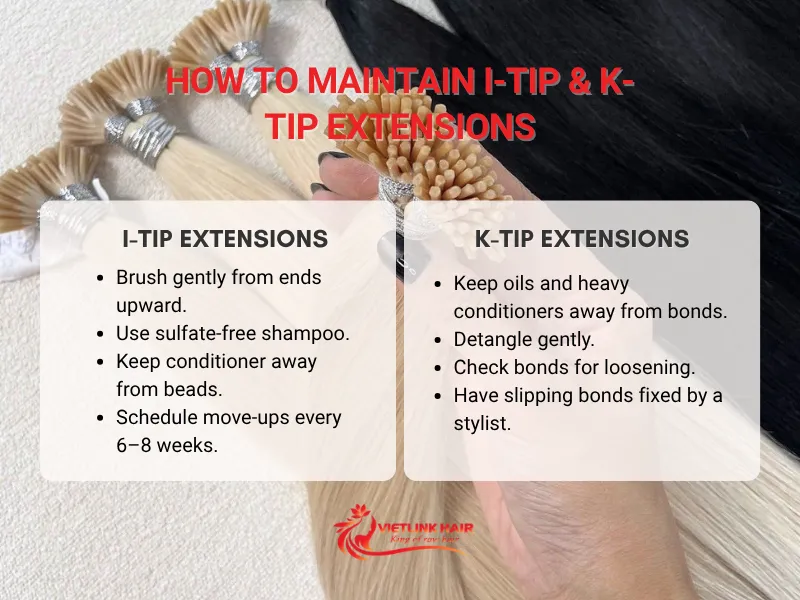
I-Tip maintenance focuses on bead position and cleanliness. Clients should brush gently from the ends upward and use sulfate-free shampoo. Conditioner should stay away from the beads, since it can reduce grip. Arrange move-ups on the schedule recommended by the stylist and the extension system; for example, some systems advise roughly 6–8 weeks.
How to Maintain K-Tip Extensions
Stylists can also share our hair extension aftercare tips for clients with buyers.
K-Tip maintenance focuses on protecting the keratin bond. Clients should keep oils and heavy conditioners away from the bonds and detangle gently. Bonds should be checked regularly for softening or loosening. Any slipping bond should be fixed by a stylist rather than at home.
How Are I-Tip and K-Tip Extensions Removed?
Removal differs between the two methods, so stylist training matters. For I-Tip, the stylist opens the bead with pliers and slides the strand out. For K-Tip, a remover solution softens the bond, and pliers help break it apart. Pulling strands out without proper removal can damage natural hair.
Buyer quality-check note: Request clear bead compatibility and keratin-tip specifications. If the supplier has documented wash or attachment-retention testing, review its method and results before making durability claims.
Installation Time and Cost in I-Tip vs K-Tip Extensions
Time and cost drive salon decisions, so they also shape what your customers will buy.
How Long Does Each Installation Method Take?
Installation time varies widely with strand count, sectioning, hair density and practitioner experience. For context, BELLAMI currently lists roughly 1.5–3 hours for its I-Tip system and 3–6 hours for its K-Tip system; these are examples, not Vietlink Hair specifications. I-Tip can be quicker for experienced stylists, since beads are clamped without waiting for heat. K-Tip may take longer because each bond needs careful shaping. Treat these as general ranges rather than guarantees.
Which Method Is More Cost-Effective Long Term?
Cost-effectiveness depends mainly on reuse and visit frequency. I-Tip may lower long-term cost when strands survive several move-ups. K-Tip may suit clients who want fewer maintenance appointments. In I-Tip vs K-Tip Extensions pricing, the right answer depends on your customer’s visit pattern.
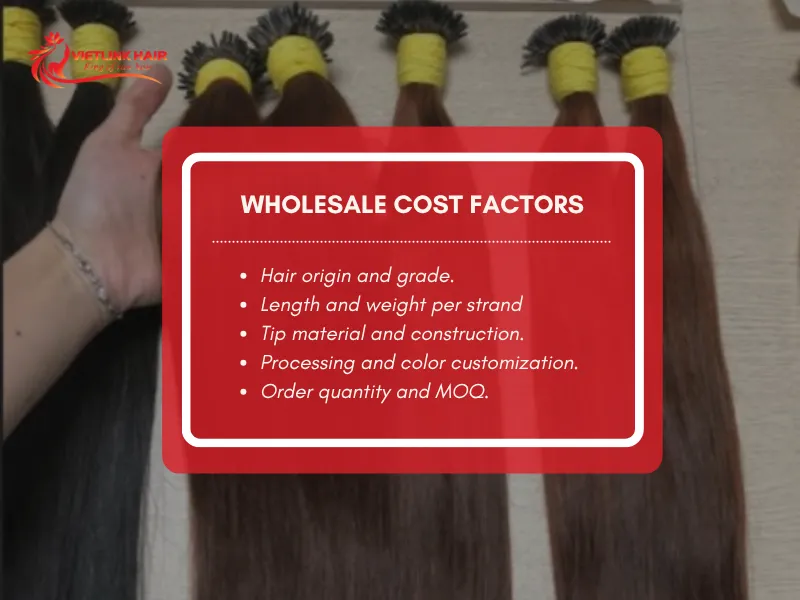
What Factors Affect Wholesale Hair Extension Costs?
Wholesale price rests on a few factors that apply to both methods:
- Hair origin and grade.
- Length and verified weight per strand or pack, measured on the actual product sample.
- Tip material and construction.
- Processing and color customization.
- Order quantity and MOQ.
How to Choose Between I-Tip vs K-Tip Extensions for Your Business
Choosing a method is a business decision, so start with your customer rather than the product.
Choosing the Right Tip Type for Your Target Market
Matching the method to your buyer segment reduces unsold stock. I-Tip is most suitable for salons that value reusable hair and repeat move-up visits. K-Tip works best for clients who want compact bonds and fewer adjustments. If your buyers serve different client profiles, compare sample performance and repeat-order demand before committing to both methods.
| Buyer scenario | What to prioritize |
|---|---|
| Salon offering regular move-ups | Check I-Tip bead compatibility, reuse policy and labor schedule |
| Salon trained in keratin fusion | Check K-Tip bond material, approved tools and removal guidance |
| Fine or fragile natural hair | Professional suitability assessment before selecting either system |
| New hair brand testing demand | Confirm product availability, sample terms, specifications and aftercare documentation before committing stock |
What Should Wholesale Buyers Check Before Ordering?
Material labels are not a substitute for checking the hair itself. Our guide on how to identify real human hair extensions explains additional buyer questions.
Once you pick a method, a short checklist reduces risk before a bulk order. For I-Tip vs K-Tip Extensions, review these points:
- Tip attachment strength.
- Strand weight consistency across the batch.
- Hair direction and cuticle alignment.
- Keratin bond uniformity (K-Tip).
- Bead size and silicone lining quality (I-Tip).
- Texture and color consistency.
How to Evaluate I-Tip and K-Tip Hair Extensions Quality Before Bulk Orders?
Samples tell you more than photos, so test before you commit. Ask whether a pre-production or lot-representative sample is available. Compare several strand weights, inspect tip consistency, and arrange any wash, bond-integrity or holding tests using the supplier’s documented procedures; do not improvise force tests on clients. This simple routine shows how I-Tip vs K-Tip Extensions from a supplier will behave in real salon use.
Sample-evaluation note: Compare strand weights, tip dimensions, texture and how samples handle normal washing. Record findings by SKU or lot, and request supplier evidence for any advertised strength or reuse claim.
FAQs About I-Tip vs K-Tip Extensions
Below are short answers to the questions buyers and stylists ask most.
Are I-Tip Extensions Damaging to Natural Hair?
Neither method is inherently damage-free. Risk depends on the client’s hair condition, strand weight, attachment size, installation tension, aftercare and removal technique. Tight beads, skipped move-ups, and rough removal are the common causes. Correct sizing and regular maintenance reduce the risk.
Can You Reuse K-Tip Extensions?
Reuse is possible in some cases, but it is harder than with I-Tip. Some systems explicitly prohibit re-tipping and require a new set; specialist re-tipping should only be considered where the hair and bonding system permit it. For that reason, many salons treat K-Tip as a lower-reuse option.
Which Is Better for Fine Hair: I-Tip or K-Tip Extensions?
The answer depends on strand weight and attachment size. Fine hair requires an assessment of density, strength, attachment visibility and tension. Some stylists choose small beads; others use carefully sized micro keratin bonds. Neither is automatically safer.
Can You Switch From I-Tip to K-Tip Extensions?
Yes, after the current extensions are removed and the natural hair is checked. Strands tipped for one method cannot simply be converted without re-tipping. A stylist should confirm that the hair is healthy before changing methods.
Do K-Tip Extensions Cause More Heat Damage Than I-Tips?
K-Tip requires controlled installation heat at the attachment, while I-Tip avoids installation heat but introduces bead-related mechanical stress. Damage depends on temperature control and technique. A trained stylist keeps heat exposure short and targeted.
Final Thoughts on I-Tip vs K-Tip Extensions
I-Tip and K-Tip are both strand-by-strand extension methods, but they serve different installation workflows. I-Tip may offer reuse and regular move-up opportunities; K-Tip may offer discreet bonds with fewer repositioning appointments. For either method, the installer’s training and the client’s natural-hair condition matter as much as the extension material.
Wholesale buyers should request product-specific hair and tip specifications, check sample consistency, and confirm attachment compatibility, care instructions, removal requirements and reorder availability before making stock commitments.
Discuss Hair Extension Options With Vietlink Hair
Planning a strand-by-strand collection for your salon or hair brand? Contact Vietlink Hair to discuss your sourcing requirements, available product types and the specifications you need to review before ordering. I-Tip/K-Tip availability and sample terms require confirmation.
Contact UsWhatsApp: +84 855 555 951
Product availability, order conditions and technical specifications are subject to sales-team confirmation.
