
Hair Extension Knowledge
Micro Ring vs Nano Ring Extensions: 5 Essential Differences
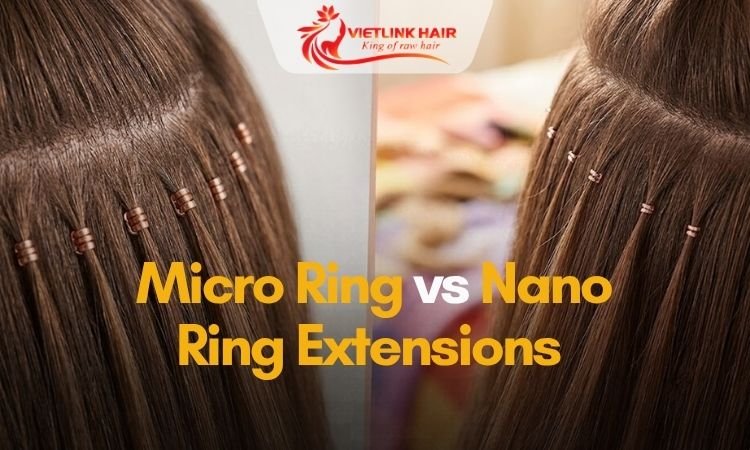
Micro ring vs nano ring extensions are two strand-by-strand methods that use small rings rather than installation heat or glue. For salons, the right choice depends on bead dimensions, tip compatibility and the client’s hair density and condition.
For wholesale buyers, the decision also affects installation time, accessory stock and refit planning. This guide compares both systems and offers a practical sourcing checklist.
What Are Micro Ring and Nano Ring Extensions?
Before comparing results, it helps to understand how each system works and which components it needs.
Micro Ring Extensions Explained
Micro ring extensions, also called micro bead or micro link extensions, secure a single strand with a small metal or silicone-lined ring. The stylist threads natural hair and the extension tip through the ring, then closes it with pliers. The silicone lining adds grip and reduces direct metal contact with the hair.
This system is commonly paired with I-tip or stick-tip extensions. The preformed tip must fit the chosen ring securely; tip materials, widths and ring designs differ between products. Stylists should verify compatibility rather than assume all I-tips use the same bead.
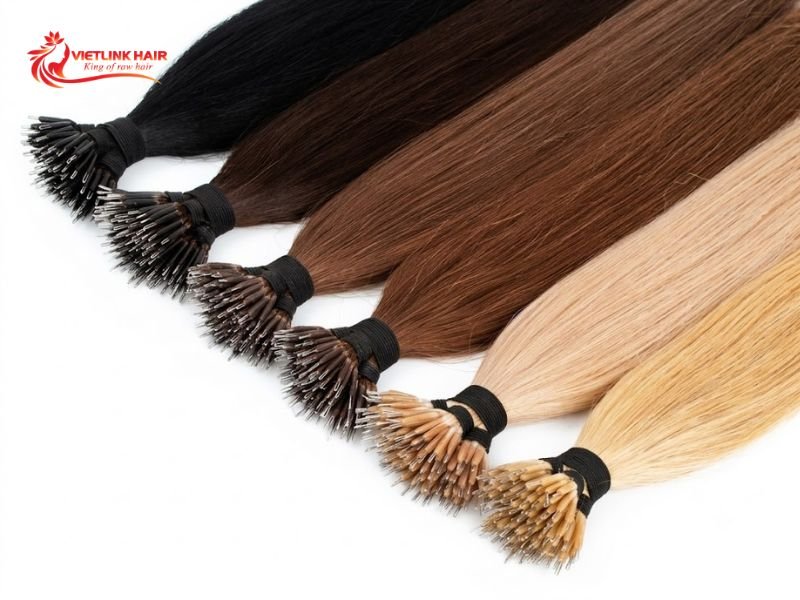
For a closer look at tip-based installation options, see our comparison of I-tip vs K-tip extensions.
Nano Ring Extensions Explained
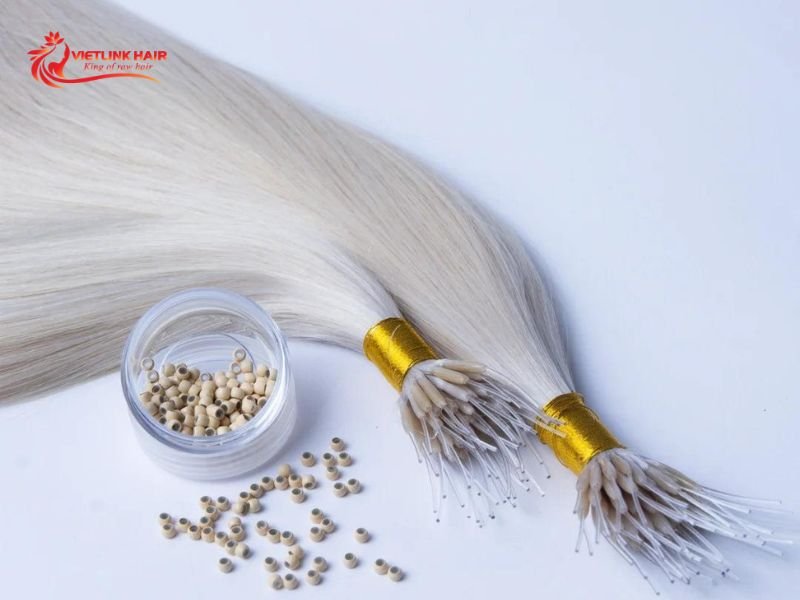
Nano ring extensions, sometimes called nano bead extensions, use a smaller attachment bead. They work with nano-tip strands, which are built to fit the narrower ring opening. The compact size can help reduce visibility in fine sections of hair.
A smaller bead needs finer sectioning and more precise handling. The ring, tip, and natural hair section must match closely. If one of the three is off, the bead can slip or place extra tension on the root.
How the Cold Fusion Method Works
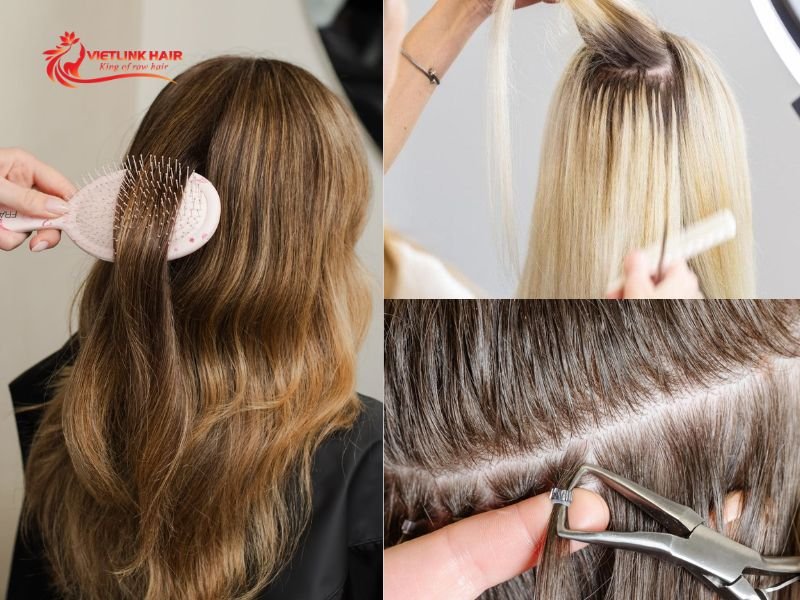
Both systems rely on mechanical attachment rather than heat or bonding glue during fitting. No-heat and no-glue installation does not mean there is no tension or damage risk. The stylist separates a thin section of natural hair, threads it through the ring with a loop tool or pulling hook, and inserts the extension tip. The ring is then clamped shut with application pliers.
Three details decide whether the hold is secure:
- Bead dimensions, including the inner diameter
- Tip construction and thickness
- Natural hair section size
Because there is no adhesive, stylists can open the ring and reposition the strand during maintenance. This is why ring systems are popular for strand-by-strand customisation.
Micro Ring vs Nano Ring Extensions: Key Differences
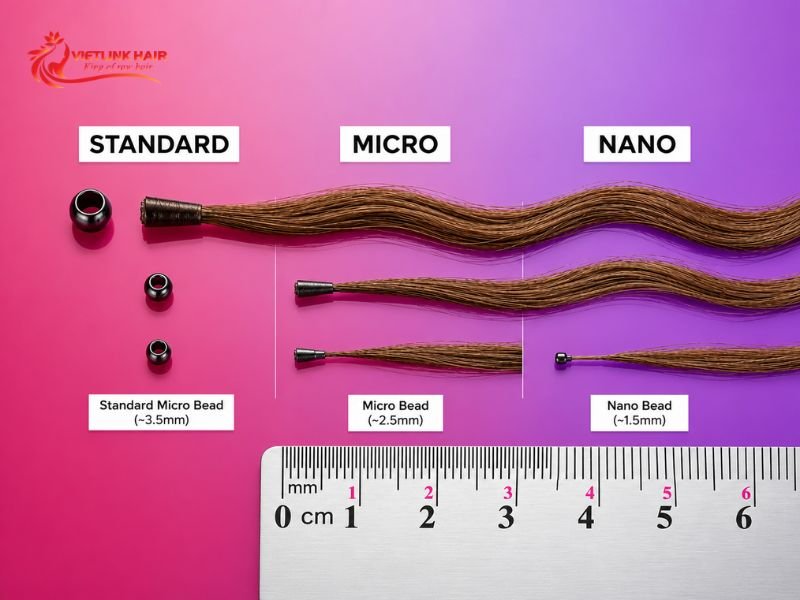
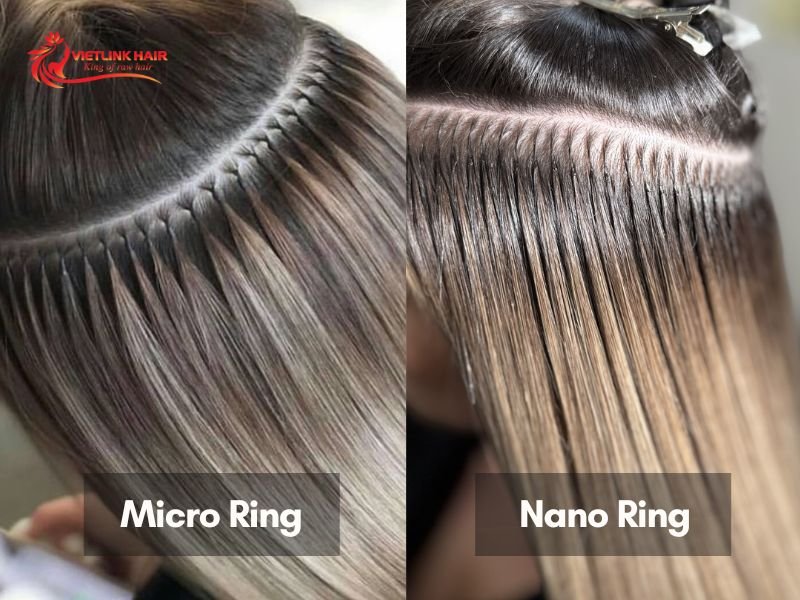
Both methods use small rings to secure individual strands, but their dimensions and fitting requirements create different trade-offs. The table below summarises the main points.
| Comparison factor | Micro ring extensions | Nano ring extensions |
|---|---|---|
| Typical bead diameter | Often around 3 to 5 mm, depending on the model | Often around 2 to 3 mm, depending on the model |
| Extension compatibility | Commonly I-tip or stick-tip | Compatible nano-tip system |
| Visibility | May be more noticeable in fine hair | Generally more discreet |
| Section size | Depends on bead and strand specifications | Usually requires finer sectioning |
| Installation | May be quicker with suitable section sizes | Often requires more precise handling |
| Hair suitability | Depends on density, strand weight, and bead fit | May suit fine hair when weight and fitting are appropriate |
| Maintenance | Regular professional checks and repositioning | Regular professional checks and repositioning |
| Main trade-off | Larger attachment profile | Smaller components and more precise fitting |
These diameters are illustrative product ranges, not a standard. Ring size descriptions can refer to different dimensions; compare the actual inner diameter, outer dimensions, bead material and compatible tip before ordering. Claims that nano rings are “90% smaller” cannot be generalized without specifying how size was measured.
Quick answer: Nano rings are generally smaller and may be easier to conceal, whereas micro rings often allow easier handling with compatible I-tip strands. Neither is automatically safer, invisible or longer-lasting; the choice depends on tip dimensions, natural-hair strength and the fitting method.
The practical trade-off is attachment visibility versus fitting precision. A larger micro ring may be easier to handle, while a nano ring offers a smaller profile but requires carefully matched tips, sections and tools. Neither size guarantees a stronger grip or lower tension.
Maintenance needs are similar. Both systems need professional checks as natural hair grows and moves the beads away from the scalp. So the main question in micro ring vs nano ring extensions is primarily fit, visibility, and suitability for each client, alongside maintenance and product quality.
Micro Ring vs Nano Ring Extensions: Which Suits Different Hair Types?
Bead size is only one factor. The client’s hair density, condition, and desired style also shape the final result.
Fine or Thin Hair
Nano rings may be worth assessing for some clients with fine hair because their smaller attachment can be less conspicuous. A smaller footprint can make the attachment less visible in some partings, but visibility depends on coverage, bead color and placement; even nano rings may show in high ponytails or exposed hairlines.
However, strand weight matters as much as bead size. If the strand is too heavy for a thin section, the hair can feel pulled even with a nano ring. In very fine, fragile or actively thinning hair, ring attachments may be inappropriate; a qualified stylist should assess hair strength and scalp condition before choosing any extension method. That is why a professional assessment of hair density, tension and attachment weight is particularly important for delicate strands.
Medium or Thick Hair
Thicker hair can hide larger beads more easily, so micro rings are a practical choice for many medium and dense heads. They allow stylists to work with slightly larger sections, which can speed up the service. This suits clients who want added volume across the whole head.
That said, thick hair does not automatically require micro rings. Nano rings still work well when the client wants a refined, strand-by-strand finish. The decision should come from the sample test, not from assumption.
High Ponytails and Updos
Updos expose the hairline, the parting, and the crown, which are the areas where beads are easiest to see. Placement and bead colour matter more here than the ring system itself. A well-matched bead and enough natural hair coverage reduce visibility in both methods.
Neither system gives an invisible attachment. Stylists should avoid promising that to clients and instead explain placement limits during the consultation. This protects the salon from complaints and returns.
Pros and Cons of Micro Ring and Nano Ring Extensions
A balanced view helps buyers weigh client satisfaction against salon operating costs.
| Factor | Micro Ring Extensions | Nano Ring Extensions |
|---|---|---|
| Advantages | Compatible with many I-tip and stick-tip formats; familiar fitting method; potentially faster installation with suitable sections | Compact attachments; discreet placement; compatible with specialist nano-tip strands |
| Limitations | May be more visible in certain hairstyles; larger beads may not suit very fine sections | Requires precise handling and finer sectioning; may still be visible; potentially higher labour costs |
| Installation time | May be shorter, depending on the stylist and hair specifications | May take longer due to finer sectioning and handling |
| Client suitability | Can suit clients whose hair density and section size support the bead dimensions | May suit clients seeking discreet attachments, provided hair condition and strand weight are appropriate |
| Cost considerations | Potentially lower labour costs per installation, depending on service time | Potentially higher labour costs if installation takes longer |
| Maintenance | Requires regular checks and professional refitting | Requires regular checks and professional refitting |
Cost deserves a closer look. Nano systems may need more chair time, which raises labour per service. Micro systems may need less time, but they can limit your client base if many customers have fine hair.
Do not confuse hair lifespan with refit timing. The hair itself can last through several installations, while the attachment points need repositioning every few weeks. Buyers should compare cost per service cycle, not just the price per pack.
Micro Ring vs Nano Ring Extensions : Maintenance, Lifespan, and Reuse
Installation is only part of the ownership cost. Maintenance schedules and hair condition decide how long a set stays usable.
Refit Schedule
Natural hair grows, and the rings move away from the scalp over time. A commonly cited maintenance check or refit interval is around 6–8 weeks for either method, but timing varies by installation, growth, attachment condition and provider guidance. A schedule used for one product should not be assumed safe for another.
Delayed maintenance creates risks. Rings that sit too far from the root can tangle, slip, or put tension on the hair. A clear refit policy protects both the client and the salon’s reputation.
Reusing Ring Extensions
Compatible strands can sometimes be reused after professional removal and refitting. The salon should follow the attachment manufacturer’s removal and bead-replacement instructions; damaged or deformed rings should not be reused automatically. Reuse is a strong selling point for B2B buyers because it lowers cost per client.
Reuse potential depends on several points:
- The quality and cuticle condition of the hair
- The state of the tip, since damaged tips may not hold
- Shedding and tangling levels from earlier wear
- Bead condition, because worn rings should be replaced
Well-aligned, intact cuticles can help reduce tangling, although processing history and care also matter. So sourcing quality directly affects how many cycles a set can complete.
How to Reduce Slippage, Tangling, and Breakage
Problems can arise from fitting, product quality, ring compatibility or aftercare. Appropriate maintenance may reduce slippage, matting and avoidable stress, but cannot eliminate those risks.
Three habits make a clear difference:
- Match section size and attachment tension to the strand weight
- Use a loop brush and gentle washing routines
- Remove rings with pliers instead of pulling or forcing them open
Share these steps in a client care sheet. Clear aftercare reduces complaints and improves repeat bookings. Do not claim that either method causes zero damage, because technique and hair condition always play a role in results.
How to Choose Between Micro Ring vs Nano Ring Extensions for Your Salon
For salon owners, the right system meets client needs while staying practical to install, maintain, and stock.
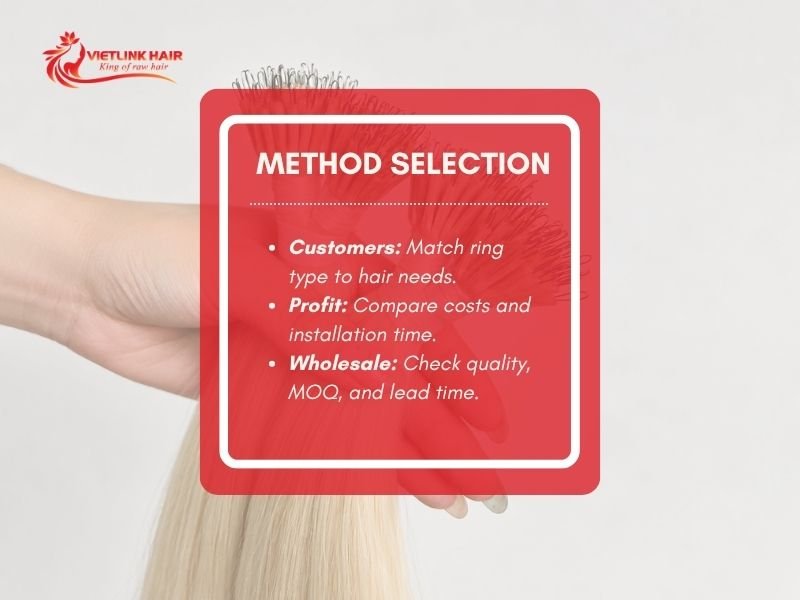
Choose Based on Your Target Customers
Use simple if-then rules to guide your range:
- If most clients have fine hair and want discreet attachments, nano rings are worth testing first.
- If your clients have medium to thick hair and want volume, micro rings are a practical default.
- If customers request both systems, assess demand and fitting time before adding a second service or setting its price.
Starting with one system lets you train staff before expanding. A second system makes sense only when demand supports the extra SKUs and tools.
Compare Installation Time and Service Profitability
Do not rely on the hair purchase price alone. Record real installation times in your salon, then compare labour, hair, accessories, and maintenance visits. Revenue per appointment is a better measure than cost per pack.
Nano installations can take longer because smaller components may require more precise sectioning, but actual chair time depends on strand count, tip system and stylist experience. Published estimates such as 2–4 hours for nano and 2–3.5 hours for micro are not universal service standards. Time actual appointments before setting service prices; the better option depends on your clients and operating costs.
Wholesale Buying Checklist
Use this list before you place a bulk order for micro ring or nano ring extensions:
- Confirm bead diameter and inner diameter
- Check tip compatibility and strand weight in grams
- Ask for hair origin, cuticle alignment, and processing details where available
- Compare colour consistency, pack weight, and strand count
- Request samples, then confirm MOQ, lead time, and defect policy
When comparing manufacturing and sourcing options, review the capabilities described on our Vietnamese hair factory page, then confirm current product formats and technical specifications directly before ordering.
Put the answers in writing. A clear specification sheet helps reduce specification disputes when a wholesale order arrives.
What Buyers Should Test Before Ordering
Catalogue specifications do not always show how a system behaves in real salon use. Sample testing helps buyers find practical issues before they commit to inventory.
Run these four checks on every sample batch:
- Tip to ring compatibility: Check that the tip passes through the intended ring and closes securely with your tools.
- Batch consistency: Compare bead dimensions, tip shape, strand weight, and colour across at least 10 strands.
- Installation efficiency: Time how easily stylists can section, thread, clamp, and remove each attachment.
- Inventory planning: Add a second system only when customer demand supports the extra accessories.
Buyer tip: A smaller bead does not automatically make a better extension. If the tip, ring, and natural hair section are mismatched, a discreet attachment can still slip or create excess tension. Test the complete system, not the bead in isolation.
Micro Ring vs Nano Ring Extensions: FAQs
The comparison above covers the main differences. These answers address the questions buyers and stylists ask most often before choosing a system.
Are nano rings better than micro rings?
Not in every case. Nano rings can be less visible in suitable fine-hair applications, but the smaller bead alone does not make them safer for fragile strands. Micro rings may be practical for medium- to thick-hair clients. Match strand weight, section size, tip and ring to each client.
Can you use micro rings with nano-tip extensions?
Not automatically. Nano-tip strands and rings have different dimensions, so compatibility must be confirmed for the exact tip, ring and fitting technique. Always confirm compatibility with your supplier first.
Do micro ring and nano ring extensions damage natural hair?
Yes, either system can cause breakage or traction-related hair loss when the attached strands are too heavy, the fitting is too tight, maintenance is delayed or removal is forceful. Correct sectioning, timely professional checks and careful removal help reduce risk, but do not guarantee safety. Pain, scalp irritation or new thinning warrant stopping use and seeking professional assessment.
Which extension method is more affordable?
Micro ring appointments may involve lower labor time, while nano ring appointments can demand more precise fitting. Neither is always cheaper: compare actual fitting time, hair and bead costs, refits, replacements and product compatibility for the same service.
Conclusion: Micro Ring vs Nano Ring Extensions
Choosing between micro ring and nano ring extensions depends on your clients’ needs, the look they want, and your salon’s budget. Each method has its own benefits, so consider which one works best for your customers before making a decision.
Nano rings may be suitable for clients who prefer smaller, less noticeable attachments, while micro rings may suit those who need a different fit or more styling options. Try samples first to see which works best for your salon.
If you’re planning to buy wholesale, check the hair quality, specifications, MOQ, and lead time before placing an order. To discuss suitable specifications and availability, contact a Vietnamese human hair supplier such as Vietlink Hair, before placing a wholesale order.
Discuss micro ring and nano ring extension sourcing with Vietlink Hair
Share your intended tip format, strand weight, length, color, and order quantity. Ask the team to confirm current availability and compatibility before placing a wholesale order.

Pingback: I-Tip vs K-Tip Extensions: Key Differences, Pros and Cons