Hair Extension Knowledge
Yaki Straight vs Kinky Straight Hair: 7 Key Differences
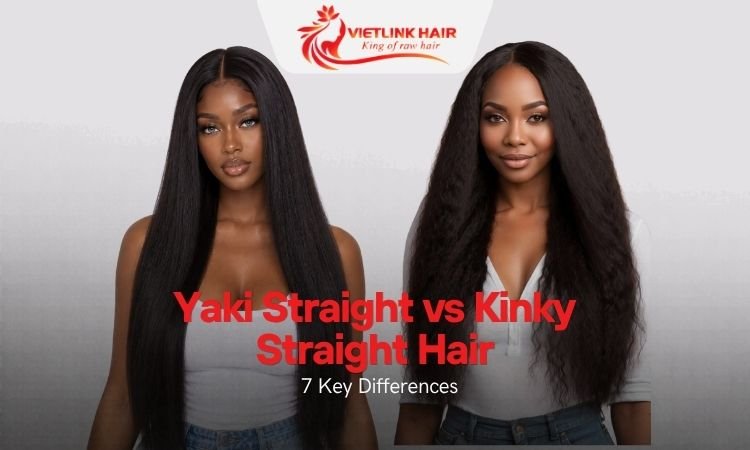
Choosing between Yaki Straight vs Kinky Straight hair can be confusing because both offer a straight look with visible texture. The difference becomes clearer in their surface, volume, and blending.
For buyers, Yaki Straight vs Kinky Straight hair is mainly a choice between a smoother, more controlled finish and a fuller, more textured appearance.
What Is Yaki Straight vs Kinky Straight Hair?
Before comparing Yaki Straight vs Kinky Straight hair, it helps to define what each texture represents.
Yaki Straight hair is commonly made to imitate the appearance of relaxed or thermally straightened Afro-textured hair. It is straighter and smoother than Kinky Straight but normally retains some surface texture instead of looking completely silky.
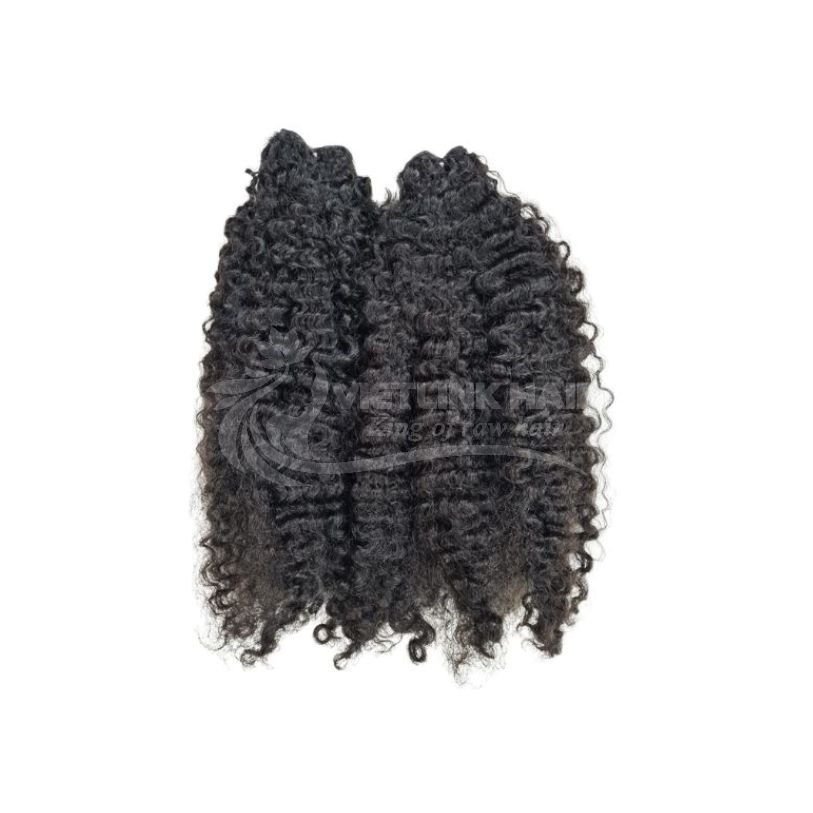
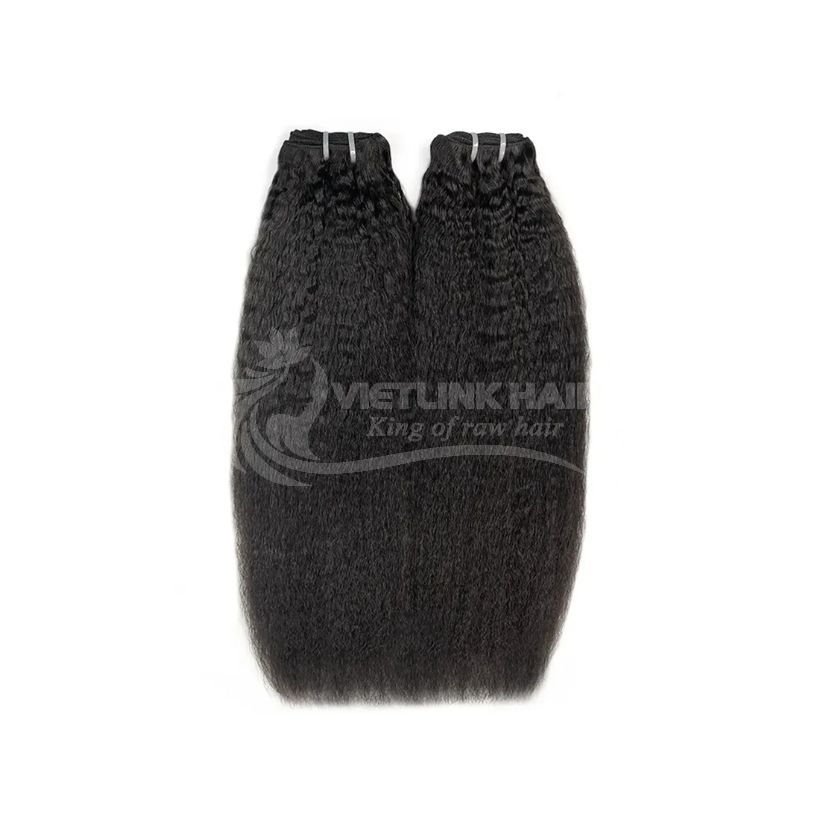
Kinky Straight hair is designed to reproduce the appearance of natural textured hair after stretching or blow-drying. It normally has more visible kinks, more body, and a fuller silhouette than Yaki Straight.
A simple texture spectrum is:
Silky Straight → Yaki Straight → Kinky Straight → more pronounced kinky/coily textures
This is a useful way to understand the difference, but it should not be treated as an official industry grading system. Texture names can vary between manufacturers, so buyers should compare an actual sample rather than relying on the name alone.
Yaki Straight vs Kinky Straight Hair: Texture Differences
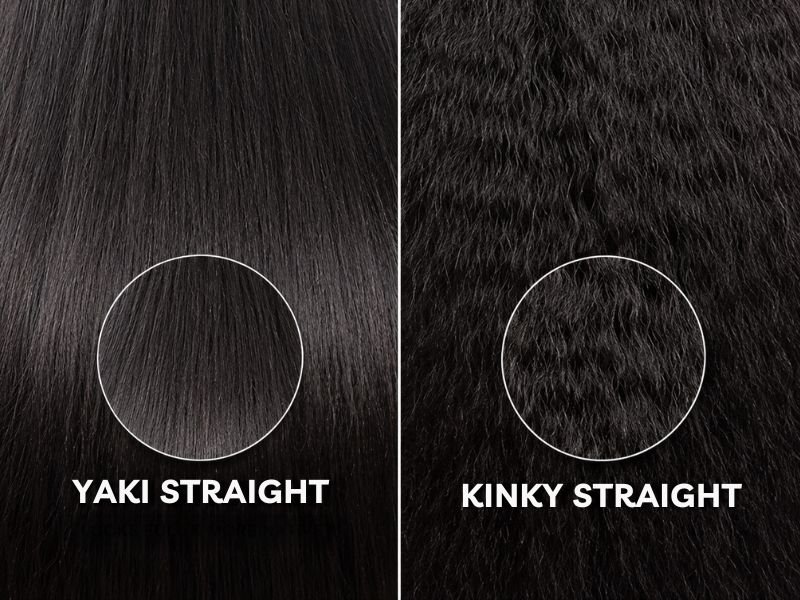
The most visible difference in Yaki Straight vs Kinky Straight hair appears in the texture itself. Both options can create a straight-looking hairstyle, but they do not produce the same surface or amount of volume.
Yaki Straight Hair Texture
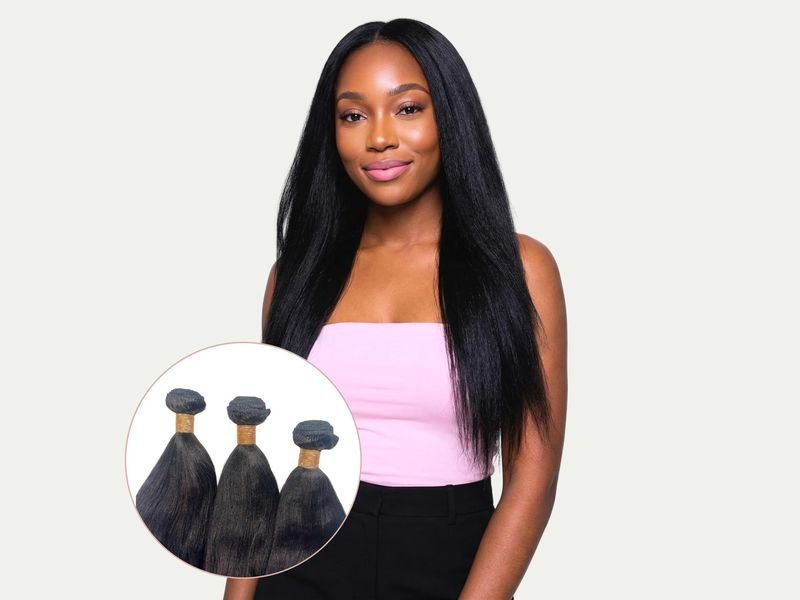
Yaki Straight has a relatively smooth surface with subtle texture. It is often compared with hair that has been relaxed, pressed, or further straightened while retaining some natural-looking body.
Compared with Kinky Straight, Yaki Straight generally has:
- Less visible kink
- A smoother surface
- Moderate volume
- A more controlled silhouette
- A slightly more polished finish
This makes Yaki Straight relevant for customers who want textured straight hair without the stronger fullness associated with Kinky Straight.
Kinky Straight Hair Texture
Kinky Straight retains more visible texture and expansion. It is commonly used to reproduce the look of natural Afro-textured hair after stretching or blow-drying.
Compared with Yaki Straight, Kinky Straight generally has:
- More pronounced texture
- More visible kinks
- Higher visual volume
- A fuller shape
- A less sleek finish
For this reason, Kinky Straight can be useful when the target customer wants a blowout-style appearance rather than a relaxed-hair look.
How Texture Changes the Overall Look
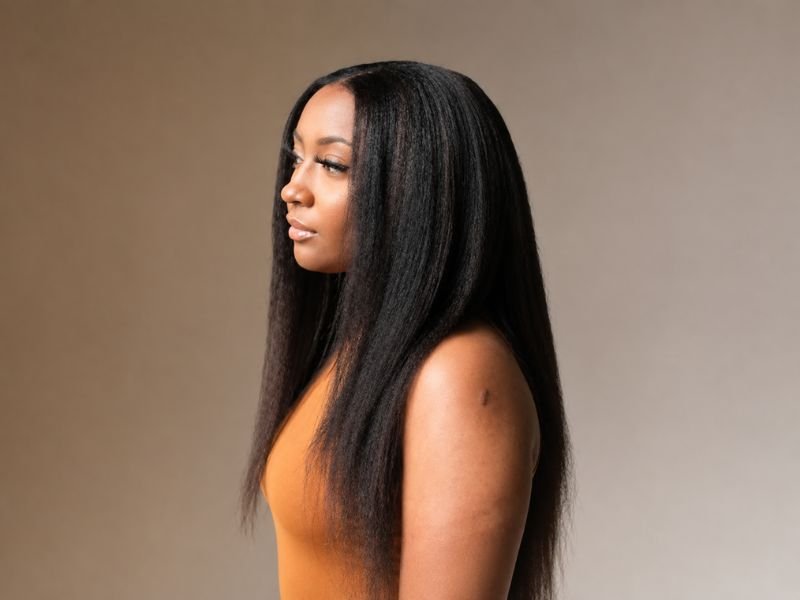
The difference becomes easier to see when the same length and installation method are used.
A Yaki Straight bundle can sit closer to the head and create a controlled straight shape. Kinky Straight usually occupies more visual space because the texture expands the hair.
This distinction is important for B2B buyers because length alone does not determine the final appearance. Two bundles with the same stated length can create different silhouettes because texture changes fullness and how the hair falls.
Yaki Straight vs Kinky Straight Hair Comparison
The following table summarizes the main differences for extension and wig buyers.
| Criteria | Yaki Straight | Kinky Straight |
| Texture | Smooth with subtle texture | More pronounced kink and texture |
| Straightness | Straighter | Less sleek |
| Volume | Moderate | Higher |
| Surface appearance | Pressed/relaxed effect | Blow-dried/stretched effect |
| Visual finish | More polished | Fuller and more natural-textured |
| Blending target | Relaxed or straightened textures | Stretched natural textures |
| Styling direction | Sleek and controlled | Full and textured |
| Maintenance expectation | Usually easier to keep smooth | More texture management may be required |
| Typical positioning | Polished textured straight | Natural blowout/textured straight |
The Yaki Straight vs Kinky Straight hair comparison should be used as a sourcing framework rather than a fixed rule. Hair texture can vary between suppliers, and terms such as “Yaki” or “Kinky Straight” do not guarantee an identical construction.
Which Natural Hair Type Matches Yaki Straight or Kinky Straight?
Texture matching is one of the most important factors when choosing between these two options.
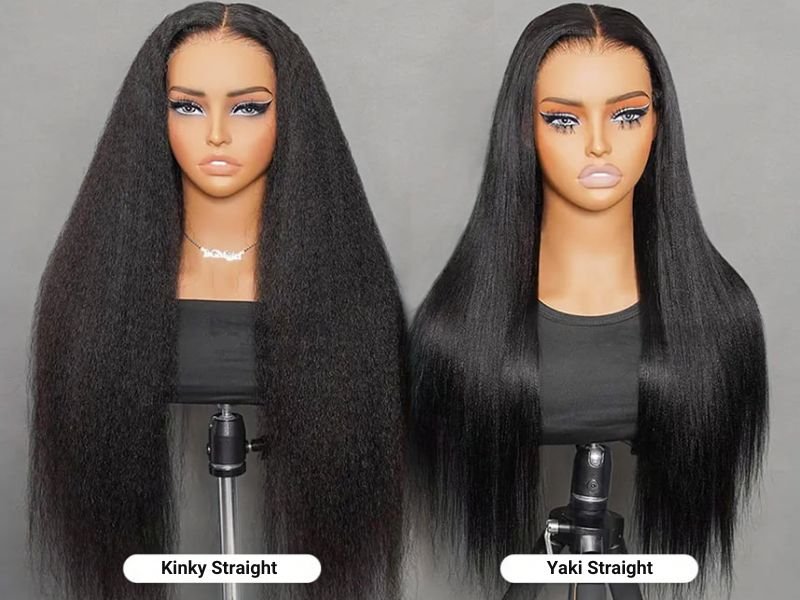
Yaki Straight vs Kinky Straight hair can produce different blending results depending on the customer’s natural hair and how it is normally styled.
Yaki Straight is commonly associated with relaxed or chemically straightened hair because its smoother textured surface can sit closer to that type of finished hair. Some customers with naturally textured hair may also use Yaki Straight when they want a smoother blowout or pressed appearance.
Kinky Straight is more closely associated with stretched, blow-dried, or naturally textured hair. Its additional fullness can help create a more continuous transition between the natural hair and the extensions.
However, hair-type labels such as 3C, 4A, 4B, or 4C should not be used as the only purchasing criteria.
The customer’s actual styling condition matters.
For example:
- A customer with naturally coily hair who regularly blow-dries it may prefer Kinky Straight.
- A customer with relaxed hair may find Yaki Straight closer to the existing texture.
- A customer with natural hair who wants a smoother pressed appearance may choose Yaki Straight.
- A customer who wants maximum visual fullness may consider Kinky Straight.
For B2B orders, asking for the customer’s intended finished look is often more useful than asking only for a hair-type category.
Yaki Straight vs Kinky Straight Hair for Extensions
Once the texture is selected, the next consideration is how it behaves as an extension product.
Blending and Density
Blending depends on more than texture.
Hair density, strand distribution, finished weight, length, and the customer’s leave-out all influence the final result. A texture that technically matches the customer’s hair can still look different if the extension is substantially fuller or thinner.
For example, a 20-inch Kinky Straight extension with high visual fullness can produce a very different result from a 20-inch Yaki Straight extension with a flatter silhouette.
For wholesale buyers, it is therefore useful to specify:
- Finished length in inches or cm
- Net weight in grams
- Texture reference
- Density or fullness specification
- Weft construction
- Drawn grade
- Color
- Intended installation method
Styling and Heat Considerations
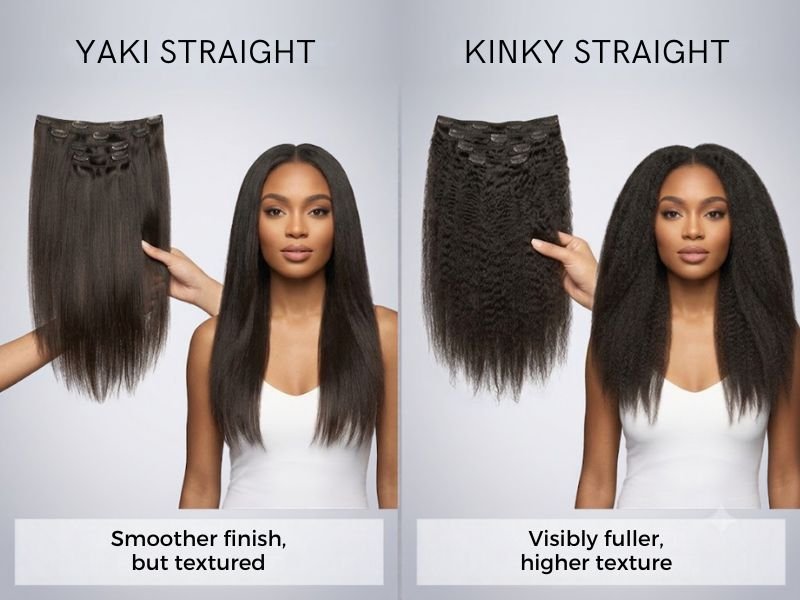
Both textures can be restyled, but the original texture is part of the product specification.
Yaki Straight can be further straightened or curled depending on the hair’s processing history and quality. Kinky Straight can also be straightened, but doing so changes the visual character that makes the texture distinct.
This creates an important sourcing point: do not assume that two products with the same texture name have the same heat or chemical-processing history.
If a buyer plans to bleach, color, straighten, or otherwise process the hair, the supplier should confirm the processing history of the specific product.
Maintenance and Customer Expectations
Yaki Straight normally has a smoother appearance, while Kinky Straight has more visible texture and volume. Therefore, customer expectations can differ.
A buyer selling Yaki Straight may need to communicate that the product is textured rather than completely silky straight.
A buyer selling Kinky Straight should explain that the fuller surface and natural-looking texture are intentional product characteristics rather than defects.
This distinction can reduce avoidable complaints after installation.
Yaki Straight vs Kinky Straight Hair for B2B Buyers
For wholesale buyers, the texture name should be only the starting point.
The commercial question is whether the supplier can reproduce the same texture, length, weight, and construction consistently enough for repeat orders.
In Yaki Straight vs Kinky Straight hair sourcing, this matters most when a salon or reseller is building a product catalog. Customers expect the next order to resemble the sample they previously purchased.
Specifications to Check Before Ordering
Before approving either Yaki Straight or Kinky Straight hair, buyers should confirm:
| Specification | What to verify |
| Hair origin | Country and sourcing information |
| Processing | Raw, virgin, colored, steamed, or otherwise treated |
| Texture | Physical sample or approved reference |
| Length | Actual finished length in inches/cm |
| Weight | Net hair weight in grams |
| Fullness | Distribution from root to ends |
| Construction | Weft, bulk, wig, closure, or frontal |
| Color | Natural color or customized shade |
| MOQ | Minimum quantity for each variation |
| Lead time | Sample and bulk production schedule |
| Packaging | Standard or private-label packaging |
These specifications matter because the same “Yaki Straight” label can describe products with different production methods.
Batch Consistency and Texture Control
For a factory, texture consistency is not simply a visual issue.
It affects production planning, sample approval, quality control, customer communication, and repeat ordering.
Factory Insight: When sourcing Yaki Straight or Kinky Straight in bulk, a buyer should keep the approved physical sample, product code, stated length, weight, color reference, and texture reference together. A product photo alone is not a reliable production specification because lighting, camera settings, and screen displays can change how texture appears.
This is especially relevant for private-label brands. If a retailer wants to sell “Kinky Straight 20-inch” as a repeatable SKU, the supplier needs a clear production reference rather than only a product name.
Pros and Trade-Offs
The two textures serve different product requirements, so the Yaki Straight vs Kinky Straight hair decision is better understood through trade-offs.
Yaki Straight Hair
To understand the benefits of Yaki Straight hair, it helps to first look at how its smoother texture affects styling, blending, and the overall finished appearance.
Advantages
- Smoother textured appearance
- More controlled silhouette
- Moderate visual volume
- Suitable for relaxed or pressed-hair looks
- Can offer a polished appearance without becoming completely silky
Trade-offs
- May not provide enough volume for customers seeking a strong blowout effect
- Can look too smooth when paired with highly textured natural hair
- Texture can vary depending on the manufacturing process
Kinky Straight Hair
Here are some pros and cons of kinky straight hair:
Advantages
- Higher visual fullness
- More pronounced natural-looking texture
- Suitable for stretched or blow-dried looks
- Can create a fuller finished hairstyle
- Useful for customers who do not want a silky-straight appearance
Trade-offs
- Requires closer texture matching
- May need more attention when maintaining the textured finish
- Can appear too full for customers looking for a flatter, polished style
Neither set of trade-offs makes one texture universally suitable. The correct choice depends on the customer’s natural hair condition, styling goal, installation method, and the specifications required by the business.
How to Choose Between Yaki Straight and Kinky Straight Hair
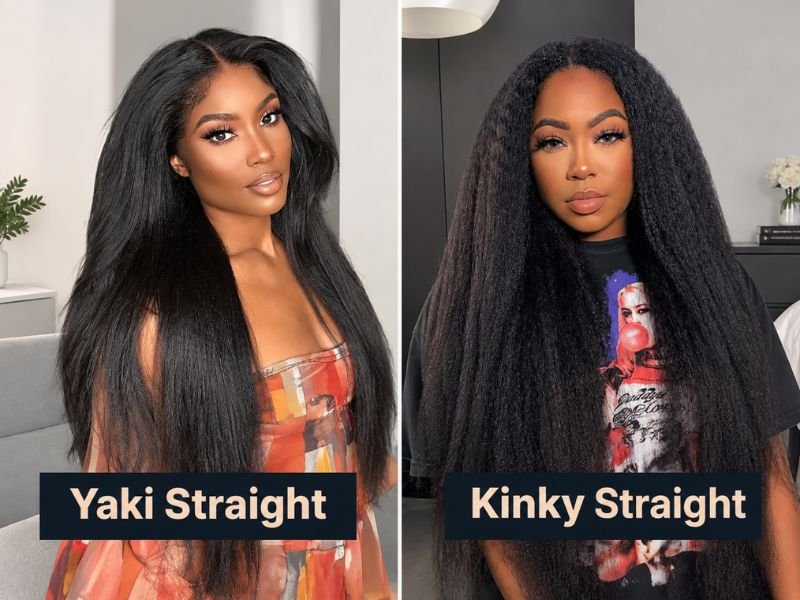
A practical way to approach Yaki Straight vs Kinky Straight hair is to match the texture with the customer’s finished look:
- Relaxed or pressed hair: Choose Yaki Straight for a smoother, more controlled match.
- Fuller blowout look: Choose Kinky Straight for more texture and volume.
- Natural, stretched hair: Compare Kinky Straight samples with the customer’s actual hair before ordering.
- Wholesale or salon sales: Check texture consistency, weight, length, construction, MOQ, and repeat-order consistency.
- New buyers: Test the exact product sample and keep the approved specifications for bulk orders.
FAQ
These FAQs clarify the key differences. For buyers, the next step is understanding their impact on sourcing and product selection:
Is Yaki Straight smoother than Kinky Straight?
Yes, Yaki Straight is generally smoother and has less pronounced texture than Kinky Straight. It is commonly designed to resemble relaxed or pressed hair, while Kinky Straight retains more visible kink and fullness.
Is Kinky Straight more voluminous than Yaki Straight?
Generally, yes. Kinky Straight is designed with more visible texture and expansion, so it usually creates a fuller silhouette than Yaki Straight.
Which texture blends better with natural hair?
It depends on the condition of the natural hair. Stretched or blow-dried textured hair may blend more closely with Kinky Straight, while relaxed or pressed hair may be closer to Yaki Straight.
Can Yaki Straight hair be straightened?
Many human-hair Yaki Straight products can be further straightened, but the result depends on the specific hair and its processing history. Buyers should confirm this with the supplier before applying heat or chemical treatments.
Can Kinky Straight hair be straightened?
Kinky Straight can often be straightened, but repeated heat or chemical processing can change its original texture and performance. The supplier’s processing information should be checked before restyling.
Are Yaki Straight and Kinky Straight the same texture?
No. Yaki Straight vs Kinky Straight hair describes two related textured-straight categories, but Yaki Straight is generally smoother and less voluminous, while Kinky Straight has stronger texture and greater fullness.
Final Takeaway: Yaki Straight vs Kinky Straight Hair
Yaki Straight vs Kinky Straight hair mainly differs in texture, volume, and finish. Yaki Straight is smoother and more controlled, while Kinky Straight is fuller and more textured.
For wholesale buyers, check texture, processing, length, weight, MOQ, and batch consistency. Contact Vietlink Hair to discuss your requirements and request a wholesale quotation.
WhatsApp: +84 855 555 951
Email: info@vietlinkhair.com
Facebook: Vietlinkhair
