Hair Extension Knowledge
Wavy Hair vs Curly Hair: Amazing Differences Explained
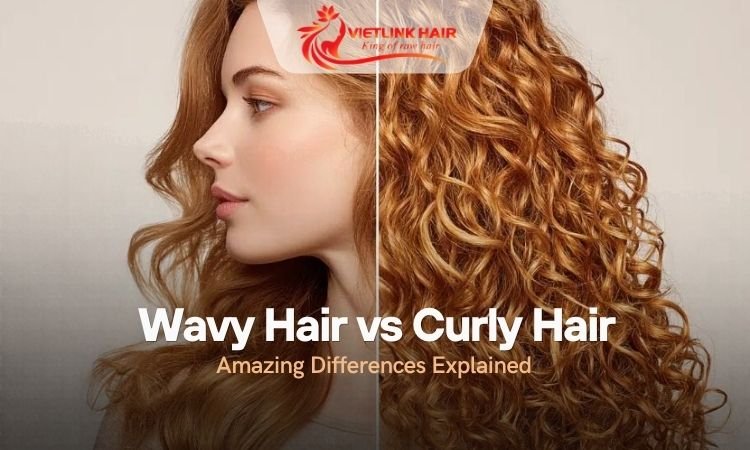
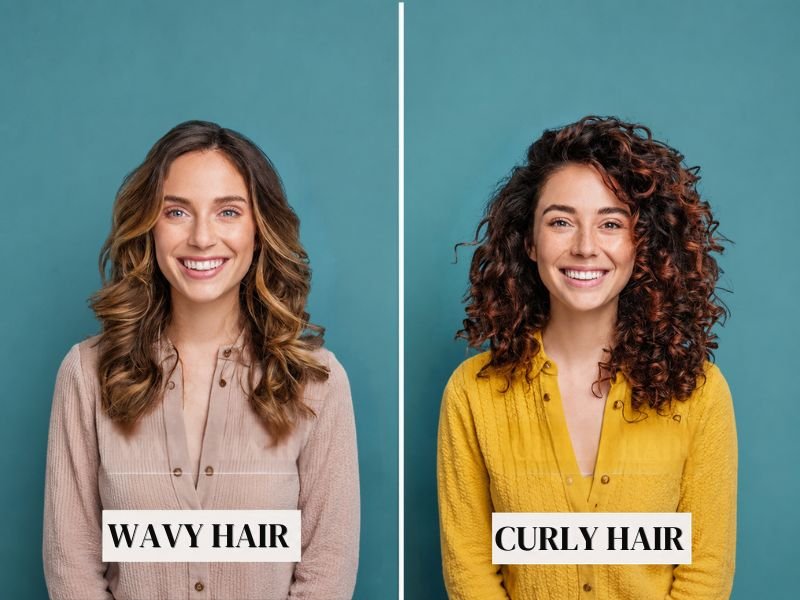
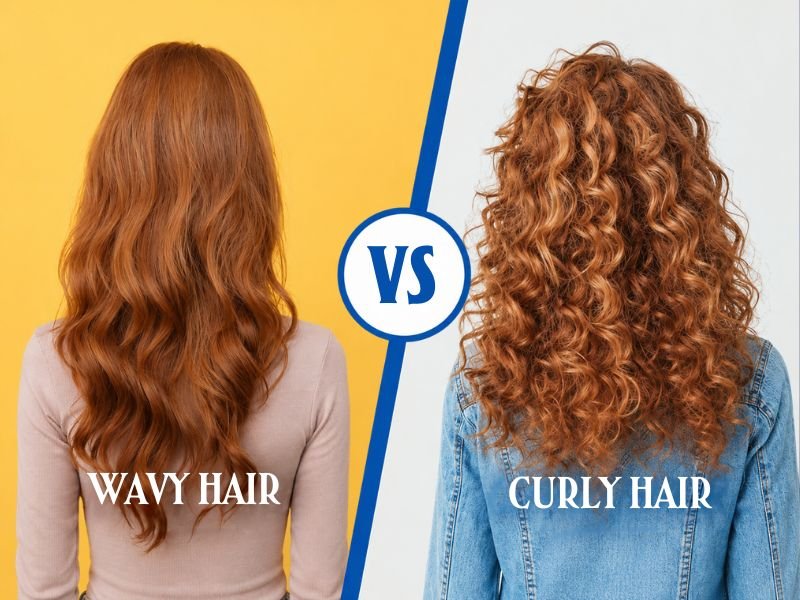
Understanding wavy hair vs curly hair helps buyers choose the right extensions for different customers. Wavy hair has a softer S-shaped pattern, while curly hair forms more defined loops or spirals, creating different levels of volume, shrinkage, and maintenance.
For hair businesses, knowing these differences also makes it easier to build a product range with textures such as Body Wave, Deep Wave, Water Wave, Water Curly, and Kinky Curly.
Understanding Wavy and Curly Hair
The easiest way to understand wavy hair vs curly hair is to look at the shape of the hair pattern.
Wavy hair generally follows an S-shaped pattern. The wave may begin around the middle of the hair rather than directly at the roots, giving the hair a softer and more relaxed appearance. Depending on the pattern, waves can range from barely noticeable to quite defined.
Curly hair forms a more complete loop or spiral. The curls are usually more structured than waves and can create greater volume. Curly textures may also experience more shrinkage, meaning the hair can appear shorter when the curls are fully defined.
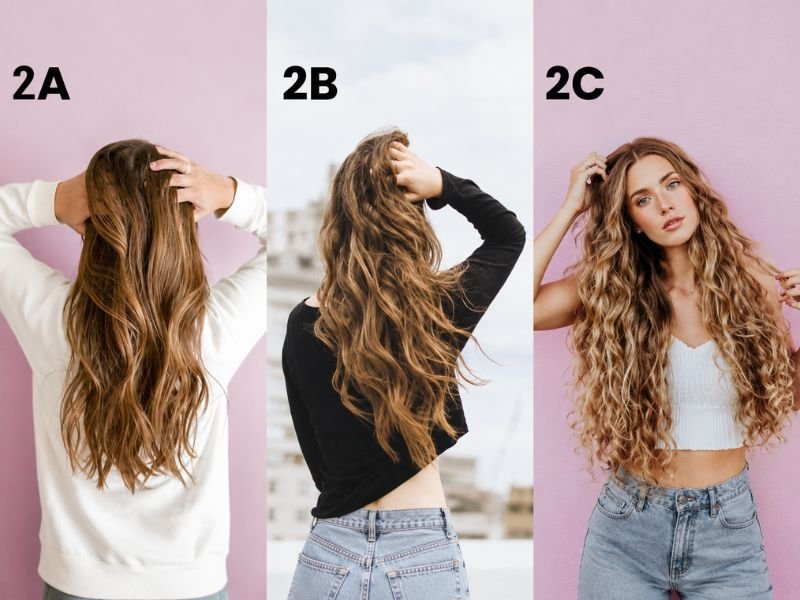
The standard hair typing system places most wavy patterns in Type 2 and curly patterns in Type 3:
- 2A: Loose and subtle waves
- 2B: More defined S-shaped waves
- 2C: Strong waves with some curl definition
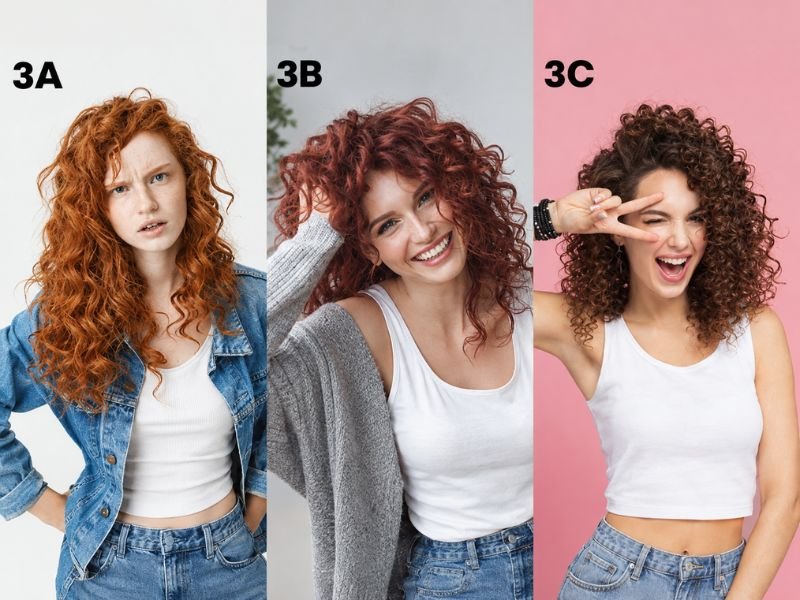
- 3A: Large, loose curls
- 3B: Springy, medium-sized curls
- 3C: Tight, highly defined curls
This classification helps explain the basic difference between wavy hair vs curly hair, but commercial hair extensions are often described using texture names rather than hair-type numbers.
Different Types of Wavy Hair
When comparing wavy hair vs curly hair, wavy textures generally provide a softer and more relaxed finish. They can work well for customers who want movement without a tightly defined curl pattern.
2A, 2B, and 2C Waves
- 2A waves are the loosest type. The hair may look almost straight but develops gentle bends through the lengths.
- 2B waves have a clearer S-shaped pattern and usually provide more visible texture. This type can create a naturally tousled appearance without excessive volume.
- 2C waves are stronger and can appear close to curly hair. They typically have more volume and definition than 2A or 2B waves and may be more prone to frizz.
For extension businesses, these categories can help explain why two products labeled as “wavy” may still look very different.
Popular Wavy Hair Textures
Several commercial extension textures fall under the broader wavy category.
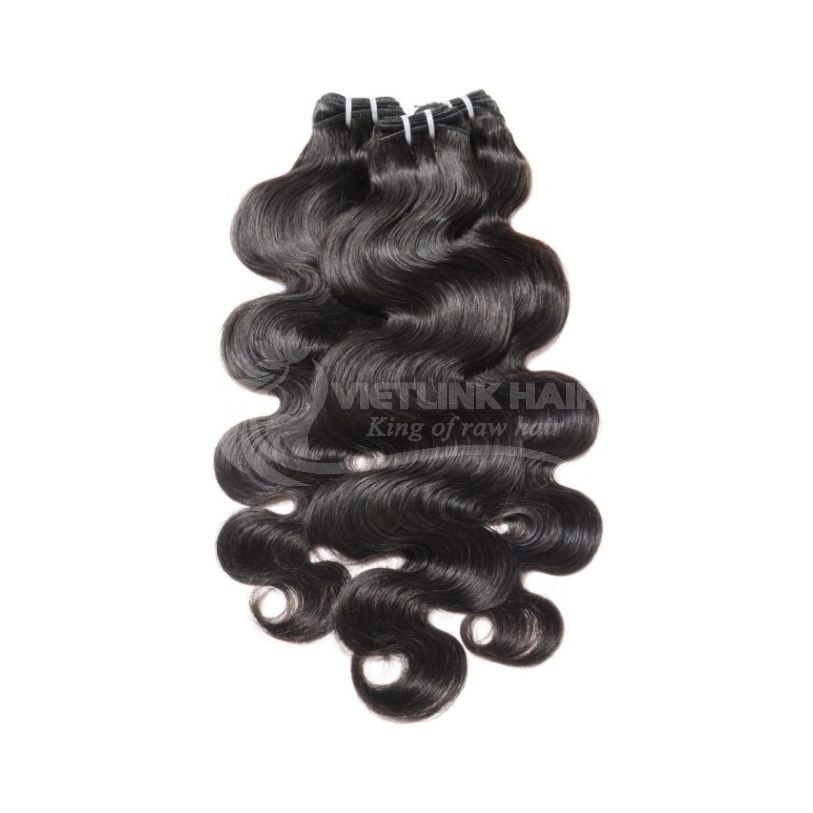
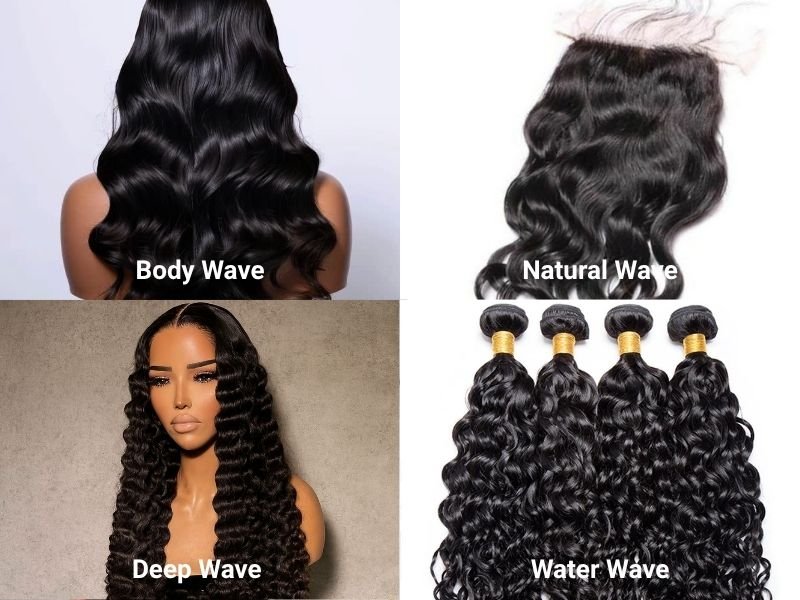
- Body Wave creates soft, flowing waves and is often chosen for elegant, polished hairstyles.
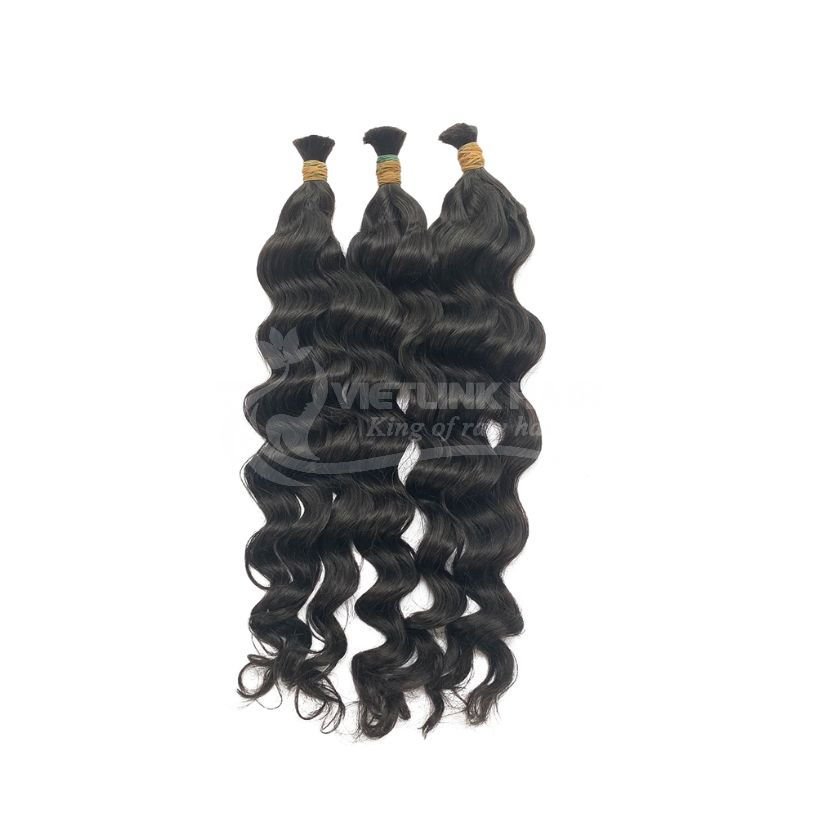
- Natural Wave has a more relaxed appearance and can mimic naturally textured hair.
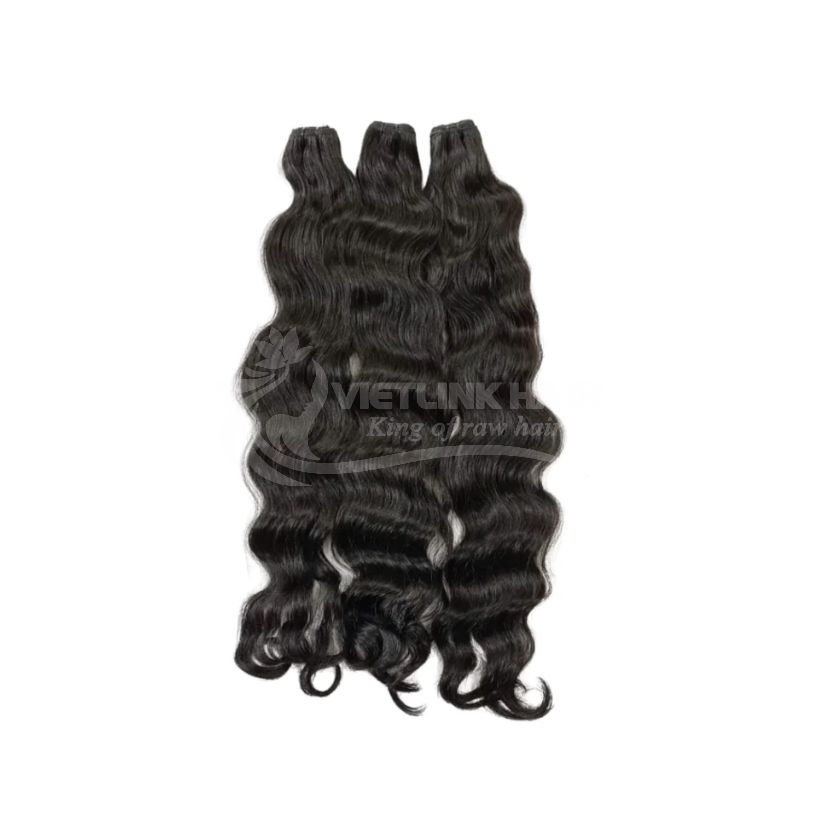
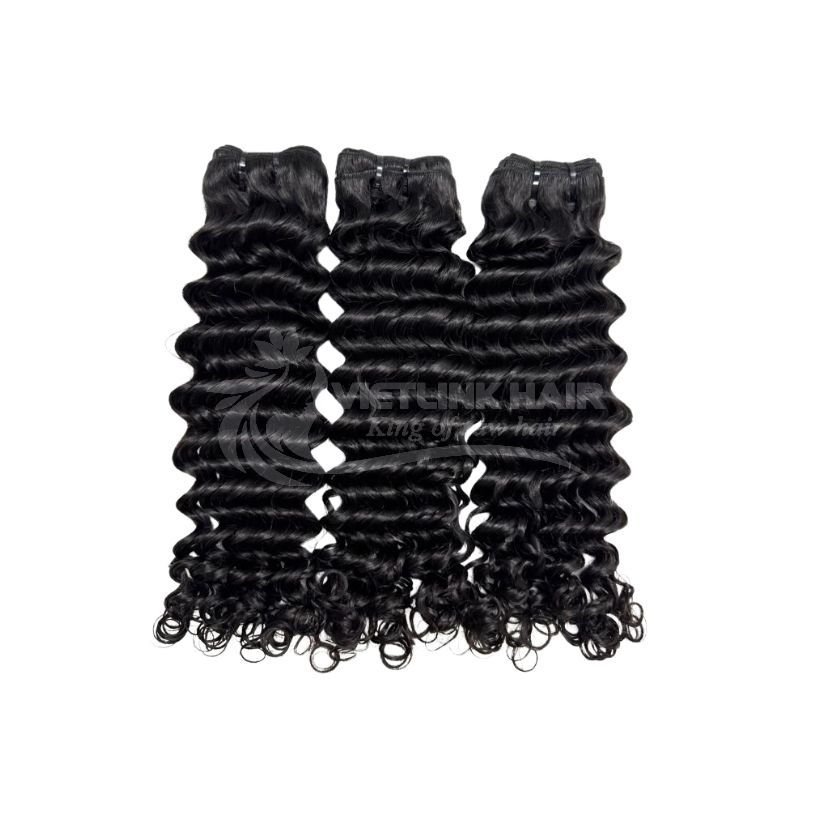
- Deep Wave has deeper and more defined waves, creating more volume than a traditional body wave.
- Water Wave has a distinctive wet-look pattern with flowing waves that can appear more textured and dimensional.
When considering wavy hair vs curly hair for a product catalog, these options allow businesses to offer different levels of wave definition without moving fully into tight curl patterns
Different Types of Curly Hair
Curly textures create more visible definition and generally offer more volume than most wavy textures. This is one of the clearest differences when looking at wavy hair vs curly hair.
3A, 3B, and 3C Curls
- 3A curls are relatively large and loose. They create noticeable ringlets while maintaining a soft appearance.
- 3B curls are tighter and more spring-like. They usually provide more volume and stronger curl definition.
- 3C curls are tighter and denser, producing a highly textured appearance. They can also experience greater shrinkage and require more attention during detangling and styling.
These differences matter when customers are choosing extensions because the same nominal length can look quite different depending on the curl pattern.
Popular Curly Hair Textures
Commercial curly extensions include several distinctive patterns.
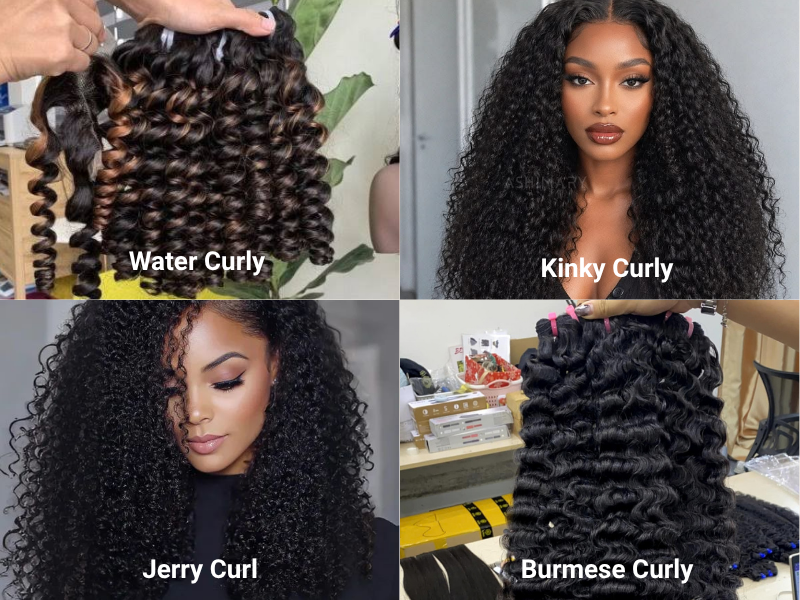
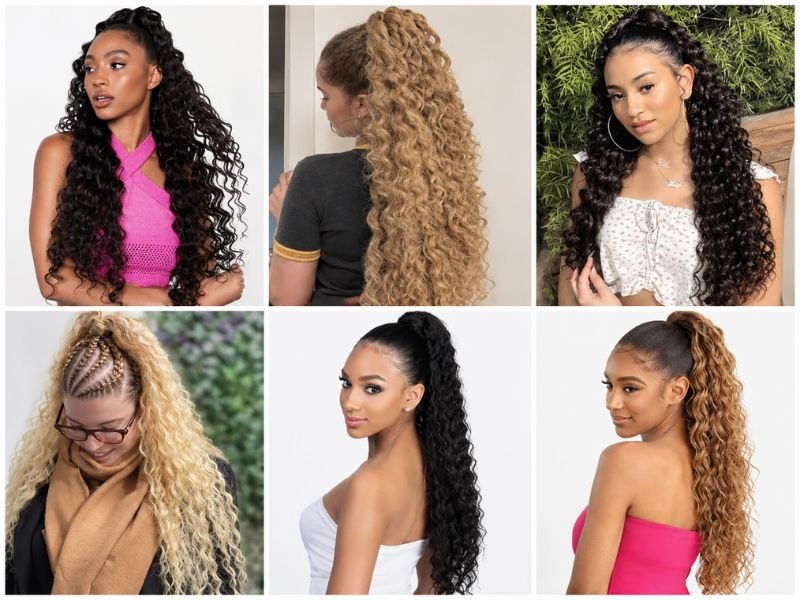
- Water Curly creates defined, flowing curls with a soft and wet-look appearance.
- Jerry Curl produces tighter, bouncy curls and is often selected for a fuller hairstyle.
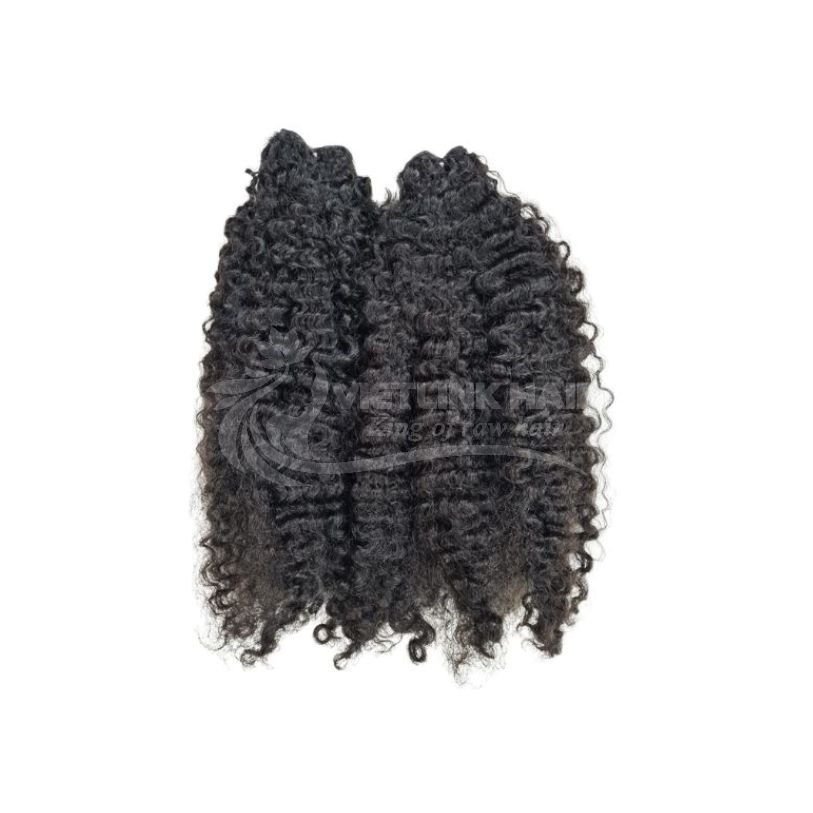
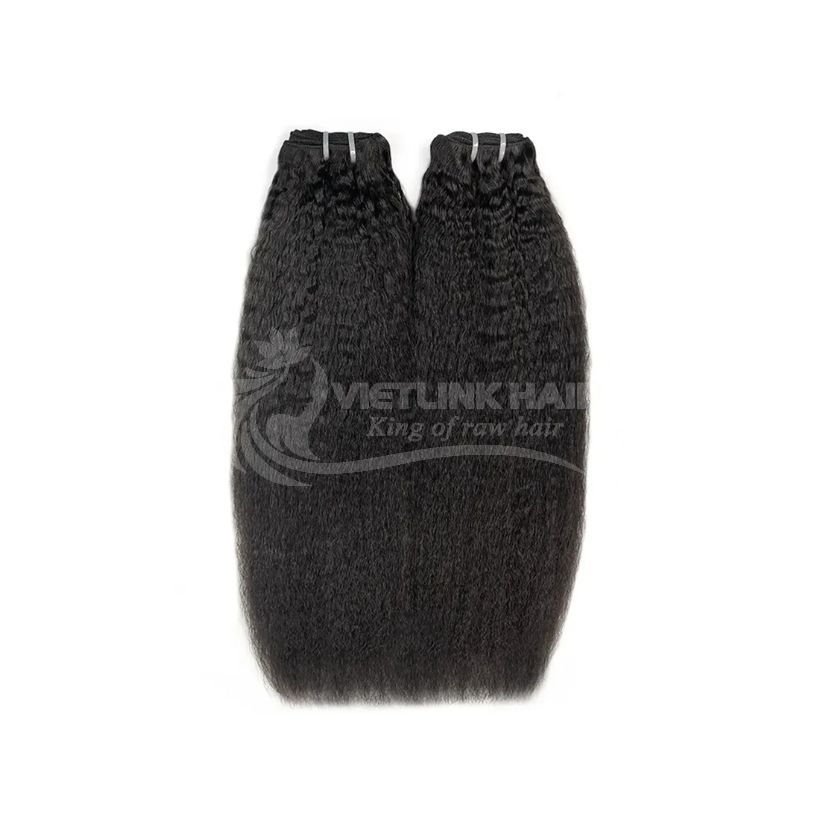
- Kinky Curly has a tighter and more textured curl pattern, providing significant volume and definition.
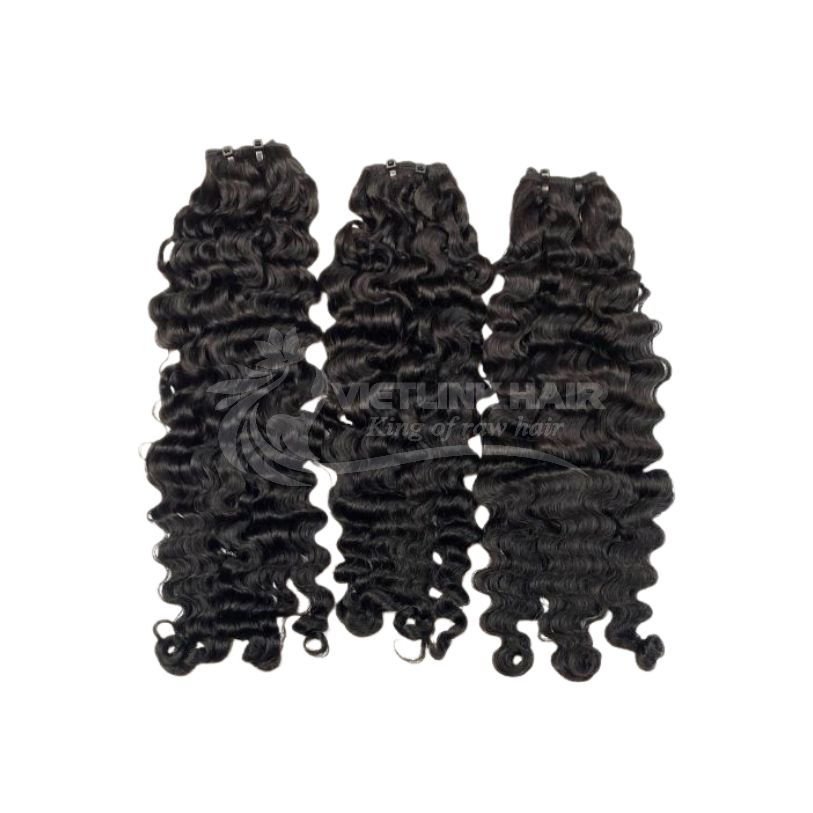
- Burmese Curly is another popular option for customers looking for a dense, naturally textured curly appearance
The greater definition of these textures is an important consideration when comparing wavy hair vs curly hair for extensions.
Wavy Hair vs Curly Hair: Key Differences
The main differences between wavy hair vs curly hair can be seen in pattern, volume, shrinkage, styling, and maintenance.
| Feature | Wavy Hair | Curly Hair |
| Pattern | S-shaped waves | Loops or spirals |
| Definition | Loose to defined | More defined |
| Volume | Moderate to high | Usually higher |
| Shrinkage | Generally lower | Generally higher |
| Detangling | Usually easier | Requires more care |
| Frizz | Moderate | Often more noticeable |
| Styling flexibility | Relatively high | More pattern-sensitive |
| Maintenance | Moderate | Higher |
Wavy hair tends to fall more naturally along the length of the hair. Curly hair, by contrast, contracts into its curl pattern, which can make the same measured length appear shorter.
This is particularly important for extension buyers. A customer ordering a 20-inch curly texture may not perceive the same visible length as a 20-inch straight or wavy texture because of curl contraction.
How Wavy and Curly Hair Extensions Compare
When choosing between wavy hair vs curly hair extensions, appearance is only one consideration.
Wavy extensions generally create a flowing, soft hairstyle. They can be suitable for customers who want texture while keeping the overall look relatively relaxed. Depending on the texture, wavy extensions may also offer more flexibility for heat styling or temporary straightening.
Curly extensions provide stronger definition and greater visual volume. They are often selected when customers want a more textured or statement hairstyle.
Another difference is pattern retention. Curly extensions need to be handled carefully because excessive brushing, heat, or incorrect drying techniques can disturb the original curl formation.
For businesses, wavy hair vs curly hair should therefore be treated as two different product categories rather than simply two variations of the same texture.
Which Texture Is Easier to Maintain?
Maintenance is another important factor in wavy hair vs curly hair.
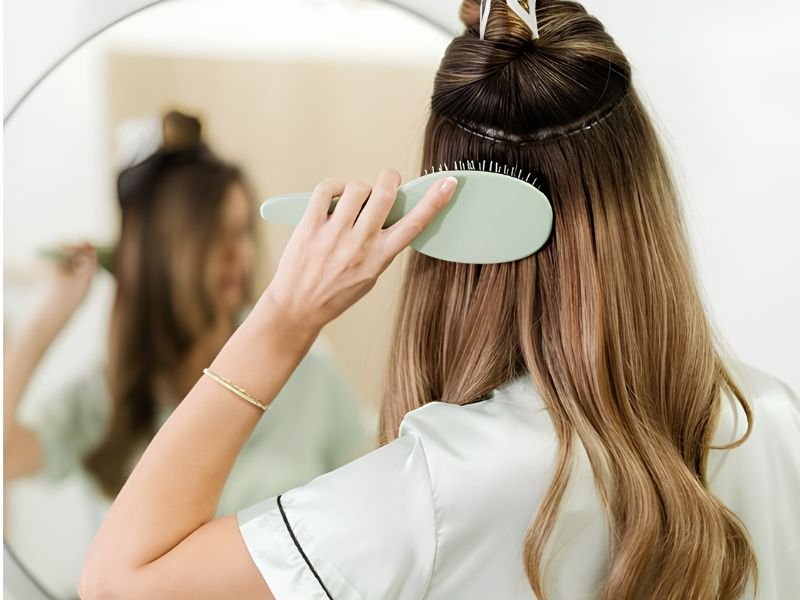
Wavy extensions generally require less intensive detangling. A wide-tooth comb or suitable extension brush can help remove knots while preserving the wave pattern. Customers should avoid aggressive brushing because it can separate the waves and create unnecessary frizz.
Curly extensions usually need more careful handling. Brushing the hair while it is completely dry can disrupt the curl pattern and increase frizz. Detangling while the hair is damp and conditioned can help preserve definition.
Both textures benefit from adequate moisture. However, curly hair often requires more conditioning because its shape can make it harder for natural oils or moisturizing products to distribute evenly through the lengths.
For this reason, wavy hair vs curly hair can also be viewed as a difference in maintenance commitment. Customers looking for a lower-maintenance textured style may prefer waves, while customers who prioritize strong curl definition may be willing to spend more time on care.
Which Texture Offers More Styling Options?
Styling flexibility is another area where wavy hair vs curly hair differs.
Wavy extensions can usually be worn naturally, brushed into a softer texture, or temporarily straightened with appropriate heat protection. Some customers may also reshape the waves using heat or overnight styling methods.
Curly extensions can also be styled, but excessive manipulation may affect the original curl pattern. Customers who purchase curly extensions often want to preserve the texture they selected, so heat and frequent brushing should be used carefully.
For retailers, this difference can influence product descriptions. Instead of simply listing an extension as “curly” or “wavy,” businesses can explain the expected definition, volume, maintenance level, and styling flexibility.
Choosing the Right Texture for Your Customers
When deciding between wavy hair vs curly hair, businesses should consider the customer’s preferred appearance and styling habits.
Wavy textures may appeal to customers who want:
- Soft movement
- A relaxed, elegant appearance
- Moderate volume
- Easier everyday maintenance
- More flexibility for restyling
Curly textures may appeal to customers who want:
- Strong curl definition
- Greater volume
- A more textured appearance
- Natural-looking curls
- A statement or protective hairstyle
Target market also matters. Different regions and customer groups can have different preferences for wave and curl patterns. A wholesale buyer should therefore avoid building a product range based only on personal preference.
Instead, review previous sales, customer requests, local styling trends, and the textures that perform consistently in the target market.
What Should Wholesale Buyers Check Before Ordering?
For wholesale buyers, wavy hair vs curly hair is not only about appearance. Product consistency is equally important.
Before placing a large order, buyers should check several specifications.
- Texture consistency: Samples should accurately represent the texture supplied in bulk. Waves or curls should remain reasonably consistent across bundles or units.
- Pattern definition: Ask how the manufacturer creates the wave or curl pattern and whether the texture is natural or chemically or thermally processed.
- Length and shrinkage: Curly textures can appear shorter because of shrinkage. Buyers should confirm both the stretched length and the expected appearance when the hair is in its natural pattern.
- Density: Density can change how a wave or curl pattern looks. Two products with the same curl type may appear different if their densities are not comparable.
- Shedding and tangling: These factors should be checked through samples before committing to larger quantities.
- Processing level: Buyers should understand whether the hair has been chemically treated, steam processed, colored, or otherwise altered.
- Sample approval: A sample approval process helps buyers compare the actual product with product photos and descriptions before bulk production.
For a wholesale business, these checks are especially important because customers expect the texture they order to match the product they receive.
Popular Wavy and Curly Extensions to Stock
A balanced extension catalog can include both wavy and curly products to reach different customer preferences.
Wavy Extensions
Popular options include:
- Body Wave
- Natural Wave
- Deep Wave
- Water Wave
These textures range from soft, subtle movement to deeper, more defined waves.
Curly Extensions
Popular curly options include:
- Water Curly
- Jerry Curl
- Kinky Curly
- Burmese Curly
Offering several curl patterns allows retailers and distributors to serve customers looking for different levels of definition and volume.
For businesses comparing wavy hair vs curly hair, carrying both categories can also make it easier to upsell customers based on styling preferences rather than limiting the catalog to one texture family.
Frequently Asked Questions
Still deciding between wavy hair and curly hair? The right texture depends on your customers’ needs and styling preferences, and maintenance expectations:
Is wavy hair the same as curly hair?
No. Wavy hair generally follows an S-shaped pattern, while curly hair forms more defined loops or spirals. This is the basic distinction between wavy hair vs curly hair.
Which is easier to maintain, wavy or curly hair?
Wavy hair is generally easier to maintain because it usually has less shrinkage and requires less intensive detangling. Curly hair often needs more moisture and careful handling to preserve its pattern.
Can wavy extensions be straightened?
Many wavy extensions can be temporarily straightened with appropriate heat styling. However, the result depends on the hair’s processing level and quality. Excessive heat can damage the hair or affect its original pattern.
Can curly extensions be straightened?
Curly extensions may also be temporarily straightened, but frequent heat styling can alter or damage the curl pattern. Buyers should check the manufacturer’s care recommendations before using heat.
Which type of extensions has more volume?
Curly extensions generally create more visible volume because the tighter pattern expands outward. However, actual volume also depends on density, length, and the specific texture.
What is the difference between Body Wave and curly hair?
Body Wave has a loose, flowing wave pattern, while curly hair has more defined loops or spirals. In a wavy hair vs curly hair comparison, Body Wave sits on the softer and less defined side of the texture spectrum.
Final Thoughts on Wavy and Curly Hair
The key difference between wavy hair vs curly hair is the pattern, volume, shrinkage, and maintenance. Wavy hair creates softer S-shaped movement, while curly hair offers more defined curls and volume.
For wholesale buyers, choosing the right texture also means considering customer demand, consistency, length, density, and processing. If you’re looking for reliable textured hair for your collection, explore the wholesale options from Vietlink Hair.
WhatsApp: +84 855 555 951
Email: info@vietlinkhair.com
Facebook: Vietlinkhair
