
Hair Extension Knowledge
How to Dye Hair Extensions at Home Safely
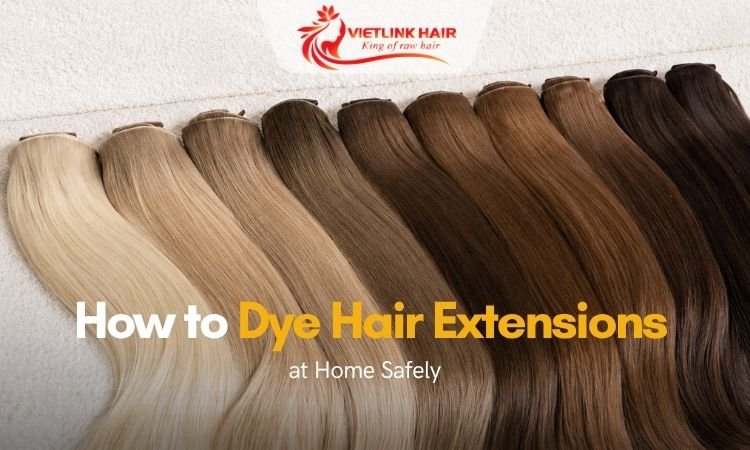
Changing hair extension color can lead to uneven results or dryness, especially when the hair needs to be reused.
How to dye hair extensions at home depends on the hair type, processing history, and desired color. Human hair can generally be dyed, while synthetic fibers require different methods.
For salons and B2B buyers, hair quality matters because previous processing affects how evenly extensions absorb color.
Can You Dye Hair Extensions at Home?
Yes, but the result depends on the fiber type, hair condition, and desired color.
When learning how to dye hair extensions at home, check these factors first:
- Human hair: 100% human hair can generally accept conventional hair color.
- Synthetic hair: Standard human-hair dye is generally unsuitable for synthetic fibers.
- Remy hair: Can be dyed, but previous chemical processing affects how it absorbs color.
- Going darker: Usually more manageable than significantly lightening already-colored hair.
- Extension construction: Keep dye away from tape, adhesive, silicone strips, clips, and other attachment areas.
So, before mixing any color, identify three things:
- Fiber: human hair or synthetic
- Processing history: virgin, Remy, dyed, bleached, or otherwise processed
- Attachment: clip-in, tape-in, weft, or another construction
These three factors determine whether an at-home color project is realistic.
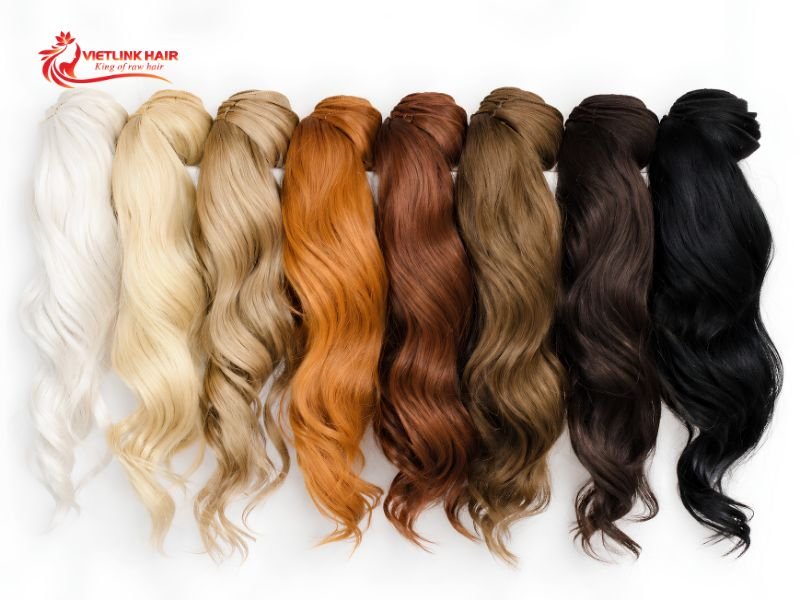
What You Need to Dye Hair Extensions
Before starting how to dye hair extensions at home, prepare everything you need so the color can be applied without rushing.
Basic supplies
| Item | Purpose |
| 100% human hair extensions | Suitable hair base for conventional color |
| Semi- or demi-permanent dye | Mainly for depositing color |
| Low-volume developer | Used only when required by the color system |
| Color bowl | For controlled mixing |
| Color brush | Helps distribute color evenly |
| Gloves | Protects hands from color |
| Foil or plastic wrap | Protects the work surface or covers hair when required |
| Wide-tooth comb | Helps with gentle detangling |
| Mild or clarifying shampoo | Removes buildup before coloring |
| Moisturizing conditioner | Helps restore softness after processing |
Some professional extension guides recommend a 10-volume developer when a developer is needed for depositing color. However, the manufacturer’s instructions should take priority because formulas vary between brands.
Avoid choosing developer strength simply because a higher volume seems faster. A stronger developer can increase chemical stress and is not automatically better for extension hair.
How to Dye Hair Extensions at Home Step by Step
Once the hair type and supplies are confirmed, the actual process should be controlled and gradual. The following method focuses on depositing color into human hair extensions while reducing unnecessary stress on the strands.
Step 1: Check the Extensions Before Coloring
The first stage of how to dye hair extensions at home is inspection, not application:
- Check for previous bleaching or chemical processing.
- Look for dry, brittle, or uneven ends.
- Avoid coloring heavily processed or weakened hair.
- Keep dye away from clips, tape, adhesive, and lace.
- If the hair already feels fragile, another chemical treatment may shorten its usable life.
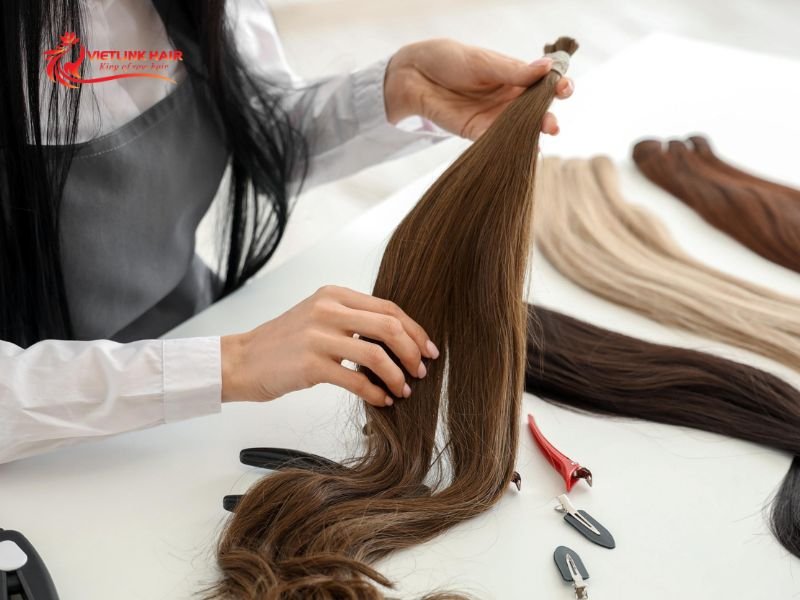
Step 2: Wash and Prepare the Hair
Clean hair helps the color distribute more evenly:
- Wash the extensions with lukewarm water and mild or clarifying shampoo.
- Remove product buildup, oils, and coatings that may affect color absorption.
- Avoid scrubbing or twisting the wefts to reduce tangling and dryness.
- Gently detangle from the ends upward.
- Let the extensions dry completely before coloring.
Step 3: Perform a Strand Test
A strand test is one of the most important parts of how to dye hair extensions at home.
Take a small, hidden section or a single clip-in weft and apply the prepared color according to the manufacturer’s instructions. Allow it to process as directed, then rinse and dry it.
Check three things:
- Color: Is the final shade close to the target?
- Evenness: Does the hair absorb the color consistently?
- Condition: Does the hair remain soft and manageable?
This test can reveal unexpected porosity before the entire set is exposed to the formula. Both Luxy Hair and Foxy Locks specifically recommend testing a small section before coloring the full set.
If the test result is too dark, too warm, or uneven, adjust the plan before proceeding.
Step 4: Prepare the Color
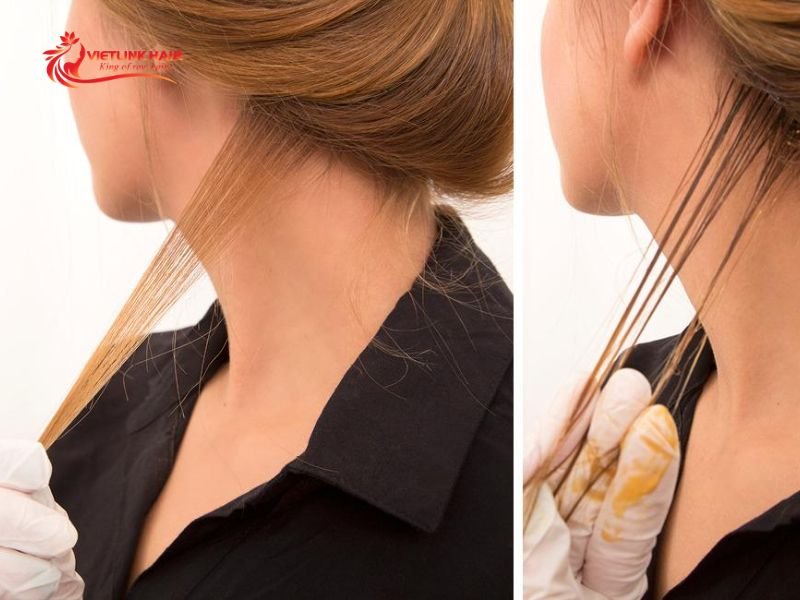
Once the extensions are clean and the strand test looks suitable, the next step is to prepare the color. Keep the formula simple and follow the manufacturer’s instructions closely.
- Use a semi-permanent or demi-permanent formula for a small color adjustment.
- Use a low-volume developer only if the product requires it.
- Follow the specified color-to-developer ratio.
- Avoid mixing multiple shades unless you understand how they interact.
- Use the same formula tested on the strand for a more predictable result.
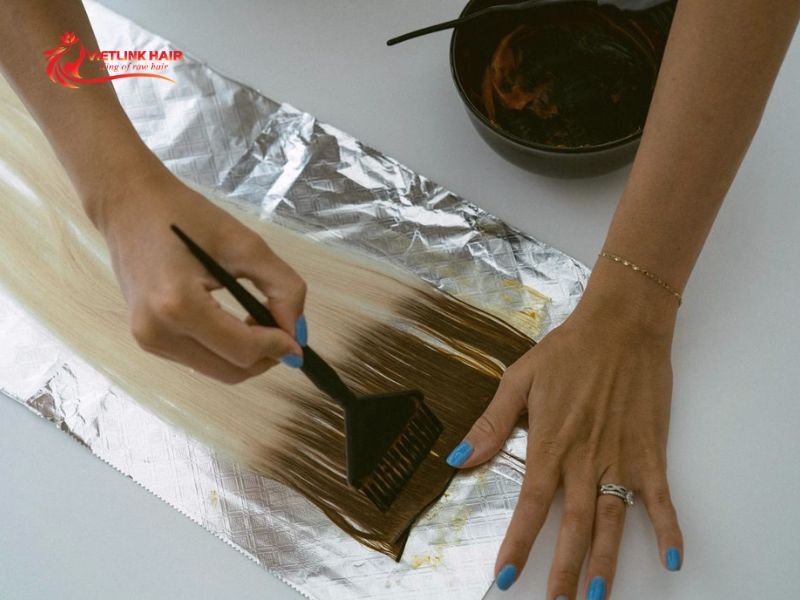
Step 5: Apply the Dye Evenly
The application stage determines whether how to dye hair extensions at home produces a uniform result or a patchy one.
- Lay each weft flat on a protected surface.
- Divide the extensions into manageable sections.
- Use a color brush to apply dye from the top toward the ends.
- Saturate both sides evenly to reduce patchy results.
- Work gently to minimize tangling and friction.
- Avoid getting dye on clips, lace, silicone, or adhesive areas.
- For tape-ins, keep dye away from the tape to protect the bond
Step 6: Allow the Color to Process
Processing time varies depending on the formula, starting shade, hair porosity, and desired result.
- Follow the manufacturer’s recommended processing time.
- A 20–40 minute window may apply to some products but is not universal.
- Do not extend the processing time if the color develops slowly.
- Use the strand test as a reference before processing the full set.
- Remember that porous extension hair may absorb color faster than natural hair.
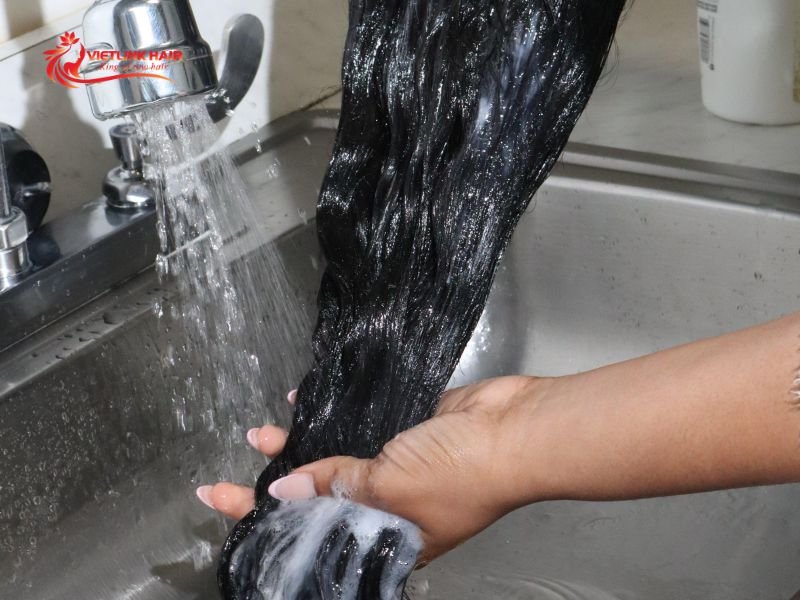
Step 7: Rinse and Condition
After how to dye hair extensions at home, rinse and condition the hair gently:
- Rinse thoroughly until the excess dye is removed.
- Avoid rubbing or twisting the extensions.
- Apply a moisturizing, color-safe conditioner.
- Gently detangle with a wide-tooth comb, starting from the ends.
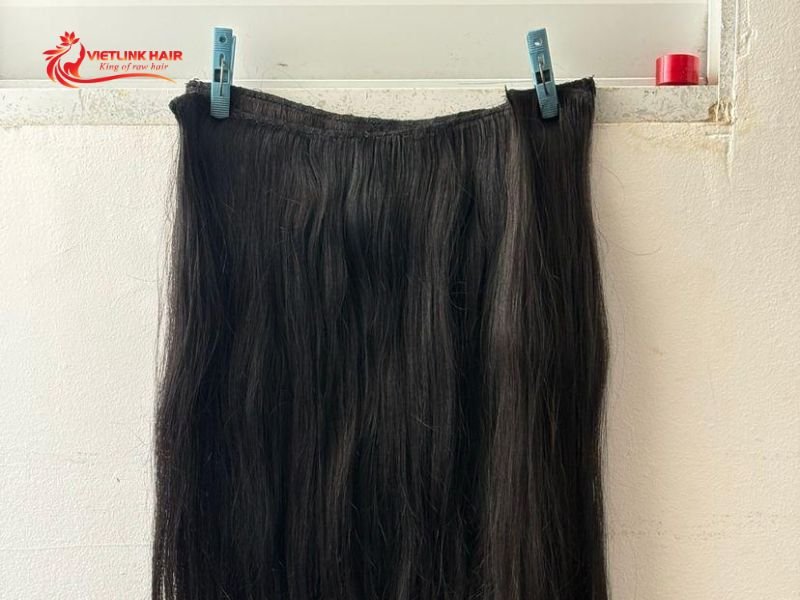
Step 8: Dry the Extensions Carefully
After rinsing, gently squeeze out excess water without twisting the hair.
- Air-dry the extensions when possible.
- If heat is necessary, use a low-temperature setting and avoid prolonged exposure.
- Never store extensions while they are damp.
- Make sure clip-ins and wefts are completely dry before storage to reduce tangling and protect their structure.
How Long Does It Take to Dye Hair Extensions?
Processing time is one of the most common questions surrounding how to dye hair extensions at home.
The actual timeline depends on the number of wefts, the application method, the formula, and whether preparation is included.
A practical workflow may look like this:
| Stage | Typical consideration |
| Preparation | 15–30 minutes |
| Washing and drying | Several hours or overnight for air-drying |
| Strand test | Follow product instructions |
| Color application | Depends on quantity of hair |
| Processing | Follow the dye manufacturer’s stated time |
| Rinsing and conditioning | 15–30 minutes |
| Drying | Several hours when air-drying |
The important point is that 20–40 minutes is not a universal processing rule. It is better to follow the specific product instructions than to copy a fixed time from another coloring method.
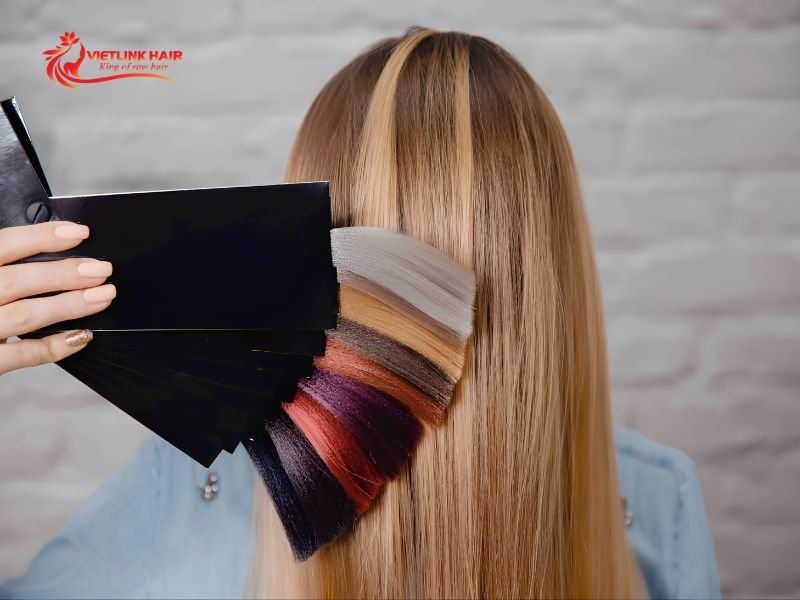
Can You Dye Hair Extensions Lighter?
Lightening is where how to dye hair extensions at home becomes significantly more complicated.
Adding pigment to lighter hair is generally more controlled than removing existing pigment. If you have medium-brown extensions and want a very light blonde result, simply applying blonde dye may not produce the expected outcome.
Bleaching introduces another level of chemical processing and can compromise the hair’s cuticle, especially if the extensions have already been treated.
Foxy Locks advises against using bleach on its extensions and recommends coloring mainly for darker or tonal adjustments.
Some professional sources do describe controlled lightening of human hair extensions, but the condition of the hair and the expertise of the colorist become much more important.
If–then recommendation:
- If you want to make human hair extensions slightly darker, then an at-home deposit-color process may be reasonable after a strand test.
- If you want to lift several levels, then professional color correction is the safer scenario.
- If the extensions are already bleached or fragile, then another chemical process may not be worthwhile.
- If the hair is synthetic, then standard human-hair dye should not be used.
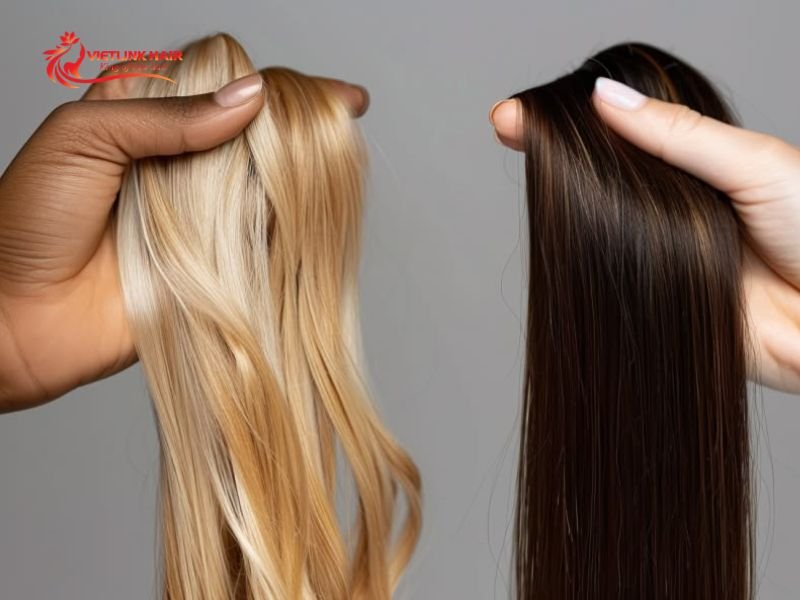
Human Hair vs. Synthetic Hair: Can You Dye Both?
Before deciding how to dye hair extensions at home, compare the actual material rather than relying on the product’s marketing name.
| Criteria | Human Hair Extensions | Synthetic Extensions |
| Standard human-hair dye | Generally compatible | Generally not compatible |
| Darkening | Usually practical | Limited |
| Major lightening | High-risk | Generally unsuitable |
| Strand test | Strongly recommended | Essential before specialty methods |
| Professional color correction | Possible | Fiber-specific |
| Color flexibility | Higher | Lower |
Synthetic hair is manufactured from fibers rather than human keratin, so conventional oxidative or deposit dyes designed for human hair do not behave the same way.
This is also why buyers should verify the fiber composition before purchasing extensions specifically for future customization.
Common Mistakes When Dyeing Hair Extensions
Even when the basic method looks simple, several mistakes can reduce color consistency or shorten the useful life of the extensions.
| Common mistake | Why it matters | Better approach |
| Skipping the strand test | The final color may be unexpected | Test one small section |
| Using the wrong fiber | Standard dye may not work on synthetic hair | Confirm 100% human hair |
| Starting with strong developer | May increase chemical stress | Use the specified system |
| Applying unevenly | Creates patchy results | Fully saturate manageable sections |
| Coloring attachment areas | Can affect clips, tape, or silicone | Keep product away from bonds |
| Over-processing | Can reduce softness and strength | Follow the stated timing |
| Rough wet brushing | Can increase stretching and tangling | Detangle gently |
| Repeated bleaching | Accumulates chemical damage | Consider pre-colored extensions |
These points are not simply cosmetic concerns. Extension hair is a finished manufactured product, and chemical treatment can affect its future resale, reuse, or service performance.
Factory Insight: Why Hair Quality Matters Before Coloring
The most useful factory insight into how to dye hair extensions at home is that color performance starts before the consumer ever opens a bottle of dye.
During manufacturing, hair may go through sorting, cleaning, alignment, wefting, coloring, texture processing, or other treatments. The more processing the hair has already received, the more important its remaining structural condition becomes.
At factory level, buyers should ask suppliers about:
- Hair origin
- Virgin vs. processed hair
- Remy or non-Remy construction
- Previous chemical treatment
- Color history
- Cuticle alignment
- Weft construction
- Attachment materials
- Color customization options.
For B2B buyers, this creates an important trade-off.
If a retailer expects customers to customize extensions, sourcing hair with a suitable processing history can reduce complaints related to uneven absorption, dryness, or unpredictable color.
This is also why raw hair and Remy hair should not automatically be treated as identical categories.
Two Practical Coloring Examples
The following examples show why the starting shade matters as much as the target shade.
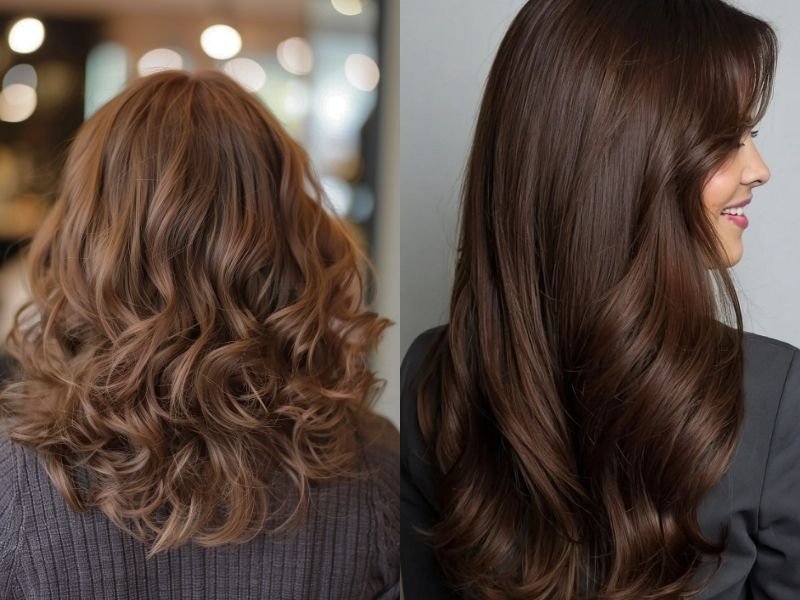
Example 1: Medium Brown to Dark Chocolate Brown
Suppose a salon has medium-brown Remy clip-ins that are slightly too light for a client’s current hair color.
This is a relatively straightforward color-depositing scenario.
The salon can:
- Wash and dry the extensions.
- Test the target formula on one small weft.
- Compare the dry result against the client’s mid-lengths and ends.
- Apply the approved formula evenly.
- Follow the manufacturer’s processing instructions.
- Rinse and condition.
- Dry and reassess the final shade.
This type of controlled darkening is generally more predictable than attempting to lift the same extensions several levels.
Example 2: Dark Brown to Blonde
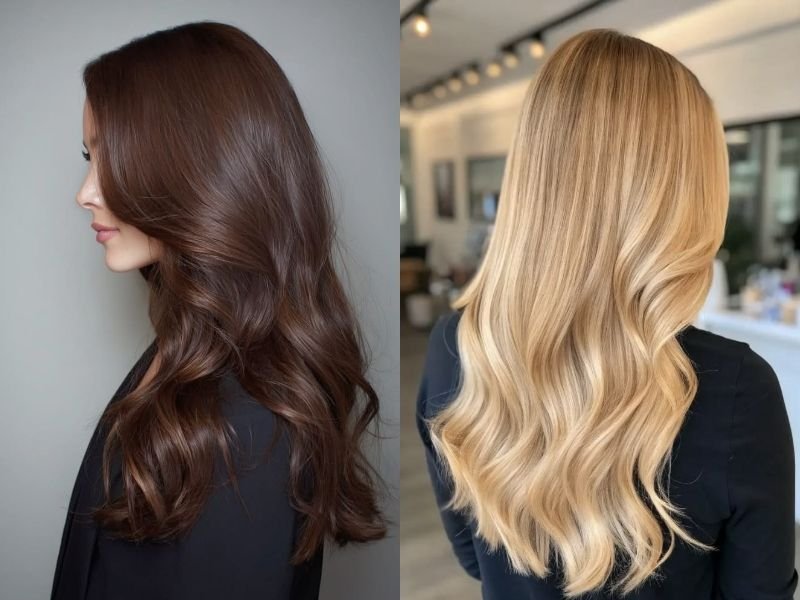
Now consider dark-brown extensions that need to become blonde.
The situation is different.
A standard blonde dye may not remove enough existing pigment. Bleaching may therefore become necessary, but bleaching also increases the risk of dryness, breakage, uneven lifting, and unwanted warmth.
For a commercial salon, the cost of damaging a full set can exceed the cost of professional color correction. For a consumer, replacing a damaged set may also cost more than having the color professionally handled from the beginning.
Therefore, if the target requires significant lightening, a pre-lightened extension set closer to the target shade can be a more practical sourcing decision.
How to Maintain Extensions After Coloring
After learning how to dye hair extensions at home, the next priority is preventing the newly colored hair from becoming dry or tangled.
Color-treated extensions should be handled gently because they do not receive natural scalp oils.
A practical maintenance routine includes:
- Wash only when necessary.
- Use gentle, color-friendly products.
- Condition the mid-lengths and ends.
- Detangle from the ends upward.
- Minimize unnecessary high heat.
- Allow extensions to dry completely before storage.
- Store wefts in a dry, organized position.
- Use a suitable heat protectant when heat styling is necessary.
The same principle applies to wholesale businesses. A good product can still generate complaints if the end customer does not receive clear aftercare instructions.
FAQ About Dyeing Hair Extensions
Before finishing how to dye hair extensions at home, here are the questions most relevant to both individual users and salon professionals.
Can you dye 100% human hair extensions?
Yes. Human hair extensions can generally accept hair color, especially when the goal is to deposit a darker or similar shade. A strand test should be performed first because processing history and porosity affect the result.
Can you dye synthetic hair extensions?
Standard human-hair dye is generally not suitable for synthetic extensions. Synthetic fibers require different coloring systems, and some cannot be recolored reliably at all.
Can you dye extensions from black to brown?
It depends on the existing pigment and the target shade. If the extensions are already very dark, achieving a noticeably lighter brown may require lifting rather than simple color deposition.
How long should you leave dye on hair extensions?
Follow the specific dye manufacturer’s processing instructions. Do not assume that a fixed 20–40 minute period applies to every formula or hair type.
Should you wash extensions before dyeing?
Yes, when the manufacturer or color system recommends pre-washing. Removing buildup and temporary coatings can help create a more consistent surface for color application.
Can you dye clip-in, tape-in, and weft extensions?
You can generally color human-hair clip-ins and wefts with appropriate precautions. Tape-ins require extra care because dye should be kept away from the adhesive area.
Does dyeing reduce extension lifespan?
It can. Chemical processing stresses the hair, and repeated coloring or bleaching can gradually reduce softness and structural integrity. The effect depends on the original hair quality, previous processing, formula, and frequency.
Final Takeaway
How to dye hair extensions at home starts with choosing quality human hair, strand testing, and applying color carefully. For B2B buyers, sourcing quality hair is equally important because processing history and construction affect color results.
Looking for customizable human hair extensions? Contact Vietlink Hair for wholesale sourcing and factory support.
WhatsApp: +84 855 555 951
Email: info@vietlinkhair.com
Facebook: Vietlinkhair
