
Hair Extension Knowledge
Flat Tip Hair Extensions: What Makes Them Different?
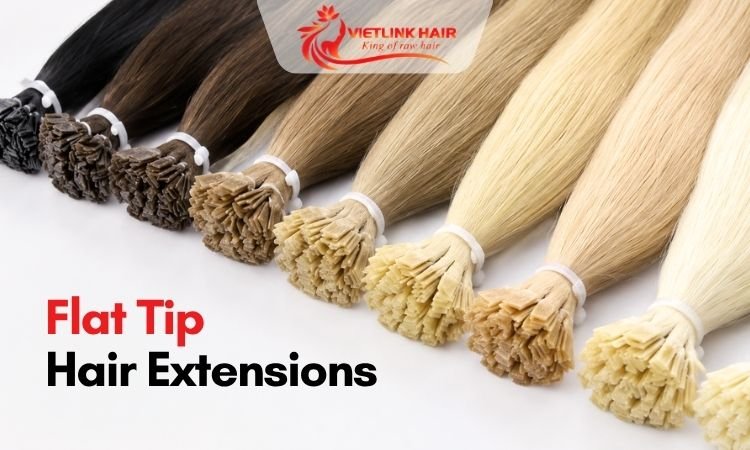
For salons and wholesale buyers, selecting flat tip hair extensions starts with the attachment system, bond dimensions, strand weight and client suitability. Flat tip hair extensions are semi-permanent, strand-by-strand extensions with a flat keratin bond that sits close to the scalp. They provide individual-strand placement with a flattened pre-bonded tip; they are not tape-in wefts. This guide covers specs, installation, a flat tip vs U-tip comparison, and sourcing checks for wholesale buyers.
What Are Flat Tip Hair Extensions?
Before comparing methods, it helps to define the product precisely, because buyers often mix it up with I-tip.
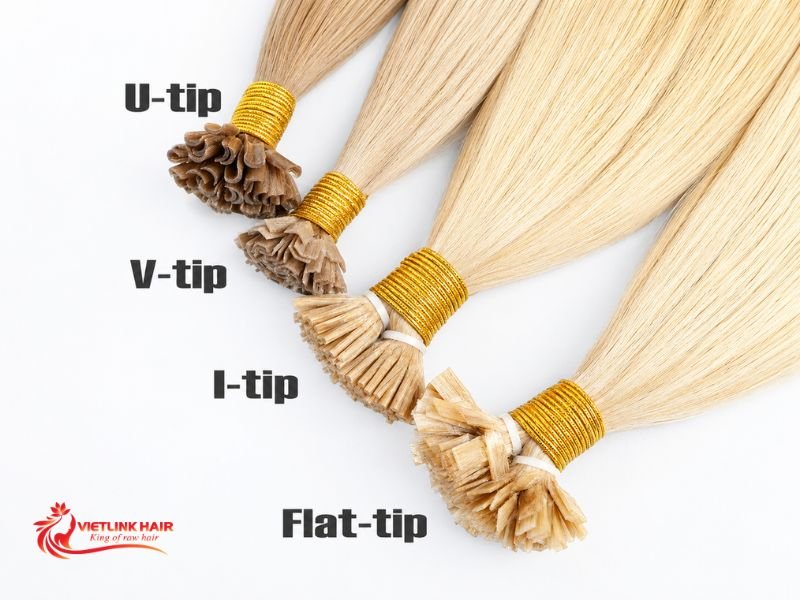
Flat tip hair extensions are strand-by-strand extensions with a wider, flatter attachment profile than many conventional rounded tips. However, the term describes different products across brands: some are keratin flat tips applied by professional heat fusion, while others are flat-tipped, bead-installed systems designed for no-heat application. Check the exact product specification before choosing installation tools or removal methods.
The name alone does not establish whether a flat tip uses keratin fusion or microbeads. I-tip strands commonly have a narrower, stick-shaped tip and use beads; some flat-tip product lines also use beads, while other flat tips use heat fusion. Ask for attachment-system documentation, bond dimensions, grams per strand and any compatible tools, rather than assuming a universal weight or installation method.
Hair condition, cuticle alignment, processing history, bond construction and correct installation can all influence tangling and wear. A supplier description such as “single donor” needs supporting specifications rather than being inferred from appearance.
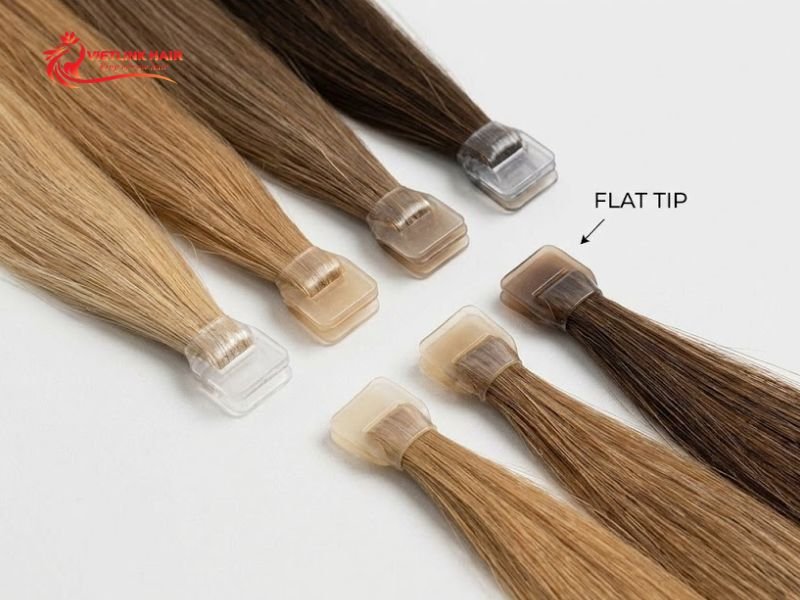
How Flat Tip Hair Extensions Are Installed
Installation requirements vary by product. A flat-tip SKU may be a keratin fusion product or a purpose-designed beaded flat-tip product. Never assume a particular pack supports both methods: verify the manufacturer’s instructions, attachment components and required training first.
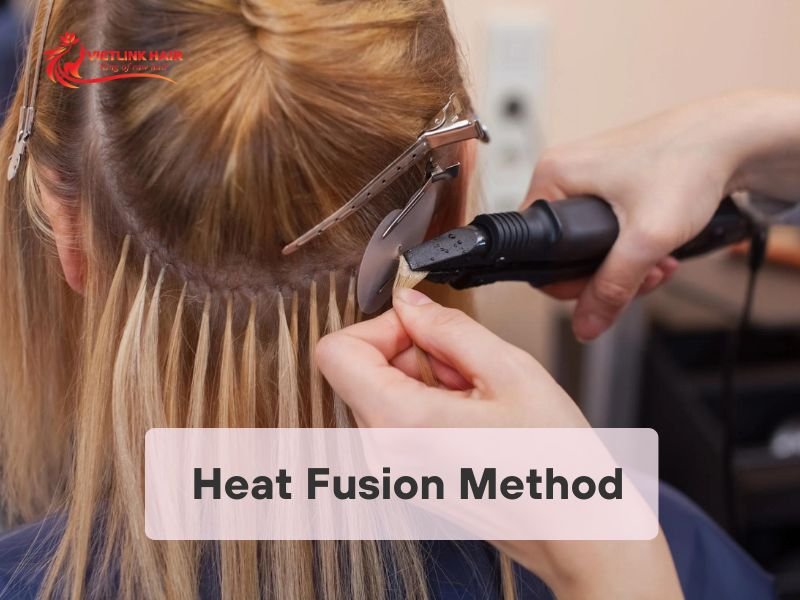
Heat Fusion Method
For a keratin flat-tip product designed for heat fusion, a trained stylist should follow the bond manufacturer’s temperature, placement and removal instructions.
A fusion tool softens the keratin bond. The stylist presses it flat around a small section of natural hair and lets it cool. This creates a thin, smooth bond that suits loose styles, but it needs trained hands because excess heat can stress the natural hair at the attachment point.
No-Heat Beaded Flat-Tip Method
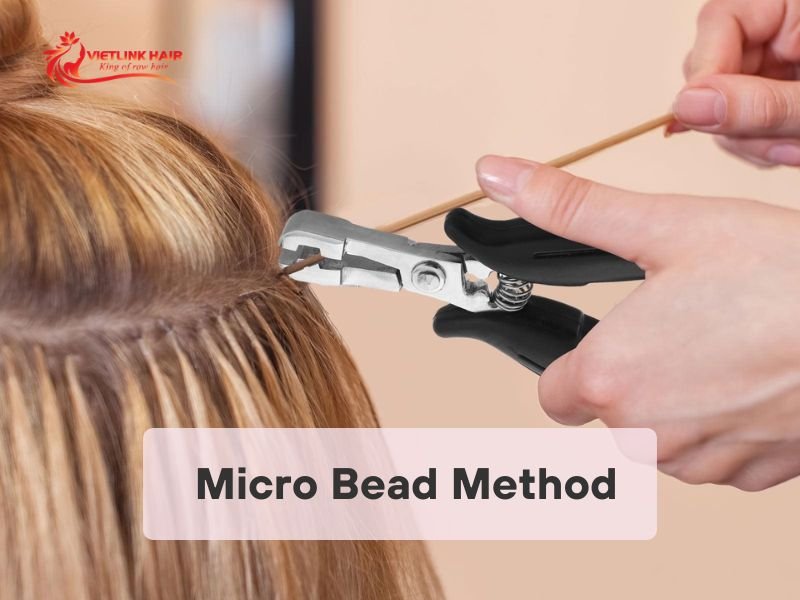
Some suppliers, including Donna Bella and Babe Hair, offer purpose-designed flat-tip extensions that are secured with microbeads rather than melted with heat. This is different from trying to clamp a heat-fusion-only keratin bond into a bead.
In a compatible bead-installed flat-tip system, a trained stylist isolates a suitable section of natural hair, threads a specified bead, inserts the flat extension tip and secures the bead with the manufacturer-recommended tool. I-tip extensions also commonly use bead attachment, but the tip and hair spread are shaped differently. The exact fit, placement and removal process depend on the product.
For either method, correct sectioning and tension control matter more than a fixed placement measurement. The stylist should protect the hairline, allow comfortable movement and follow the brand’s attachment and removal protocol. Do not treat an AIO-suggested 0.5–1 cm distance as a universal installation specification.
How to Care for Flat Tip Hair Extensions
Aftercare affects client comfort and extension condition, so it belongs in the consultation from the start.
-
Brush gently from the ends upward with a soft brush, holding the hair above the bond to reduce pulling.
-
Keep conditioner and oils away from the bonds to help prevent loosening.
-
Dry hair before bed to reduce tangling and stress on attachment points.
-
Provide an aftercare card with every installation so clients can follow clear care instructions.
-
Schedule professional checks according to the fusion system, natural hair growth and stylist advice. Do not promise bead-style repositioning for fused keratin bonds.
Flat Tip Hair Extensions vs U Tip Hair Extensions
Wholesale buyers rarely stock only one bond shape, so a direct comparison shows how to split inventory.
The following comparison describes common keratin fusion designs; some suppliers also sell bead-installed flat-tip variants. Exact dimensions, weights, movement and service requirements must be confirmed for the SKU.
| Criteria | Flat tip | U tip |
|---|---|---|
| Bond shape | Flattened keratin tip | Curved or nail-shaped keratin tip |
| Typical attachment | Heat fusion for keratin designs; compatible microbeads for purpose-built beaded flat tips | Usually professional keratin heat fusion |
| Fit and visibility | Depends on sectioning, exact bond size and placement | Depends on sectioning, exact bond size and placement |
| Strand weight | Ask for verified grams per strand | Ask for verified grams per strand |
| Maintenance / removal | Follow product-specific professional bond removal or replacement instructions | Follow product-specific professional bond removal or replacement instructions |
| Best application | Depends on natural hair density and stylist assessment | Depends on natural hair density and stylist assessment |
Flat tip vs I-tip: A conventional I-tip generally has a narrow stick-shaped head and is attached using a microbead. A beaded flat tip instead distributes hair across a wider, flatter base. Keratin flat tips that use heat should not be assumed compatible with either bead system. Ask the supplier for a close-up of the actual tip and installation instructions. Confirm the application method in writing before ordering.
Flat-tip and U-tip bonds both support strand-by-strand placement. The more appropriate choice depends on real bond dimensions, client hair condition, comfort and the installer’s technique, not a universal claim that one always holds better or installs faster.
For salons comparing stock, request specification sheets for both products and assess suitability using an approved test sample. I-tip vs K-tip extensions explains the separate heat-fusion and bead-based approaches.
Other options include tape-in vs I-tip extensions when a client needs a different attachment system. Always check which product and method is actually being quoted.
Buyer tip: Ask each supplier to quote bond dimensions, weight per strand and the intended installation method for every SKU. Packs with the same strand count may differ in total weight.
Pros and Cons of Flat Tip Hair Extensions
No bonding method fits every client, so an honest view of the limits protects your reputation with stylists.
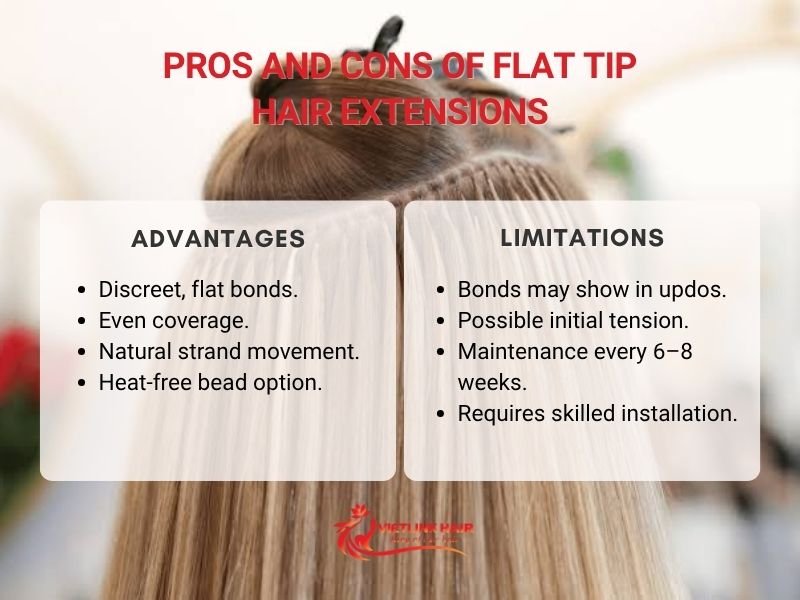
Main advantages:
- Low profile: the flat bond lies close to the scalp and stays discreet in loose styles.
- Even coverage: the wide spread reduces the stringy look on fine hair.
- Free movement: individual-strand placement offers styling flexibility, subject to bond position and the stylist’s advice.
- SKU-specific selection: professional keratin flat-tip systems are commonly heat-fused; buyers who require a no-heat bead system should compare a separately specified I-tip product.
Main limits:
- Updo restrictions: the corners of the bond can show in tight high ponytails or buns.
- Scalp tension: a bond that causes continuing pain, tension or irritation needs prompt stylist assessment.
- Maintenance: as natural hair grows, follow a professional maintenance and removal schedule appropriate to the installed fusion system.
- Skill dependence: uneven sectioning or inconsistent bond size shows quickly.
Wear time depends on product specifications, installation, natural hair growth and aftercare; do not treat any lifespan range as a guarantee.
Choosing Hair Quality and Quantity for Flat Tip Hair Extensions
Specifications on the quote matter as much as bond shape, so check these points before you compare prices.
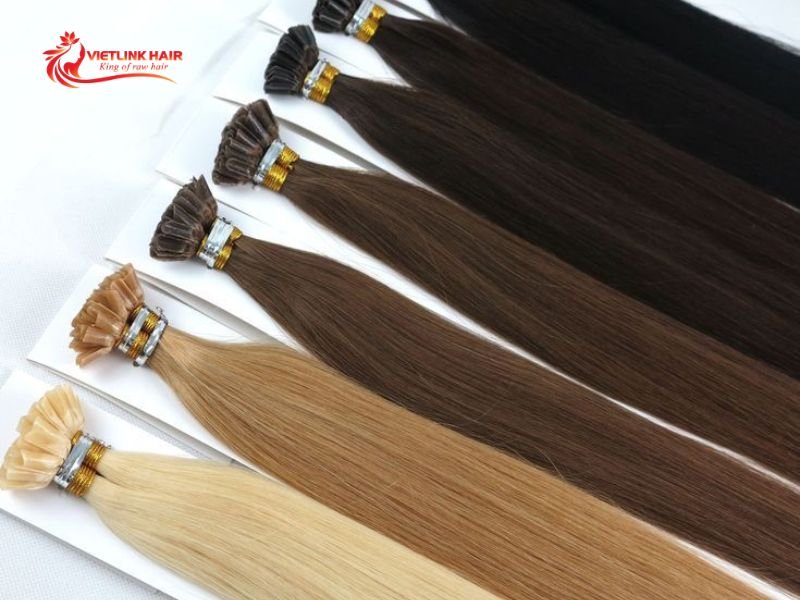
- Hair source: ask whether the hair is raw, from a single donor and cuticle-aligned, and whether it has been colored or bleached.
- Fullness at the ends: a strand can look full at the root and thin at the tip. Ask how any drawn grade is defined, and request a close-up photo of the ends, because the same label can mean different fullness at different suppliers.
- Length and texture: match the length range to your market, since longer lengths need more grams per client.
- Quantity per client: total grams required depend on the client’s starting density, intended result, installation area and strand weight; a trained stylist should specify the appropriate amount.
Estimate order quantity using a stylist-approved grams-per-client plan and add only a commercially justified allowance for color matching and stock management.
How much hair is needed for a full head? There is no reliable one-size-fits-all number. Some retail guides cite around 150–200 g, but the required total depends on head coverage, natural-hair density, intended result, strand weight and the installation method. For example, 150 g made from 0.5 g strands requires a very different strand count from 150 g made from 1.8 g strands. Have the installing stylist calculate the required grams and number of strands before placing a wholesale order.
What Wholesale Buyers Should Know Before Stocking Flat Tip Hair Extensions
Most guides stop at product specs, yet stocking decisions also depend on a few business factors that rarely get covered.
- Maintenance planning matters. Explain expected checkups, professional removal and potential replacement costs before installation. Exact intervals depend on the product and client.
- Strand weight is the real SKU. Two suppliers can both sell 50 strand packs, yet one pack weighs 25 g at 0.5 g per strand and the other 50 g at 1 g per strand. Compare grams, not pack counts.
- Fine hair needs extra assessment. A flat profile alone does not establish suitability for fragile or low-density hair. Verify the load per section and placement with a trained stylist.
- Chair time affects service pricing. Record actual fitting and removal times for each method in your salon rather than planning capacity around generic estimates.
- Consistency beats a low headline price. Natural hair varies slightly between production runs, so agree on shade and texture tolerance when you approve an order. Keep the invoice, product codes, and an approved sample for every reorder.
- Method defines required skills. Heat-fusion flat tips need trained installation and removal; a bead-based I-tip range needs appropriate bead tools and training.
How to Source Wholesale Flat Tip Hair Extensions
Sourcing is where margins are won or lost, so test a sample before you commit to a bulk order.
Order a small sample, then run a short quality control checklist for flat tip hair extensions:
- Attachment-system confirmation: verify heat-fusion vs bead-installed flat tip with an official SKU specification and compatible tool list; do not rely on naming alone.
- Bond consistency: check that size and flatness are reasonably consistent across a documented sample of strands.
- Strand weight: weigh a representative group of strands and compare the average with the quoted grams per strand.
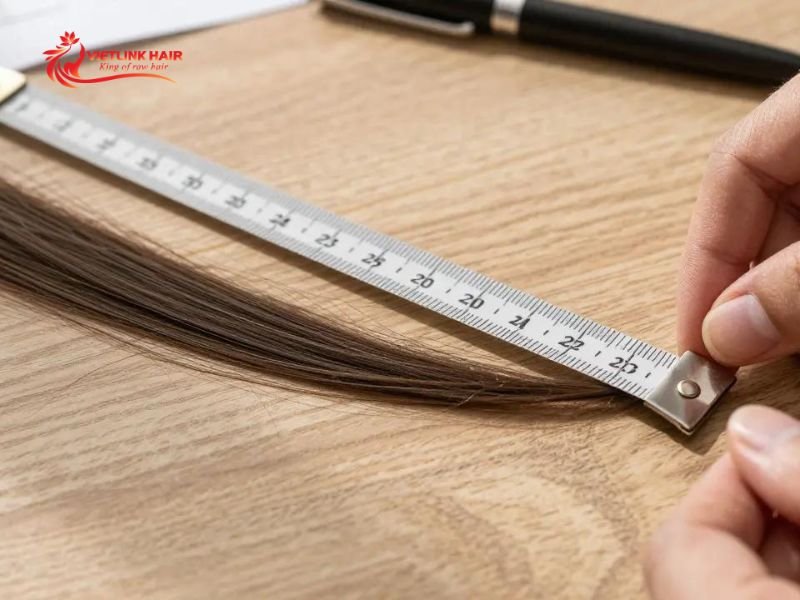
- Length uniformity: measure root to tip on a sample of strands.
- Cuticle direction: request details about alignment and processing history; visible shine alone does not verify alignment.
- Bond hold: attach a few strands to a mannequin and test them with a gentle pull after washing.
- Color match: compare shades in daylight, not only under shop lights.
Do not stop at a first look. Wash, brush, and style the sample strands several times before approving a bulk order, because handling can change after washing and wear. Record the results against agreed specifications rather than claiming that a simple home test guarantees performance.
Watch for these red flags when vetting suppliers:
- Missing company address or unclear contact details
- Discounts far below the market level
- Refusal to provide samples
- Specifications that will not be confirmed in writing
Questions to Ask Vietlink Hair Before Ordering Flat Tip Extensions
For wholesale sourcing, Vietlink Hair can be contacted to discuss your requirements. Confirm current availability and the exact product specification rather than assuming every pre-tipped style is in stock.
- Installation system: ask whether the quoted tip is intended for professional heat fusion or another documented method.
- Bond specifications: request material, dimensions, strand weight, strand count and color options for the selected SKU.
- Hair specifications: request processing history, texture, cuticle-alignment information and available lengths.
- MOQ and samples: confirm the current minimum and whether a small evaluation order is possible for that specific product.
- Lead time and shipping: confirm production availability, dispatch timing and carrier transit separately.
- Branding: discuss any packaging or private-label requirement before treating it as an included service.
For buyers comparing manufacturing and sourcing options, read our Vietnamese hair factory overview. Request a written, itemized quotation for pricing, specifications and commercial terms.
Buyer tip: Keep a verified reference sample and written specification for repeat orders. Compare subsequent deliveries against that agreed reference rather than relying solely on the product name.
FAQs
These short answers cover the questions wholesale buyers and stylists ask most often.
Are flat tip hair extensions suitable for fine hair?
A low-profile bond can be useful for some clients, but suitability must be assessed individually.
They may suit some fine-hair clients, but suitability depends on density, section strength, product weight and placement. Very thin or fragile hair should be assessed by a qualified stylist before installation.
How long do flat tip hair extensions last?
Wear time is the figure clients ask about first.
There is no universal wear time or maintenance interval. Bead-installed flat-tip extensions may be repositioned according to their system, while keratin-fusion bonds often have different removal or re-bonding requirements. Published ranges such as 6–12 weeks between checks and several months of hair reuse are product-specific, not promises. Ask the stylist for the written maintenance, removal and reapplication schedule for the exact system.
What is the minimum order for flat tip hair extensions at Vietlink Hair?
Order size decides whether you can test a new product line safely.
The brand has previously indicated a 500 g wholesale minimum, but eligibility and mix rules for flat-tip SKUs have not been confirmed here. Request the current SKU-specific minimum in a written quote.
Do flat tip hair extensions damage natural hair?
Hair health is the concern that most often delays a purchase.
Damage risk depends mostly on application and care, not on bond shape alone. Keratin flat-tip fusion requires trained installation, compatible tools and professional removal. Bead-based I-tip systems are a separate option. Correct sectioning, suitable weight and ongoing scalp checks help reduce avoidable tension.
Can I order flat tip hair extensions under my own brand?
Many resellers want their own label, so private branding is a common request.
Ask the sales team whether private label or packaging customization is offered for the selected SKU and request written minimums, costs and lead times.
Can flat tip hair extensions be installed without heat?
Yes—if the product is specifically designed for beaded flat-tip installation. Brands such as Donna Bella and Babe Hair offer bead-installed flat tips, while other flat-tip lines use a heated keratin-fusion connector. A heat-fusion tip should not be installed with a microbead unless its manufacturer expressly approves that method.
What should a wholesale flat-tip specification sheet include?
Request the attachment method, photos of the finished tip, bond material and dimensions, grams per strand, strand count and total pack weight, lengths, textures, colors, processing claims, care and removal instructions, and sample/return conditions. Confirm MOQ, manufacturing lead time, shipping origin and any private-label options separately for the exact SKU.
Final Thoughts on Flat Tip Hair Extensions
To wrap up, flat tip hair extensions are a practical option for buyers who verify specifications before scaling. Compare bond size and strand weight, test samples, and balance flat tip and U tip inventory based on client needs.
If you are expanding your extension range, contact the Vietlink Hair team to verify available flat-tip specifications and request an itemized wholesale quotation.
For more details, visit Vietlink Hair on Facebook or use the contact options below.
Ask About Flat Tip Hair Extension Specifications
Share your preferred attachment system, bond dimensions, hair length, color, strand weight and target order quantity. Request current availability and an itemized quotation before ordering.
