Hair Extension Knowledge
Double Drawn vs Single Drawn Hair: Key Differences Explained
Choosing the right hair type is essential for wholesalers, salon owners, and wig makers who want to meet customer expectations and offer suitable products. When sourcing human hair extensions and bundles, double drawn vs single drawn hair is an important distinction that affects product selection and positioning. This article from VietLink Hair Factory will explore their key characteristics and differences to help buyers make informed sourcing decisions for their businesses.
What Is Single Drawn Hair?
Single drawn hair is human hair that has undergone one sorting process to remove some of the shortest strands from the original hair bundle. As a result, the bundle contains a mixture of long, medium, and shorter strands, with the labeled length (such as 20 inches) referring to the longest strands rather than every strand in the bundle.
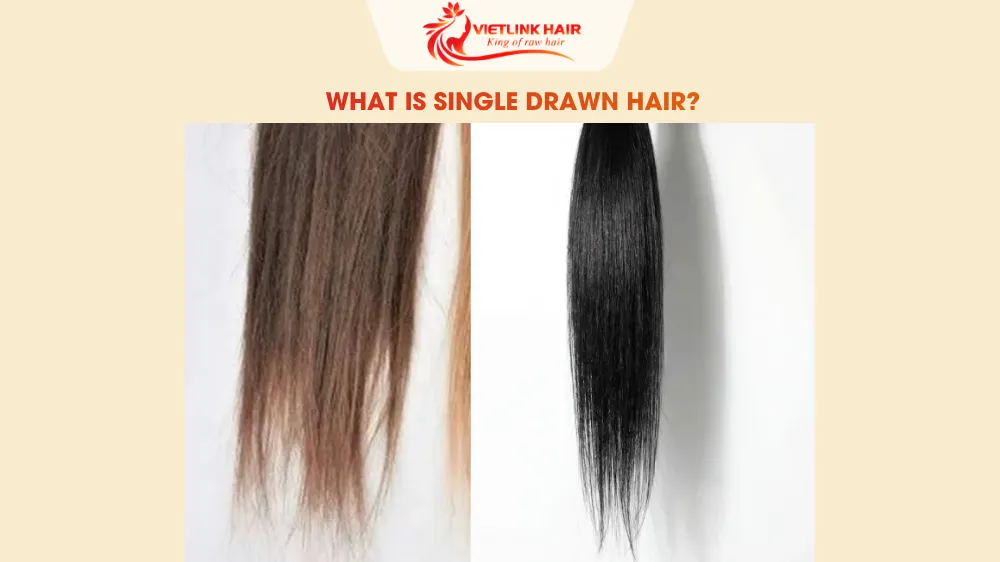
This length distribution gives single drawn hair a naturally tapered appearance, with thicker roots and thinner ends. Unlike bundles with more uniform strand lengths, single drawn hair has a softer, more graduated finish.
What Is Double Drawn Hair?
Double drawn hair is human hair that undergoes two sorting processes to remove a larger proportion of shorter strands. This leaves a higher percentage of long strands with more consistent lengths throughout the bundle.
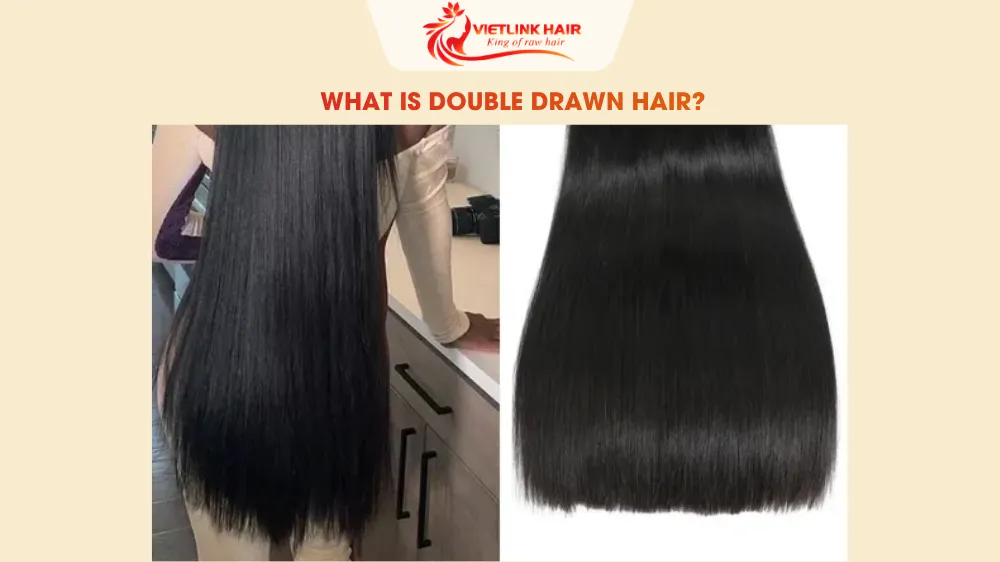
As a result, double drawn hair has a fuller, more even appearance from top to bottom, with thicker ends and less natural tapering than single drawn hair. The labeled length still represents the longest strands, not necessarily every strand in the bundle.
Detailed Differences between Double Drawn vs Single Drawn Hair
The two types differ in how strands are distributed inside the bundle. The table gives the summary, and the three sections after it explain length, lifespan and cost in detail.
| Factor | Single drawn hair | Double drawn hair |
| Length range | Wide; label equals the longest strands | Narrow; most strands near the label |
| Ends | Thin, tapered | Thick, near blunt |
| Fullness at 100g | Heavier at the roots | Even to the tips |
| Look over repeated wear | Tips thin out sooner | Holds its fullness longer |
| Price per bundle | Lower | Higher |
| Best for | Short, layered, budget styles | Long, sleek, premium styles |
Hair Length Distribution
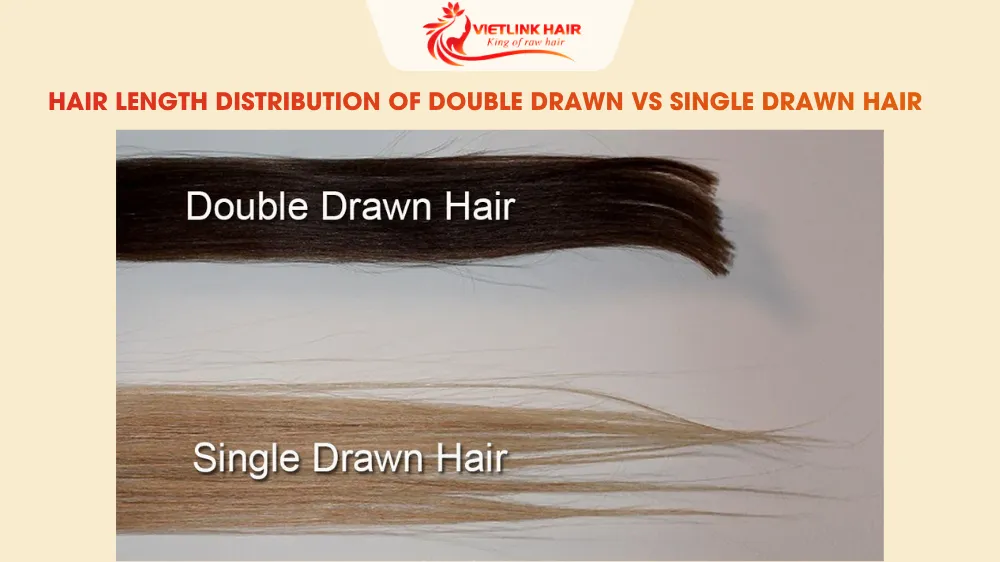
The labeled length on a single drawn bundle applies only to its longest strands. Many other strands are noticeably shorter, and the shortest can sit several inches below the label, so a hanging bundle looks wispy at the bottom. In a double drawn bundle, most strands finish close to the labeled length, and the bottom edge looks dense and even. In super double drawn hair, lengths are almost identical.
Thickness at the ends follows the same order:
- Single drawn: thick at the root, thinning through the last few inches.
- Double drawn: the last few inches stay close to the density of the mid-shaft.
Weight explains why this matters. A standard bundle is 100g, and at the same weight both types hold the same amount of hair. What differs is where it sits: single drawn hair spends part of its weight on short strands that never reach the label, while double drawn hair puts more of it into long strands. That is why a double-drawn bundle looks fuller at the ends without weighing more. On a weft, the same distribution shows along the bottom edge.
The gap widens with length. At 10 to 14 inches strands have little room to vary, so the two types look similar. From 22 inches up, the difference is obvious, and stylists often need one bundle fewer of double drawn hair for a full look, depending on head size, texture and install method.
Durability and Lifespan
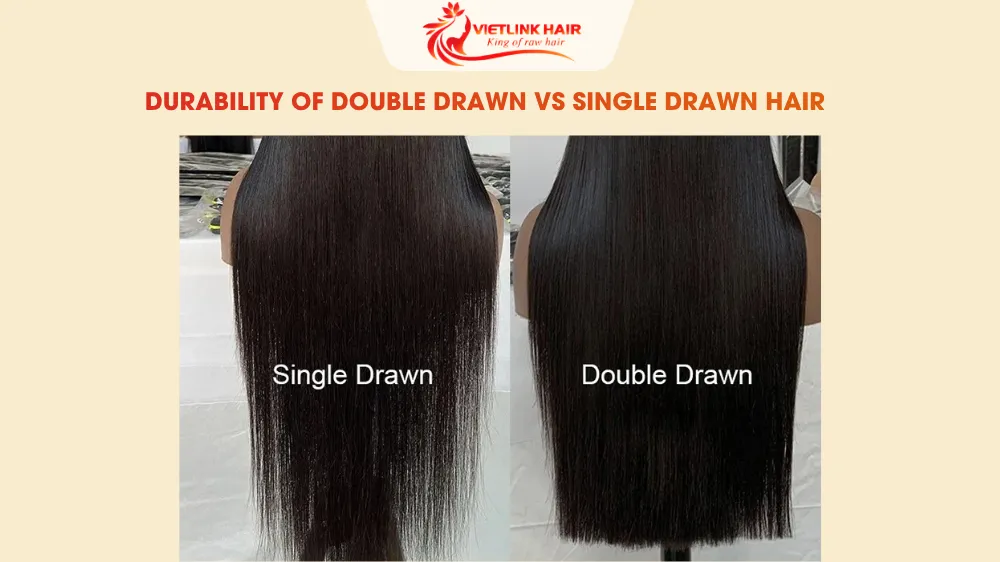
Drawn level does not change the strength of an individual strand. Strength depends on hair grade, cuticle alignment, chemical processing and care, so a single drawn raw bundle can outlast a double drawn bundle made from lower-grade hair.
What drawn level changes is how long the style keeps its shape. Short strands are the first to loosen with brushing, washing and friction, so single drawn hair loses its shorter pieces over time and the tips look thinner after repeated wear. Short strands also tangle more at the bottom, which is why single drawn hair usually needs a trim sooner. Double drawn hair has fewer short strands to lose, so it holds a full bottom line longer. The difference shows most on the second and third installs, when double drawn hair still looks close to its first wear.
Good care protects both types: detangle from the ends upward with a wide-tooth comb, wash with sulfate-free products, apply heat protectant before styling, and store the hair flat or loosely braided. In short, grade decides how long the strands last, and drawn level decides how long the style stays full.
Price and Cost per Use
Double drawn hair costs more per bundle than single drawn hair of the same length, texture and grade. The reason is yield: the second sort discards more hair, so a factory needs more raw hair and more labor to fill each 100g bundle. The gap tends to widen at long lengths, where long raw hair is scarcer.
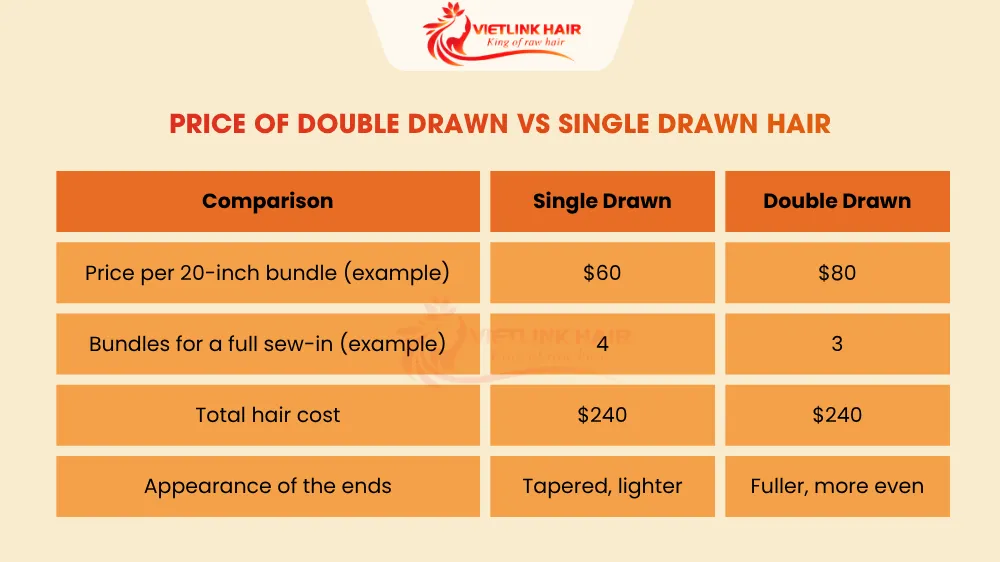
Price per bundle is not the same as cost per finished look. The example below is for illustration only, using round numbers to show the math. It is not the VietLink Hair Factory price list.
| Comparison | Single Drawn | Double Drawn |
|---|---|---|
| Price per 20-inch bundle (example) | $60 | $80 |
| Bundles for a full sew-in (example) | 4 | 3 |
| Total hair cost | $240 | $240 |
| Appearance of the ends | Tapered, lighter | Fuller, more even |
In this example, both installs cost the same, but the double drawn one looks fuller at the ends. If a client needs the same bundle count either way, single drawn stays cheaper. If double drawn saves a bundle, the price gap can disappear.
Cost per wear adds a second angle. Hair that keeps its fullness through several installs spreads its price over more wears. For wholesale buyers, this becomes a pricing decision: single drawn works as an entry product, while double and super double drawn support a premium tier because customers can see the fuller ends.
Drawn level is only one price driver. Length has the biggest effect, followed by hair grade and texture, so a 28-inch single drawn bundle can cost more than a 16-inch double drawn one. When you compare quotes, confirm that length, grade, and drawn level match on every line, because two prices are only comparable when all three do.
Which Is Better: Single Drawn or Double Drawn Hair?
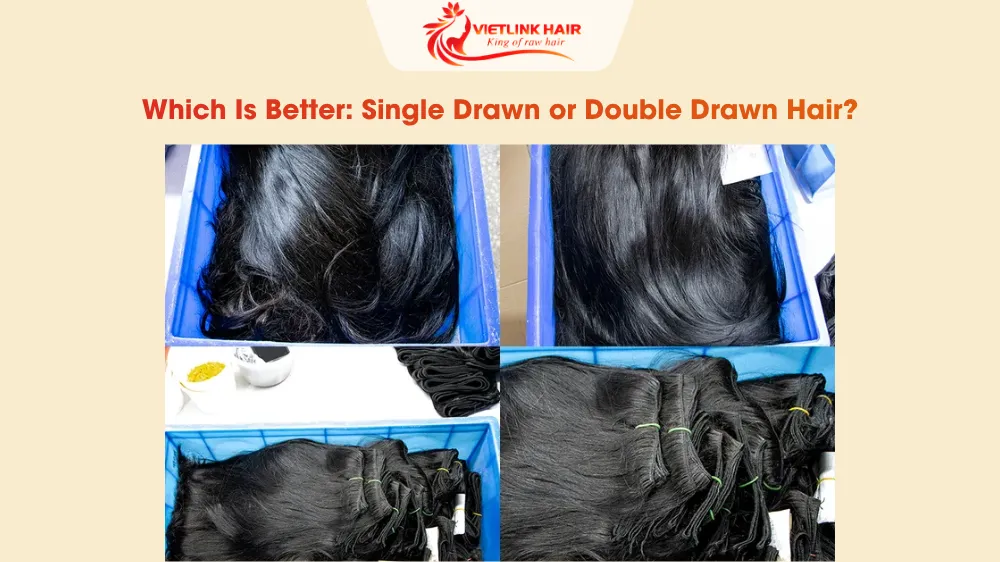
Neither single drawn nor double drawn hair is universally better. The right choice depends on the desired hair thickness, end fullness, hairstyle, and budget. Single drawn hair offers a more natural tapered finish, while double drawn hair provides greater density and fuller ends. Understanding these differences helps buyers select products that match their customers’ expectations.
- Short Bobs and Medium-Length Styles (10–16 Inches): Single Drawn Hair
Single drawn hair is often a practical choice for shorter hairstyles because the difference in end fullness is less noticeable at shorter lengths. Its naturally tapered ends also create a softer finish that works well with layered cuts and everyday hairstyles. For wholesalers, this option provides a more accessible price point without requiring maximum end density. - Long Hair Extensions (20 Inches and Above): Double Drawn Hair
As hair length increases, the tapered ends of single drawn bundles can become more noticeable, making the hair appear thinner toward the bottom. Double drawn hair addresses this by retaining a higher proportion of long strands, creating a fuller and more consistent appearance. It is particularly suitable for customers who want long extensions with thick, well-defined ends. - Layered Hairstyles and Natural-Looking Finishes: Single Drawn Hair
The variation in strand lengths gives single drawn hair a naturally graduated shape. This makes it suitable for layered hairstyles, where the ends need to blend softly rather than form a thick, uniform line. It is also a suitable option for customers who prefer a more natural-looking hair silhouette. - Full, Blunt Ends and Sleek Hairstyles: Double Drawn Hair
Double drawn hair is a suitable choice for sleek straight extensions, full-length wigs, and hairstyles that require consistent thickness from top to bottom. Its higher proportion of long strands creates a denser bottom edge, helping the finished hairstyle maintain a fuller appearance, especially when worn long. - Wholesale Buyers and Hair Businesses: Consider Offering Both
For hair wholesalers, salon owners, and distributors, stocking both single drawn and double drawn hair can serve different customer preferences and price segments. Single drawn hair provides an option for buyers prioritizing natural taper and budget, while double drawn hair caters to customers seeking fuller ends and greater visual density. Offering both also gives customers more flexibility when choosing products for different hairstyles and budgets.
If you are unsure, order one bundle of each at your best-selling length and hang them side by side before you decide.
How to Identify Single Drawn and Double Drawn Hair
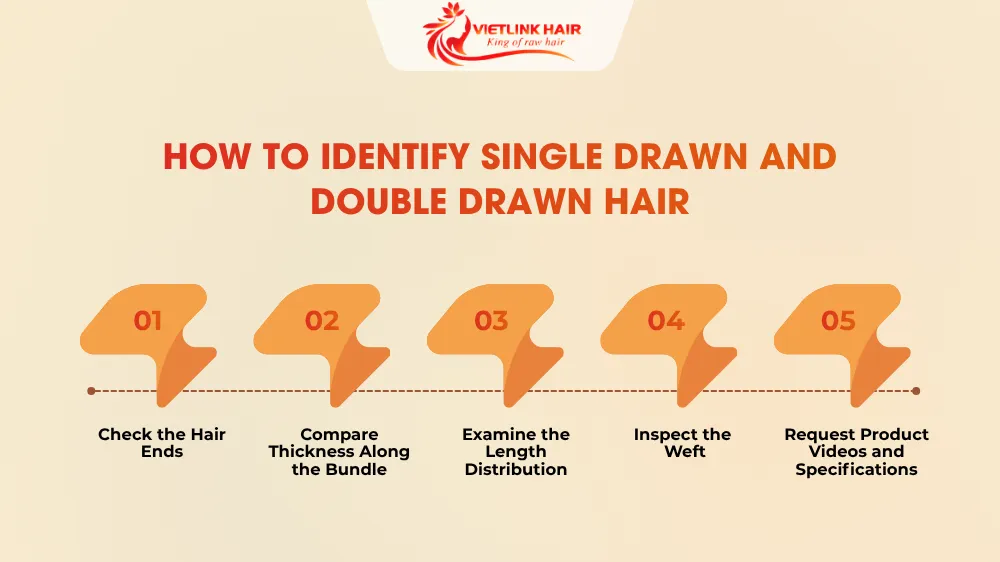
To identify single-drawn and double-drawn hair, buyers should examine the distribution of hair lengths and the bundle’s thickness, particularly toward the ends. Product labels alone are not enough to confirm the drawn level, so checking the actual hair is important when sourcing wholesale bundles.
Here are five practical ways to distinguish the two types:
- Check the Hair Ends: Hold the bundle vertically and observe its bottom edge. Single drawn hair typically has thinner, naturally tapered ends, while double drawn hair has a fuller and more consistent bottom edge.
- Compare Thickness Along the Bundle: Gently feel the hair around the middle and near the ends. A noticeable reduction in thickness toward the bottom is characteristic of single drawn hair. Double drawn hair generally maintains more volume through the ends.
- Examine the Length Distribution: Separate a small section of hair and compare individual strand lengths. Single-drawn bundles have a wider range of lengths, while double-drawn bundles have a higher proportion of strands close to the labeled length.
- Inspect the Weft: For weft hair extensions, examine the hair across the entire stitched track. Check whether the strands are distributed evenly and whether the ends show consistent density. Avoid judging the drawn level from the weft construction alone, as stitching and hair weight can also affect its appearance.
- Request Product Videos and Specifications: When ordering wholesale hair, ask the supplier for a video showing the bundle hanging against a plain background. Confirm the labeled length, bundle weight, and drawn level in writing before placing a bulk order.
Important: A full-looking bundle does not automatically confirm that it is double drawn hair. Hair weight, length, texture, and preparation can all influence its appearance. For a more reliable assessment, compare bundles of the same labeled length and weight, and examine their strand-length distribution alongside end density.
Where to Buy Wholesale Single and Double Drawn Hair
If you are looking for a reliable wholesale supplier of single drawn and double drawn hair, VietLink Hair Factory offers high-quality Vietnamese human hair directly from the manufacturer. With years of experience in hair production and international wholesale supply since 2016, we serve hair businesses, salons, distributors, and resellers across the US, Europe, Africa, and other markets.
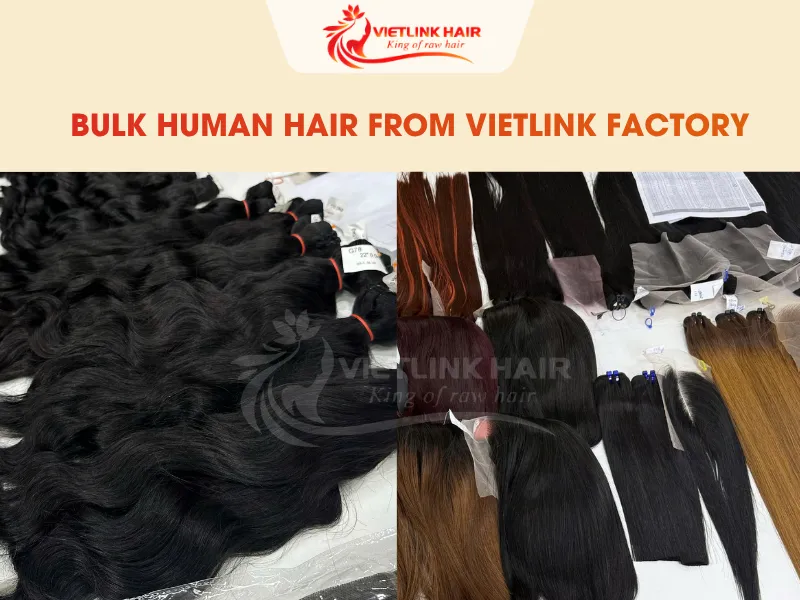
Our wholesale hair options include:
- Length: 8–34 inches
- Bundle Weight: 100g per bundle
- Textures: Straight, wavy, and curly
- Hair Types: Single drawn and double drawn
- Price Range:22–120 per bundle, depending on length, texture, and product specifications.
As a direct hair manufacturer, VietLink eliminates unnecessary intermediaries, helping wholesale buyers access competitive factory-direct prices and maintain better profit margins. We focus on consistent hair quality, careful product selection, and reliable order support to help business partners build long-term customer relationships.
Whether you need naturally tapered single drawn bundles or fuller double drawn hair, our team can help you select suitable products based on your target market and business requirements.
Contact VietLink Hair Factory for wholesale inquiries, product specifications, and a factory-direct quotation. Build your hair business with quality Vietnamese human hair and an experienced manufacturing partner.
- WhatsApp: +84 855 555 951
FAQs
Is Double Drawn Hair Better Than Single Drawn Hair?
Not necessarily. Double drawn hair provides fuller, thicker ends, while single drawn hair has a more natural tapered appearance. The better option depends on the desired hairstyle, fullness, and budget.
Why Is Double Drawn Hair More Expensive Than Single Drawn Hair?
Double drawn hair generally costs more because it requires additional sorting to remove a larger proportion of shorter strands. This process requires more labor and raw hair to produce bundles with fuller, more consistent ends.
Does Single Drawn Hair Have Thin Ends?
Yes. Single drawn hair typically has thinner, tapered ends because its bundles contain a mixture of long and short strands. This creates a natural graduated appearance rather than uniform thickness from root to tip.
Does Double Drawn Hair Mean Better Quality?
No. Double drawn describes the distribution of strand lengths, not the overall quality or origin of the hair. Factors such as hair condition, sourcing, cuticle alignment, and previous chemical processing should be evaluated separately.
Is Single Drawn or Double Drawn Hair Better for Long Extensions?
Double drawn hair is often preferred for long extensions because it maintains greater fullness toward the ends. Single drawn hair is also suitable for long styles when a softer, naturally tapered finish is desired.
In conclusion, understanding the difference between single drawn and double drawn hair comes down to strand length distribution, end thickness, and overall fullness. Single drawn hair offers naturally tapered ends, while double drawn hair provides a denser, more consistent appearance from root to tip. Neither is universally better; the right choice depends on the desired hairstyle, customer preferences, and budget. For wholesale buyers, understanding these characteristics makes it easier to select suitable products and meet different market demands.
