
Hair Extension Knowledge
Remy Hair vs Virgin Hair: 7 Differences You Should Know
Remy hair vs virgin hair are often confused, but they describe two different qualities. Virgin hair is chemically untreated, while Remy hair has cuticles aligned from root to tip. This guide compares seven key differences to help you choose the right hair for your salon or brand.
What Are Remy Hair and Virgin Hair?
Each label has its own definition, so it helps to look at them one at a time before putting them side by side.
What Is Virgin Hair?
Virgin hair is human hair that has never been colored, bleached, permed, relaxed, or exposed to any chemical treatment. After collection, it only goes through cleaning, sorting, and bundling, so the strands keep their natural pigment, texture, and protein structure. In wholesale trade, it is usually sourced from a single donor or a small group of donors, which keeps thickness and tone fairly even within one batch.
Natural color and texture are the easiest signs to check. Raw virgin hair typically falls somewhere between dark brown and black, and its pattern can be straight, wavy, or curly depending on the donor. If you open a virgin hair order, you should expect small tonal differences between bundles rather than one flat, laboratory shade. That variation is a normal result of untreated hair, not a quality problem.
What Is Remy Hair?
Remy follows a different logic, because it describes how the strands are arranged rather than what has been done to them.
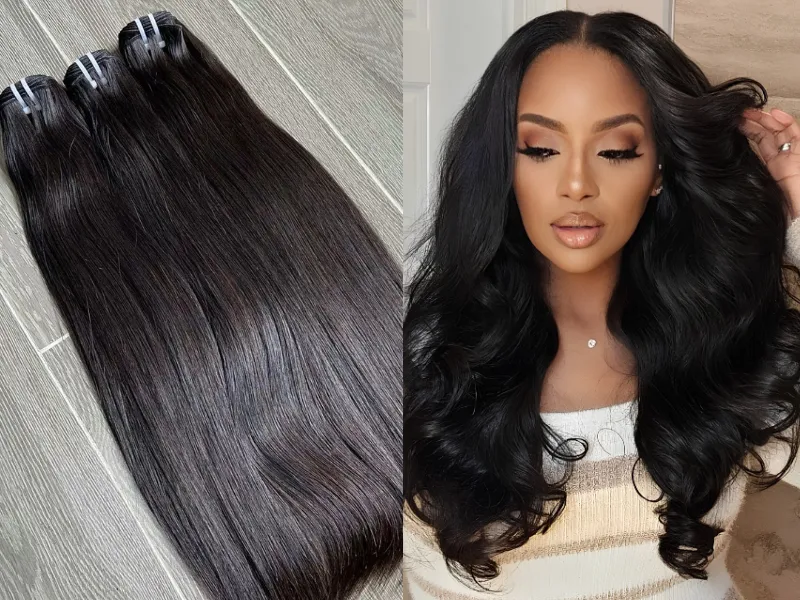
Remy hair is collected and sorted so that all cuticles face the same direction from root to tip. Collectors usually keep the hair tied in a ponytail before cutting, and the manufacturer then checks that no strand runs in reverse. With the cuticle layer lying flat, the hair glides against itself and resists matting. A Remy product can come from one donor or from several donors blended together.
The label does not tell you anything about chemical history. Remy hair may be colored, steam styled, or coated after sorting, and many commercial Remy products are lightened to reach shades such as 613 blonde. For that reason, treat “Remy” as a statement about cuticle direction only, and ask about processing as a separate question.
Is Virgin Hair Always Remy Hair?
Because the two words measure different things, the answer is more nuanced than most product pages suggest.
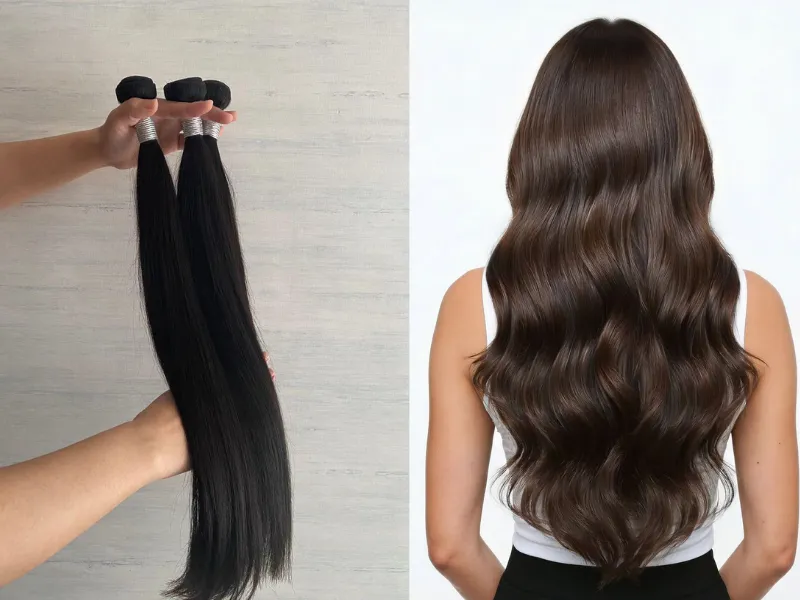
Not necessarily. Premium virgin hair is usually sorted with aligned cuticles, so the two labels often overlap in practice, but one can exist without the other. A bundle bleached to 613 blonde is no longer virgin, yet it can still be Remy if the cuticles stay aligned. That overlap is exactly why Remy hair vs virgin hair cannot be treated as one choice, and why a good spec sheet states both facts separately.
Remy Hair vs Virgin Hair: 7 Key Differences
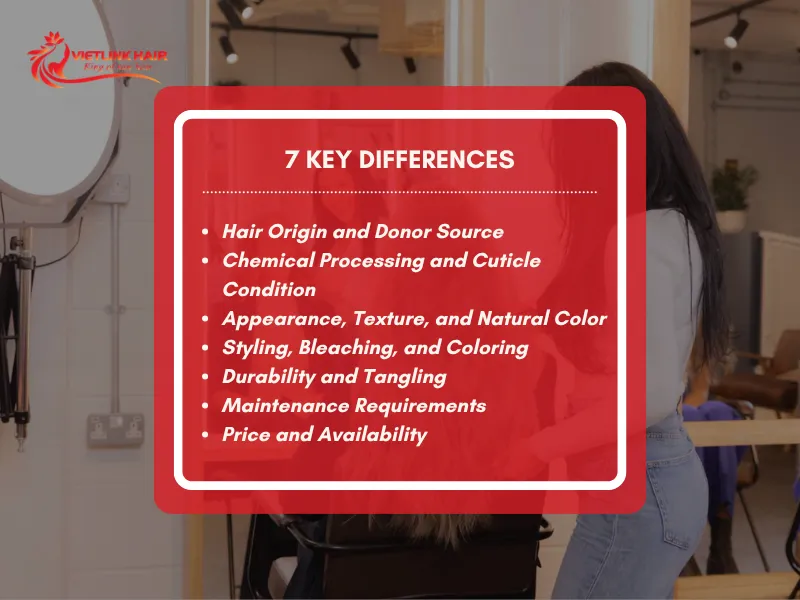
The seven differences below run from sourcing to price, so you can follow the same order when you compare Remy hair vs virgin hair on a supplier quote.
Hair Origin and Donor Source
Origin is where the two labels first part ways, since each one implies a different sourcing method.
- Virgin Hair: Usually comes from a single donor or a small donor group, helping maintain similar color and thickness across bundles. Its supply is limited because donors must have naturally grown, chemically untreated hair.
- Remy Hair: Can come from one or multiple donors, provided the cuticles remain aligned from root to tip. Its wider sourcing pool makes it easier for manufacturers to scale production and meet regular wholesale demand.
Chemical Processing and Cuticle Condition
Processing is where the two labels separate most clearly, because only one of them speaks about treatment history.
Untreated virgin hair keeps its original cuticle layer, which protects the cortex and holds moisture. Remy hair may also be untreated, but it can be colored, acid-washed, or coated with silicone for extra shine. Each step can roughen the cuticle, and a silicone coating often fades after repeated washing, leaving the hair duller than it looked on delivery.
The impact shows up over time. Heavily processed hair becomes more porous, so it tangles sooner and loses moisture faster. When you compare Remy hair vs virgin hair on condition, ask the supplier for the full processing history in writing.
Appearance, Texture, and Natural Color
Appearance is what your end customers notice first, so it directly affects how easily a product sells.
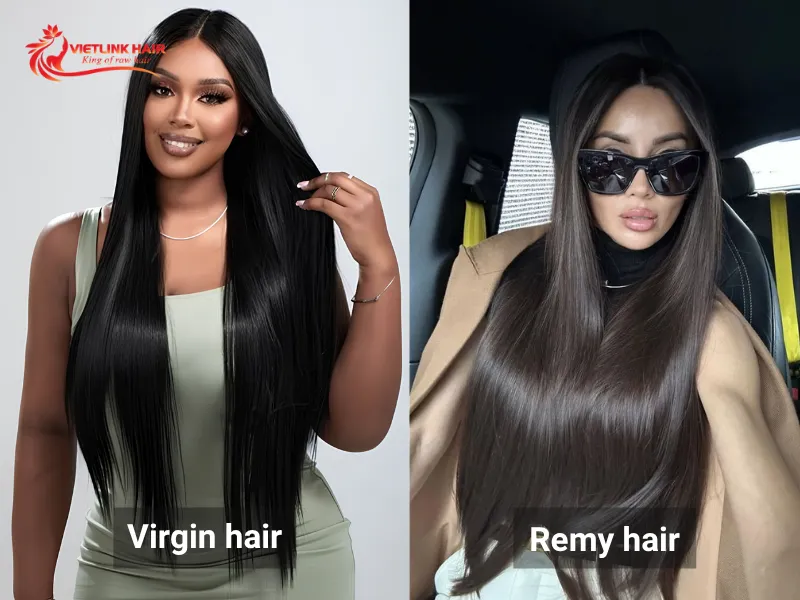
Virgin hair shows natural color variation, with small differences between bundles and sometimes between strands. Remy hair is often processed to match a target shade, which gives a more uniform finished look. A salon ordering ten bundles in a lightened shade, for example, will usually see steadier color from processed Remy hair, and that is a practical gap in Remy hair vs virgin hair.
Texture follows a similar pattern. Virgin hair keeps the donor’s natural texture, including small irregularities that look realistic when blended with a client’s own hair. Remy hair can be steam-styled or smoothed into a very even finish, which suits customers who want a polished result.
Styling, Bleaching, and Coloring
Customization potential often decides the order for brands that sell colored lines, so this difference deserves a closer look.
Virgin hair offers more room to customize because it carries no previous chemical treatment. A dark virgin bundle can be lifted and toned, although lifting always costs some strength and should be done with care. Remy hair that has already been lightened has less room left, and repeated bleaching raises the risk of dryness and breakage.
Take a pre-lightened 613 Remy bundle as an example. It can usually be toned cooler or warmer, but it cannot be darkened evenly or re-bleached without added damage. That is why Remy hair vs. virgin hair should be settled before you plan a custom color program.
→ Wondering how far human hair extensions can really be lifted? Here’s the full breakdown
Durability and Tangling
Durability depends on two things at once: how the cuticles are arranged and how much chemical stress the strands have absorbed.
Aligned cuticles reduce friction between strands, so well-sorted Remy hair tangles less than hair with mixed direction. Chemical processing pulls the other way, since each step weakens the hair a little. The strongest combination is hair that is both virgin and Remy, while heavily processed Remy hair may wear out faster than its smooth feel suggests.
Care changes the outcome too. Wear frequency, heat use, and washing habits all affect lifespan, so a fair Remy hair vs virgin hair comparison should keep those variables the same.
Read more: How Long Do Extensions Last? Hair Care Secrets
Maintenance Requirements
Maintenance is the daily cost of ownership, and it differs mainly because processed hair is more porous. A simple routine works for both types:
- Wash with a gentle, low-sulfate shampoo and apply conditioner from mid-length to the ends.
- Detangle from the ends upward with a wide-tooth comb.
- Use a heat protectant before any hot tool.
Virgin hair generally tolerates this routine well. Processed Remy hair benefits from extra conditioning and lower heat settings, which is the main care gap in Remy hair vs virgin hair.
Price and Availability
Virgin hair costs more because donor selection is strict and supply is limited. Remy hair has its own cost drivers, including sorting labor and any steam styling or bleaching, but it is offered across a wider range of price points. In volume, Remy products are easier to find, while verified virgin hair usually requires a closer relationship with the supplier, so this is where Remy hair vs virgin hair affects your margin most.
Pros and Cons of Remy Hair vs Virgin Hair
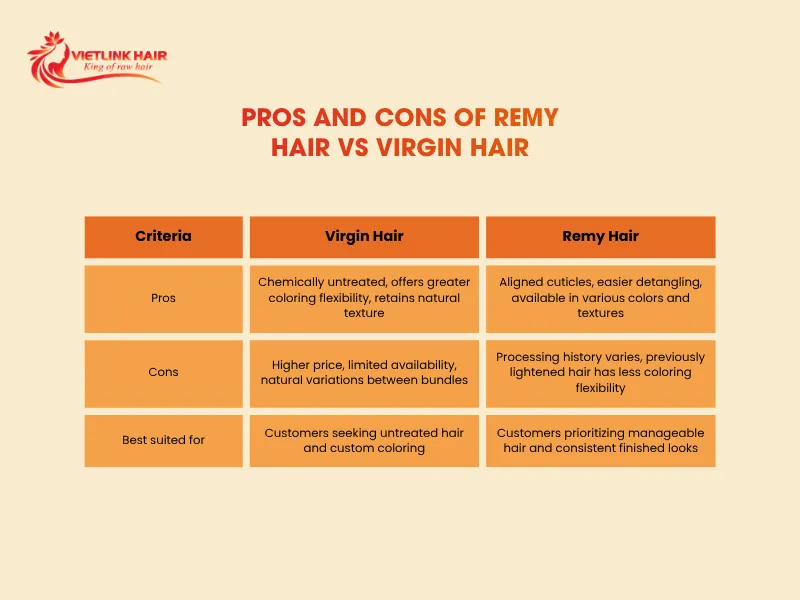
The table below puts all of these trade-offs side by side, so you can scan Remy hair vs virgin hair at a glance.
| Criteria | Virgin Hair | Remy Hair |
| Pros | Chemically untreated, offers greater coloring flexibility, retains natural texture | Aligned cuticles, easier detangling, available in various colors and textures |
| Cons | Higher price, limited availability, natural variations between bundles | Processing history varies, previously lightened hair has less coloring flexibility |
| Best suited for | Customers seeking untreated hair and custom coloring | Customers prioritizing manageable hair and consistent finished looks |
Remy Hair vs Virgin Hair: Which One Should You Choose?
The right choice depends on what your customers value and how much control you need over final color.
Choose Virgin Hair for Unprocessed Hair and Custom Coloring
Virgin hair makes the most sense when customization is part of what you sell.
It suits buyers who want untreated hair and the freedom to color it themselves. For example, a brand with custom-colored lines can lift and tone without working around earlier chemical damage. Salons whose clients ask specifically for unprocessed hair will also find it a natural fit. In that scenario, Remy hair vs virgin hair tips toward virgin because customization is the selling point.
Choose Remy Hair for Consistent Texture and Everyday Styling
Remy hair is the more practical pick when consistency matters more than customization.
A salon that installs extensions every day benefits from hair that handles easily and looks uniform from bundle to bundle. Before purchasing, check the processing history, because a smooth feel can hide heavy treatment. If your customers care about everyday wear and predictable results, Remy hair vs virgin hair usually resolves in favor of Remy.
Why Choose Vietlink Hair for Remy and Virgin Hair?
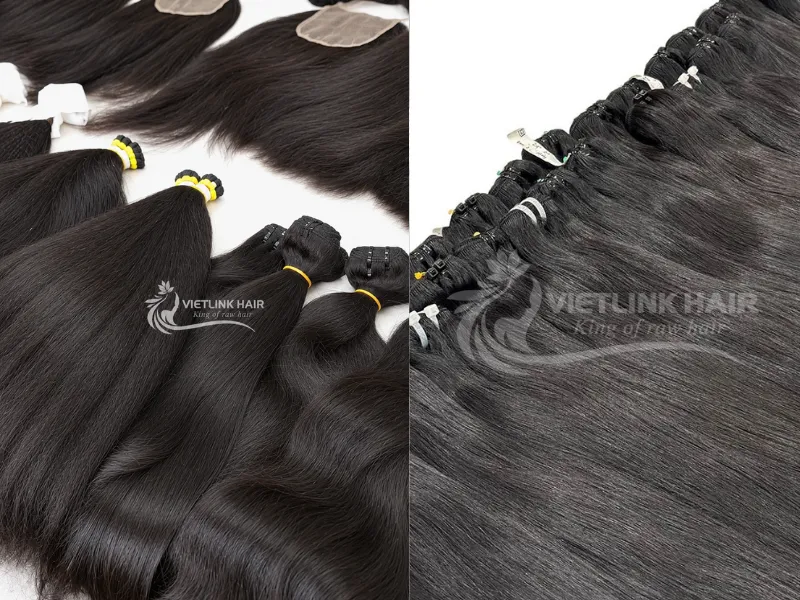
For wholesale buyers, choosing between Remy hair and virgin hair is only one part of the purchasing decision. Finding a manufacturer that understands both hair types and can maintain consistent specifications across orders is equally important. Vietlink Hair is a human hair manufacturer with over 10 years of experience, serving international wholesalers, salons, and hair brands.
Vietlink Hair offers several advantages for wholesale partners:
- Raw hair sourcing: The company works with hair donors to source raw human hair for its production range.
- Remy and virgin hair options: Buyers can explore different hair categories based on their target market, product requirements, and budget.
- Manufacturing experience: With more than 10 years in the industry, Vietlink Hair has experience producing human hair products for international customers.
- Wholesale support: Buyers can discuss product specifications, request samples, and evaluate hair quality before placing larger orders.
Factory insight: Hair consistency is not determined by the product label alone. During wholesale production, donor selection, length sorting, texture matching, and processing control all influence the final result. Vietlink Hair encourages buyers to clarify their specifications before confirming an order, especially when sourcing both Remy and virgin hair for the same product line.
Whether you are developing a hair brand, supplying a salon, or expanding your wholesale inventory, Vietlink Hair can help you explore suitable options for your business. Contact Vietlink Hair to discuss your requirements and request a sample before placing a bulk order.
WhatsApp: +84 855 555 951
Email: info@vietlinkhair.com
Facebook:Vietlinkhair
FAQs About Remy Hair vs Virgin Hair
These are the questions buyers ask most often when comparing Remy hair vs virgin hair, so each answer focuses on what to verify.
Is Remy Hair 100% Human Hair?
The answer depends on the product, not just the label.
Remy hair is human hair by definition, but some finished products blend in synthetic fibers. Confirm the fiber content in writing, along with cuticle direction, before you order. That check matters in any Remy hair vs virgin hair purchase.
Can Remy Hair Be Considered Virgin Hair?
It can, but only under one condition.
Remy hair counts as virgin only if it has never been chemically treated. A bleached or colored Remy bundle is not virgin even when its cuticles are perfectly aligned, which is the core of Remy hair vs virgin hair.
Does Virgin Hair Last Longer Than Remy Hair?
Often yes, though care plays a big part.
Untreated hair keeps its original cuticle and protein structure, so it tends to last longer. Heat use and wear frequency still matter, and the most durable choice in Remy hair vs virgin hair is hair that is both.
Can You Bleach or Dye Remy Hair?
Yes, within the limits set by its processing history.
Untreated Remy hair can be lifted and toned with care, while pre-lightened Remy hair has little room left. Test a small section first and expect some loss of strength.
Is Remy Hair Better Than Non-Remy Hair?
For most extension and wig uses, the answer leans toward Remy.
Aligned cuticles reduce tangling and give a smoother finish, while Non-Remy hair has mixed direction and tends to mat sooner. Non-Remy can fit short term or low-budget needs, but wholesale buyers selling long-wear products usually prefer Remy
